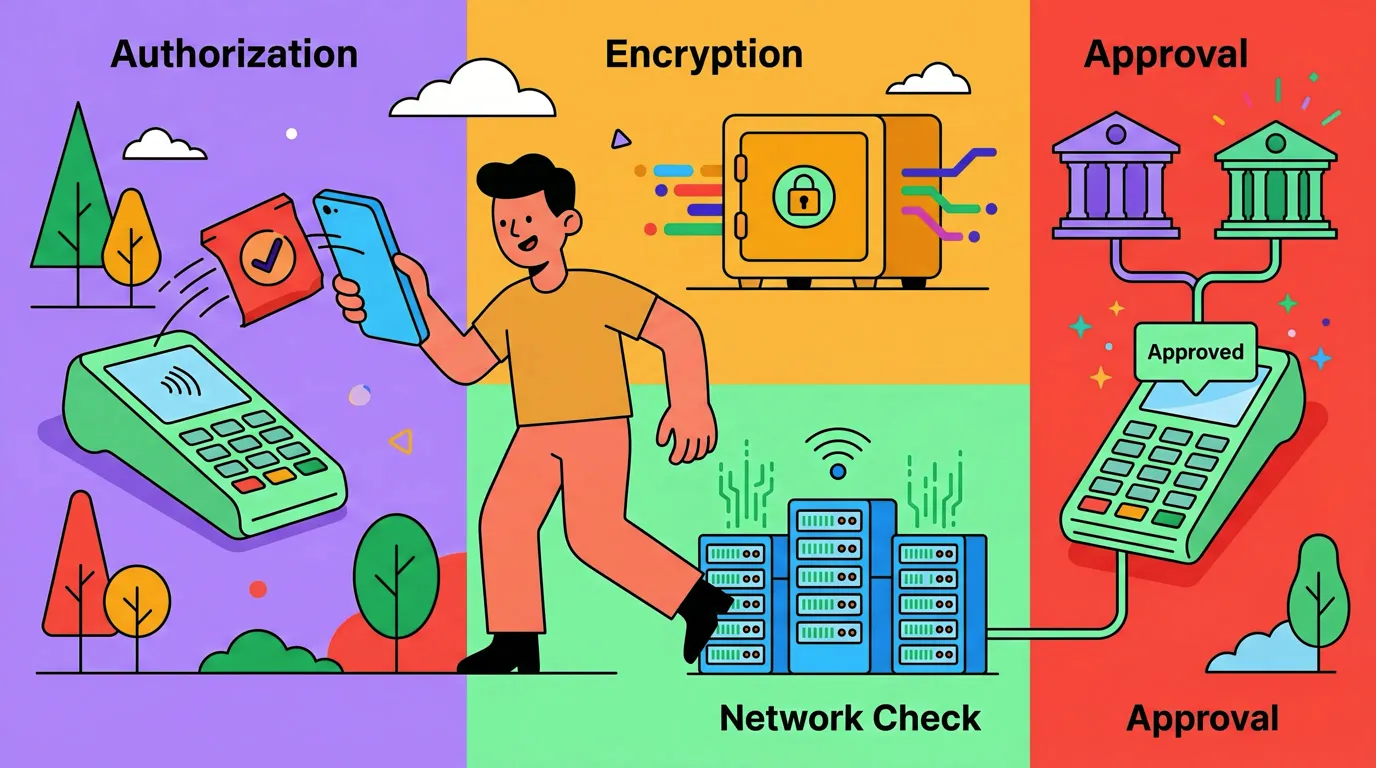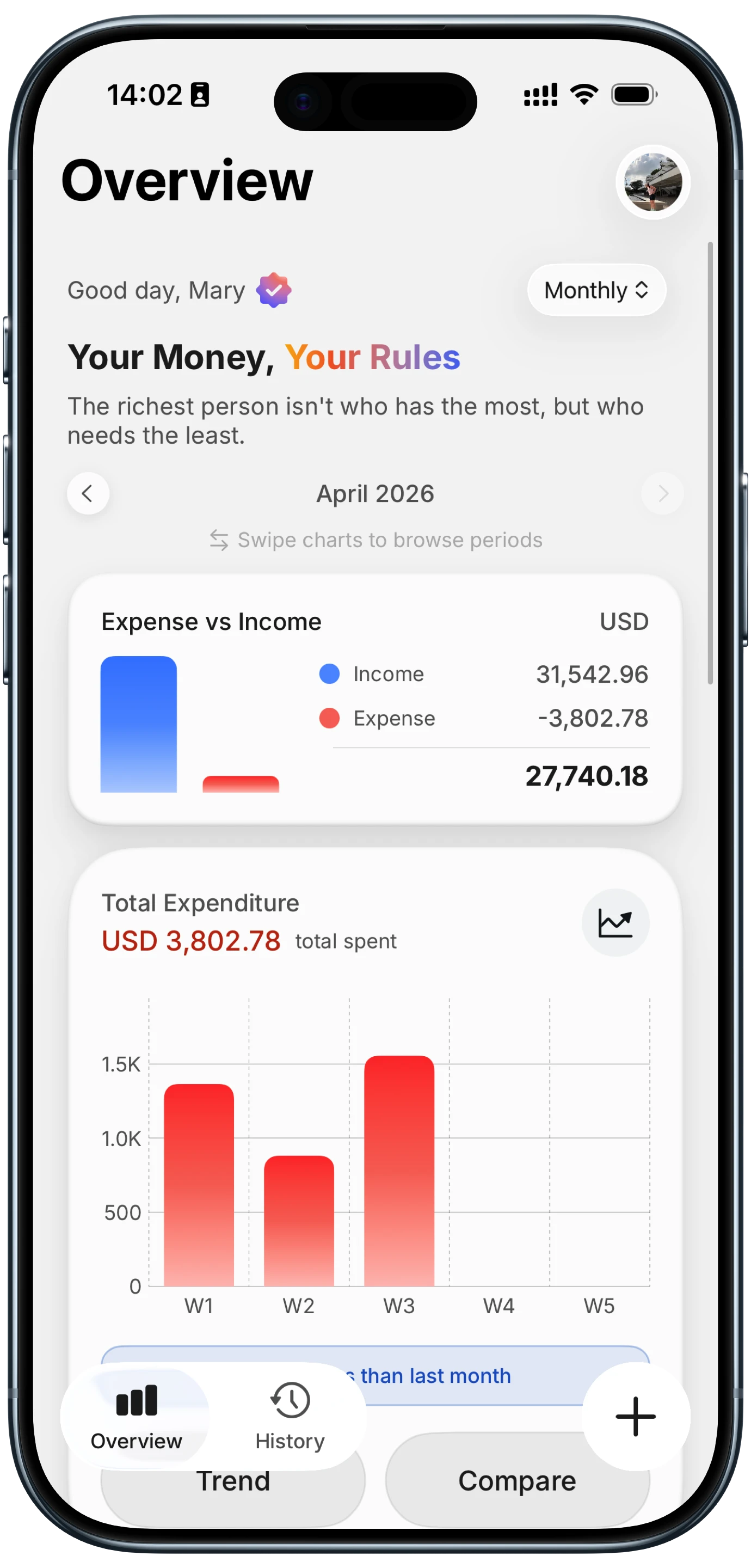
Spreadsheets are dying. The era of manually updating cells and creating formulas to track your spending is being replaced by something faster and more intuitive. In 2026, AI financial advisor apps are transforming how people manage money, moving from reactive tracking to proactive guidance.
The shift is not just about convenience. Traditional expense tracking tells you what happened last month. AI-powered finance tools tell you what will happen next week and help you prevent problems before they occur. This guide explains how predictive budgeting works, what to look for in an AI financial coach, and whether this technology actually delivers on its promises.
For a comparison of expense tracking approaches, see our best money tracker apps in 2026 guide.
What Is an AI Financial Coach
An AI financial coach is software that uses machine learning to analyze your spending patterns, predict future expenses, and provide personalized recommendations. Unlike traditional budgeting apps that simply record transactions, AI coaches actively guide your financial decisions.
The technology works through three core capabilities:
Pattern recognition: The AI identifies recurring expenses, seasonal spending variations, and unusual transactions by analyzing historical data.
Predictive alerts: Based on patterns, the system warns you before potential overspending occurs. If you typically overspend on dining during weekends, you receive a Friday alert.
Conversational interaction: Instead of navigating complex menus, you describe expenses naturally. Say "dinner with friends, split four ways, $120 total" and the AI extracts and categorizes the information.
This combination moves expense tracking from passive recording to active financial guidance.
How Predictive Spending Alerts Work
Predictive spending alerts analyze your transaction history to forecast upcoming expenses and potential budget breaches.
The Prediction Process
- Historical analysis: The AI examines weeks or months of spending data to identify patterns
- Category modeling: Each spending category gets its own prediction model based on your behavior
- Anomaly detection: Unusual transactions are flagged for review
- Forecast generation: The system projects spending for the current period
- Alert triggering: When projections exceed budgets, you receive warnings
Types of Predictive Alerts
| Alert Type | What It Catches | When It Triggers |
|---|---|---|
| Budget breach warning | Projected overspending | 70-80% of budget spent |
| Unusual spending | Transactions outside normal patterns | Immediately |
| Recurring expense reminder | Upcoming subscriptions or bills | 1-3 days before |
| Category spike | Sudden increase in category spending | Pattern detected |
| Cash flow warning | Low balance predicted | Days in advance |
Real-World Example
Consider a user who typically spends $400 monthly on groceries. By the 15th of the month, they have spent $280. The AI calculates:
- Current spending rate: $280 / 15 days = $18.67/day
- Projected monthly total: $18.67 x 30 = $560
- Budget overage: $160 (40% over budget)
The system sends an alert: "At your current pace, you'll exceed your grocery budget by $160. Consider adjusting your remaining shopping trips."
This intervention happens while change is still possible, not as a post-mortem after the damage is done.
Conversational AI Budgeting Explained
Conversational AI budgeting lets you interact with your finance app through natural language instead of forms and buttons.
How It Differs from Traditional Input
| Traditional App | Conversational AI |
|---|---|
| Open app, navigate to "Add Expense" | Open app, type or speak |
| Select category from dropdown | AI auto-categorizes |
| Enter amount in number field | State amount naturally |
| Add notes in separate field | Include context in conversation |
| Save manually | AI confirms and saves |
Practical Conversation Examples
Simple expense logging:
- You: "Coffee this morning, $4.50"
- AI: "Got it. Added $4.50 to Food & Drink, today at 8:32 AM."
Complex transaction:
- You: "Dinner last night at that Italian place, $85 total but I paid for two friends so they owe me"
- AI: "Added dinner expense of $28.33 (your share) to Dining. Created receivable of $56.67 from friends. Does this look right?"
Budget inquiry:
- You: "How am I doing on entertainment this month?"
- AI: "You've spent $145 of your $200 entertainment budget. That's 72.5% with 12 days remaining."
Spending search:
- You: "What did I spend on Amazon last month?"
- AI: "Last month you made 6 Amazon purchases totaling $234.67. Categories: Household ($89), Electronics ($120), Personal ($25.67)."
Finny uses this conversational approach to make expense logging feel natural rather than administrative. For more on conversational and text-first input, see our AI finance tracker overview and the best AI budget apps in 2026 comparison.
AI Financial Advisor Apps: What to Look For
Not all AI finance apps deliver equal value. Some use "AI" as marketing without meaningful intelligence. Here is what separates genuine AI coaches from decorated spreadsheets.
Essential AI Features
Learning capability: The AI should improve over time. Early on, it might miscategorize transactions. After corrections, it should get smarter about your specific spending patterns.
Personalized insights: Generic tips like "spend less on coffee" are useless. Good AI provides insights specific to your behavior: "Your grocery spending increases 23% in weeks when you don't meal plan."
Predictive accuracy: Test the predictions. If alerts rarely match reality, the AI is not sophisticated enough to be useful.
Natural language processing: Can you describe transactions conversationally, or must you fill out rigid forms? True conversational AI handles ambiguity and context.
Privacy architecture: Where does AI processing happen? On-device AI keeps your financial data private. Cloud-only processing means your data travels to external servers.
Comparison of AI Finance Features
| Feature | Basic Apps | Mid-Range | Advanced AI |
|---|---|---|---|
| Transaction categorization | Manual | Rule-based | Machine learning |
| Spending predictions | None | Simple trends | Pattern-based |
| Natural language input | None | Templates | Full NLP |
| Personalized insights | None | Generic | Behavior-specific |
| Learning from corrections | No | Limited | Continuous |
Red Flags in "AI" Finance Apps
Static rules masquerading as AI: If the app uses fixed rules ("all Starbucks transactions go to Coffee") rather than learning your patterns, it is not true AI.
Generic recommendations: Real AI personalizes. Generic advice indicates template-based systems.
No improvement over time: AI should get better. If accuracy stays flat after months of use, the intelligence is superficial.
Cloud dependency for basic features: Genuine AI can run on-device for privacy. Apps requiring constant cloud connection for simple tasks may be sending all your data to external servers.
Benefits of AI-Assisted Financial Tracking
Reduced Friction
The biggest barrier to expense tracking is effort. Every tap, every dropdown menu, every form field increases the chance you will skip logging a transaction. AI-assisted input reduces friction by understanding natural descriptions and handling categorization automatically.
For users who previously abandoned manual tracking, conversational AI can make the difference between consistent logging and an empty transaction history.
Earlier Intervention
Traditional budgeting reviews happen at month-end, when overspending has already occurred. Predictive alerts shift intervention earlier in the cycle, when behavioral changes can still affect outcomes.
This matches how people actually make financial decisions. You are more likely to skip an impulse purchase if warned beforehand than to regret it afterward.
Better Pattern Recognition
Humans are poor at identifying their own spending patterns. We notice major expenses but miss gradual increases. AI excels at pattern detection, surfacing insights like:
- "Your utility bills have increased 15% over six months"
- "You spend 34% more on weekends"
- "Food delivery increases during deadline weeks at work"
These patterns often remain invisible without computational analysis. For a deeper look at how to interpret your own spending data, see our financial analytics guide.
Reduced Categorization Errors
Manual categorization is inconsistent. The same coffee shop might be logged as "Food," "Dining," or "Coffee" depending on your mood. AI applies consistent categorization logic, making reports more accurate and trends more reliable.
Limitations of AI Financial Coaches
AI-powered finance tools are not perfect. Understanding limitations helps set realistic expectations.
Dependency on Data Quality
AI predictions are only as good as the data they analyze. If you log expenses inconsistently, predictions will be unreliable. Garbage in, garbage out applies to financial AI as much as any other system.
Cold Start Problem
New users have no historical data for AI to analyze. Early predictions will be generic until the system learns your patterns. This typically takes 2-4 weeks of consistent logging.
Overcomplicated for Simple Needs
Some users have straightforward finances: steady income, predictable expenses, no travel complications. For them, AI features may add complexity without proportional benefit. Simple manual tracking might work better.
Privacy Tradeoffs
Cloud-based AI processing means your transaction data travels to external servers. This enables more powerful analysis but creates privacy exposure. On-device AI preserves privacy but may offer less sophisticated predictions.
Finny processes AI on-device where possible, keeping your financial data local while still providing conversational input and smart categorization.
How to Get Started with AI Budgeting
Step 1: Choose the Right Level of AI
Evaluate your needs honestly:
- Light AI: Automatic categorization, basic insights
- Medium AI: Predictive alerts, spending pattern analysis
- Full AI coach: Conversational interaction, personalized recommendations, learning system
Start with less than you think you need. You can always upgrade.
Step 2: Commit to Consistent Logging
AI cannot predict spending it does not know about. For predictive features to work, you need comprehensive transaction data. Commit to logging everything for at least one month.
Receipt scanning and natural language input reduce friction. See our how to track expenses guide for practical tips.
Step 3: Train the AI
Correct miscategorizations promptly. Each correction teaches the system about your specific spending patterns. Early investment in training pays off in long-term accuracy.
Step 4: Review Predictions Critically
Do not accept AI predictions blindly. Compare predictions to actual spending. Note where the AI succeeds and fails. This helps you understand which alerts deserve attention.
Step 5: Adjust Gradually
Do not overhaul your entire financial system at once. Introduce AI features gradually. Master conversational input before relying on predictive alerts. Build trust through experience.
The Bottom Line
AI financial advisor apps represent a genuine evolution in personal finance tools. Predictive spending alerts catch problems before they occur. Conversational AI budgeting reduces friction in expense logging. Pattern recognition surfaces insights humans miss.
But AI is not magic. It requires consistent data input, time to learn your patterns, and realistic expectations. The technology works best for users who want to track expenses but struggle with the manual effort, and who appreciate guidance without ceding control.
For those users, AI-assisted finance tools in 2026 offer something spreadsheets never could: a coach that pays attention when you do not, spots patterns you miss, and warns you before problems become permanent.
The question is not whether AI financial coaching works. It is whether you are ready to let software help you make better money decisions.
Common Questions About AI Financial Coaches
What is an AI financial advisor app?
An AI financial advisor app uses machine learning to analyze spending, predict future expenses, and provide personalized financial guidance. Unlike traditional trackers, these apps actively coach behavior through alerts and recommendations.
Are AI spending predictions accurate?
Accuracy depends on data quality and the sophistication of the AI. With consistent logging and 4-6 weeks of historical data, good AI systems achieve useful prediction accuracy. Predictions improve over time as the system learns your patterns.
Is conversational AI budgeting secure?
Security depends on implementation. On-device AI processing keeps data local and private. Cloud-based processing offers more power but creates privacy exposure. Check where your app processes data before sharing financial information.
Can AI replace a human financial advisor?
AI apps handle day-to-day expense tracking and basic budgeting effectively. For complex financial planning involving taxes, investments, estate planning, or major life decisions, human advisors remain valuable. AI and human advice serve different purposes.
What is the best AI expense tracker in 2026?
The best choice depends on your priorities. For privacy-focused AI with conversational input and offline support, Finny offers a strong balance. For comprehensive financial dashboards with bank syncing, other options may suit better.
Ready to try AI-assisted expense tracking?
Download Finny to log expenses using natural language, get smart categorization, and track spending without sacrificing privacy. AI helps you log faster while you stay in control.