5 Ways to Optimize Your Spending Categories
Organizing your spending categories isn’t just about neatness: it’s the key to financial awareness. When done right, it helps you identify waste, set limits, and achieve long-term goals faster.
For a broader take on what good tracking looks like, see our how to track expenses guide and the automatic expense categorization overview.
1. Keep Categories Simple and Relevant
Start with 6–8 main categories such as:
- Food & Groceries
- Transportation
- Housing
- Entertainment
- Savings & Investments
- Miscellaneous
Avoid over-complicating your setup. Too many categories make tracking tedious.
2. Combine Similar Expenses
If you buy coffee and lunch every day, track them under “Dining” instead of separating them. Simplicity keeps your insights accurate and easy to act on.
3. Add Subcategories for Deeper Insights
When you’re ready for more precision, add subcategories.
For example:
Transportation → Fuel, Grab, Public Transit
Finny lets you create custom categories and subcategories that match your lifestyle perfectly.
4. Analyze Monthly Trends
Review category totals at the end of each month.
- Which category grew the most?
- Which one can you cut by 10% next month?
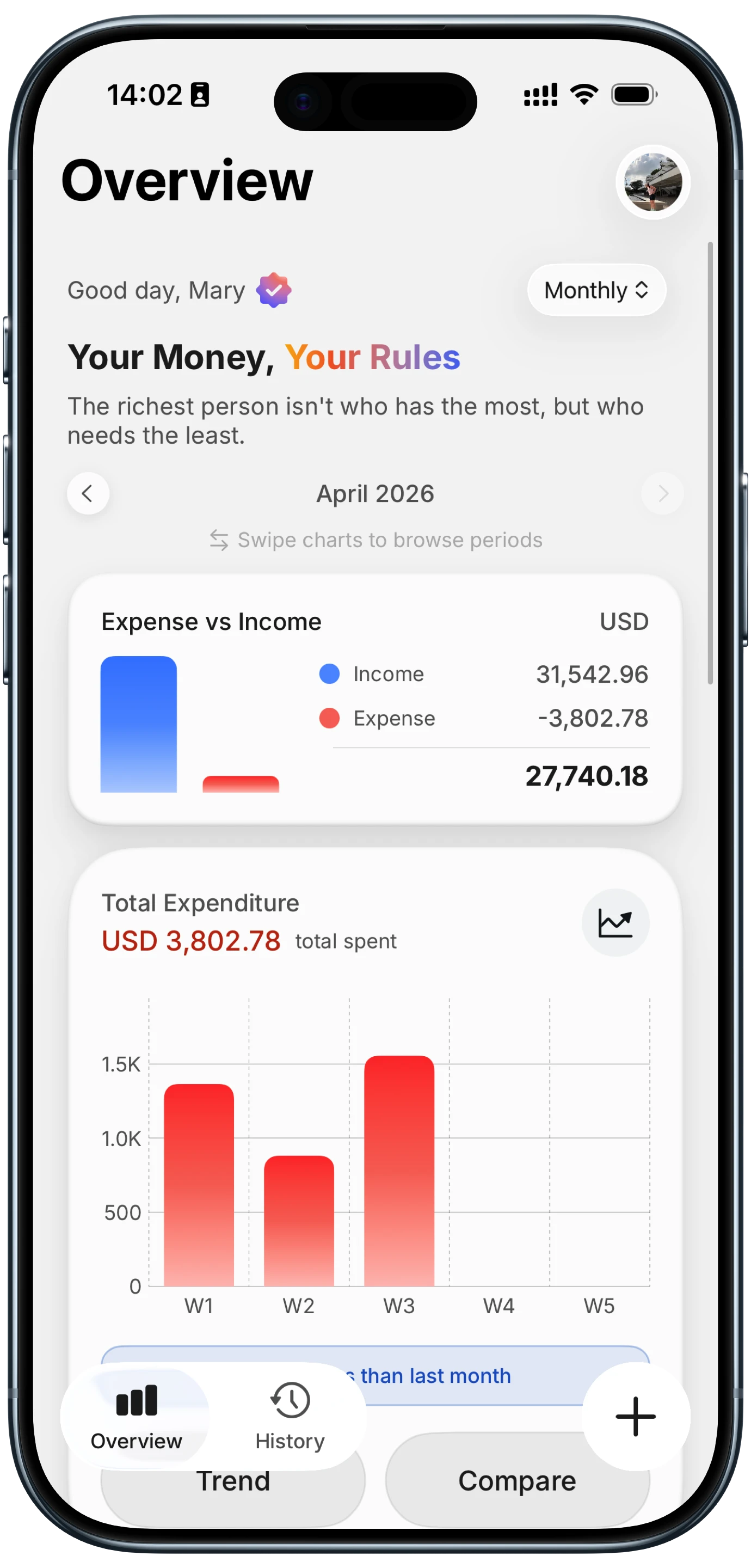
Visual reports in Finny make this process effortless.
5. Automate Recurring Expenses
Recurring costs like subscriptions or rent can skew your data. Mark them clearly or use automation to flag them. Finny’s recurring expense tracking ensures nothing slips through the cracks. For more on building a consistent tracking routine, see our guides on how to track daily spending, how to track expenses, and how to stop subscription creep before it distorts your category totals.
Simplify, Categorize, Save
Your categories should work for you: not against you.
Try Finny to organize, visualize, and improve your spending habits effortlessly.