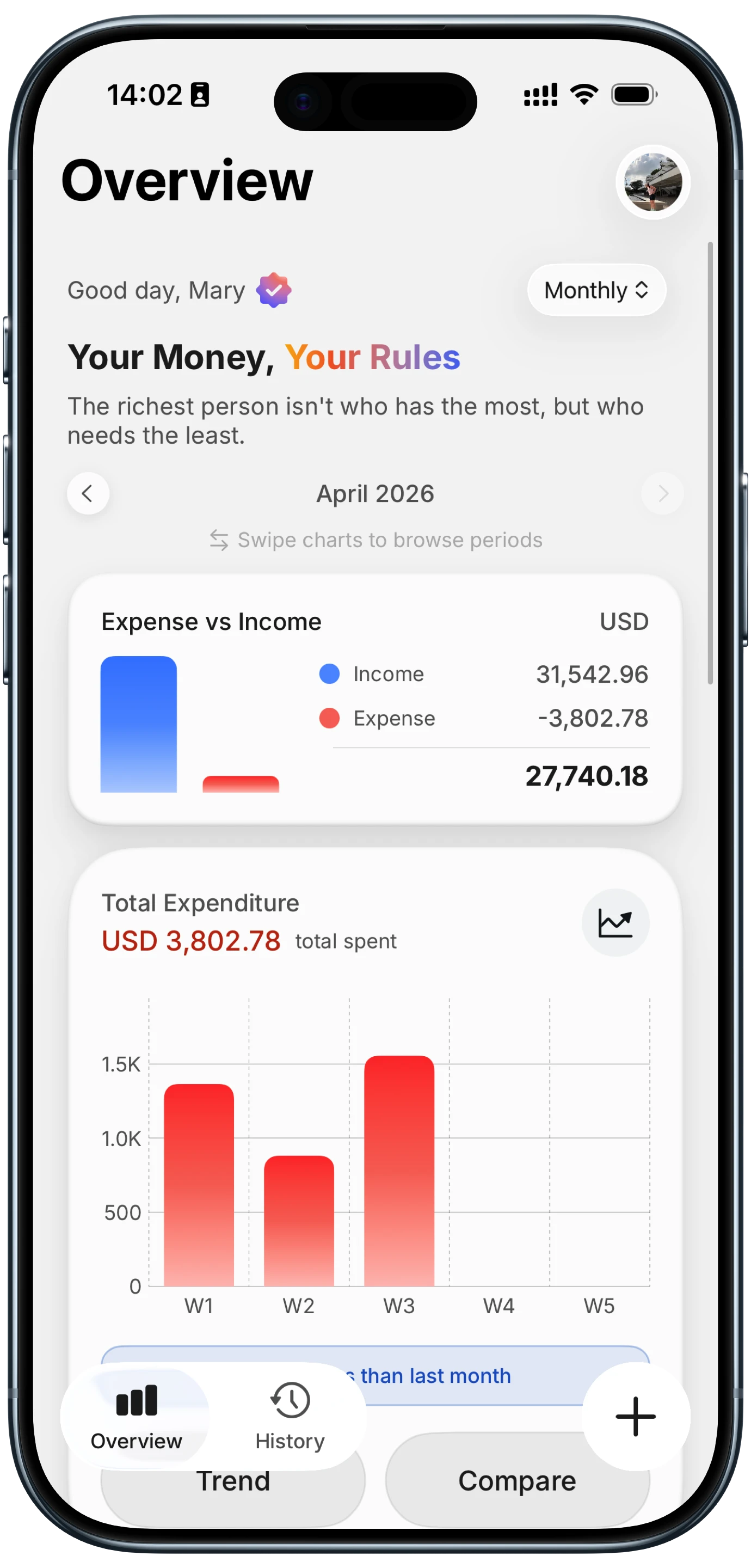
How to Track Expenses: A Simple Step-by-Step Guide
Most people have a rough idea of their big bills: rent, utilities, car payment. But smaller daily spending is where money quietly disappears. A coffee here, a subscription there, an impulse buy at the grocery store. Over a month, those untracked purchases can add up to hundreds of dollars.
How to track expenses is one of the most common personal finance questions, and for good reason. Tracking is the foundation of every budgeting method, savings plan, and debt payoff strategy. Without knowing where your money goes, you cannot redirect it. This guide walks through the process step by step, covering both manual and app-based approaches so you can pick what works for your daily routine.
For a broader look at budgeting tools and methods, see our budgeting for beginners guide.
Why Expense Tracking Matters
Expense tracking is the act of recording every purchase you make so you can review your spending patterns over time. It serves three purposes:
- Visibility. You see exactly where money goes each week and month.
- Accountability. Recording a purchase makes you more aware of the decision.
- Decision-making. With data in hand, you can cut spending in categories that do not match your priorities.
People who track expenses consistently tend to spend less, not because tracking restricts them, but because awareness changes behavior. When you know that dining out costs you $400 a month, you make more deliberate choices about when and where to eat out.
Step 1: Choose Your Tracking Method
Before recording your first expense, decide how you want to track. There are three main approaches, each with clear tradeoffs.
Manual Tracking with a Notebook or Spreadsheet
Write down every purchase in a notebook or log it in a spreadsheet. This method costs nothing and gives you full control. The downside is friction: you must remember to record every transaction, and it is easy to fall behind after a busy day.
Manual tracking works best for people who enjoy writing things down and have simple spending patterns with fewer than ten transactions per day.
Bank and Credit Card Statements
You can review your bank statements at the end of each month. This captures every digital transaction automatically. However, it misses cash purchases, often has vague merchant descriptions, and only gives you a backward-looking view. You see what happened but cannot course-correct in real time.
Expense Tracking Apps
A track expenses app handles the logging, categorization, and analysis for you. Some apps connect to your bank account to pull transactions automatically. Others, like Finny, use AI-powered input methods (voice, text, receipt scanning) so you stay in control of what gets recorded without needing a bank connection.
Apps reduce friction compared to manual tracking while giving you real-time data instead of waiting for a monthly statement.
For a deeper comparison of AI-assisted and manual methods, read our AI expense tracking vs manual guide.
Step 2: Define Your Expense Categories
Consistent categories are what turn a list of purchases into useful data. Without them, you have numbers but no patterns.
Start with these core categories:
| Category | Examples |
|---|---|
| Housing | Rent, mortgage, repairs |
| Food | Groceries, dining out, coffee |
| Transportation | Gas, parking, public transit, rideshare |
| Utilities | Electric, water, internet, phone |
| Health | Insurance, prescriptions, gym |
| Entertainment | Streaming, events, hobbies |
| Personal | Clothing, haircuts, gifts |
| Subscriptions | Software, memberships, apps |
| Savings | Emergency fund, investments |
| Debt Payments | Credit cards, student loans |
You can add or merge categories as needed, but keep the total under 15. Too many categories create confusion. Too few hide important patterns. Most expense tracking apps let you customize categories, which saves time compared to managing them manually in a spreadsheet.
Step 3: Record Every Expense as It Happens
The single most important habit in expense tracking is recording purchases immediately. Waiting until the evening or the weekend means you will forget transactions, estimate amounts incorrectly, or skip the task entirely.
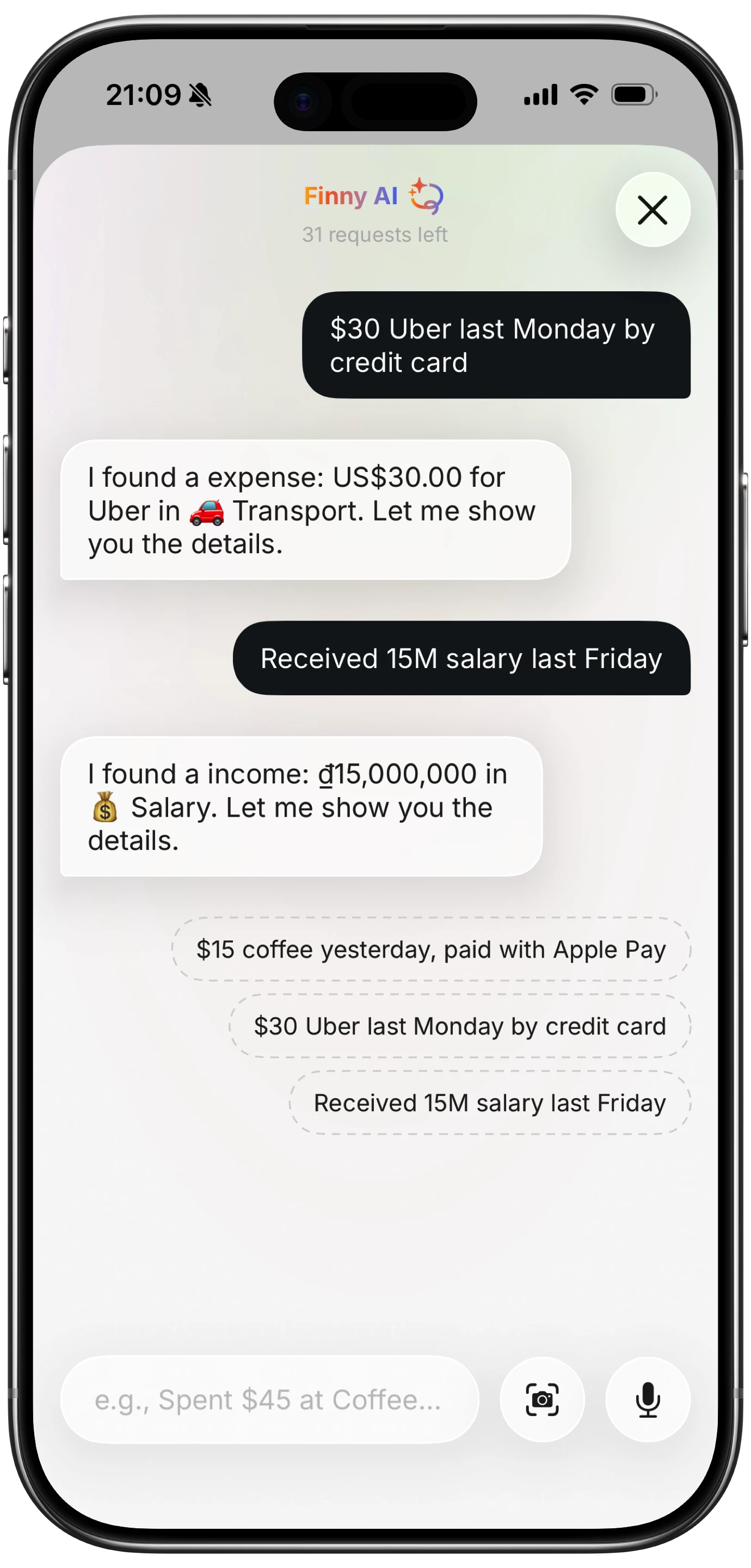
Finny app's AI chat feature
Here is how to build the recording habit:
- Set a trigger. Every time you tap your card, open your wallet, or complete an online checkout, that is your cue to record the expense.
- Use the fastest input method available. If you use an app, voice input or receipt scanning takes seconds. If you use a notebook, jot down the amount and category.
- Do not worry about perfection. A roughly correct record is better than no record. You can clean up categories and amounts during your weekly review.
- Track cash spending. Cash purchases are the easiest to forget. Make a point to record them immediately, or keep receipts and log them at the end of the day.
Apps with offline support are especially useful here. You do not always have internet access when making a purchase, particularly when traveling. An offline expense tracker lets you log transactions anywhere and syncs the data later.
Step 4: Review Your Spending Weekly
Recording expenses is only half the process. The other half is reviewing what you have recorded.
Set aside 15 minutes each week to look at your spending. During this review:
- Check totals by category. Are any categories higher than expected?
- Identify patterns. Do you spend more on certain days? Are there recurring impulse purchases?
- Compare to your budget. If you have a budget (and you should), compare actual spending against planned amounts.
- Correct any errors. Fix miscategorized transactions or add any expenses you missed.
Weekly reviews prevent surprises at the end of the month. They also reinforce the tracking habit by showing you the value of the data you are collecting.
Step 5: Adjust Your Spending Based on Data
Tracking expenses without acting on the data is like checking the weather without dressing for it. The goal is to use your spending data to make better financial decisions.
Common adjustments include:
- Cutting or reducing categories. If you are spending $200 monthly on subscriptions, review each one and cancel those you rarely use.
- Setting category limits. Decide in advance how much you will spend on dining out, entertainment, or shopping each month. Understanding the difference between variable and fixed expenses helps you identify which categories have the most room for adjustment.
- Shifting money toward goals. Redirect savings from reduced categories toward an emergency fund, debt payoff, or investment account.
- Negotiating bills. Tracking reveals exactly what you pay for utilities, insurance, and services, giving you specific numbers to use when negotiating or shopping for alternatives.
If you want to learn more about allocating your income effectively, our guide on how to budget money covers several practical methods.
How Competitors Handle Expense Tracking
Several popular apps take different approaches to the same problem.
YNAB (You Need A Budget)
YNAB combines expense tracking with zero-based budgeting. Every dollar gets assigned a job before you spend it. This approach works well for people who want strict budget enforcement, but requires more upfront setup and costs $14.99 per month.
PocketGuard
PocketGuard connects to your bank accounts and shows you how much you have available to spend after bills, goals, and necessities. It automates tracking but requires bank connections, which means sharing your login credentials with a third-party service.
Goodbudget
Goodbudget uses the digital envelope method. You allocate money into virtual envelopes for each spending category. It is manual by design, which appeals to people who want full control, though the free tier limits you to 20 envelopes.
Where Finny Fits
Finny takes a different approach by using AI to reduce the friction of manual tracking without requiring bank connections. You can log expenses through voice, text, or receipt scanning. The app works offline, supports over 150 currencies, and keeps your data private. It is designed for people who want the accuracy of manual tracking without the effort.
Daily Habits That Make Tracking Stick
Expense tracking only works if you do it consistently. These habits help:
- Morning check. Spend one minute reviewing yesterday's spending before starting your day.
- Receipt ritual. After every purchase, take a photo of the receipt or log the amount immediately.
- Weekly review. Block 15 minutes each Sunday to review your weekly spending and plan the week ahead.
- Monthly reset. At the start of each month, review category totals, set goals for the coming month, and celebrate progress.
The first two weeks are the hardest. After that, tracking becomes automatic, like checking the time on your phone.
Common Questions About Tracking Expenses
How do I start tracking my expenses?
Pick a method (notebook, spreadsheet, or app), define your spending categories, and begin recording every purchase as it happens. Start simple and refine your system over time.
What is the best app to track expenses?
The best track expenses app depends on your priorities. If you value privacy and offline access, look for apps that do not require bank connections. If you want automation, bank-linked apps handle more of the work. Our best money tracker apps in 2026 guide compares the top options.
Should I track every single purchase?
Yes, especially when starting out. Small purchases are where most unplanned spending hides. Once you have several months of data, you can decide if certain low-cost categories need less detailed tracking.
How long does it take to see results from expense tracking?
Most people notice spending patterns within the first two weeks. Meaningful behavior changes typically appear within one to two months of consistent tracking. The key is reviewing your data regularly, not just recording it.
Can I track expenses offline?
Yes. Offline-first expense trackers let you log transactions without internet access. The data syncs when you reconnect. This is especially useful for travelers or anyone who does not want to depend on connectivity.
Ready to start tracking your expenses with less friction?
Download Finny to log expenses using AI, voice, or receipt scanning. No bank connections needed, full offline support, and spending analytics that help you see where your money actually goes.