The high-yield savings accounts that felt like free money in 2024 are quietly shrinking. As interest rates decline through 2026, that 5% APY is dropping toward 4%, then 3%, reducing what your emergency fund earns by hundreds of dollars annually.
This shift does not require panic, but it does require attention. The moves you make now determine whether you capture remaining yields, lock in favorable rates, or let opportunities pass while you procrastinate.
This guide covers three strategic moves for your cash as rates decline: optimizing your high-yield savings placement, evaluating mortgage refinancing, and exploring alternatives that perform better in lower-rate environments. For foundational saving concepts, see how to build an emergency fund, our explainer on what is a high yield savings account, and the basics of compound interest.
Understanding the 2026 Rate Environment
After years of elevated rates designed to control inflation, central banks are normalizing policy. For consumers, this means:
Savings rates are declining: High-yield savings accounts that peaked above 5% are trending toward 3-4% and likely lower.
Borrowing becomes cheaper: Mortgage rates, auto loans, and credit cards will see lower rates over time.
Existing fixed-rate investments lock in higher yields: CDs and bonds purchased at peak rates continue earning those rates until maturity.
Cash alternatives become more attractive: With savings rates lower, other options for emergency funds and cash reserves become comparatively better.
The transition period, while rates are falling but not yet bottomed, creates opportunities for those paying attention.
Move 1: Optimize Your High-Yield Savings Now
Why This Matters
A 1% decline in your savings rate costs real money:
| Emergency Fund | 5% APY | 4% APY | 3% APY |
|---|---|---|---|
| $10,000 | $500/year | $400/year | $300/year |
| $25,000 | $1,250/year | $1,000/year | $750/year |
| $50,000 | $2,500/year | $2,000/year | $1,500/year |
On a $25,000 emergency fund, the difference between 5% and 3% is $500 annually: not life-changing but not ignorable.
Action Steps
Compare current rates: Your bank may have quietly dropped rates while competitors offer better deals. Check current high-yield savings rates from:
- Online banks (typically highest)
- Credit unions
- Brokerage money market accounts
Consider rate-lock alternatives: CDs and Treasury bills lock current rates regardless of future declines. A 12-month CD at 4.5% today beats a savings account that drops to 3.5% mid-year.
Ladder your cash: Instead of all cash in one account, split between:
- Immediate access savings (1-2 months expenses)
- Short-term CDs (3-6 months)
- Medium-term CDs (6-12 months)
This captures higher locked rates while maintaining liquidity.
Rate Shopping Considerations
When comparing high-yield savings options:
| Factor | Why It Matters |
|---|---|
| APY (not interest rate) | APY includes compounding; direct comparison |
| Rate history | Some banks cut rates faster than competitors |
| Minimum balance | Some rates require $10K+ to qualify |
| Transfer speed | How quickly can you access money? |
| FDIC/NCUA insurance | Confirm coverage up to $250K |
Do not chase the absolute highest rate if it means switching to an unstable institution or sacrificing accessibility for your emergency fund.
Move 2: Evaluate Mortgage Refinancing
When Refinancing Makes Sense
Lower rates create refinancing opportunities, but not automatically. Refinancing makes sense when:
Rate improvement is significant: Generally 0.5-1% or more below your current rate justifies the effort and costs.
You will stay in the home: Refinancing has upfront costs. You need time to recoup them through lower payments.
Your credit and finances are strong: Best rates go to strong borrowers. If your situation has declined since your original mortgage, refinancing may not help.
The Break-Even Calculation
Refinancing typically costs 2-5% of loan amount in closing costs. Calculate break-even:
Example:
- Current mortgage: $300,000 at 7.5%
- Refinance offer: $300,000 at 6.5%
- Closing costs: $9,000 (3%)
- Monthly savings: ~$200
Break-even: $9,000 / $200 = 45 months (about 4 years)
If you plan to stay in the home 4+ years, refinancing makes financial sense.
Timing Refinancing in a Declining Rate Environment
The challenge with falling rates: do you refinance now or wait for lower rates?
Arguments for refinancing now:
- Guaranteed savings start immediately
- Rates could stabilize or reverse
- Waiting has opportunity cost
Arguments for waiting:
- Rates may continue declining
- Refinancing twice is expensive
- Uncertainty about home or job plans
Practical approach: If current rates offer meaningful improvement (0.75%+), refinance now. You can refinance again later if rates drop substantially further, but do not let perfect be the enemy of good.
Refinancing Beyond Rate Reduction
Even without rate improvement, refinancing can make sense for:
Changing loan term: Switch from 30-year to 15-year to pay off faster Removing PMI: If you now have 20%+ equity Cash-out for specific purposes: Home improvements, debt consolidation (with discipline) Switching from ARM to fixed: Lock in predictable payments
Move 3: Explore High-Yield Savings Alternatives
As savings rates decline, other options become comparatively more attractive.
Treasury Bills and Bonds
Government securities offer competitive yields with tax advantages:
Treasury Bills (T-Bills):
- Short-term (4 weeks to 52 weeks)
- Purchased at discount, mature at face value
- State tax exempt
- Highly liquid through secondary market
I-Bonds:
- Inflation-protected
- Up to $10K per person per year
- Must hold 1 year minimum
- 5-year holding avoids penalty
Treasury Notes:
- 2-10 year terms
- Fixed interest paid semi-annually
- State tax exempt
Certificates of Deposit (CDs)
CDs lock rates for specified terms:
| CD Term | Typical Rate (2026) | Best For |
|---|---|---|
| 3 month | 4.0-4.5% | Short-term parking |
| 6 month | 4.2-4.7% | Near-term needs |
| 12 month | 4.3-4.8% | Known timeline |
| 24 month | 4.0-4.5% | Longer lock |
CD Laddering Strategy:
- Split cash across multiple terms
- As each CD matures, reinvest at longest term
- Maintains liquidity while capturing rates
Money Market Funds
Brokerage money market funds often beat bank savings rates:
- Higher yields than most savings accounts
- Highly liquid (same-day access)
- Not FDIC insured but very low risk
- Check minimum investment requirements
What to Avoid
Reaching for yield inappropriately: Emergency funds should be safe and liquid. Do not put emergency money in:
- Stocks or equity funds
- Long-term bonds (price volatility)
- Cryptocurrency
- Alternative investments
Locking up too much: Maintain sufficient liquid cash for actual emergencies. A 5-year CD earning 0.5% more is useless if you need the money at month 6.
Tracking Your Progress
Whatever moves you make, track the results:
Monitor savings rates: Set quarterly reminders to check if your accounts remain competitive Calculate actual earnings: Compare year-over-year interest earned Track refinance break-even: Know when you have recouped closing costs
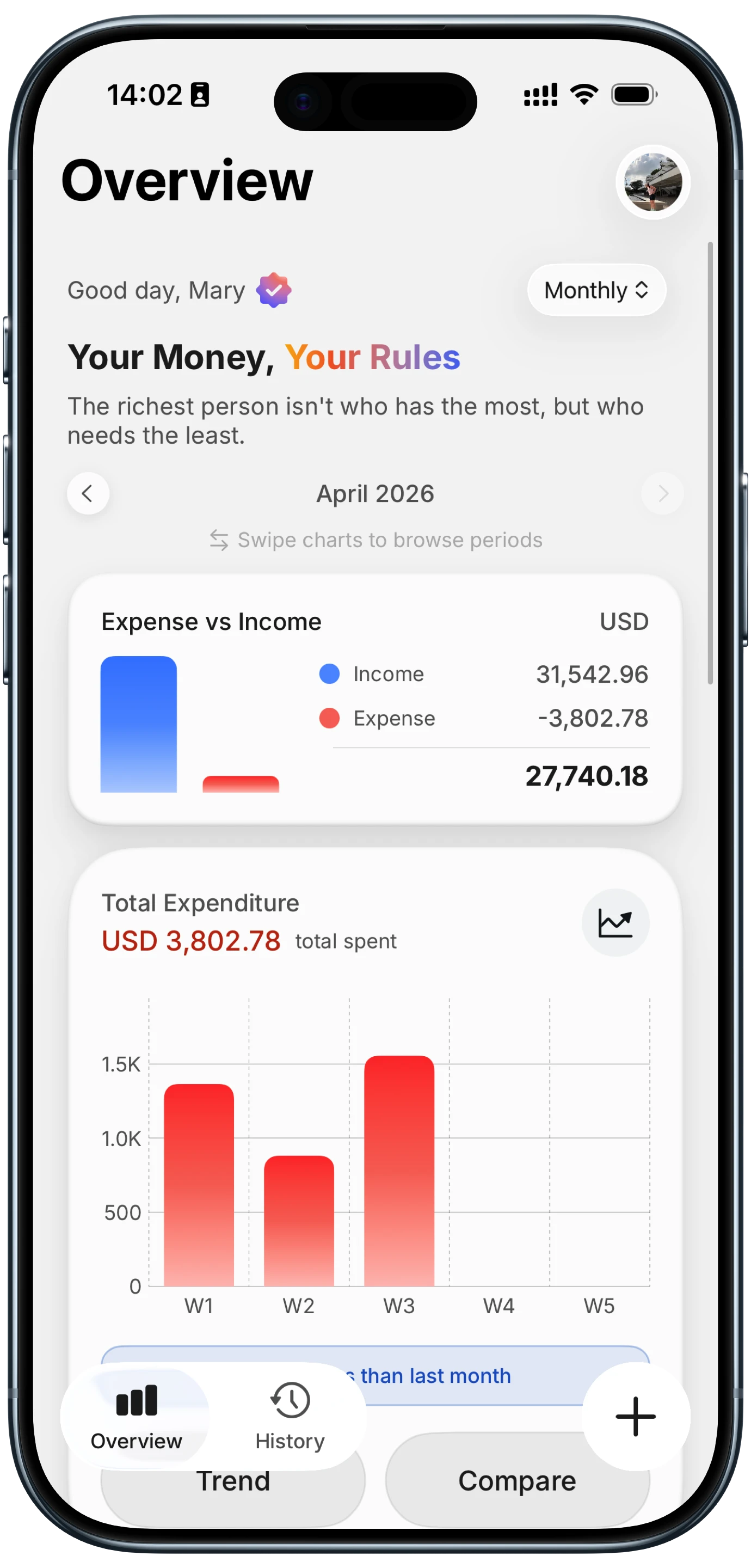
Expense tracking apps like Finny help maintain visibility into your overall financial picture, including how changes affect your monthly cash flow. For overall money management, see our best money tracker apps in 2026 guide and the APR vs APY explainer if you want to understand how rate quotes actually translate into earnings.
What Not to Do
Panic Moves
Falling savings rates do not require dramatic action. The difference between 4% and 3% on a $20,000 emergency fund is $200 annually. Important, but not crisis-level.
Chasing Unsustainable Yields
Some accounts advertise high promotional rates that drop after 3-6 months. Factor in the full timeline, not just the teaser rate.
Timing the Bottom
Waiting for rates to hit bottom before acting means missing months of higher rates. Make reasonable moves now; adjust later if conditions change significantly.
Over-Optimizing
The mental energy spent finding an extra 0.1% yield often exceeds the actual dollars gained. Focus on the major moves: reasonable savings rate, refinance if appropriate, sensible alternatives. Do not spend hours on marginal improvements.
The Bottom Line
Falling interest rates in 2026 shift the financial landscape:
- Optimize current high-yield savings by comparing rates and considering short-term locked options like CDs or T-Bills
- Evaluate mortgage refinancing if rates have dropped 0.5-1%+ below your current rate and you plan to stay in your home
- Explore alternatives like Treasury securities and money market funds that may outperform declining savings rates
None of these moves require urgency or anxiety. Rates are declining gradually, not collapsing. You have time to make informed decisions.
The key is attention. Many people set up financial accounts and never revisit them. In a changing rate environment, periodic reviews ensure your money works as hard as possible within appropriate risk parameters.
Check your rates. Calculate your options. Make sensible moves. Then return your attention to earning and enjoying rather than obsessing over marginal yield optimization.
Common Questions About Falling Interest Rates
Should I move my emergency fund out of high-yield savings?
Not necessarily. High-yield savings remain appropriate for emergency funds due to liquidity and FDIC insurance. Consider supplementing with CDs or T-Bills for portions you can lock up, but maintain accessible cash for true emergencies.
When is the best time to refinance a mortgage?
When the rate improvement is significant enough (generally 0.5-1%+) to justify closing costs over your expected time in the home. Do not wait for the absolute bottom; meaningful improvement now beats uncertain future optimization.
What are the best high-yield savings alternatives in 2026?
Treasury Bills, CDs, and money market funds offer competitive yields. The best choice depends on your liquidity needs, timeline, and tax situation. T-Bills offer state tax exemption; CDs offer FDIC insurance; money market funds offer highest liquidity.
How much should I keep in liquid savings vs. locked alternatives?
Maintain at least 1-2 months of expenses in fully liquid savings. Beyond that minimum, consider laddering additional emergency funds across CDs or T-Bills with staggered maturities to balance yield and accessibility.
Will rates keep falling in 2026?
Economic forecasts suggest continued gradual rate declines, but predictions are uncertain. Make decisions based on current conditions rather than speculation about future movements. You can always adjust as conditions change.
Ready to track how rate changes affect your finances?
Download Finny to log expenses and monitor your financial picture. Clear visibility into income, expenses, and savings helps you make informed decisions in any rate environment.