Ways to Save Money on a Tight Budget
When money is tight, the standard advice can feel insulting. "Just skip your daily latte." "Stop eating out." As if people living paycheck to paycheck are blowing their income on avocado toast. The reality is that most people on a tight budget have already cut the obvious extras. The challenge is finding savings in what remains.
Ways to save money on a tight budget exist even when it feels like there is nothing left to cut. The key is shifting from big dramatic changes to small, consistent adjustments that compound over time. A few dollars saved here and there does not sound like much, but $5 a day adds up to $1,825 a year.
This guide covers practical strategies organized by category, so you can focus on the areas where your spending has the most room for improvement. None of these require earning more money. They work with whatever income you have right now.
Start With Visibility: Know Where Every Dollar Goes
You cannot save what you cannot see. Before cutting anything, spend one full month tracking every expense. Every grocery trip, every subscription charge, every gas fill-up.
Most people discover surprises. A forgotten streaming service still billing $15 a month. Convenience store stops totaling $80 a month. Small delivery fees adding up to more than the food itself. These are not character flaws. They are simply invisible until you track them.
You can use a notebook, a spreadsheet, or an app. What matters is consistency. Our guide on how to track expenses covers different methods and how to pick one that fits your life.
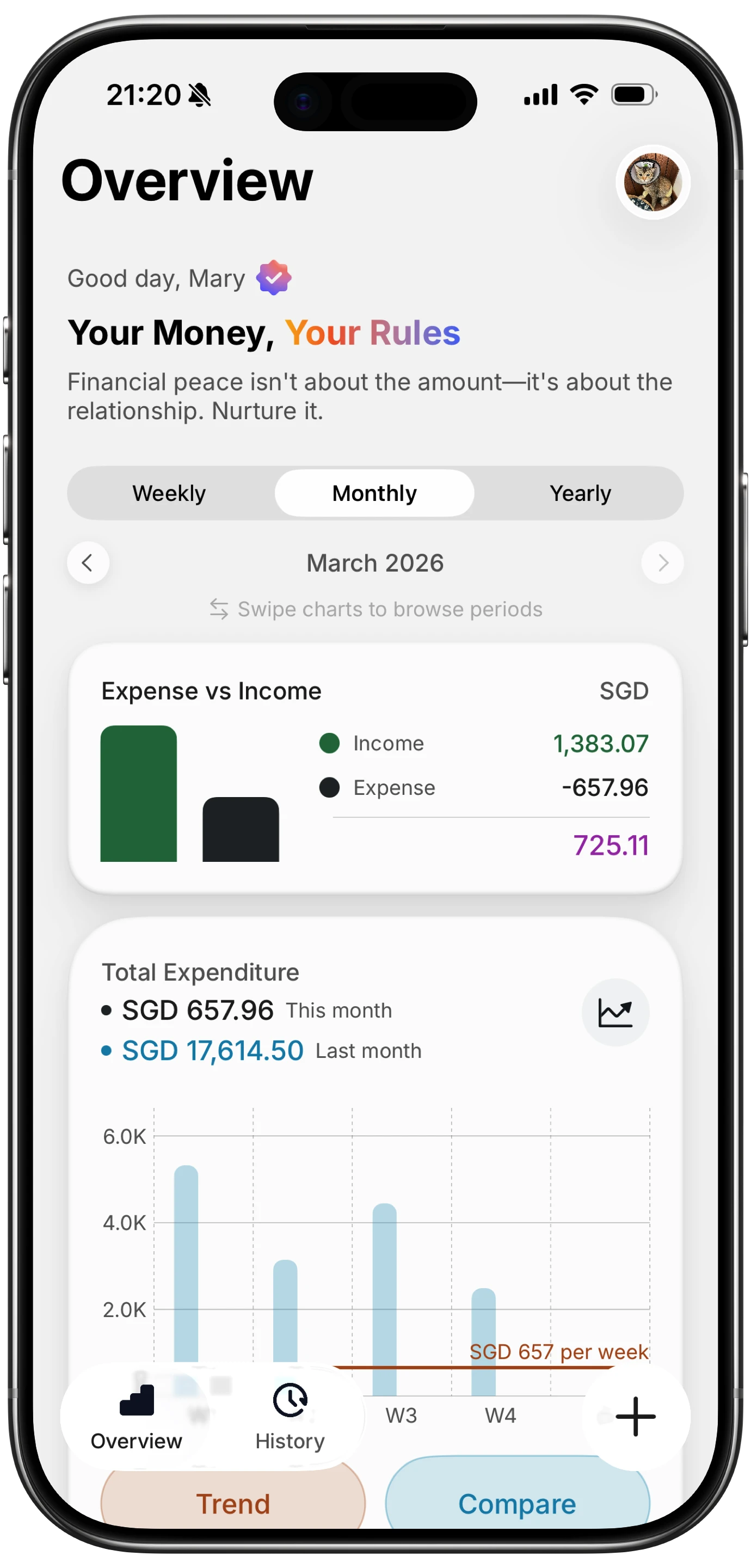
Once you see where your money goes, you can make informed decisions about where to cut. Without this step, saving feels like guessing.
Build a Simple Budget Framework
Tracking shows you the past. A budget directs the future. You do not need a complicated system. A basic framework that divides your income into categories is enough to create structure.
The 50/30/20 rule is a popular starting point: 50% of after-tax income goes to needs, 30% to wants, and 20% to savings and debt repayment. If your needs already consume 70% or more of your income, adjust the ratios. The point is not perfection. The point is having a plan.
For a step-by-step walkthrough of different budgeting approaches, see our full guide on how to budget money. Some people prefer zero-based budgeting, where every dollar gets assigned a job. Others do better with a simpler two-category system: bills and everything else. The best budget is the one you actually follow.
Cut Food Costs Without Living on Rice and Beans
Food is one of the largest flexible expenses in most budgets, and it is also where small changes produce the biggest results.
Meal Plan Before You Shop
Walking into a grocery store without a plan almost guarantees overspending. You buy ingredients for meals you never make, grab items that look appealing, and forget things you actually need. Spend 15 minutes each week planning meals around what is on sale and what you already have in your pantry. Even planning four or five dinners saves significant money.
Cook in Batches
Cooking a large pot of chili, soup, or stir-fry on Sunday costs roughly the same in ingredients as a single meal but feeds you for three or four days. Batch cooking also reduces the temptation to order takeout on busy weeknights.
Rethink Convenience Foods
Pre-cut vegetables, single-serve snack packs, and ready-to-eat meals carry a significant markup. A block of cheese costs less per ounce than shredded cheese. A whole chicken costs less per pound than chicken breasts. These small price differences multiply across a monthly grocery bill.
Use the 48-Hour Rule for Takeout
Before ordering delivery or eating out, wait 48 hours. Most of the time, the craving passes. This is not about never eating out. It is about making it a conscious choice rather than a default reaction to hunger or boredom.
Reduce Recurring Bills
Recurring expenses are the silent budget killers. They charge automatically, so you rarely think about them. But they add up fast.
Audit Your Subscriptions
List every subscription you pay for: streaming services, apps, gym memberships, subscription boxes, cloud storage, news sites. For each one, ask: have I used this in the past 30 days? If not, cancel it. You can always resubscribe later.
A practical approach is to keep only one streaming service at a time and rotate monthly. Watch what you want on Netflix this month, switch to another service next month. This alone can save $30 to $50 a month.
Negotiate Bills You Cannot Eliminate
Call your internet provider, insurance company, and phone carrier. Ask if there are promotions, loyalty discounts, or cheaper plans available. Many companies offer retention deals that are not advertised. A single phone call can save $20 to $50 per month on services you were going to pay for anyway.
Lower Utility Costs
Small adjustments reduce utility bills without sacrificing comfort:
- Adjust your thermostat by 2 degrees (lower in winter, higher in summer)
- Wash clothes in cold water
- Unplug electronics when not in use (phantom power draw adds up)
- Switch to LED bulbs if you have not already
- Use a power strip for entertainment centers and turn it off at night
These changes individually save a few dollars a month. Combined, they can reduce your utility bill by 10% to 15%.
Adopt Smart Shopping Habits
How you shop matters as much as what you buy.
Use a Waiting Period for Non-Essential Purchases
Impulse purchases account for a significant portion of overspending. Implement a waiting rule: 24 hours for purchases under $50, one week for purchases over $50. This creates a buffer between the urge to buy and the actual transaction. For more strategies on curbing impulse buys, see our guide on how to stop overspending.
Buy Generic and Store Brands
Store-brand products are often manufactured in the same facilities as name-brand items. For pantry staples, cleaning supplies, and over-the-counter medications, the generic version is typically identical in quality and 20% to 40% cheaper.
Time Your Purchases
Certain items go on sale at predictable times. Winter clothing is cheapest in January and February. Electronics drop around major shopping events. Buying what you need at the right time stretches your budget further.
Try a No Spend Challenge
A no spend day is a day where you spend nothing on non-essential items. No coffee runs, no online shopping, no vending machine snacks. Bills that auto-pay and planned groceries are fine. Everything else waits.
Start with one no spend day per week. Once that feels manageable, try two. Some people work up to a full spending fast, which is an extended period of spending only on true necessities.
No spend days work because they interrupt automatic spending habits. You start noticing how often you reach for your wallet out of habit rather than need. Even one no spend day per week can save $50 to $150 a month, depending on your typical discretionary spending.
Automate What You Can
If saving money requires a manual decision every time, it will eventually lose to convenience. Automation removes the decision entirely.
Set Up Automatic Transfers
Schedule a small automatic transfer to your savings account on payday. Even $25 per paycheck adds up to $650 per year. You adjust to spending what is left after savings, rather than saving what is left after spending.
Use a High-Yield Savings Account
If your savings sit in a standard checking account earning 0.01% interest, move them. High-yield savings accounts offered by online banks pay significantly more. As of early 2026, top rates are around 4.5% to 5.0% APY. On $1,000, that is the difference between earning 10 cents a year and earning $50.
Build an Emergency Buffer
Unexpected expenses are the biggest threat to saving on a tight budget. A car repair, a medical bill, a broken appliance. Without a buffer, these emergencies go on credit cards and create more monthly debt.
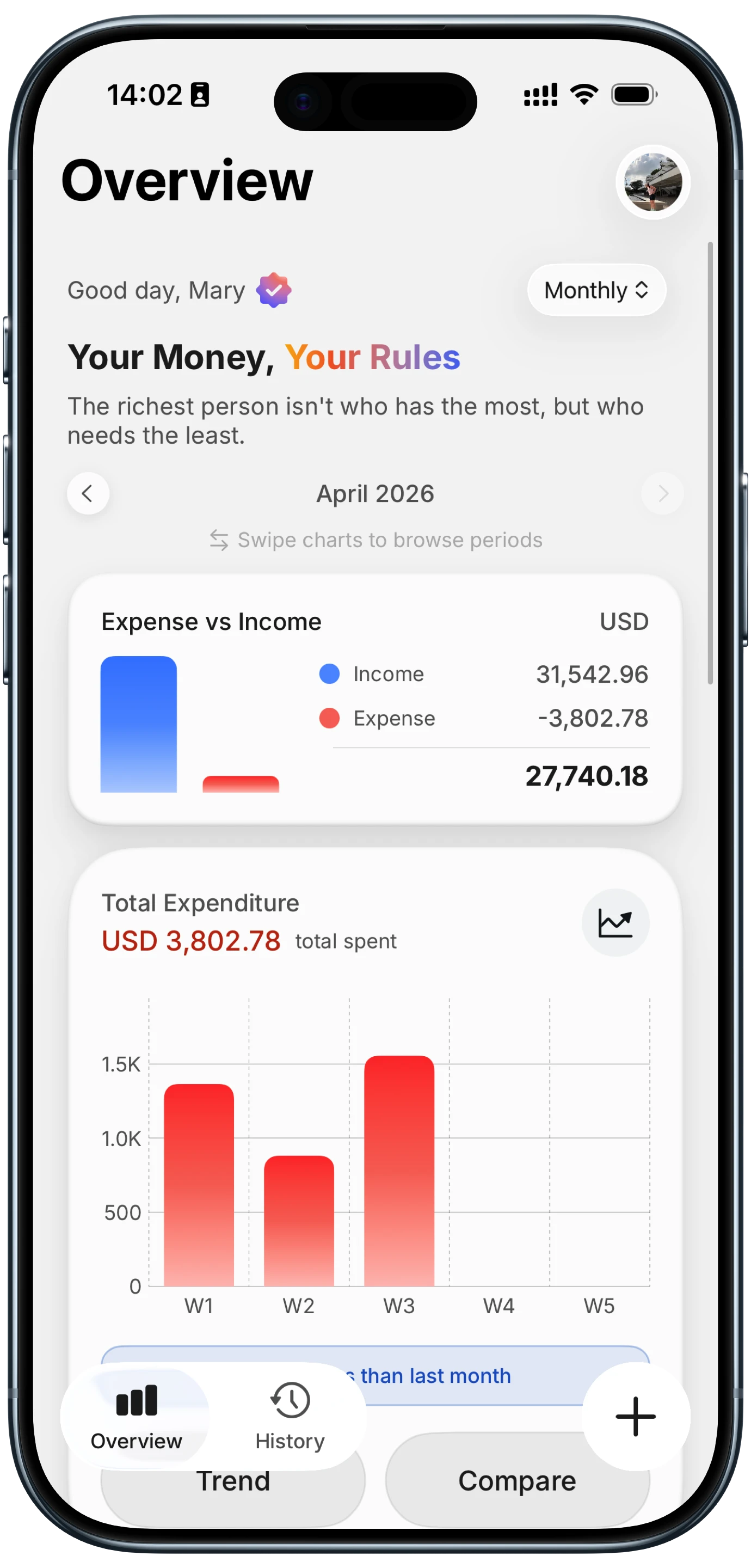
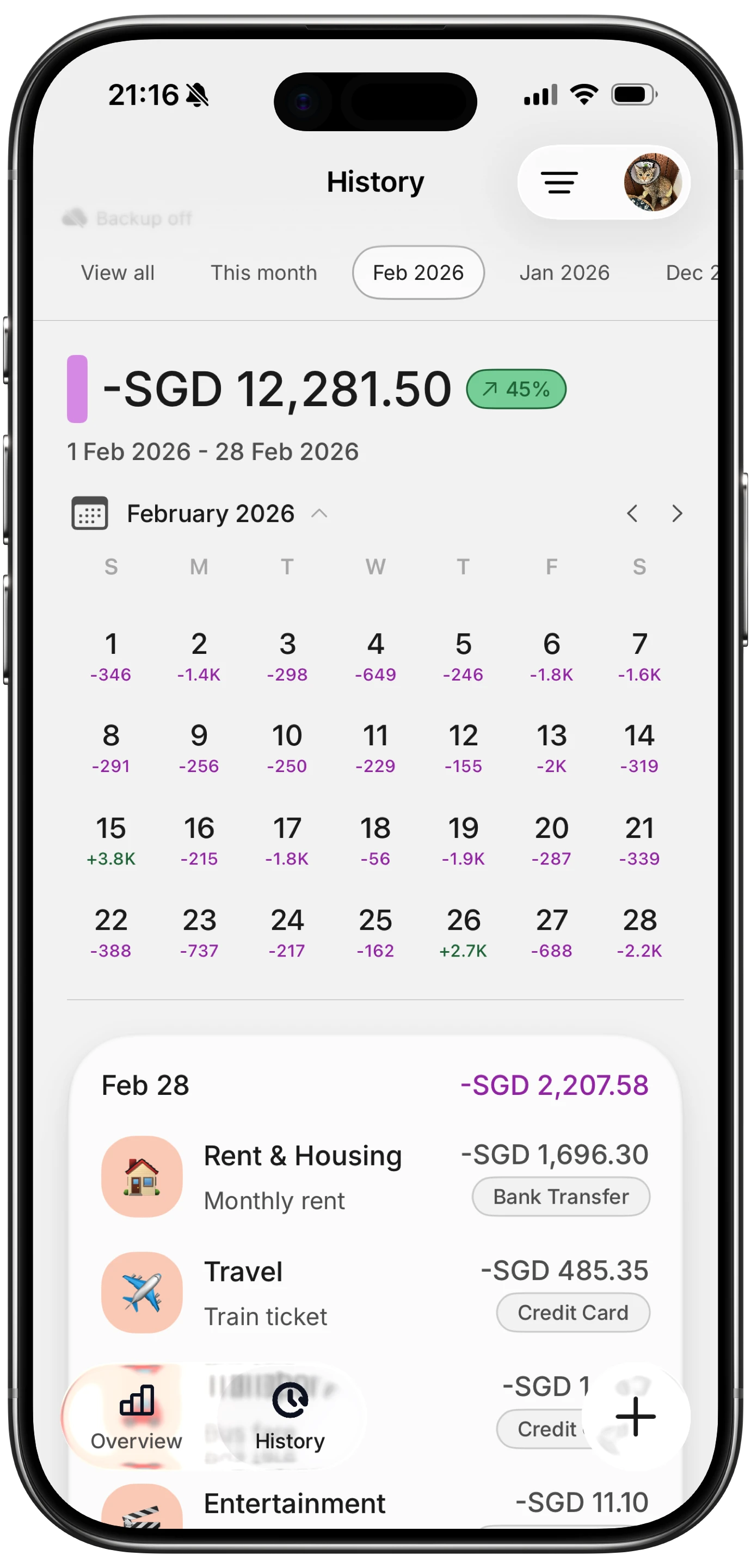
Start small. A $500 emergency fund covers most minor emergencies. Even $20 a week gets you there in six months. Once you have a basic buffer, the psychological pressure eases and it becomes easier to stick to your budget. An expense tracker like Finny can help you monitor progress by showing exactly how much you are setting aside each month.
Find Small Wins in Daily Life
Saving on a tight budget is not about one big sacrifice. It is about dozens of small, sustainable adjustments.
- Bring your own lunch. Packing lunch instead of buying it saves $100 to $150 per month for most people.
- Make coffee at home. A home-brewed cup costs roughly $0.25 compared to $5 or more at a coffee shop.
- Use the library. Free books, movies, music, and even digital subscriptions replace paid entertainment.
- Cancel unused memberships. Gym memberships you do not use, warehouse club fees for stores you rarely visit, and professional associations you no longer need all drain money silently.
- Drink more water. Replacing one daily soda, juice, or energy drink with water saves $30 to $60 a month and is better for your health.
None of these changes are dramatic on their own. Together, they can free up several hundred dollars a month. For a broader list beyond tight budgets, see our 50 money saving tips that actually work guide. For a deeper look at this mindset, our guide on what frugal living is explains how to spend less without sacrificing quality of life.
Stay Motivated When Progress Feels Slow
Saving money on a tight budget is a long game. Progress can feel painfully slow, especially in the early months. A few strategies help maintain momentum.
Track your wins. Write down every savings milestone, no matter how small. Completed a no spend week? Write it down. Visible progress reinforces the habit.
Focus on trends, not daily totals. A single bad spending day does not erase a good month. Look at your weekly and monthly patterns. If the overall trend is moving in the right direction, you are succeeding.
Reward yourself occasionally. Extreme restriction leads to burnout and binge spending. Budget a small amount for something you enjoy. A tight budget does not mean zero joy. It means being intentional about where joy comes from.
FAQ
How much should I save each month on a tight budget?
There is no universal number. The standard recommendation is 20% of after-tax income, but if that is not realistic right now, start with whatever you can. Even 2% to 5% builds the habit. The consistency matters more than the amount. Increase the percentage as your situation improves.
What is the fastest way to cut expenses when money is tight?
Start with recurring charges. Cancel unused subscriptions, negotiate bills, and switch to cheaper plans for services like internet and phone. These changes take effect immediately and produce savings every month without ongoing effort.
Can I save money without a detailed budget?
Yes. Even a simple rule like "spend less than I earn and save the difference" works if you track your spending. The tracking is the critical piece. Without it, you will not know whether your spending is aligned with your intentions. A basic expense tracker gives you that visibility without requiring a full budget.
Is it worth saving small amounts like $5 or $10 a week?
Absolutely. $10 per week is $520 per year. Over five years, that is $2,600 before interest. Small amounts also build the saving habit, which matters more than the dollar figure.
How do I save money when I have debt?
Focus on eliminating high-interest debt first, since credit card interest can erase any savings gains. At the same time, build a small emergency buffer of $500 to $1,000 to avoid going deeper into debt when surprises happen. Once high-interest debt is gone, redirect those payments into savings.
Start Small, Stay Consistent
Saving money on a tight budget is not about deprivation. It is about awareness and intention. When you know where your money goes, you can redirect it toward what actually matters to you. The strategies in this guide work individually, but they work best together. Pick two or three that fit your life, stick with them for a month, and build from there.
Ready to see exactly where your money goes each month?
Download Finny to track every expense quickly and spot the savings opportunities hiding in your daily spending.