You know you need an emergency fund. Every financial advisor says so. But knowing and doing are different things. The money that should go toward emergencies keeps getting spent on daily life, and the fund stays at zero.
Building an emergency fund fast requires more than good intentions. It requires a specific target, automated systems, and strategies that accelerate savings without making life miserable. This guide provides actionable steps to build your emergency fund as quickly as possible while maintaining a sustainable approach.
For a deeper understanding of what an emergency fund is and how to calculate the right amount, see our guide on what is an emergency fund. For broader saving strategies, check out budgeting for beginners.
Why Speed Matters for Emergency Funds
Every day without an emergency fund is a day you are exposed to financial risk. A car breakdown, medical bill, or job loss could arrive tomorrow. The faster you build your fund, the sooner you have protection.
Speed also builds momentum. A fund that grows visibly motivates continued saving. A fund that barely moves feels pointless. Quick progress creates the psychological reward that sustains the habit.
However, speed should not mean recklessness. Draining every dollar into savings then running out of grocery money defeats the purpose. The goal is the fastest sustainable pace: aggressive but realistic.
Set Your Emergency Fund Target
Before building fast, know what you are building toward.
Calculate Essential Monthly Expenses
Add up costs you cannot eliminate during an emergency:
| Category | Monthly Amount |
|---|---|
| Rent/Mortgage | $1,400 |
| Utilities | $180 |
| Groceries | $400 |
| Transportation | $300 |
| Insurance premiums | $250 |
| Minimum debt payments | $200 |
| Phone | $80 |
| Essential medications | $50 |
| Total Essential Expenses | $2,860 |
Do not include discretionary spending. In an emergency, dining out, entertainment, and shopping stop.
Multiply by Target Months
Standard recommendation: 3-6 months of essential expenses.
- 3 months: $2,860 × 3 = $8,580
- 6 months: $2,860 × 6 = $17,160
If you want a personalized number, our Emergency Fund Calculator can help you find your exact target based on your monthly expenses. Your target also depends on risk factors:
| Situation | Recommended Months |
|---|---|
| Dual income, stable jobs | 3 months |
| Single income, stable job | 4-6 months |
| Variable or freelance income | 6-9 months |
| Single earner with dependents | 6+ months |
| Health concerns or older car | 6+ months |
Set Milestone Targets
Large targets feel overwhelming. Break them into milestones:
- $1,000 starter fund: Covers minor emergencies
- 1 month of expenses: Serious buffer established
- 3 months of expenses: Standard protection
- 6 months of expenses: Full security
Celebrate each milestone. The psychological boost maintains motivation.
Strategies to Build Your Emergency Fund Fast
Strategy 1: Automate Immediately
The single most effective action is setting up automatic transfers before you convince yourself not to.
How to automate:
- Open a high-yield savings account (separate from checking)
- Set up automatic transfer on each payday
- Start with whatever amount you can manage
- Increase the amount every few months
Money that transfers automatically never enters your spending account. You cannot spend what you do not see.
Automation example:
- Bi-weekly paycheck: $2,000
- Automatic transfer: $150 per paycheck
- Monthly savings: $300
- Annual savings: $3,900
Strategy 2: Save Windfalls Completely
Unexpected money accelerates progress dramatically:
- Tax refund: Average refund is $2,800. One refund could fund a starter emergency fund entirely.
- Work bonus: Before lifestyle inflation absorbs it, transfer to savings.
- Gifts: Birthday or holiday cash goes to the fund.
- Rebates and refunds: Every returned item or cashback payment adds up.
- Selling unused items: Old electronics, clothes, furniture convert to cash.
Commit now: the next windfall goes entirely to your emergency fund until it reaches your target.
Strategy 3: Cut One Major Expense Temporarily
Identify one significant expense to eliminate or reduce for 3-6 months:
| Cut | Monthly Savings | 6-Month Total |
|---|---|---|
| Cancel streaming services | $50 | $300 |
| Pause gym membership | $60 | $360 |
| Cook all meals at home | $200 | $1,200 |
| Reduce one subscription | $30 | $180 |
| Downgrade phone plan | $40 | $240 |
These cuts are temporary. Once your emergency fund reaches target, you can restore spending. The sacrifice is finite; the security is permanent.
Strategy 4: Implement No-Spend Days
No-spend days are days where you buy nothing discretionary. For details, see what is a no spend day. For related savings habits, our guides on how to save money fast and money saving tips that work cover practical ways to redirect daily spending into your fund.
Quick implementation:
- Start with 1-2 no-spend days per week
- Track savings from each day
- Transfer the estimated savings to your emergency fund
If you normally spend $25 daily on discretionary purchases, each no-spend day saves $25. Eight no-spend days monthly equals $200 toward your emergency fund.
Strategy 5: Redirect Debt Payments
If you pay off a loan or credit card, redirect that payment to your emergency fund. You were already living without that money, so continuation feels natural.
Example:
- Car payment finishes: $350/month now available
- Redirect entire amount to emergency fund
- $350 × 12 months = $4,200 in one year
Do not let freed-up money dissolve into general spending. Assign it a new job immediately.
Strategy 6: Generate Temporary Extra Income
Short-term income boosts can accelerate your timeline significantly:
- Overtime at current job: Even a few extra hours weekly adds up
- Freelance work: Use existing skills for side projects
- Gig economy: Delivery, rideshare, or task-based work
- Sell services: Tutoring, pet sitting, lawn care, handyman work
- Sell belongings: Items collecting dust have value to someone
Commit all extra income to the emergency fund. This is temporary intensity for permanent security.
Strategy 7: Use the 1% Method
If aggressive saving feels impossible, start tiny and build:
- Save 1% of each paycheck this month
- Increase to 2% next month
- Continue increasing by 1% monthly
By month 12, you are saving 12% automatically. The gradual increase allows lifestyle adjustment without shock.
Example on $4,000 monthly income:
- Month 1: 1% = $40
- Month 6: 6% = $240
- Month 12: 12% = $480
- Total saved in year one: approximately $3,120
Where to Keep Your Emergency Fund
The right account matters for both growth and accessibility.
High-Yield Savings Account (Best Option)
Online banks offer 4-5% APY on savings accounts with (see our guide on what is a high yield savings account and current falling interest rates in 2026 context):
- FDIC insurance (safe up to $250,000)
- No monthly fees
- Easy transfers to checking when needed
- Interest that compounds while you save
Recommended approach: open a high-yield savings account at a different bank than your checking. The slight friction of transferring between banks reduces impulse withdrawals.
Money Market Account
Similar to savings accounts but may offer:
- Check-writing ability
- Debit card access
- Slightly different interest rates
Useful if you want direct emergency access without transfers.
Where NOT to Keep Emergency Funds
- Checking account: No interest, too easy to spend
- Under the mattress: No interest, theft risk, no insurance
- Investment accounts: Market can drop when you need money most
- CDs: Penalties for early withdrawal defeat the purpose
Emergency funds prioritize safety and access over growth.
Track Your Progress
Visible progress motivates continued saving.
Use a Savings Tracker
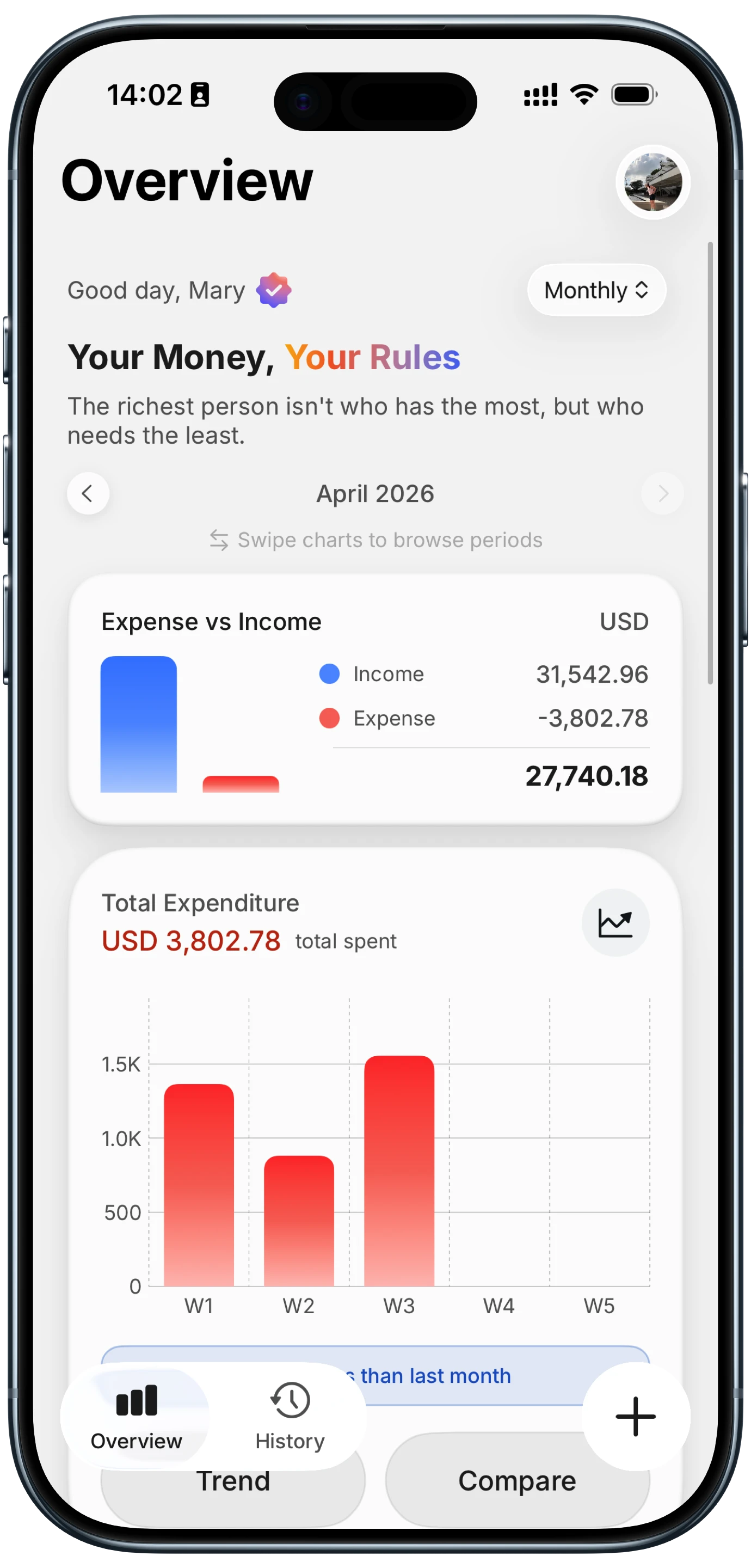
Finny lets you create savings goals and track progress visually. Seeing your emergency fund grow from $500 to $2,000 to $5,000 provides motivation that abstract numbers cannot.
Celebrate Milestones
When you hit $1,000, acknowledge it. When you reach one month of expenses, celebrate (cheaply). Positive reinforcement sustains the behavior.
Review Monthly
Check your progress monthly:
- How much did you save?
- Are automatic transfers happening?
- Can you increase the amount?
- What windfalls are coming that could accelerate progress?
How Long Will It Take
Timeline depends on your savings rate and target:
| Monthly Savings | Time to $1,000 | Time to $10,000 |
|---|---|---|
| $100 | 10 months | 8+ years |
| $200 | 5 months | 4+ years |
| $300 | 3.5 months | 3 years |
| $500 | 2 months | 20 months |
| $750 | 6 weeks | 14 months |
| $1,000 | 1 month | 10 months |
These timelines assume consistent saving without windfalls. Tax refunds, bonuses, and extra income can cut these times significantly.
What Happens After You Reach Your Target
Stop Active Building
Once your emergency fund reaches target, reduce contributions. You do not need to keep adding money indefinitely.
Redirect to Other Goals
Money that was building your emergency fund can now:
- Accelerate debt payoff
- Increase retirement contributions
- Fund sinking funds for planned expenses
- Build wealth through investments
Maintain the Fund
Keep the account. Add enough to offset any withdrawals and keep pace with expense increases. If rent goes up, your emergency fund target goes up too.
Replenish After Use
If you use the emergency fund legitimately, rebuild it immediately. Temporarily redirect money from other goals until the fund is whole again.
Common Questions About Building an Emergency Fund Fast
How fast can I realistically build an emergency fund?
With aggressive saving (20%+ of income) and windfalls, a $10,000 fund can be built in 12-18 months. A starter $1,000 fund can be built in 1-3 months even on modest income.
Should I build an emergency fund or pay off debt first?
Build a $1,000 starter fund first. Then focus on high-interest debt while making minimum payments on everything else. Once high-interest debt is paid, complete your full emergency fund.
What if I cannot afford to save anything?
Start with any amount: even $10 per paycheck. Review expenses for potential cuts. Consider temporary income increases. Something is always possible, even if small.
Can I invest my emergency fund to grow it faster?
No. Investment accounts can lose value exactly when you need the money. Emergency funds require guaranteed safety and immediate access. Accept lower returns for this protection.
What counts as a real emergency?
Emergencies are unexpected, necessary, and urgent. Job loss, medical bills, essential car repairs, and emergency home repairs qualify. Sales, vacations, and upgrades do not.
The Bottom Line
Building an emergency fund fast requires a clear target, automated savings, and multiple strategies working together. Set your target based on actual expenses. Automate transfers before you talk yourself out of it. Layer additional strategies: cutting expenses, saving windfalls, generating extra income.
Speed matters because every day without protection is a day of risk. But sustainable speed matters more than reckless intensity. Find the aggressive-but-manageable pace that works for your situation.
Once built, your emergency fund provides security that changes how you experience financial life. Unexpected expenses become inconveniences rather than crises. Job uncertainty becomes manageable rather than terrifying. This peace of mind is worth the temporary sacrifice required to build it.
Ready to track your emergency fund progress?
Download Finny to set savings goals, track your progress, and see exactly how your daily spending affects your ability to save. Clear visibility accelerates results.