How to Save Money Fast on a Low Income
The advice sounds simple: spend less, save more. But when your income barely covers the essentials, that advice feels disconnected from reality. You are not bad with money. You are working with less of it.
How to save money fast on a low income is not about extreme deprivation or skipping meals. It is about making intentional choices with the money you do have, cutting waste you did not know existed, and building a system that grows your savings week by week. Even small amounts add up when the system is consistent.
This guide covers practical strategies that work on any income level. No gimmicks, no shame, just steps you can start using today.
Why Saving on a Low Income Feels Impossible
Before getting to the strategies, it helps to understand why saving feels so difficult when money is tight.
Every dollar is spoken for. When your paycheck covers rent, utilities, food, and transportation with little left over, there is no obvious "savings" category. It feels like there is nothing to redirect.
Unexpected expenses derail progress. A car repair, a medical bill, or a broken appliance can wipe out weeks of careful saving in a single day. Without a buffer, these events push people further behind.
Financial advice assumes a higher income. Tips like "cancel your gym membership" or "stop buying lattes" assume you have those luxuries in the first place. Generic advice often misses the reality of tight budgets.
None of this means saving is impossible. It means the approach needs to match your actual situation. The strategies below are designed for people who are starting with very little margin.
1. Know Exactly Where Your Money Goes
You cannot find extra money if you do not know where it is going. The first step is tracking every expense for at least two weeks, ideally a full month.
Most people discover spending they did not realize was happening. Small recurring charges, convenience purchases, and rounding errors in mental math create leaks that are invisible until you write them down.
You do not need a complicated spreadsheet. A simple list on your phone works. If you want something faster, an expense tracking app can categorize purchases automatically. Our guide on how to track expenses explains different methods and how to pick one that fits your routine.
2. Build a Bare-Bones Budget
Once you know where your money goes, create a budget that reflects your actual income. Not a wishful-thinking budget. A realistic one.
Start by listing your fixed expenses: rent, utilities, insurance, minimum debt payments, and transportation. These are non-negotiable in the short term.
Next, list your variable expenses: groceries, gas, personal care, and anything else that fluctuates month to month. This is where most of the savings opportunities hide.
The 50/30/20 rule is a popular starting point, but on a low income, your needs category might take up 70% or more. That is fine. Adjust the ratios to fit reality. Even a 70/20/10 split, where 10% goes to savings, builds momentum over time. For a deeper look at budgeting methods, see our how to budget money guide.
3. Cut the Expenses You Will Not Miss
This is not about cutting everything enjoyable from your life. It is about identifying spending that does not meaningfully improve your day.
Subscriptions you forgot about. Check your bank statement for recurring charges. Streaming services, app subscriptions, and memberships you signed up for months ago and stopped using are common culprits. Even $5 and $10 charges add up to $60 to $120 per year each.
Convenience fees. ATM fees, delivery charges, rush shipping, and single-serving packaging all cost more for the same result. Batch your errands, cook at home more often, and plan ahead to avoid paying extra for convenience.
Brand-name groceries. Store-brand products are typically 20% to 30% cheaper than name brands and are often made in the same facilities. Switching on staple items alone can save $50 to $100 per month for a household.
Unused memberships. Gym memberships, warehouse club fees, and subscription boxes are worth auditing annually. If you have not used it in the past 30 days, cancel it.
The goal is not to eliminate all spending. It is to redirect money from things that do not matter to you toward things that do, including your savings.
4. Use the No-Spend Day Strategy
A no-spend day is a day where you spend zero dollars on non-essential items. Bills and groceries you planned are fine. Impulse purchases, takeout, and online shopping are not.
If your average discretionary spending is $15 per day, adding just four no-spend days per month saves $60. That is $720 over a year. On a low income, that amount can fund an emergency savings cushion or pay off a small debt.
Start with one or two no-spend days per week. Choose days where you are less likely to face temptation, like days you work from home or have food already prepped. As the habit builds, you can add more.
5. Negotiate and Reduce Fixed Bills
Many fixed expenses are more flexible than they appear.
Call your service providers. Phone companies, internet providers, and insurance carriers often have lower-rate plans or retention discounts. A 15-minute phone call can save $20 to $50 per month. Ask directly: "Is there a lower plan available, or any current promotions?"
Reduce utility costs. Unplugging devices when not in use, switching to LED bulbs, adjusting your thermostat by just two degrees, and washing clothes in cold water can reduce energy bills by $20 to $40 per month.
Review insurance annually. Shop around for auto and renter's insurance each year. Rates vary widely between companies, and loyalty rarely earns you the best price. Bundling policies or raising your deductible can lower premiums.
Refinance or restructure debt. If you carry high-interest debt, look into balance transfer options, income-driven repayment plans for student loans, or simply calling your creditor to negotiate a lower rate.
6. Save Small Amounts Consistently
The biggest misconception about saving is that you need a large amount to start. You do not. Consistency matters more than size.
Save $5 per week, and you will have $260 at the end of the year. Save $10 per week, and you will have $520. These are not life-changing amounts on their own, but they build the habit and create a cushion that prevents small emergencies from becoming financial crises.
Set up an automatic transfer on payday, even if it is just $5. Moving the money before you see it in your checking account makes it easier to leave it alone. This "pay yourself first" approach works because it removes the decision from the equation.
If your income varies, use a percentage instead of a fixed amount. Setting aside even 2% to 5% of each paycheck creates a savings habit that scales with your earnings.
7. Tackle High-Interest Debt First
Debt and savings compete for the same dollars, but high-interest debt actively works against you. Credit card interest rates averaging 20% or more mean every dollar of carried balance costs you money.
Focus on minimum payments across all debts, then put any extra toward the highest-interest balance. Once that is paid off, roll that payment into the next highest. This avalanche method saves the most in interest over time.
If you need a psychological boost, the snowball method (paying off the smallest balance first) can build momentum. Either approach is better than paying only minimums. For a detailed comparison, check out our guide on how to stop overspending, which also covers strategies for keeping spending under control while paying down debt.
8. Find Free or Low-Cost Alternatives
Saving money does not mean sitting at home doing nothing. It means finding less expensive ways to do what you enjoy.
Entertainment. Libraries offer free books, movies, and music streaming. Many cities have free community events, park programs, and museum days. Swap paid streaming services monthly instead of running three or four simultaneously.
Fitness. Free workout videos, walking, running, and bodyweight exercises cost nothing. Community centers often have low-cost gym access.
Food. Batch cooking, meal prepping, and using what you already have in the pantry before buying more can cut food costs significantly. Plan meals around weekly grocery sales and seasonal produce.
Transportation. Carpooling, public transit, biking, and combining errands into fewer trips all reduce costs. If you drive, apps that compare gas prices can save a few dollars per fill-up.
9. Build a Starter Emergency Fund
Before you focus on long-term savings goals, build a small emergency fund. Even $500 can cover a car repair, a medical copay, or an unexpected bill without resorting to credit cards or payday loans.
This is not about saving for retirement yet. This is about creating a buffer so that one bad week does not undo months of progress. Once you have $500, aim for $1,000. Once you hit $1,000, you can start splitting your savings between your emergency fund and other goals.
Keep this money in a separate account, ideally a high-yield savings account, so it earns interest and is slightly harder to access on impulse.
10. Track Your Progress and Adjust
Saving money is not a set-it-and-forget-it project. Your expenses change, your income shifts, and strategies that worked last month might need adjusting.
Review your spending and savings at least once a month. Look for categories where spending crept up, subscriptions that restarted, or new expenses that appeared. Small corrections prevent small leaks from becoming big problems.
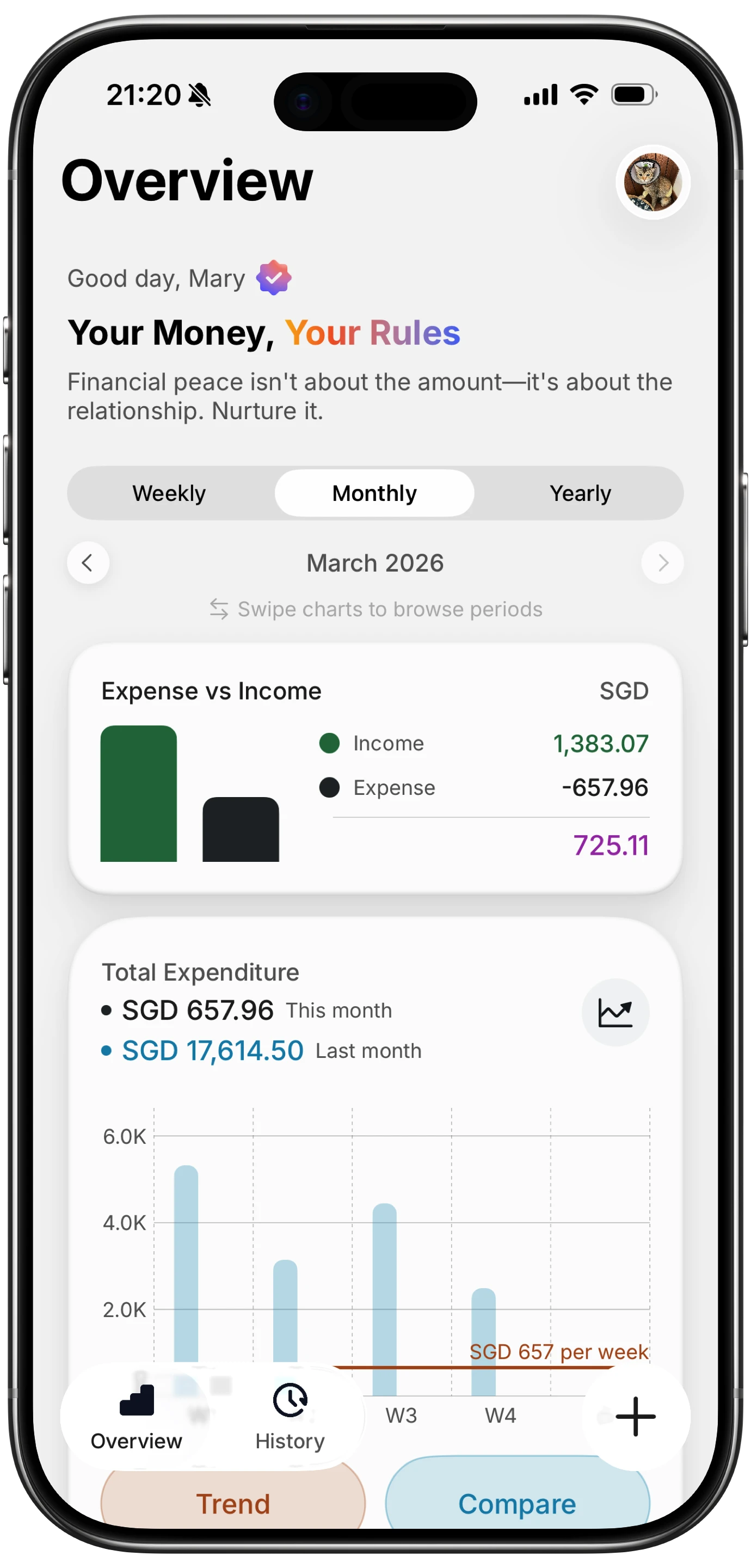
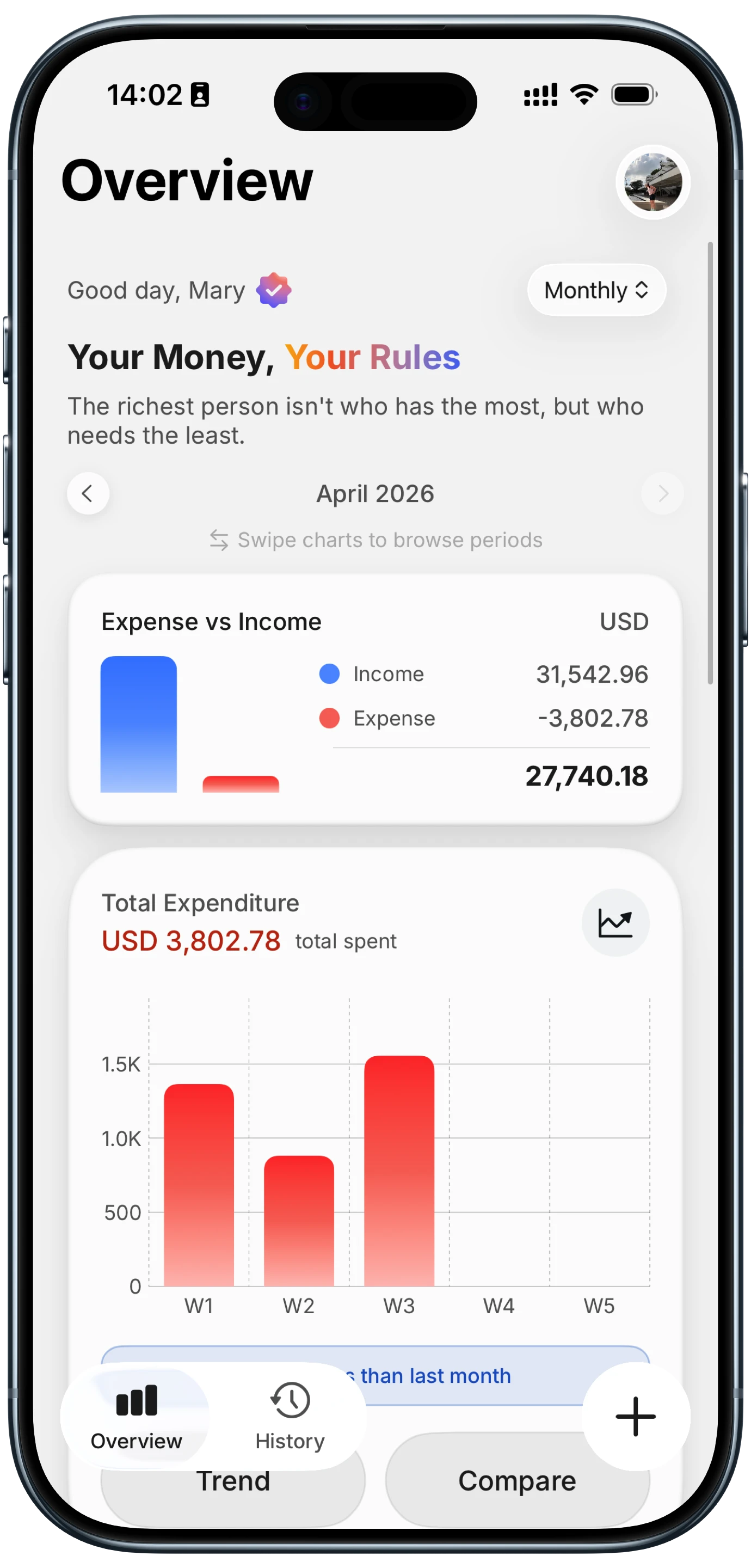
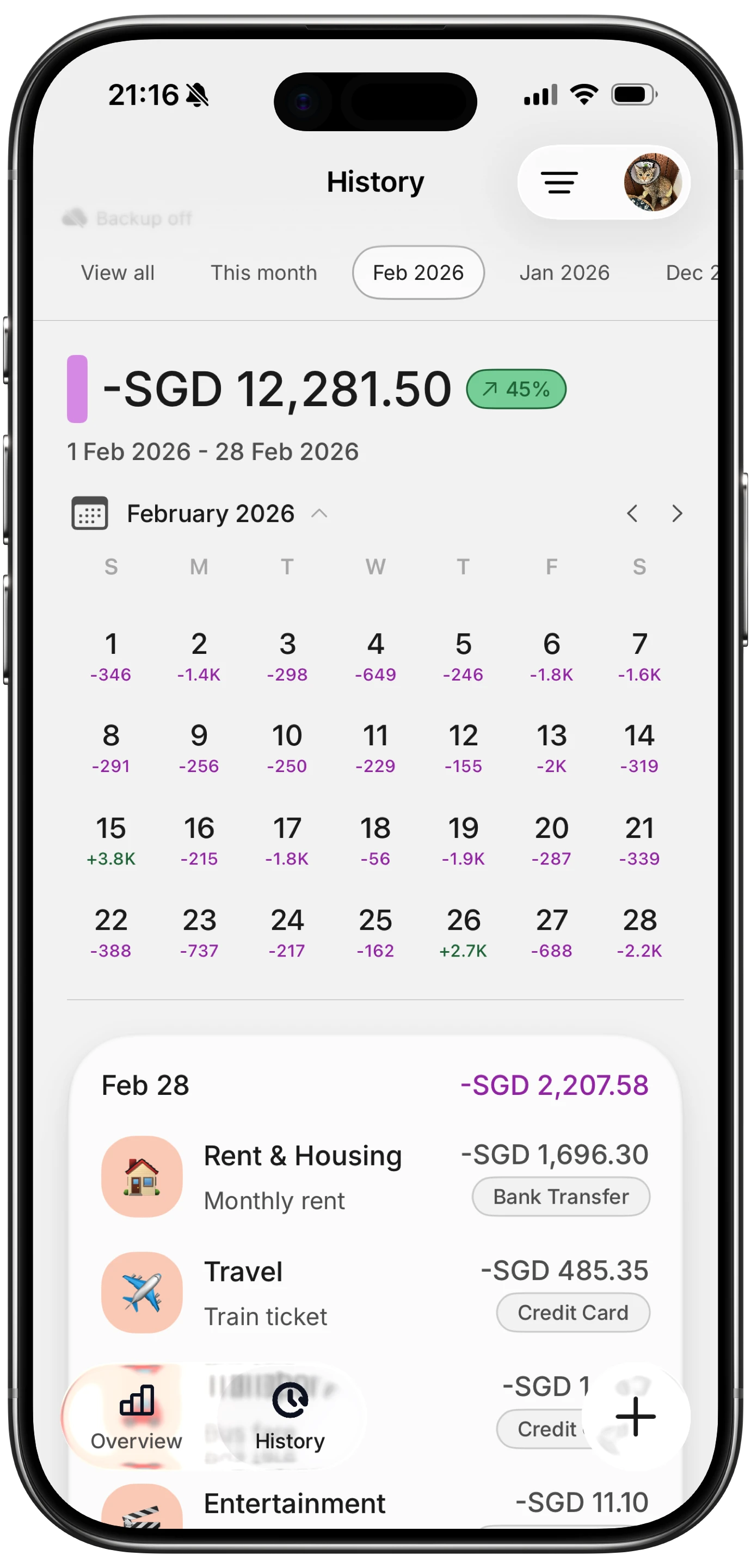
Apps like Finny make this easier by categorizing expenses automatically and showing spending trends over time. The free tier covers basic tracking, and the Pro plan costs a low monthly price if you want detailed analytics and AI-powered insights. Either way, the point is having a clear, up-to-date picture of where your money goes.
Quick Wins You Can Do This Week
If you want to start saving immediately, here are five things you can do before the week is out:
- Check your bank statement for subscriptions you forgot about. Cancel at least one.
- Set up a $5 automatic weekly transfer to a savings account.
- Plan your meals for the next seven days using groceries you already have, then buy only what is missing.
- Call one service provider (phone, internet, or insurance) and ask for a lower rate.
- Pick two days this week as no-spend days. Track what you would have spent.
These five steps alone can free up $50 to $150 in the first month. That is real money, and it compounds as you keep going. For more ideas, see our full list of ways to save money on a tight budget.
How Much Can You Actually Save?
Here is a realistic look at monthly savings from the strategies above, based on a low income:
| Strategy | Monthly Savings |
|---|---|
| Cancel unused subscriptions | $10 to $30 |
| Switch to store-brand groceries | $40 to $80 |
| Four no-spend days per month | $40 to $80 |
| Negotiate one fixed bill | $15 to $40 |
| Reduce energy costs | $15 to $30 |
| Cut convenience spending | $20 to $50 |
| Total potential savings | $140 to $310 |
These are conservative estimates. Your actual savings depend on your spending patterns, but the point is clear: saving on a low income is not about one big move. It is about stacking small wins.
Frequently Asked Questions
How much should I save each month on a low income?
Any amount is better than nothing. If you can save 5% to 10% of your income, that is a strong start. For someone earning $2,000 per month, that means $100 to $200. If that feels out of reach, start with $20 per month and increase gradually as you cut expenses.
What is the fastest way to save $1,000 on a low income?
Combine expense cutting with a focused savings sprint. Cancel unnecessary subscriptions, reduce grocery spending with meal planning, add no-spend days, and direct every freed-up dollar to savings. Most people can reach $1,000 in three to six months using this approach.
Should I save money or pay off debt first?
Build a small emergency fund of $500 to $1,000 first. This prevents you from going deeper into debt when unexpected expenses hit. After that, focus on high-interest debt while continuing to save a small amount each month.
How do I save money when I live paycheck to paycheck?
Start by tracking every expense for a month to find spending you can redirect. Even paycheck-to-paycheck budgets usually have $30 to $100 in spending that can be cut without affecting your quality of life. Automate a small transfer on payday so savings happen before spending does. Our guide on budgeting apps under $5 covers affordable tools that can help.
Is it worth saving $5 or $10 per week?
Absolutely. $10 per week becomes $520 in a year. That is enough to cover most minor emergencies, start a sinking fund, or contribute to a specific goal. The habit of saving regularly matters more than the amount. Once the habit is established, increasing the amount becomes much easier.
Start Where You Are
Saving money on a low income is harder than saving on a high one. That is just reality. But harder does not mean impossible. The strategies in this guide are designed to work with limited resources, not against them.
You do not need to implement everything at once. Pick two or three strategies that fit your life, start this week, and build from there. Progress is not always linear, but every dollar you save is a dollar working for you instead of against you.
If tracking your spending manually feels like too much effort, give Finny a try. The free tier lets you log expenses with a single tap, and you can see exactly where your money goes without connecting your bank account. Sometimes the simplest tools make the biggest difference.
Download Finny and start tracking your spending today.