Small daily purchases add up faster than most people realize. A coffee here, a snack there, an impulse buy online. Individually, these seem insignificant. Together, they drain hundreds of dollars monthly.
A no spend day is exactly what it sounds like: a day where you spend zero money on non-essential items. No coffee runs, no takeout, no online shopping, no vending machines. Bills that auto-pay are fine. Buying groceries you planned is acceptable. But discretionary spending stops completely for 24 hours. For a more intensive version of the same idea, see our explainer on what is a spending fast.
This guide explains what no spend days accomplish, how to implement them, and how to track your progress. For broader budgeting approaches, see our budgeting for beginners guide.
What Counts as a No Spend Day
The rules vary by person, but a standard definition includes:
Spending that breaks a no spend day:
- Coffee or drinks purchased outside home
- Meals at restaurants or takeout
- Snacks, candy, or impulse food purchases
- Online shopping (clothes, gadgets, entertainment)
- In-app purchases or subscriptions started
- Entertainment tickets or rentals
- Any unplanned purchase
Spending that does NOT break a no spend day:
- Pre-scheduled automatic bills
- Essential groceries you planned to buy
- Medical expenses or prescriptions
- Gas if needed for work commute
- Work-related required expenses
- Previously committed obligations
The goal is eliminating discretionary, unplanned spending. Necessary life expenses do not count against you.
Why No Spend Days Work
Breaks Automatic Spending Habits
Many purchases happen on autopilot. You pass the coffee shop; you buy coffee. You feel bored; you browse Amazon. No spend days interrupt these patterns and make you aware of how often you spend without thinking.
Reveals Spending Triggers
On a no spend day, you notice urges to purchase. Stress, boredom, social pressure, convenience: each trigger becomes visible when you cannot act on it. Understanding your triggers helps control them.
Creates Immediate Savings
Every no spend day saves whatever you would have spent. If your typical discretionary daily spending is $25, each no spend day keeps $25 in your account. Ten no spend days per month equals $250 saved.
Builds Financial Discipline
Saying no to purchases strengthens your ability to delay gratification. This discipline extends beyond no spend days into general spending decisions.
Resets Lifestyle Inflation
After a few no spend days, expensive habits feel less necessary. You remember you can pack lunch, make coffee at home, and find free entertainment. This awareness persists even on regular spending days.
How Many No Spend Days Should You Have
There is no universal rule, but common approaches include:
| Approach | No Spend Days | Notes |
|---|---|---|
| Beginner | 1-2 per week | Start building the habit |
| Moderate | 3-4 per week | Meaningful budget impact |
| Aggressive | 5+ per week | Maximum savings, requires planning |
| Challenge | Entire month | Occasional reset, not sustainable long-term |
Start with one day per week. If weekends involve more social spending, try a weekday first. Gradually add more days as the habit becomes comfortable.
How to Plan a Successful No Spend Day
Prepare the Night Before
Set yourself up for success:
- Pack lunch and snacks: Hunger drives impulse purchases
- Prep coffee or tea: Skip the morning cafe stop
- Plan free entertainment: Know what you will do for fun
- Remove shopping temptations: Log out of shopping sites, delete apps temporarily
- Tell someone: Accountability helps
Choose Easier Days First
Some days are naturally harder. Social events, stressful workdays, or times when you typically treat yourself are challenging for no spend attempts. Start with days that have fewer triggers.
Have Free Alternatives Ready
When you feel the urge to spend, you need something else to do:
- Instead of buying coffee: Make it at home, enjoy slowly
- Instead of lunch out: Eat your packed lunch somewhere pleasant
- Instead of online shopping: Take a walk, read, exercise
- Instead of paid entertainment: Free library events, parks, home activities
- Instead of stress shopping: Call a friend, journal, meditate
Allow Planned Exceptions
If you need to buy gas for your commute or pick up a prescription, do it. No spend days target discretionary spending, not survival. Being too strict leads to quitting.
How to Track No Spend Days
Tracking creates accountability and reveals patterns. Several methods work:
Calendar Marking
Use a physical or digital calendar. Mark each successful no spend day with a symbol or color. Seeing a streak of successful days motivates continuation.
Expense Tracker Categories
In your expense tracking app, the easiest way to verify a no spend day is checking your daily transactions. If no discretionary spending appears, the day counts.
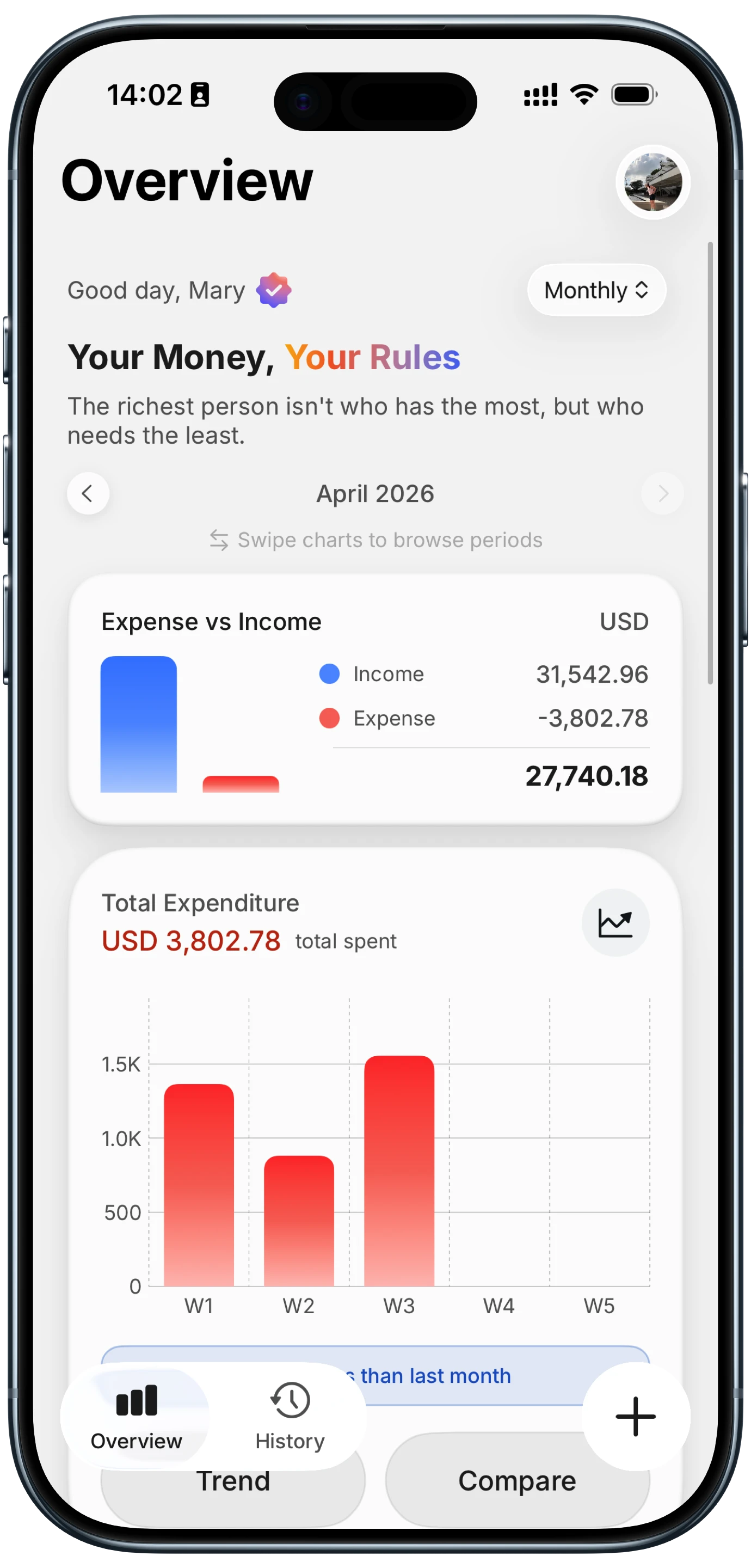
Finny shows daily spending totals and transaction lists. A day with zero or only essential expenses confirms your no spend day succeeded.
Dedicated No Spend Tracker
Some people create a simple tracker:
| Date | No Spend? | Notes |
|---|---|---|
| Jan 1 | Yes | Packed lunch, made coffee |
| Jan 2 | No | Bought coffee, $5 |
| Jan 3 | Yes | Worked from home |
| Jan 4 | Yes | Grocery trip (planned) |
The notes help identify patterns: which days succeed, which fail, and why.
Monthly Tallies
At month end, count your no spend days. Track this number over time. Are you improving? Holding steady? Slipping? Monthly totals reveal trends that daily tracking might miss.
No Spend Day Challenges
Weekly Challenge
Commit to one no spend day per week for a month. Four successful days is a reasonable starting goal.
Weekend Challenge
Weekends often involve discretionary spending. Try one no spend weekend per month: both Saturday and Sunday without non-essential purchases.
No Spend Week
Choose a week with no social obligations and attempt seven consecutive no spend days. This requires significant meal prep and entertainment planning but provides a powerful reset.
No Spend Month
The extreme version: 30 days of only essential spending. People attempt this to pay off debt, build emergency savings quickly, or break serious overspending habits. Not sustainable long-term but effective for short-term goals.
What to Do with No Spend Day Savings
The money you do not spend needs a destination, or it will eventually get spent anyway.
Track the Amount
At day end, estimate what you would have spent. If you typically buy a $6 coffee and $15 lunch, your no spend day saved $21.
Transfer to Savings
Move that amount to a savings account. Watching your "no spend savings" grow provides tangible motivation. Some people set up a dedicated sub-account just for this purpose.
Apply to Financial Goals
Direct no spend savings toward specific goals:
- Emergency fund building
- Debt payoff (extra principal)
- Vacation fund
- Large purchase savings
- Investment contributions
Celebrate Milestones
When no spend savings reach certain amounts ($100, $500, $1,000), acknowledge the achievement. This positive reinforcement sustains the habit.
Common No Spend Day Mistakes
Being Too Strict
If you count necessary gas or a prescription against yourself, you will fail frequently and feel discouraged. Define reasonable rules that target discretionary spending, not all spending.
Not Preparing
Attempting a no spend day without planning leads to situations where spending feels necessary. Prepare food, entertainment, and alternatives in advance.
Compensating the Next Day
Some people "celebrate" a successful no spend day by overspending the following day. This defeats the purpose. No spend days should reduce total monthly spending, not shift it around.
Giving Up After One Failure
A broken no spend day is not a failed month. Reset and try again. Progress comes from the overall pattern, not perfection.
Not Tracking
If you do not track no spend days, you cannot see progress or patterns. The habit fades without measurement and accountability.
No Spend Days and Your Budget
No spend days complement other budgeting approaches:
With Zero-Based Budgeting
In zero-based budgeting, every dollar has a purpose. No spend days reduce the dollars needed for discretionary categories, freeing money for savings or debt payoff.
With Pay Yourself First
After automating savings via pay yourself first, no spend days help you live within the remaining amount. Less discretionary spending means easier management of what is left. For the broader habit of resisting unplanned purchases, see how to stop overspending.
With Expense Tracking
Tracking every expense makes no spend days verifiable. You can look at your daily transaction list and confirm: today, you spent nothing discretionary.
The Bottom Line
A no spend day is a day where you avoid all discretionary spending. It breaks automatic purchasing habits, reveals spending triggers, and creates immediate savings.
Start with one day per week. Prepare by packing food, planning free activities, and removing temptations. Track your no spend days to build accountability and see progress.
The savings from no spend days, when directed toward financial goals, compound over time. Ten no spend days per month at $25 daily discretionary spending equals $250 monthly or $3,000 annually, not from earning more but from spending less on things you did not need anyway.
Common Questions About No Spend Days
What is a no spend day?
A no spend day is a day when you do not spend money on non-essential items. Necessary expenses like bills, gas for work, and planned groceries are acceptable. Discretionary purchases like coffee, takeout, and online shopping are not.
How many no spend days should I have per month?
Start with 4-8 per month (1-2 per week). Increase as the habit becomes easier. Some people aim for 15+ per month during aggressive saving periods.
What if I need to buy something essential on a no spend day?
Essential purchases do not break your no spend day. The goal is eliminating discretionary spending, not avoiding all transactions. Use judgment about what qualifies as essential.
How do I track no spend days?
Use a calendar to mark successful days, check your expense tracker for zero-discretionary-spending days, or keep a simple log. Monthly totals help you see progress over time.
Ready to track your no spend days and see where your money goes?
Download Finny to log every expense and verify your no spend days. Clear spending visibility makes it easy to spot discretionary purchases and celebrate days when you successfully spent nothing.