Your car breaks down. Your company announces layoffs. A medical bill arrives that insurance does not fully cover. These situations share one thing: they demand money you were not planning to spend.
An emergency fund is cash set aside specifically for these moments. It sits untouched during normal life, then covers essential expenses when income stops or unexpected costs appear. Without one, emergencies become debt. With one, emergencies become inconveniences.
This guide explains what qualifies as an emergency fund, how to calculate the right amount based on your actual spending, and how to build one without derailing your regular budget. For strategies on building your fund quickly, see our detailed guide on how to build an emergency fund.
What Is an Emergency Fund
An emergency fund is money reserved exclusively for unexpected financial emergencies. It is not savings for a vacation, a new phone, or holiday gifts. It is protection against events that threaten your financial stability.
True emergencies typically include:
- Job loss: Income stops but expenses continue
- Medical emergencies: Costs beyond what insurance covers
- Major car repairs: Transportation you need for work
- Emergency home repairs: Roof leak, broken furnace, burst pipe
- Family emergencies: Unexpected travel or support needs
An emergency fund serves as self-insurance. Instead of turning to credit cards, personal loans, or family when crisis hits, you turn to your own reserves.
Why Emergency Funds Matter
Prevents Debt Spirals
Without cash reserves, emergencies go on credit cards. Credit card interest compounds. What started as a $2,000 car repair becomes $3,000 or more as interest accumulates and minimum payments barely touch the principal.
Emergency funds break this cycle. You pay cash, avoid interest, and recover faster.
Reduces Financial Stress
Money stress affects health, relationships, and job performance. Knowing you can handle a $1,000 or $5,000 emergency without panic changes how you experience daily life. The fund may sit unused for years, but the security it provides is constant.
Provides Decision Time
Emergencies often require quick decisions. Without money, you take the first option available, which is rarely the best one. With reserves, you can shop for quotes, negotiate, or wait for better timing.
Protects Long-Term Goals
Without an emergency fund, every unexpected expense raids your other savings. The retirement contribution stops. The house down payment fund gets depleted. The investment account gets liquidated at a loss.
A proper emergency fund insulates your long-term goals from short-term disruptions. Once you have your emergency fund in place, our guide on how to save money fast covers strategies for accelerating your other savings goals.
How Much Emergency Fund Do You Need
The standard advice is "3-6 months of expenses." This is reasonable but incomplete. The right amount depends on your actual spending and your specific risk factors.
Step 1: Calculate Your Monthly Essential Expenses
Essential expenses are costs you cannot eliminate during an emergency:
| Category | Typical Items |
|---|---|
| Housing | Rent/mortgage, property tax, insurance |
| Utilities | Electric, gas, water, internet, phone |
| Food | Groceries (not restaurants) |
| Transportation | Car payment, insurance, gas, or transit pass |
| Healthcare | Insurance premiums, medications |
| Debt payments | Minimum payments on existing debt |
| Childcare | If required for work |
Do not include discretionary spending like entertainment, dining out, subscriptions, or shopping. In an emergency, these stop.
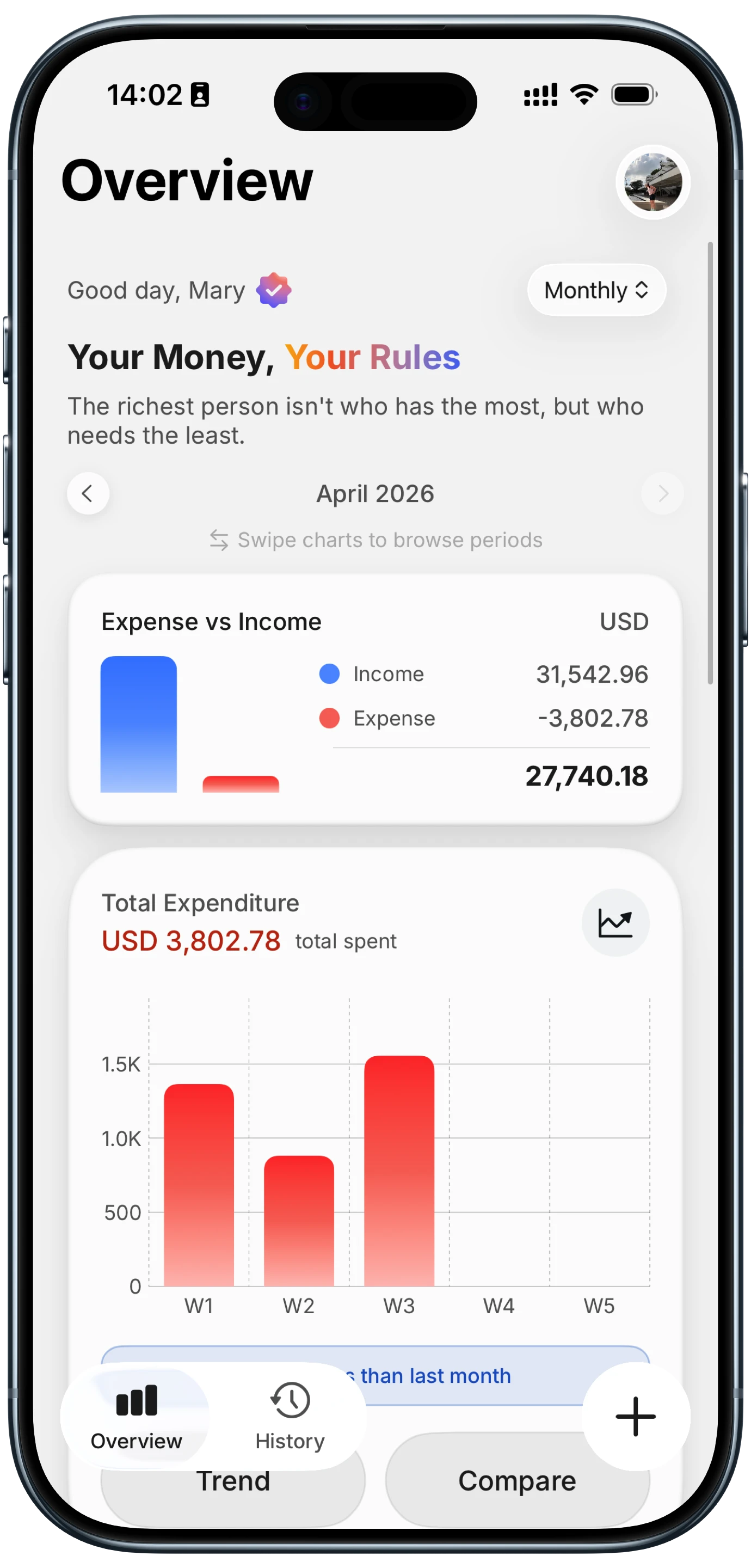
To calculate accurately, review your actual spending history. An expense tracking app like Finny shows exactly where your money goes each month. Filter for essential categories and sum the totals.
Example calculation:
| Essential Category | Monthly Amount |
|---|---|
| Rent | $1,500 |
| Utilities | $200 |
| Groceries | $400 |
| Car payment + insurance | $450 |
| Gas | $150 |
| Health insurance | $300 |
| Medications | $50 |
| Minimum debt payments | $200 |
| Total Essential Expenses | $3,250 |
Step 2: Determine Your Risk Level
Not everyone needs the same number of months covered. Consider these factors:
Higher risk (need 6+ months):
- Single income household
- Self-employed or freelance
- Commission-based income
- Industry with frequent layoffs
- Chronic health conditions
- Older car or aging home systems
- No family support network
Lower risk (3 months may suffice):
- Dual income household
- Stable government or union job
- Multiple income streams
- Strong family support network
- Excellent health insurance
- Newer car and home
Step 3: Calculate Your Target
Multiply essential monthly expenses by your risk-appropriate months:
- 3 months: $3,250 × 3 = $9,750
- 6 months: $3,250 × 6 = $19,500
- 9 months: $3,250 × 9 = $29,250
For most people, the target falls between $10,000 and $25,000. If you want a quick answer tailored to your situation, our Emergency Fund Calculator can estimate your target based on your monthly expenses. This sounds like a lot, but remember: you build it over time, and once built, it only needs occasional replenishment.
Where to Keep Your Emergency Fund
Emergency funds need three qualities: safety, liquidity, and some return.
High-Yield Savings Account (Recommended)
Online banks offer savings accounts paying 4-5% APY (see what is a high yield savings account and the current falling interest rates in 2026 context) with:
- FDIC insurance up to $250,000
- Instant or next-day transfers to checking
- No risk of loss
- No penalties for withdrawal
This is the ideal home for emergency funds. The money earns interest while remaining completely accessible.
Money Market Account
Similar to high-yield savings with slightly different features. Often includes check-writing or debit card access, which can be useful for emergencies but also creates temptation for non-emergencies.
Where NOT to Keep Emergency Funds
- Checking account: Too easy to spend accidentally. No interest.
- Investments: Stock market can drop 30% right when you need the money.
- CDs: Penalties for early withdrawal defeat the purpose.
- Cash at home: No interest, risk of theft or loss, temptation to spend.
How to Build an Emergency Fund
Start with a Starter Fund
If you have zero savings, aim for $1,000 first. This covers minor emergencies (car repair, medical copay, appliance breakdown) while you work toward the full amount.
Automate Contributions
Set up automatic transfers from checking to your emergency savings on payday. Treat it like a bill. If you wait until month-end to transfer "whatever is left," nothing will be left.
Use Windfalls
Tax refunds, bonuses, gifts, and rebates accelerate your progress. Commit to putting at least half of any windfall into the emergency fund until it reaches your target.
Cut One Expense Temporarily
Cancel one subscription or reduce one discretionary category until your starter fund is complete. The sacrifice is temporary; the security is permanent.
Track Your Progress
Watching your emergency fund grow provides motivation. Log contributions in your expense tracker or set up a simple spreadsheet. Seeing $1,000 become $2,000 then $5,000 builds momentum.
Using Your Expense History to Set the Right Target
Generic advice cannot account for your specific situation. Your actual spending data can.
Review 6-12 Months of Expenses
Using Finny or your bank statements, categorize spending from the past 6-12 months. Identify:
- Fixed essentials: Same amount every month (rent, insurance premiums)
- Variable essentials: Fluctuates but necessary (groceries, utilities, gas)
- Discretionary: Could be eliminated in emergency (dining, entertainment, shopping)
Calculate Your "Emergency Budget"
Sum only fixed and variable essentials. This is what you would spend during a crisis when discretionary spending stops.
Most people find their emergency budget is 60-70% of their normal spending. If you spend $5,000 monthly but $1,500 is discretionary, your emergency budget is $3,500.
Stress Test Your Number
Ask yourself:
- Could I live on this for 3-6 months?
- What would I cut first if income stopped today?
- Are there any essentials I forgot to include?
Adjust until the number feels realistic for your life.
Emergency Fund vs Other Savings
Emergency Fund vs Sinking Fund
Emergency funds cover unexpected events. Sinking funds cover expected but irregular expenses like car insurance or holiday gifts. Keep them separate — our explainer on what is a sinking fund covers how to set those up.
Emergency Fund vs Investment Account
Emergency funds prioritize access and safety over growth. Investment accounts prioritize growth and accept volatility. Never invest your emergency fund in stocks.
Emergency Fund vs Retirement Savings
Continue retirement contributions while building your emergency fund, but at a reduced rate if necessary. The exception: if your employer matches contributions, always contribute enough to get the full match first.
When to Use Your Emergency Fund
Use it for true emergencies only:
Yes, use it for:
- Job loss covering expenses while job searching
- Medical bills not covered by insurance
- Essential car repair when you need the car for work
- Emergency home repair (burst pipe, not kitchen remodel)
- Emergency travel for family crisis
No, do not use it for:
- Sales or good deals
- Vacations
- Non-essential purchases
- Predictable expenses (use sinking funds instead)
- Wants disguised as needs
After Using Your Emergency Fund
Rebuild immediately. Reduce discretionary spending and redirect that money to replenishing the fund. The goal is returning to your target amount as quickly as possible.
Common Emergency Fund Questions
What is an emergency fund in simple terms?
An emergency fund is cash you save for unexpected financial emergencies like job loss, medical bills, or major repairs. It protects you from going into debt when life surprises you.
How much should I have in my emergency fund?
Calculate your essential monthly expenses and multiply by 3-6 months. Higher risk situations (single income, unstable job, health issues) warrant 6+ months. Lower risk situations may be fine with 3 months.
Where is the best place to keep an emergency fund?
A high-yield savings account at an online bank offers the best combination of safety, accessibility, and interest earnings. Avoid investments, CDs, or checking accounts.
Should I pay off debt or build an emergency fund first?
Build a starter emergency fund of $1,000 first, then focus on high-interest debt. Without any emergency fund, unexpected expenses will create more debt. Once debt is paid, complete your full emergency fund.
How do I know if something is a real emergency?
Ask: Is this unexpected? Is it urgent? Is it necessary? If yes to all three, it qualifies. A car repair you need for work is an emergency. A new TV because yours is outdated is not.
The Bottom Line
An emergency fund is cash reserved exclusively for unexpected financial emergencies. The right amount depends on your actual monthly expenses and risk factors, typically 3-6 months of essential costs.
Start by calculating your real essential expenses using your spending history. Set a target based on your situation. Automate contributions and protect the fund from non-emergency use.
This single account provides more financial security than almost any other action you can take. It transforms emergencies from crises into inconveniences and keeps unexpected events from derailing your long-term goals.
Ready to calculate your emergency fund target based on actual spending?
Download Finny to track expenses, identify your essential monthly costs, and monitor your progress toward a fully funded emergency reserve. Clear spending data leads to confident financial planning.