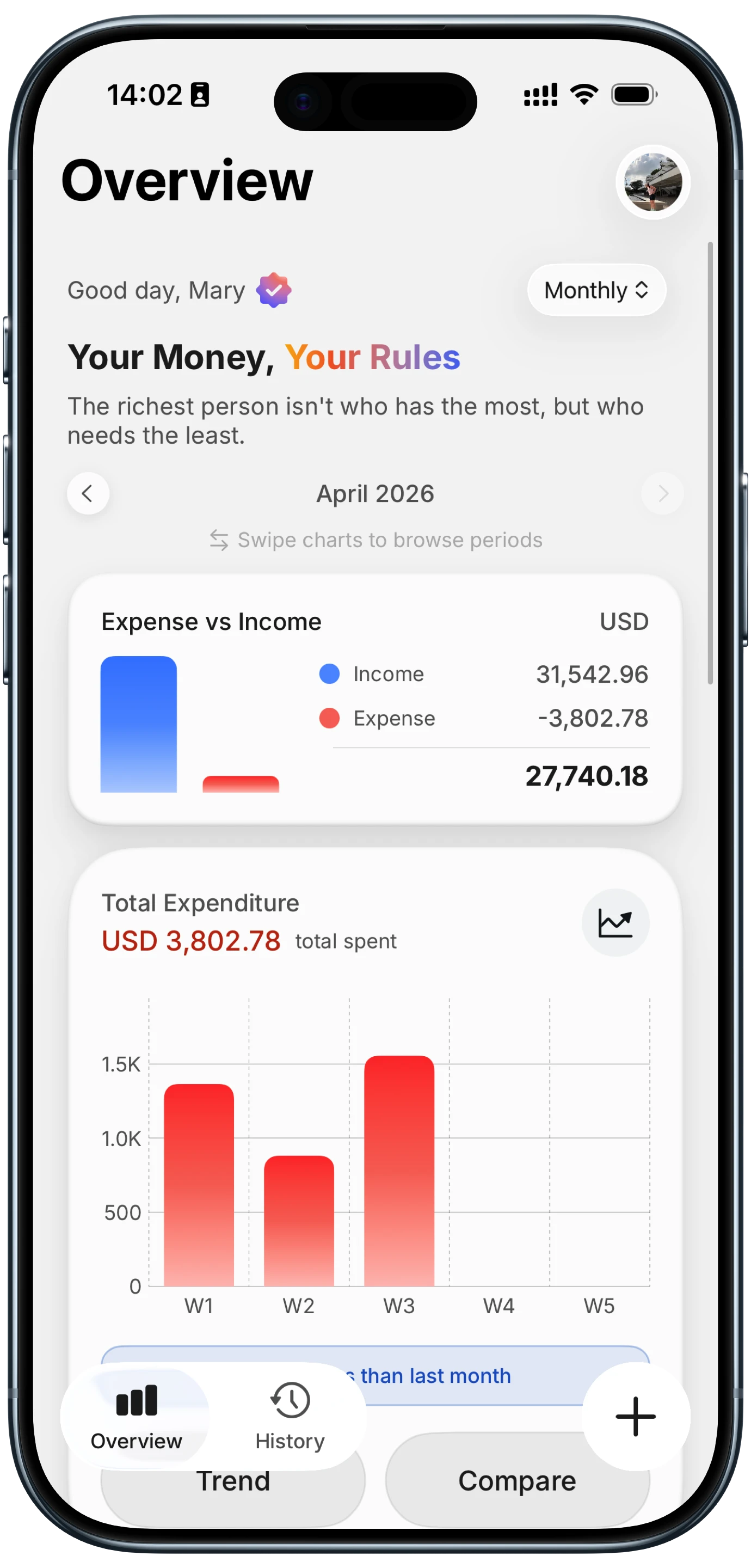
Monarch vs Quicken Simplifi: Which Wins in 2026?
Most people pick a budgeting app once, set it up, and expect it to just work. But two apps that look similar on the surface, monarch vs simplifi, handle money in fundamentally different ways, and choosing the wrong one means rebuilding your system months later. One rewards people who want deep customization and household collaboration; the other keeps things simple at a lower price point.
This post compares Monarch Money and Quicken Simplifi across the six areas that matter most: pricing, account syncing, budgeting model, categorization, couples and household sharing, and mobile experience. If you want a broader look at more apps, see the best personal finance apps in 2026.
Note that Quicken sells two different products. This comparison covers Simplifi. If you meant Quicken Classic, the desktop software that keeps your data in a local file, see our Monarch Money vs Quicken Classic comparison.
What You Pay and What You Get
Pricing is the first place these two apps diverge, and the gap is larger than it looks at first.
Quicken Simplifi lists at $5.99 per month billed annually ($71.88 per year), but new subscribers typically see a promotional rate around $3.99 per month ($47.88 per year). There is no free tier and no monthly billing option, though a 30-day money-back guarantee softens the commitment. Annual billing only.
Monarch Money introduced a two-tier structure in 2026. Monarch Core costs $99.99 per year (about $8.33 per month) or $14.99 per month. Monarch Plus, targeting power users and those managing investments or side-business finances, runs $199 per year and is annual only. Both tiers include a 7-day free trial. Promotional codes like WELCOME (30% off) and MONARCHVIP (50% off the first year) are frequently available.
At list price, Simplifi is the cheaper option. For someone who just needs straightforward expense tracking and a spending plan, that cost difference is real. Monarch's higher price is justified primarily by its investment tracking, deeper analytics, and household collaboration features, all of which Simplifi handles more lightly.
| Feature | Monarch Core | Quicken Simplifi |
|---|---|---|
| Price (annual) | $99.99/yr (~$8.33/mo) | |
| Monthly billing | $14.99/mo | Not available |
| Free tier | No (7-day trial) | No (30-day guarantee) |
| Platforms | Web, iOS, Android | Web, iOS, Android |
| Account sync | 11,000+ institutions, daily | Major banks, can be inconsistent |
| Budgeting model | Flexible categories + goals | Spending plan + watchlists |
| Couples/household sharing | Included, separate logins | Financial spaces, invite others |
| Investment tracking | Yes, built-in | Basic |
| Free trial | 7 days | 30-day money-back |
Account Syncing and Connection Reliability
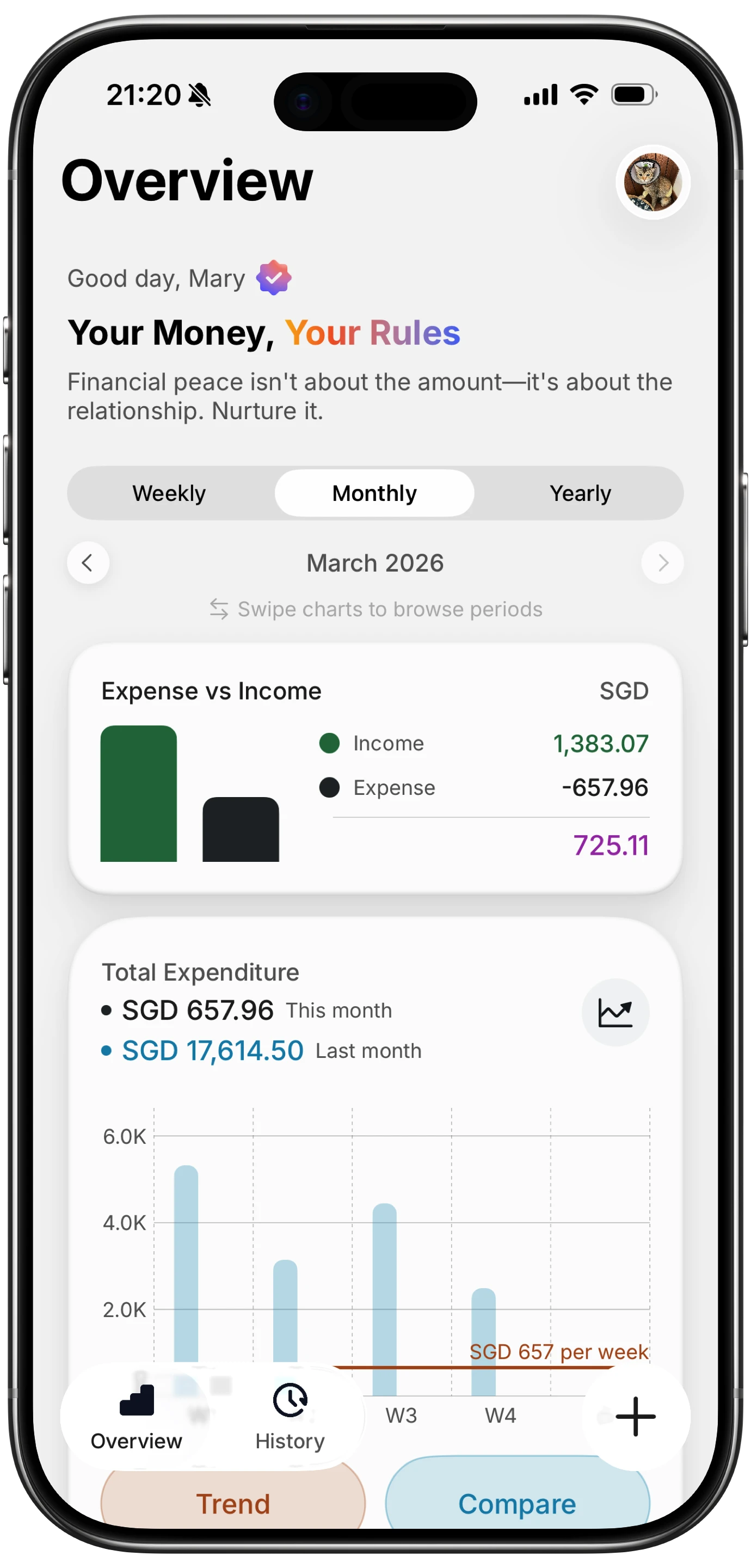
Account syncing is where the day-to-day experience is won or lost. A single broken connection, especially with a primary checking or credit card account, can undermine your entire budget view.
Monarch Money
Monarch connects to over 11,000 financial institutions and routes connections through multiple aggregators including Plaid, Finicity, and MX. In practice, roughly 95% of accounts sync daily without manual intervention. Monarch added an AI assistant in 2026 that can answer natural-language questions about your spending and flags category drift in a weekly recap email. The new Receipt Scanner and Bill Split features let you manually log and divide shared expenses without needing to reconnect to an account.
Where Monarch struggles: smaller credit unions and some international banks may require periodic reconnection. The Plus tier does not change the sync infrastructure, just the analytics and planning depth.
Quicken Simplifi
Simplifi was built mobile-first and has matured into a capable web app as well. Its connection reliability is solid for major US banks and cards, but users with Capital One accounts or accounts at smaller credit unions report needing to reconnect weekly in some cases. Simplifi's categorization engine is automatic and fairly accurate out of the box, using rules you can adjust over time.
For someone banking at a major institution, Chase, Bank of America, Wells Fargo, Simplifi's syncing is generally reliable. If you have accounts spread across community banks or credit unions, Monarch's multi-aggregator setup tends to be more stable.
Budgeting Models: How Each App Structures Your Money
This is the most important difference between the two apps, and neither approach is wrong. They serve different mental models of budgeting.
Monarch uses a flexible, category-based system. You set monthly targets for each spending category and track performance against them. Monarch also supports goals (vacation fund, emergency fund, debt payoff) with projected timelines. Investment accounts are tracked natively, giving you a net worth view alongside your budget. For households managing multiple income streams or significant assets, this integrated view is genuinely useful.
Simplifi uses a Spending Plan, a forward-looking structure that accounts for recurring bills, savings goals, and discretionary spending. Each month, Simplifi calculates how much money is available after committed expenses and shows it as a single number: what's left to spend. Watchlists let you flag specific categories you want to monitor without building a full budget for them.
Simplifi's model is faster to maintain. You spend less time managing categories and more time just looking at a clean summary. Monarch's model gives you more control but asks more of you upfront during setup.
If you are moving from Mint (shut down in 2024) and want something that maps closely to how Mint worked, Monarch's category system will feel familiar. See the best Mint alternatives in 2026 for a wider comparison.
Couples and Household Sharing
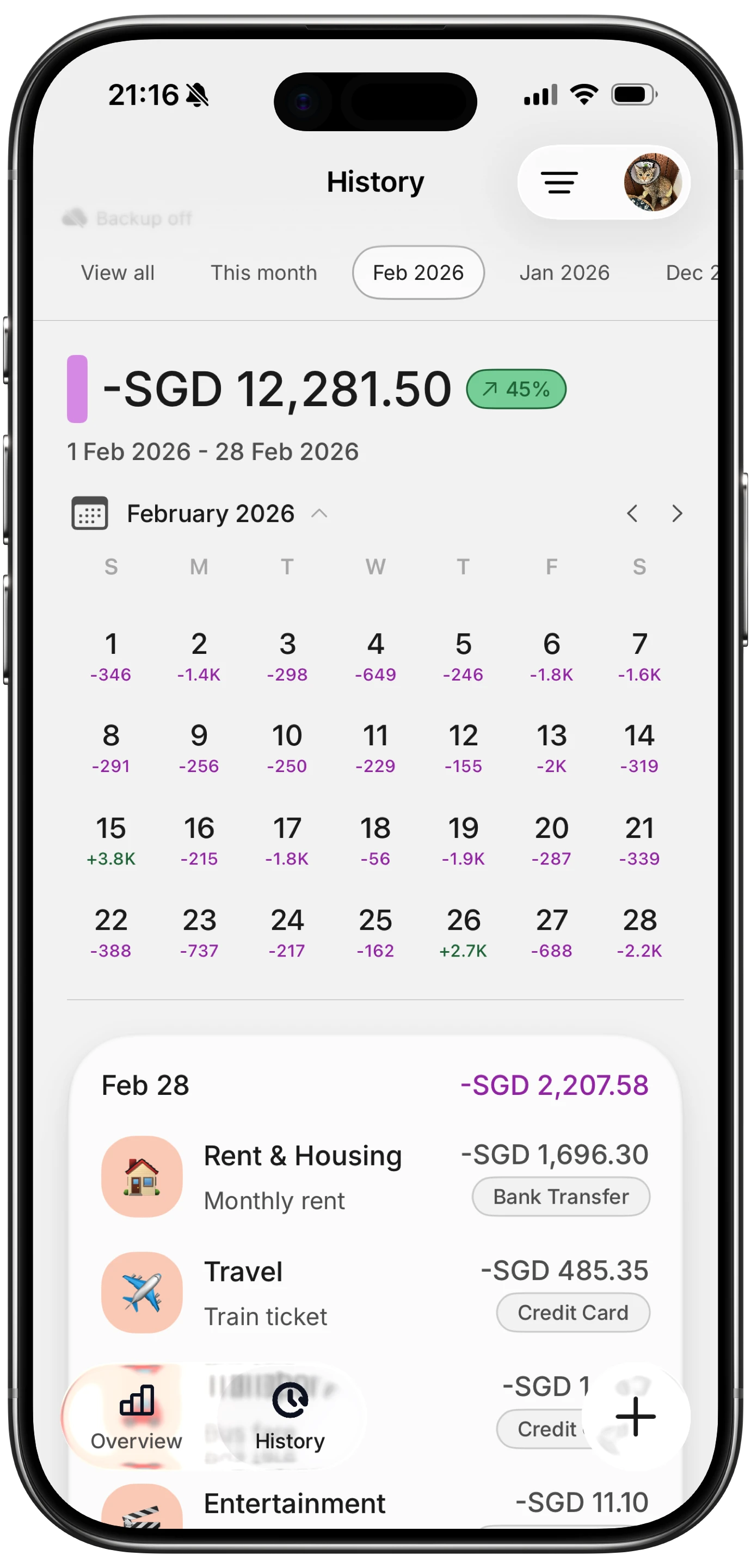
Shared finances are a common breaking point for budgeting apps. Either the sharing is clunky, requires paying twice, or one partner ends up locked out of meaningful detail.
Monarch on Couples
Monarch's household model is one of its strongest features. Both partners get their own secure login, see the same accounts and budgets in real time, and can add transactions or adjust categories independently. There is no extra charge for additional household members. For couples who want full transparency and joint decision-making, Monarch is purpose-built for this use case.
Simplifi on Couples
Simplifi offers Financial Spaces, which let you invite another person to view and edit your budget. It is functional and covers the basics: shared visibility, shared categorization, shared spending plan. But it lacks some of the polish Monarch brings, particularly around assigning transactions or tracking which partner spent what. For couples who want a shared view but do not need deep per-partner attribution, Simplifi works fine.
If couples collaboration is a priority, Monarch is the clearer choice. For a deeper look at Monarch's collaborative features, the Monarch Money review for 2026 covers this in detail.
Mobile Apps and Day-to-Day Usability
Both apps have iOS and Android apps that are actively maintained. Simplifi's mobile app was the original product before the web version arrived, so it has a polished, streamlined interface optimized for quick transaction review and spending plan updates.
Monarch's mobile app has improved significantly in 2026. The transaction feed is clean, filtering is fast, and the AI assistant is accessible from mobile. However, some of the deeper investment and net worth tools are still easier to navigate on the web version.
For someone who manages their budget primarily on their phone, Simplifi's mobile-first heritage shows. For someone who splits time between desktop and mobile, particularly for net worth or investment tracking, Monarch's web app is the stronger experience.
Who Each App Is For
Choose Monarch if:
- You share finances with a partner and want both people fully involved with separate logins.
- You track investments, a brokerage account, or retirement accounts alongside your budget.
- You want deep customization: custom categories, goals with timelines, AI-assisted spending analysis.
- You bank at a range of institutions, including smaller ones, and need reliable daily syncing.
Choose Simplifi if:
- You want a low-maintenance spending plan that does most of the work automatically.
- You primarily use major US banks with stable connections.
- Price is a meaningful factor and Simplifi's promotional rate fits your budget.
- You prefer a mobile-first experience with a clean, minimal interface.
For context on how both compare to a third option, the Monarch vs YNAB vs Simplifi comparison for 2026 adds YNAB to the mix for those considering zero-based budgeting.
If you want to skip bank connections entirely, a privacy-first option like Finny logs expenses via Tap to Track (automatic Apple Pay logging), AI text or voice input, and receipt scanning without requiring any account link. The Pro tier costs a low monthly price, a fraction of either Monarch or Simplifi.
Common Questions About Monarch vs Simplifi
Is Monarch Money worth the higher price compared to Simplifi?
Monarch costs more at list price ($99.99 per year vs. around $47.88 per year for Simplifi), but the gap narrows if you use Monarch's frequent promo codes. The extra cost buys you investment tracking, more reliable syncing across diverse institutions, and genuinely better couples collaboration. If you only need basic expense tracking, Simplifi is the better value. If you manage a household budget together or track investments, Monarch justifies its price.
Does Quicken Simplifi work for couples?
Simplifi supports Financial Spaces, which lets you invite a partner to view and edit your budget. It covers the basics but does not offer per-partner transaction attribution. Both people see the same shared plan. Monarch's household model goes further, giving each person a separate login with full access and real-time sync, making it the stronger choice for couples who want deep joint visibility.
Which app has better account syncing in 2026?
Monarch uses multiple aggregators (Plaid, Finicity, MX) and supports over 11,000 institutions with roughly 95% syncing daily. Simplifi's connections are solid for major US banks but can be inconsistent for Capital One and smaller credit unions. If your banking is concentrated at large institutions, both apps work well. If you have diverse accounts, Monarch's multi-aggregator approach is more reliable.
Can I try Monarch Money or Simplifi before paying?
Monarch offers a 7-day free trial with full access to Core features. Simplifi does not offer a traditional free trial but provides a 30-day money-back guarantee, so you can sign up, use it for a month, and request a refund if it does not work for you. Neither app has a permanent free tier.
What happened to Mint, and which of these should Mint users try?
Mint shut down in January 2024. For former Mint users, Monarch is generally the closest match in terms of category-based budgeting, spending history visualization, and net worth tracking. Simplifi is also a strong option if you preferred Mint's automatic spending plan approach. See the best Mint alternatives for 2026 for a full list of options.
Ready to track expenses without connecting a single bank account? Download Finny and log your first expense in under ten seconds with Tap to Track, AI input, or a receipt snap.