Savings Goal Calculator
See how long it takes to reach your goal at your current pace, or how much to save each month to hit a target date.
Leave at 0 to ignore interest. High yield savings accounts often pay a few percent.
Time to reach your goal
2 years 10 months
Saving $300 a month toward $10,000
Have a target date instead?
Enter how many months you have and we will work out how much to save each month.
Find the money to hit your goal faster
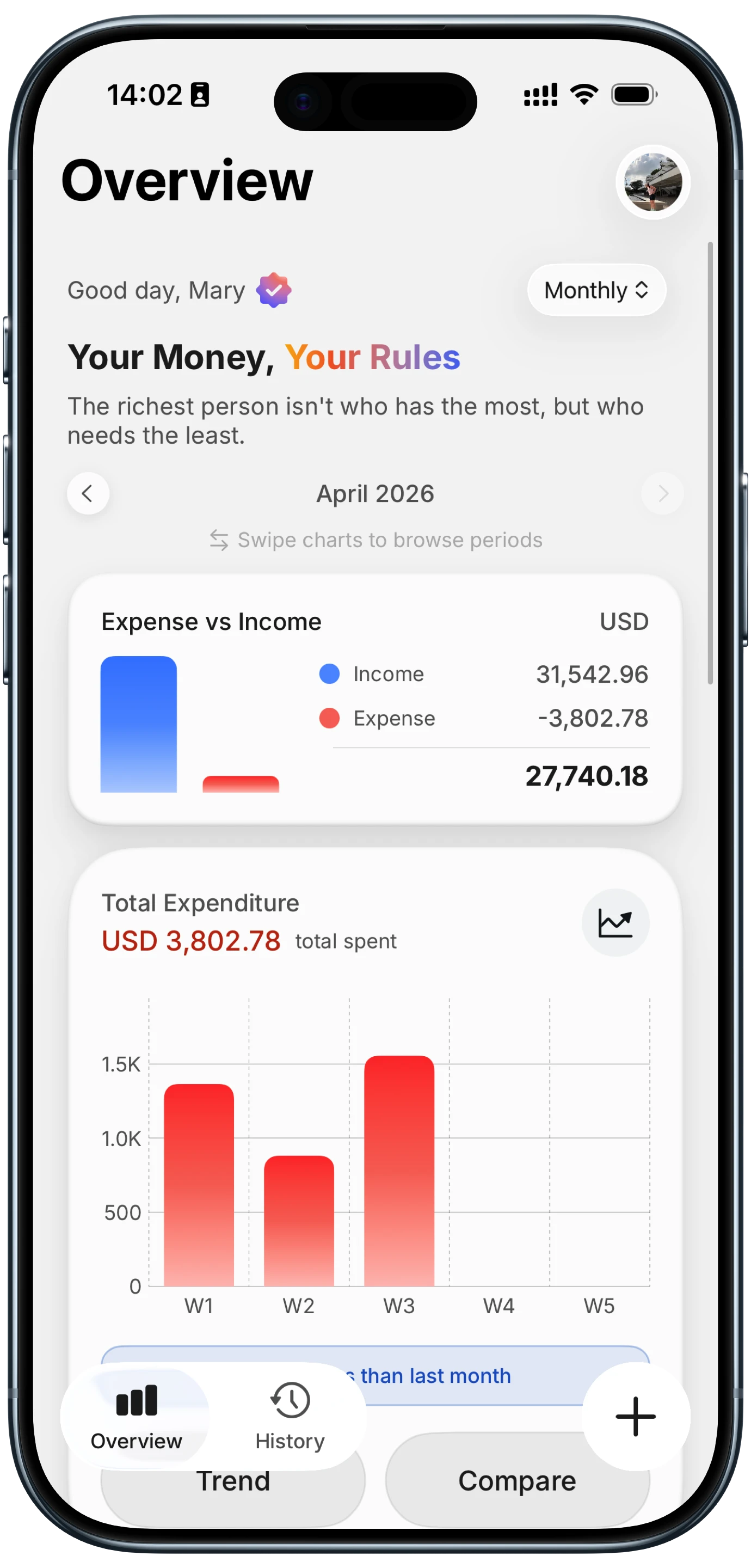
Finny tracks your spending automatically and shows where your money goes, so you can free up cash to put toward this savings goal. No bank connection needed.
Frequently asked questions
How do I calculate how much to save each month?
Take the amount you still need, which is your goal minus what you have already saved, then divide it by the number of months until your target date. For example, a 6,000 goal with 0 saved and 12 months left means 500 a month. If your savings earn interest, you can save a little less each month because growth covers part of the gap.
Does a savings goal calculator account for interest?
This one does when you enter an annual percentage yield. It compounds your balance monthly, adds each contribution, and shows the interest you earn along the way. If you leave the rate at 0, the math is simply your contributions added up. Interest helps most on larger balances and longer timeframes, so it matters more for multi year goals.
How much should I save for an emergency fund?
A common target is three to six months of essential expenses, covering rent, food, utilities, insurance, and minimum debt payments. If your income is variable or you support a family, lean toward six months or more. Start with a smaller milestone, such as 1,000, then build from there. Keep the money somewhere safe and easy to reach.
Where should I keep my savings?
For short term goals and emergency funds, a high yield savings account is a strong choice. Your money stays liquid, is protected up to insured limits, and earns far more than a standard checking account. For goals more than five years out, some people invest instead to seek higher returns, accepting that values can rise and fall in the short term.
Related reading: sinking funds, financial goals, high-yield savings accounts, and how to build an emergency fund.