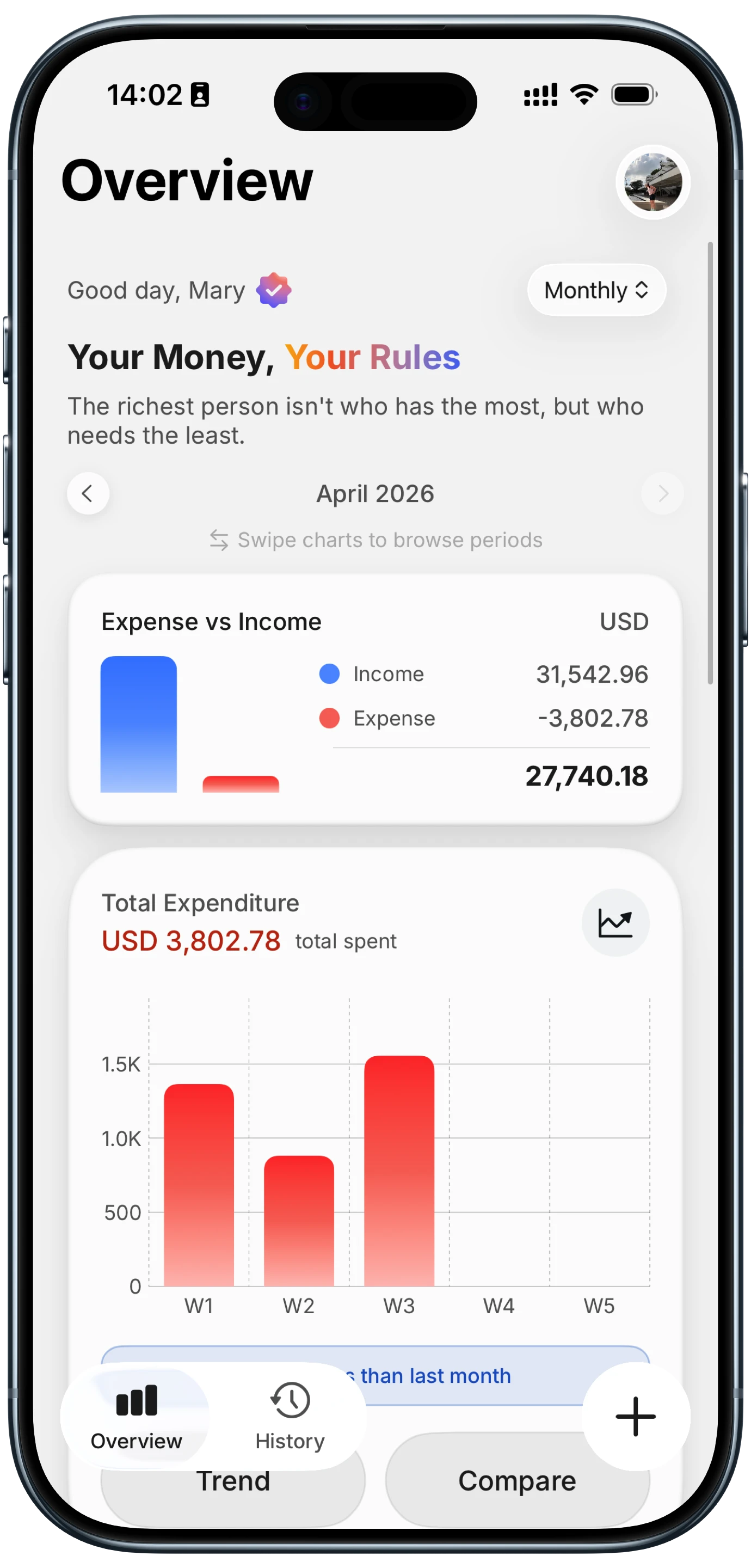
Managing money well starts with picking the right tool. But with dozens of options on the market, finding the personal finance app that actually fits your life takes more effort than it should.
Some apps focus on budgeting discipline. Others prioritize investment tracking or household planning. A few are built for people who want fast expense logging without handing over bank credentials. The best choice depends on what you need most: strict budgeting, a full financial dashboard, privacy, affordability, or speed.
We compared eight of the most popular personal finance apps available in 2026 and evaluated them on features, pricing, ease of use, and privacy. Whether you are just starting to track your expenses or looking to switch from an app that no longer fits, this guide will help you decide. For a deeper dive into managing your money holistically, see our complete guide to personal finance.
How We Chose These Apps
We focused on apps that are actively maintained, widely available, and offer something genuinely useful. Each app was evaluated on:
- Core functionality: Does it do what it promises well?
- Pricing transparency: What do you actually pay, and what do you get?
- Ease of daily use: How quickly can you log transactions and check your budget?
- Privacy approach: Does it require bank credentials or sell your data?
- Multi-currency and offline support: Useful for travelers and anyone who values reliability
We excluded apps that have shut down (like Mint, which closed in 2024) and apps that are too niche to recommend broadly.
Quick Comparison Table
| App | Starting Price | Free Tier | Bank Sync | AI Input | Offline | Multi-Currency | Platform |
|---|---|---|---|---|---|---|---|
| Finny | a low monthly price | Yes | No | Text, voice, photo, chat | Yes | 150+ currencies | iOS |
| YNAB | $14.99/mo | No (34-day trial) | Yes | No | No | Limited | iOS, Android, Web |
| Monarch Money | $14.99/mo | No (7-day trial) | Yes | No | No | Limited | iOS, Android, Web |
| Copilot | $13/mo | No (30-day trial) | Yes | Limited | No | Yes | iOS, Mac, Web |
| PocketGuard | $12.99/mo | Yes (limited) | Yes | No | No | No | iOS, Android, Web |
| Spendee | $1.25/mo | Yes (limited) | Premium only | Receipt scanner | Partial | Yes | iOS, Android, Web |
| Goodbudget | $10/mo | Yes | No | No | Partial | No | iOS, Android, Web |
| Honeydue | Free | Yes (fully free) | Yes | No | No | No | iOS, Android |
The Best Personal Finance Apps in 2026
Finny: Best for Fast, Private Expense Tracking
Finny takes a different approach from most finance apps. Instead of connecting to your bank and pulling in transactions automatically, it makes manual tracking so fast that you barely notice you are doing it.
The standout feature is Tap to Track, which captures Apple Pay transactions the moment they happen. You tap your phone to pay, and the expense logs itself. No other personal finance app offers this kind of instant capture.
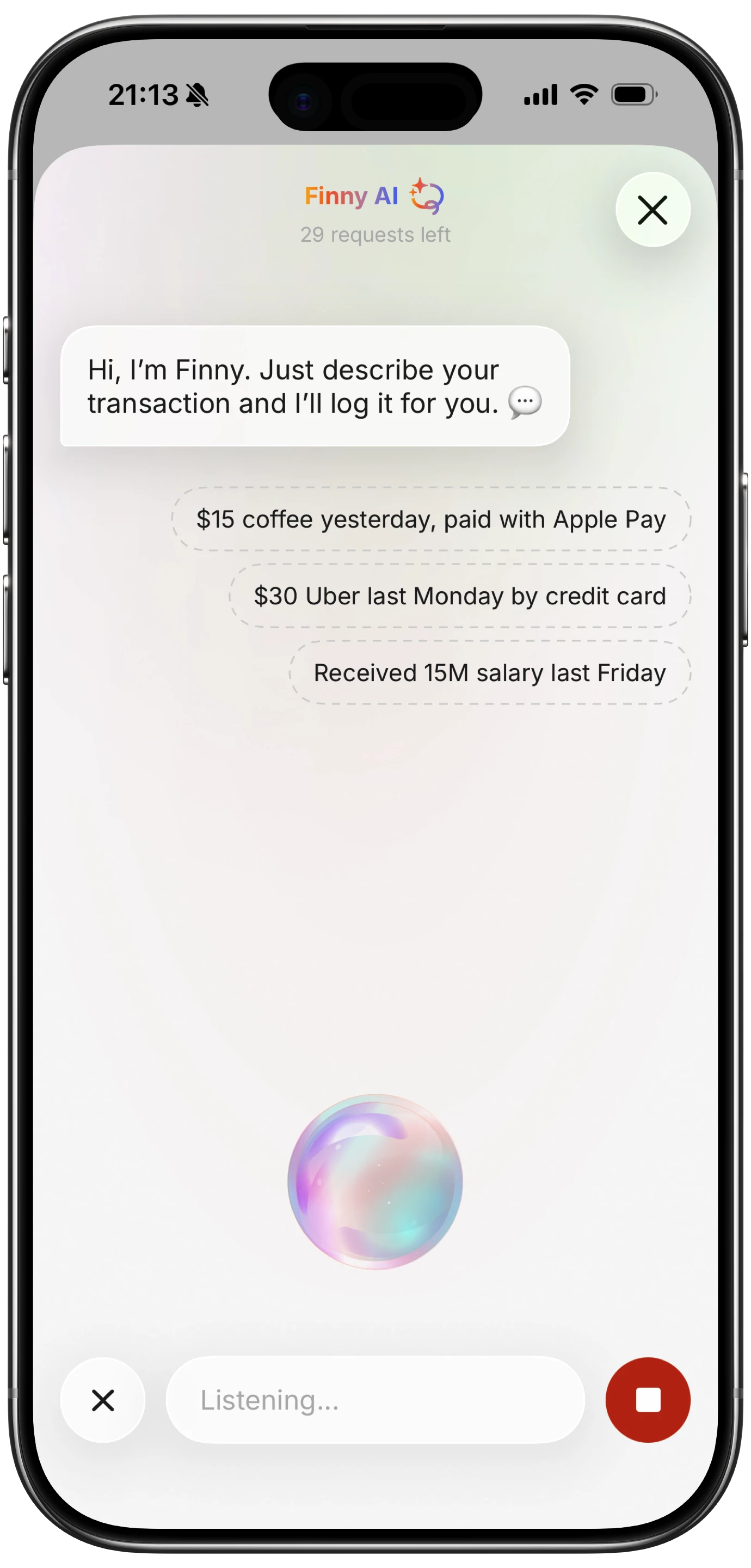
Finny app's voice input feature
AI input covers every scenario. Type "groceries 42.50 at Trader Joe's," speak it aloud, scan a receipt, or snap up to five receipt photos at once with Batch Snap and Log. The AI extracts amounts, categories, and merchant names automatically. You get 50 AI requests per day on the Pro plan, which is more than enough for heavy use.
For anyone dealing with multiple currencies, Finny's Unified Currency View keeps each transaction in its original currency while converting daily and monthly totals to your default. This is especially valuable for travelers and expats who want to see what they actually paid without losing context. Our guide to the best expense tracker apps in 2026 covers this feature in more detail.
The app works fully offline, syncs when you have a connection, and never asks for bank login credentials. At a low monthly or yearly price, Finny costs a fraction of what most competitors charge. The free tier includes unlimited manual tracking, custom categories, charts, and support for over 150 currencies.
Pricing: Free tier available. Pro: a low monthly or yearly price.
Best for: Anyone who wants fast, AI-powered tracking with strong privacy and low cost.
YNAB: Best for Zero-Based Budgeting
YNAB (You Need a Budget) has been the gold standard for zero-based budgeting for over two decades. The core philosophy is simple: give every dollar a job before you spend it. This proactive approach helps people stop living paycheck to paycheck.
The app syncs with your bank accounts and imports transactions, but you still need to review and assign each one to a budget category. This intentional friction is part of the method. YNAB's educational resources, community forums, and live workshops are among the best in the industry.
The trade-off is cost. At $14.99 per month ($109 per year), YNAB is one of the most expensive personal finance apps available. There is no free tier after the 34-day trial. The app also requires an internet connection, lacks AI-assisted input, and has limited multi-currency support that requires manual rate adjustments.
Pricing: $14.99/month or $109/year. 34-day free trial.
Best for: People committed to zero-based budgeting who want a proven system with strong educational support.
Monarch Money: Best All-in-One Financial Dashboard
Monarch Money positions itself as the comprehensive financial hub. It connects to over 13,000 financial institutions and pulls in data from bank accounts, credit cards, loans, and investment accounts to create a complete picture of your finances.
The interface is polished. Budgets, net worth tracking, investment monitoring, and spending analytics all live in one place. Collaborative features let couples and families manage money together with shared dashboards and unlimited collaborators. If you are looking specifically for budgeting apps that work well for couples, Monarch is a strong contender.
At $14.99 per month ($99.99 per year), Monarch is a premium product with no free tier. The 7-day trial is short. The app depends entirely on bank sync, which means it cannot work without internet and requires you to share financial credentials with a third party.
Pricing: $14.99/month or $99.99/year. 7-day free trial.
Best for: Households that want a full financial dashboard with bank connections, investment tracking, and shared access.
Copilot: Best Design for Apple Users
Copilot is an iOS-exclusive finance app with one of the best visual designs in the category. Transactions import automatically from linked accounts, and the categorization system learns your preferences over time.
The app covers budgeting, spending tracking, net worth, and investment monitoring. The interface feels native to Apple platforms and works across iPhone, iPad, Mac, and web. Subscription tracking and recurring transaction detection are well implemented.
Copilot costs $13 per month ($95 per year), placing it in the premium tier. There is no free plan, though the 30-day trial is generous. Like Monarch, it requires bank connections and does not work offline. Multi-currency support exists but is secondary to its bank-synced workflow.
Pricing: $13/month or $95/year. 30-day free trial.
Best for: Apple users who want a beautifully designed, bank-connected financial tracker.
PocketGuard: Best for "How Much Can I Spend?" Simplicity
PocketGuard answers the one question most people care about: how much money do I have left to spend today? Its "In My Pocket" feature calculates your available balance after accounting for bills, goals, and necessities.
The free version connects up to two financial institutions and includes basic budgeting and automatic categorization. PocketGuard Plus ($12.99 per month or $74.99 per year) removes those limits and adds debt payoff planning, financial goal tracking, and subscription monitoring.
The app is straightforward but limited. There is no AI input, no offline mode, and no multi-currency support. It works best for people in the US who want a simple, bank-connected overview of their spending capacity.
Pricing: Free tier available (limited). Plus: $12.99/month or $74.99/year.
Best for: Beginners who want a quick answer to "how much can I spend?" without complex budgeting.
Spendee: Best Budget Option with Bank Sync
Spendee stands out for offering a lot of functionality at a low price. The free tier handles basic expense tracking with one wallet and one budget. Spendee Plus ($14.99 per year) adds unlimited budgets and shared wallets. Spendee Premium ($22.99 per year) includes automatic bank sync, AI receipt scanning, and smart categorization.
The app supports multiple currencies and shared finances, making it a decent choice for couples or travelers on a budget. It connects to over 2,500 financial institutions globally.
The downside is that the free tier is quite restrictive, and the app does not offer offline reliability or advanced AI input beyond receipt scanning. The user interface, while functional, feels less polished than Copilot or Monarch.
Pricing: Free tier available (limited). Plus: $14.99/year. Premium: $22.99/year.
Best for: Budget-conscious users who want bank sync and shared wallets without paying premium prices.
Goodbudget: Best for Envelope Budgeting Without Bank Linking
Goodbudget digitizes the classic envelope budgeting method. You allocate money into virtual envelopes for each spending category, and the app tracks how much remains in each one as you spend.
The free tier includes 20 envelopes, one account, and sync across two devices. Goodbudget Plus ($10 per month or $80 per year) lifts those limits and adds 7 years of transaction history. The app works on iOS, Android, and the web.
No bank connection is required, which appeals to privacy-conscious users. However, every transaction must be entered manually, and there is no AI input to speed up the process. Offline support is partial, and multi-currency is not supported. For more free options, see our guide to the best free budgeting apps in 2026.
Pricing: Free tier available. Plus: $10/month or $80/year.
Best for: People who prefer envelope budgeting and do not want to connect their bank accounts.
Honeydue: Best Free App for Couples
Honeydue is built specifically for couples who want to manage money together. It is completely free, with no paid tier. The company sustains itself through optional tips from users.
Both partners link their accounts and can see shared balances, track bills, set category spending limits, and chat about finances within the app. Privacy controls let each person choose what to share. The app connects to over 20,000 financial institutions.
The trade-off for being free is limited scope. Honeydue does not offer investment tracking, net worth monitoring, AI input, or offline support. It focuses narrowly on couples' day-to-day spending and bill management. If you need more comprehensive couple-focused tools, our guide to tracking spending as a couple explores additional options.
Pricing: Completely free.
Best for: Couples who want a simple, free way to manage shared finances.
How to Choose the Right Personal Finance App
The right app depends on your priorities. Here is a quick framework:
If privacy matters most: Choose an app that does not require bank connections. Finny and Goodbudget both work without sharing financial credentials. Finny adds AI-powered input to reduce the friction of manual tracking.
If you want everything in one dashboard: Monarch Money and Copilot offer the most complete financial pictures by connecting to banks, credit cards, and investment accounts.
If you are on a tight budget: Finny Pro costs a low monthly price, one of the lowest paid tiers among the apps listed here. Spendee Premium at $22.99 per year is another affordable option with bank sync. Honeydue is completely free.
If you travel or deal with multiple currencies: Finny supports over 150 currencies with its Unified Currency View. Copilot and Spendee also handle multiple currencies, though with less granularity.
If you want strict budgeting methodology: YNAB for zero-based budgeting or Goodbudget for envelope budgeting provide structured frameworks that go beyond simple tracking.
Even the best apps have blind spots, and it is worth knowing what personal finance apps are still missing in 2026 before committing to one.
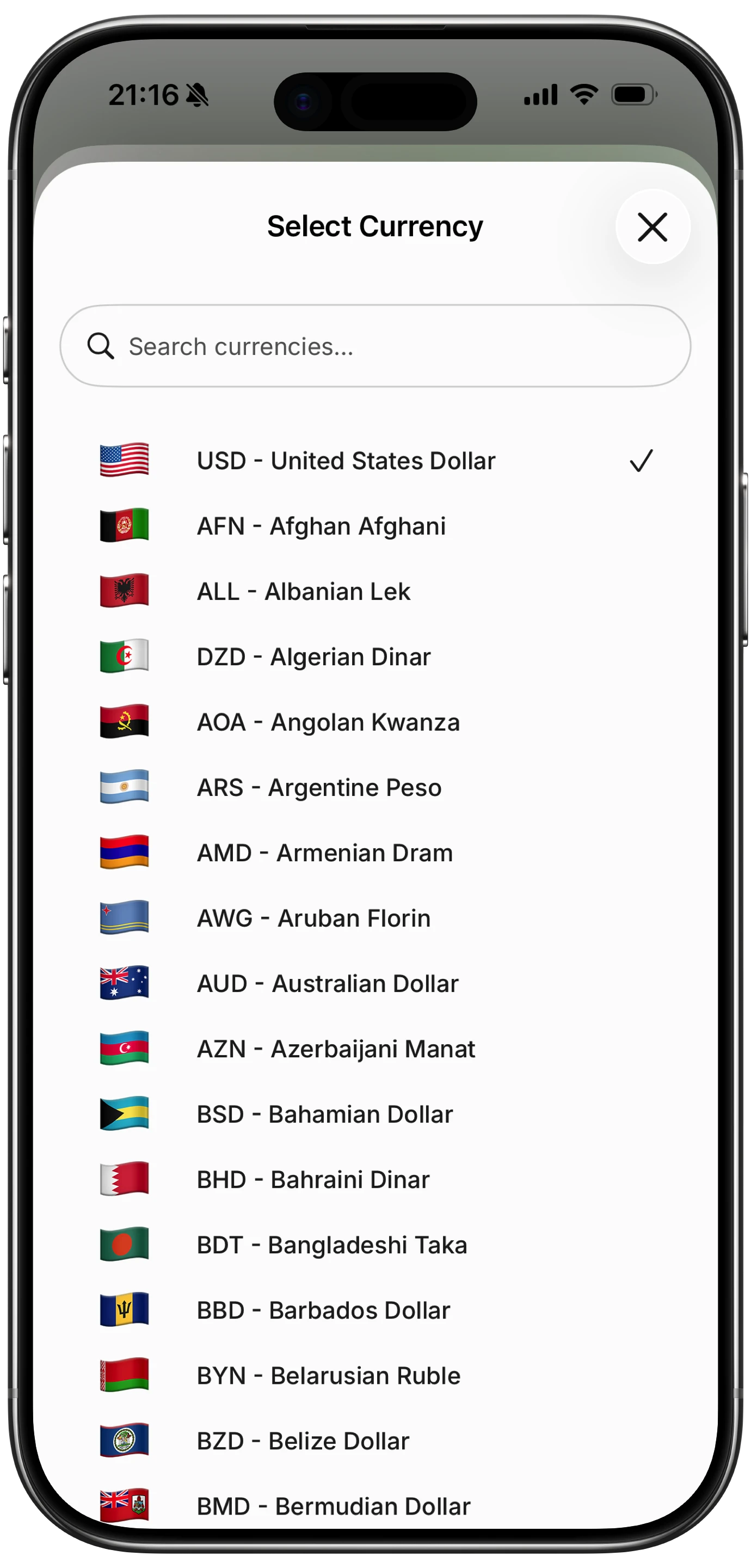
Finny app's multi-currency feature
What About Mint?
Mint shut down in March 2024 after Intuit acquired Credit Karma and decided to consolidate. If you were a Mint user, the apps on this list are all viable replacements. Monarch Money absorbed many former Mint users because of its similar dashboard approach. Finny is a good alternative for users who valued Mint's free tier and want to avoid paying $10 or more per month.
FAQ
What is the best personal finance app for beginners?
PocketGuard is the simplest option for beginners because it focuses on one number: how much you have left to spend. For beginners who also want to build good expense tracking habits, Finny's AI input makes logging transactions almost effortless, which helps with consistency in the early weeks.
Are free personal finance apps safe to use?
Generally, yes. Apps like Goodbudget and Finny do not require bank connections, which reduces your exposure. Apps that sync with banks (including free ones like Honeydue) use encryption and third-party aggregators like Plaid or Finicity. The key question is whether you are comfortable sharing financial credentials with a third party. If not, choose an app that works without bank linking.
Is it worth paying for a personal finance app?
It depends on the features you need. Free tiers from Finny, PocketGuard, Goodbudget, and Spendee cover basic tracking and budgeting. Paid plans add AI input, bank sync, advanced analytics, or investment tracking. If a paid app helps you save more than the subscription costs, it pays for itself. At a low monthly price, Finny Pro offers one of the best value propositions in the category.
Can I use a personal finance app without linking my bank account?
Yes. Finny, Goodbudget, and Spendee all work without bank connections. Finny compensates for the lack of auto-import with AI-powered input methods (text, voice, receipt scanning, and Tap to Track for Apple Pay) that make manual entry nearly as fast as automatic syncing. For a broader look at AI-powered receipt scanning and how it simplifies expense tracking, see our dedicated guide.
Which personal finance app is best for couples?
Honeydue is the best free option built specifically for couples. Monarch Money offers more comprehensive shared financial planning at a premium price. Both support linked accounts, shared dashboards, and communication features designed for managing money as a team.