How to Save Money Fast: 12 Practical Ways That Work
Most saving advice sounds the same: skip the latte, pack your lunch, wait 30 days before buying anything. That advice is not wrong. But when you need to how to save money fast, you need more than small tweaks. You need a system that creates noticeable results within weeks.
Whether you are building an emergency fund, saving for a trip, or trying to get ahead after an expensive month, the strategies below are ordered from highest impact to lowest friction. Start with the ones that match your situation and stack them as you go.
Know Where Your Money Is Going First
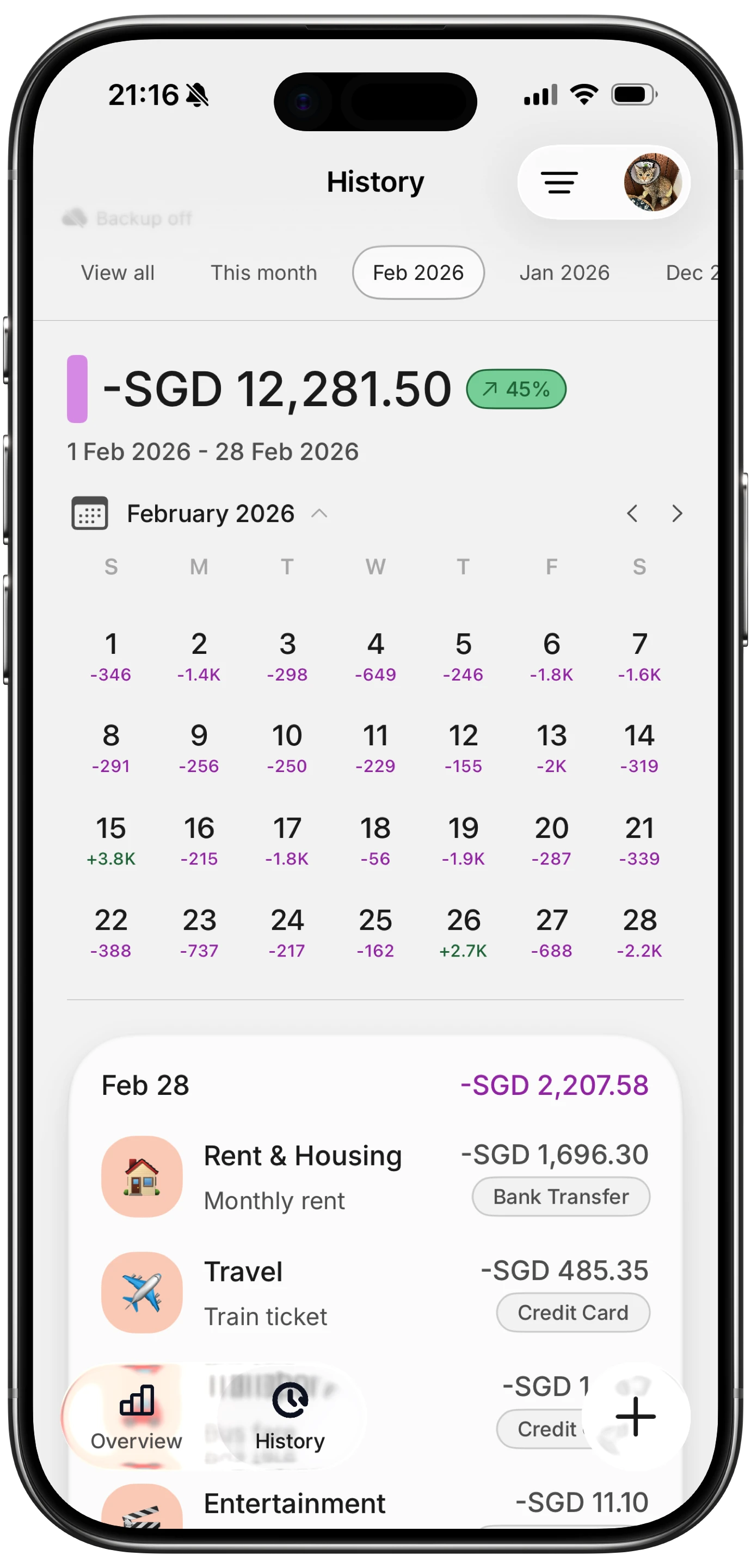
You cannot save what you cannot see. Before cutting anything, spend one week tracking every dollar that leaves your account. This includes coffee, parking meters, app subscriptions, and everything in between.
Most people discover they are spending 10 to 20 percent more than they think. If you are a college student working with limited income, our guide on how to save money for students tailors these ideas to campus life. A study cited by Bankrate found that consumers underestimate their monthly subscription spending by about $133. That gap between perceived and actual spending is where your fastest savings hide.
You do not need a complicated spreadsheet. A simple expense tracking habit that takes a few seconds per transaction will reveal patterns within days. The goal is awareness, not perfection.
Set a Specific Savings Target
"Save more money" is a wish, not a goal. A specific target changes your behavior because it gives you something to measure against.
Break your goal into smaller milestones. If you want to save $1,000 in two months, that is $125 per week. Seeing the weekly number makes it feel manageable. Seeing progress each week keeps you motivated.
Write down your target, the deadline, and the weekly amount. Put it somewhere you will see it daily. People who write down financial goals are significantly more likely to reach them than those who keep the number in their heads.
Automate Your Savings Immediately
Willpower is unreliable. Automation is not. Set up an automatic transfer from your checking account to a high-yield savings account on the day you get paid. This way, the money moves before you have a chance to spend it.
This approach is sometimes called paying yourself first, and it works because it removes the decision from your daily routine. Even $25 per week adds up to $1,300 in a year.
If your employer offers split direct deposit, send a portion of each paycheck directly to savings. You will adjust to the smaller checking balance faster than you expect.
Cancel or Pause Subscriptions You Do Not Use
The average American household spends over $200 per month on subscriptions. That includes streaming services, gym memberships, software, meal kits, and apps you forgot you signed up for.
Go through your bank statements and list every recurring charge. For each one, ask: did I use this in the last two weeks? If the answer is no, cancel it or pause it. Most services let you resubscribe later with no penalty.
Here are common subscriptions worth auditing:
- Streaming services you rarely watch
- Gym memberships (especially if you exercise outdoors or at home)
- Premium app tiers you could downgrade
- Meal kit deliveries
- Cloud storage you are not using
Cutting three $15 subscriptions saves $540 per year. That alone could fund a short trip or cover an unexpected car repair.
Use a Budget Framework That Fits Your Life
A budget is not about restriction. It is about deciding in advance where your money goes. The simplest starting point is the 50/30/20 rule: 50 percent for needs, 30 percent for wants, and 20 percent for savings and debt repayment.
If 20 percent feels like a stretch right now, start with 10 percent. The exact number matters less than having a structure. When you know your spending limits for each category, you stop making financial decisions on impulse.
For a deeper dive into budgeting methods and how to pick the right one, see our guide on how to budget money.
Reduce Food Spending Without Feeling Deprived
Food is one of the most flexible budget categories, which makes it one of the fastest places to save. The average American household spends over $600 per month on groceries and dining out combined. Small changes here create big results.
Practical ways to cut food costs:
- Meal plan for the week. Decide what you will eat before you shop. This reduces impulse buys and food waste.
- Cook in batches. Make large portions on Sunday and portion them out for the week. This saves both money and time.
- Limit dining out to a set number per week. Going from five restaurant meals to two could save $150 or more per month.
- Buy store brands. Generic products often have the same ingredients as name brands at 20 to 30 percent less.
- Shop with a list. People who shop without a list spend an average of 20 percent more per trip.
You do not have to stop eating out entirely. The goal is intentional spending, not deprivation.
Tackle High-Interest Debt
Debt is a savings leak. If you are paying 20 percent interest on a credit card balance, every dollar of debt costs you far more than a dollar over time. Paying down high-interest debt is one of the fastest ways to free up money for savings.
Focus on the highest-interest balance first while making minimum payments on everything else. This is sometimes called the avalanche method, and it saves the most money mathematically. Once the first balance is gone, redirect that payment to the next one.
If you carry credit card debt, even a small extra payment each month accelerates your payoff timeline significantly.
Negotiate Bills You Already Pay
Many recurring bills are negotiable, but most people never ask. Call your internet provider, insurance company, and cell phone carrier. Ask if there are current promotions, loyalty discounts, or cheaper plans that fit your usage.
A single phone call to your car insurance company could save $200 to $500 per year. Internet providers frequently offer retention discounts of 10 to 30 percent when you mention switching.
Bills worth negotiating annually:
- Car and home insurance
- Internet and cable
- Cell phone plans
- Medical bills (ask about cash-pay discounts or payment plans)
- Credit card interest rates
The worst outcome is they say no. The best outcome is hundreds saved with a 15-minute call.
Try a No-Spend Challenge
A no-spend challenge is a set period, usually a week or a month, where you commit to spending only on essentials: rent, utilities, groceries, transportation, and existing debt payments. Everything else stops.
This is not meant to be permanent. It is a reset. A no-spend week forces you to notice every spending impulse and decide whether it is a genuine need or a habit. Most people who complete one discover spending triggers they were not aware of.
Start with a no-spend weekend if a full week feels aggressive. Even two days of zero discretionary spending can shift your perspective on what you actually need versus what you want in the moment. If you enjoy structured challenges, our list of proven saving money challenges offers several formats you can try.
Sell Things You No Longer Use
Look around your home. Chances are there are clothes you have not worn in a year, electronics collecting dust, fitness equipment from a phase that passed, and books you will never reread.
Selling unused items does two things: it puts cash directly into your savings, and it reduces the clutter that often drives more spending. List items on platforms like Facebook Marketplace, Poshmark, or eBay. Price things to sell quickly rather than to maximize profit.
A weekend declutter session can easily generate $200 to $500, depending on what you have. That is real money that can go straight toward your savings goal.
Track Your Progress Weekly
Saving money fast requires feedback. If you only check your savings balance once a month, you lose momentum during the weeks in between.
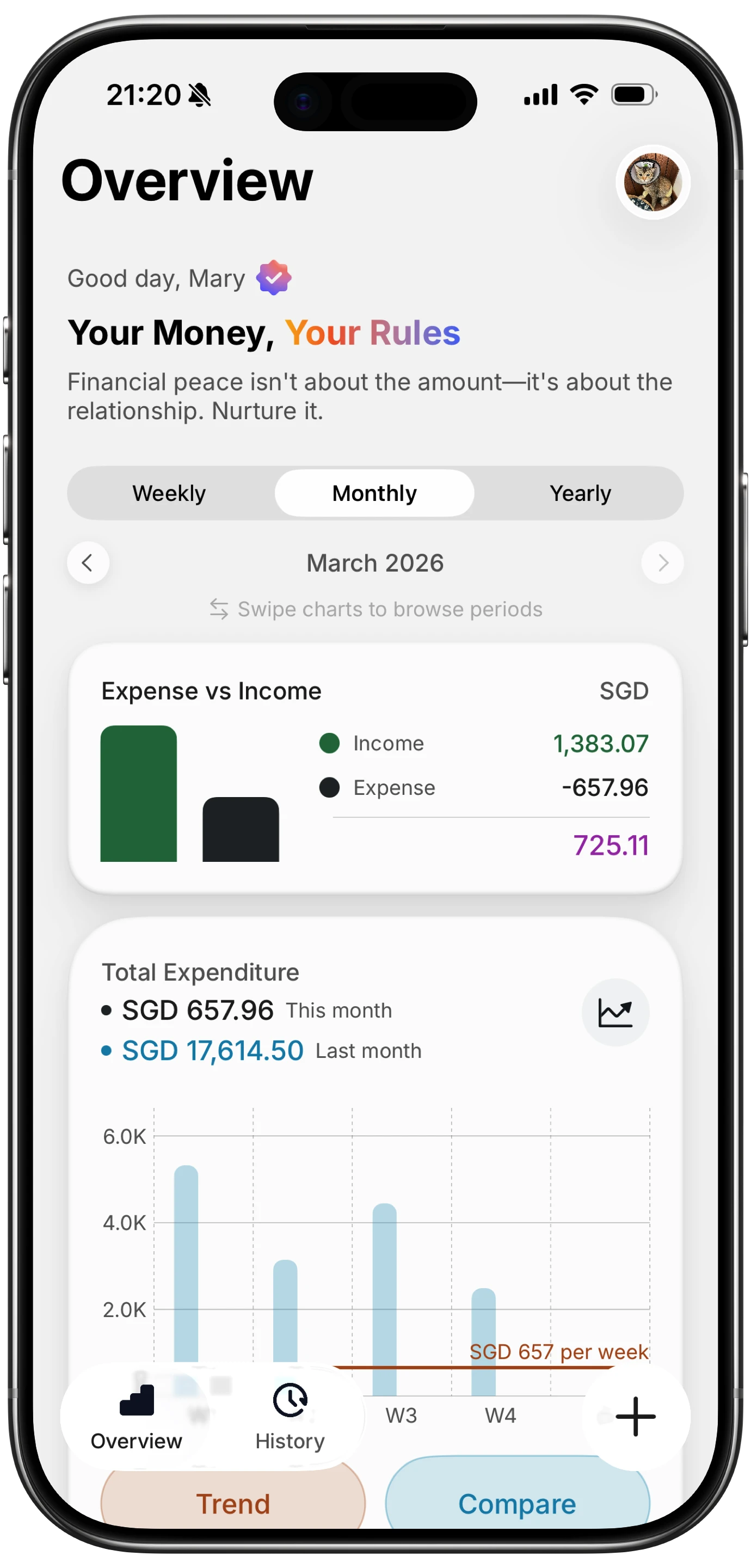
Set a weekly check-in: review what you spent, compare it against your budget, and see how close you are to your savings target. This does not need to take more than five minutes.
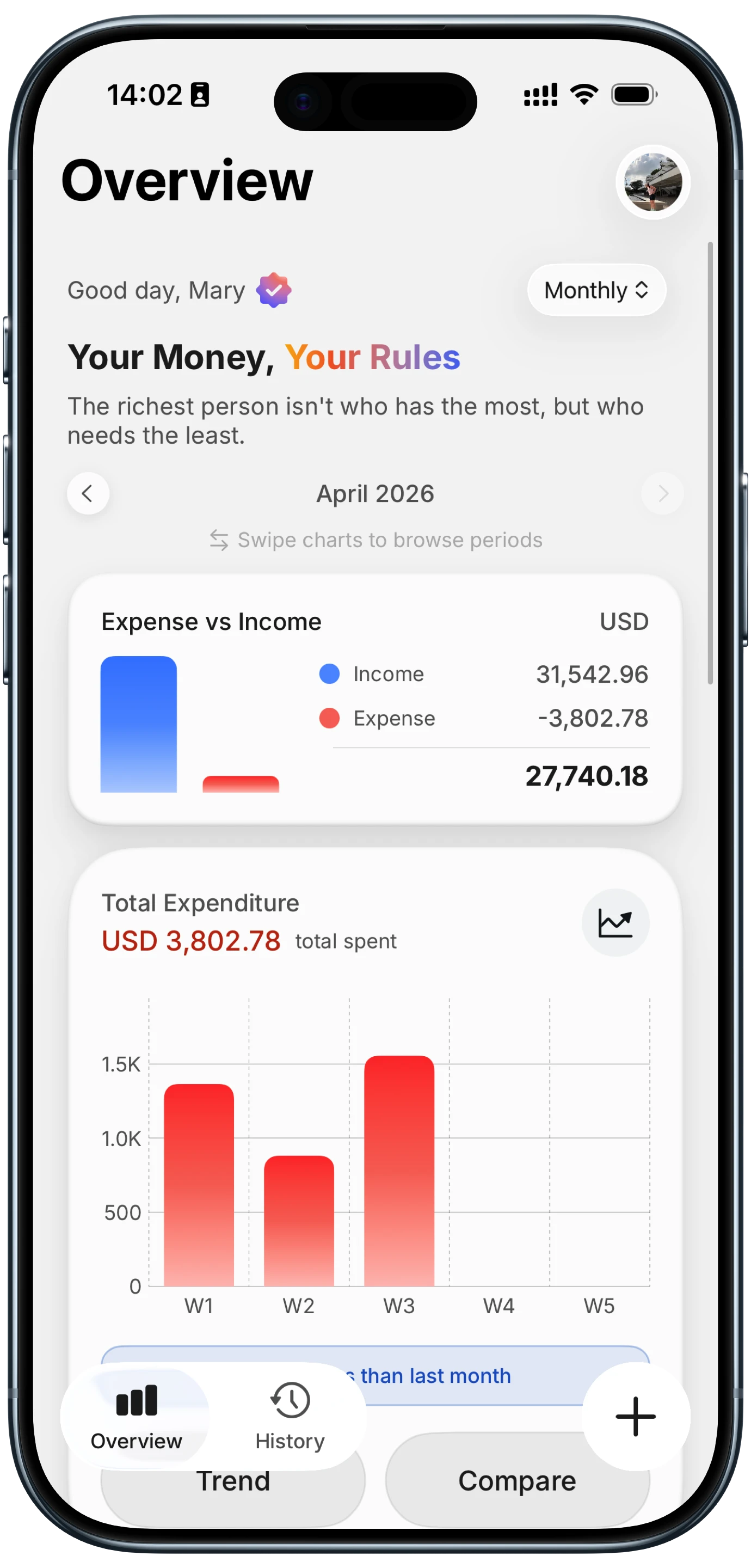
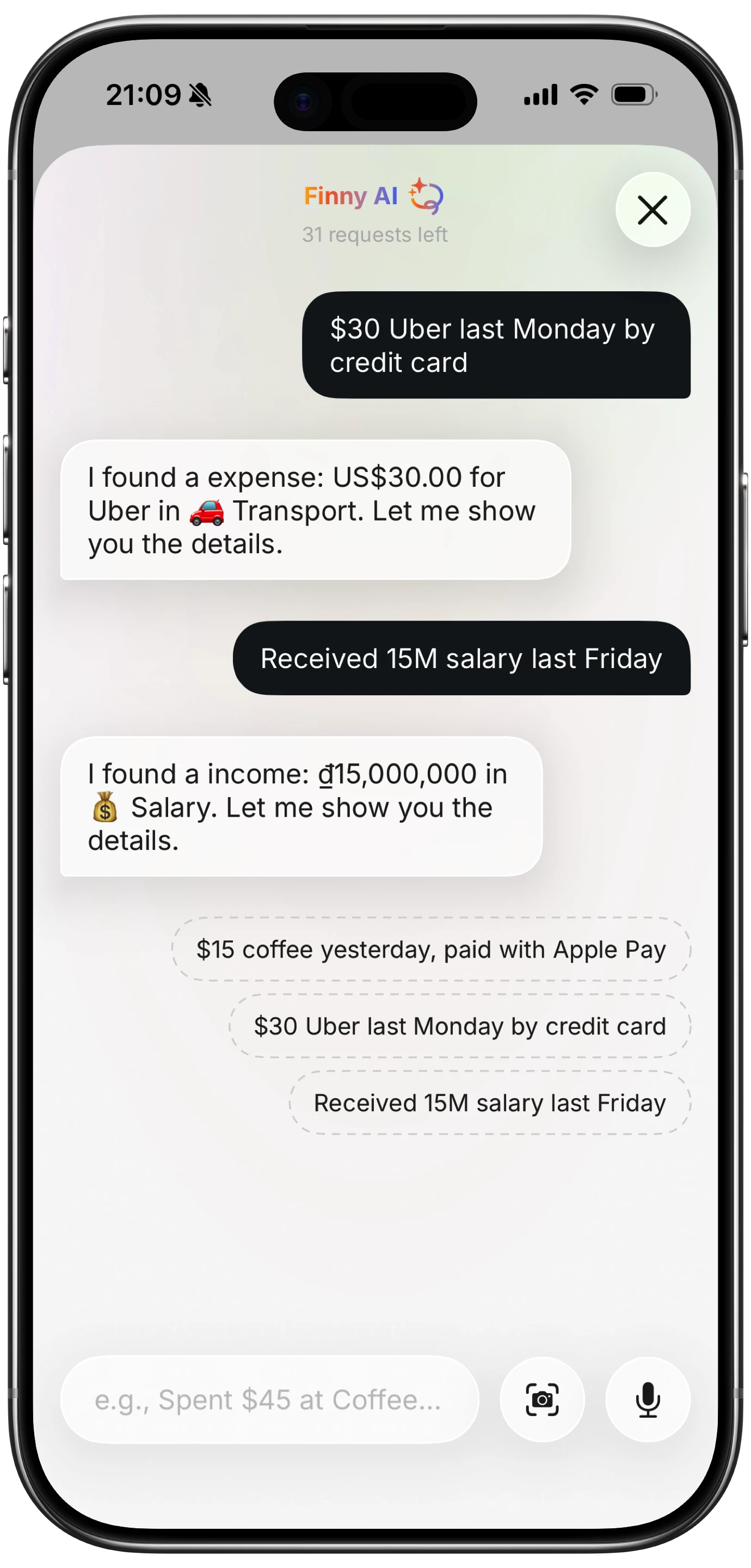
Apps like Finny make this easier by letting you log expenses in seconds with Tap to Track or voice input. When tracking your expenses takes minimal effort, you are far more likely to stick with it. The data adds up, and so do the savings. For a full app roundup, see our best apps to save money in 2026 guide.
Put Windfalls Straight Into Savings
Tax refunds, birthday money, bonuses, cash back rewards, and rebates all count as windfalls. The instinct is to treat this money as "extra" and spend it freely. Instead, route at least 50 percent of every windfall directly to savings.
This single habit can add hundreds or even thousands to your savings each year without changing your regular spending at all. It works because the money never enters your spending routine in the first place.
If you receive a tax refund of $2,000 and save half, that is $1,000 toward your goal with zero lifestyle change.
How Fast Can You Realistically Save?
The speed depends on your income, expenses, and how aggressively you apply these strategies. Here is a rough framework:
| Monthly Income | Aggressive Saving (25%) | Moderate Saving (15%) | Light Saving (10%) |
|---|---|---|---|
| $3,000 | $750/mo | $450/mo | $300/mo |
| $4,000 | $1,000/mo | $600/mo | $400/mo |
| $5,000 | $1,250/mo | $750/mo | $500/mo |
| $6,000 | $1,500/mo | $900/mo | $600/mo |
At moderate saving rates, someone earning $4,000 per month can save $1,000 in under two months. That timeline shrinks further when you combine cutting subscriptions, selling unused items, and redirecting windfalls.
The key is consistency. Saving $150 per week for eight weeks is more achievable than trying to save $1,200 in a single month.
Frequently Asked Questions
What is the fastest way to save $1,000?
The fastest path combines immediate expense cuts with selling unused items. Cancel unnecessary subscriptions (saving $50 to $150 per month), reduce dining out, and sell things you no longer need. If you can free up $125 per week through these changes, you will reach $1,000 in eight weeks. Redirecting a tax refund or work bonus can get you there even sooner.
How much should I save each month?
A common guideline is 20 percent of your after-tax income, based on the 50/30/20 rule. But any amount is better than nothing. If 20 percent is not realistic right now, start with 10 percent and increase it gradually. The habit matters more than the exact number.
How can I save money when I am living paycheck to paycheck?
Start with the smallest possible step. Even saving $5 per day adds up to $150 per month. Focus on tracking your spending first to find hidden costs like unused subscriptions or frequent small purchases. Then automate whatever amount you can, even if it is just $10 per week. Small, consistent deposits build momentum and prove that saving is possible at your income level. For targeted strategies when money is especially tight, see our guide on how to save money on a low income.
Is it better to save money or pay off debt first?
If you have high-interest debt (above 10 percent), prioritize paying it down while maintaining a small emergency cushion of $500 to $1,000. The interest on credit card debt typically outpaces any return you would earn on savings. Once the high-interest debt is gone, redirect those payments into savings.
How do I stop spending money on things I do not need?
Impulse spending often comes from boredom, stress, or lack of awareness. Start by tracking every purchase for a week. Introduce a 24-hour rule: when you feel the urge to buy something nonessential, wait a full day. Most impulses fade. Removing saved payment methods from shopping apps and unsubscribing from marketing emails also reduces temptation.
Start Today, Not Monday
The best time to start saving was last month. The second best time is right now. Pick one or two strategies from this list and put them into action today. You do not need to overhaul your entire financial life at once.
Track what you spend. Automate what you save. Review your progress weekly. These three habits, done consistently, will move you further than any single dramatic change.
If you want a simple way to stay on top of your spending, download Finny and start tracking in seconds. No bank login required, no complicated setup. Just a clear picture of where your money goes, so more of it goes where you want.