What Is an ETF? How Exchange-Traded Funds Work
If you have looked into investing, you have probably encountered the term ETF. Exchange-traded funds are one of the most popular investment vehicles for both beginners and experienced investors, and for good reason: they combine the diversification of mutual funds with the flexibility of stocks.
An ETF (exchange-traded fund) is a collection of securities, such as stocks or bonds, bundled into a single fund that trades on a stock exchange just like an individual stock. When you buy one share of an S&P 500 ETF, you are buying a tiny piece of all 500 companies in that index. For a broader look at building wealth, see our personal finance guide.
How ETFs Work
An ETF holds a basket of underlying assets. The fund is divided into shares that trade on stock exchanges during market hours. The price of each share fluctuates throughout the day based on supply and demand, as well as the value of the underlying holdings.
When you buy an ETF share through your brokerage, you are not buying the individual stocks or bonds directly. You are buying a share of the fund that holds those assets. This gives you exposure to the entire basket through a single purchase.
The Creation and Redemption Process
ETFs maintain their price close to the value of their underlying holdings through a process involving authorized participants (large financial institutions). When an ETF's price drifts from its net asset value, these participants create or redeem shares to bring the price back in line. This mechanism keeps ETFs trading at or near their fair value.
ETF vs Mutual Fund vs Index Fund
| Feature | ETF | Mutual Fund | Index Fund |
|---|---|---|---|
| Trading | Throughout the day | Once per day at market close | Depends on structure |
| Minimum investment | Price of one share | Often $1,000-$3,000 | Varies |
| Expense ratios | Very low (0.03%-0.20%) | Low to high (0.10%-1.50%) | Very low |
| Tax efficiency | High | Lower | High |
| Fractional shares | Available at most brokers | Standard | Depends |
| Automatic investing | Manual or brokerage feature | Built-in | Built-in |
The key distinction: an ETF trades like a stock with real-time pricing. A mutual fund processes all trades at the end of the day. An index fund is a strategy (passive tracking) that can be structured as either an ETF or a mutual fund.
For most long-term investors, the practical difference between an index ETF and an index mutual fund is minimal. Both get you diversified, low-cost exposure to the market.
Types of ETFs
| Type | What It Holds | Example Use |
|---|---|---|
| Stock index ETFs | Broad market stocks (S&P 500, total market) | Core portfolio building |
| Bond ETFs | Government or corporate bonds | Income, stability |
| International ETFs | Non-US stocks | Global diversification |
| Sector ETFs | Specific industries (tech, healthcare) | Targeted exposure |
| Dividend ETFs | High-dividend-paying stocks | Income generation |
| Commodity ETFs | Gold, oil, or other commodities | Inflation hedge |
Stock index ETFs are by far the most popular for individual investors building long-term wealth. A single total stock market ETF provides exposure to thousands of companies.
Why ETFs Are Popular
Low cost. The average ETF expense ratio has dropped below 0.20%. Many broad market ETFs charge 0.03% or less. For more on why fees matter, see our expense ratio guide.
Accessibility. No minimum investment beyond one share. With fractional shares now available at most brokers, you can start with any dollar amount.
Diversification. One ETF purchase spreads your money across dozens, hundreds, or thousands of securities.
Transparency. Most ETFs publish their holdings daily. You always know what you own.
Tax efficiency. The creation/redemption mechanism means ETFs generate fewer taxable capital gains distributions than mutual funds.
How to Buy ETFs
- Open a brokerage account. Fidelity, Vanguard, Schwab, and others offer commission-free ETF trades.
- Choose your ETFs. A total US stock market ETF and a total international ETF cover most of what you need.
- Place your order. You can buy at market price or set a limit order. During market hours, the order fills in seconds.
- Set up recurring purchases. Many brokerages now support automatic ETF investing on a schedule.
ETF Fees and Hidden Costs
Beyond the expense ratio, watch for:
- Bid-ask spread: The small difference between the buy and sell price. For popular ETFs, this is fractions of a penny. For niche ETFs, it can be larger.
- Brokerage commissions: Most major brokers have eliminated these for ETFs, but check your platform.
- Tracking error: How closely the ETF follows its index. Top-tier ETFs have near-zero tracking error.
How Expense Tracking Supports Regular Investing
Consistent investing matters more than picking the perfect ETF. The challenge is finding money to invest each month.
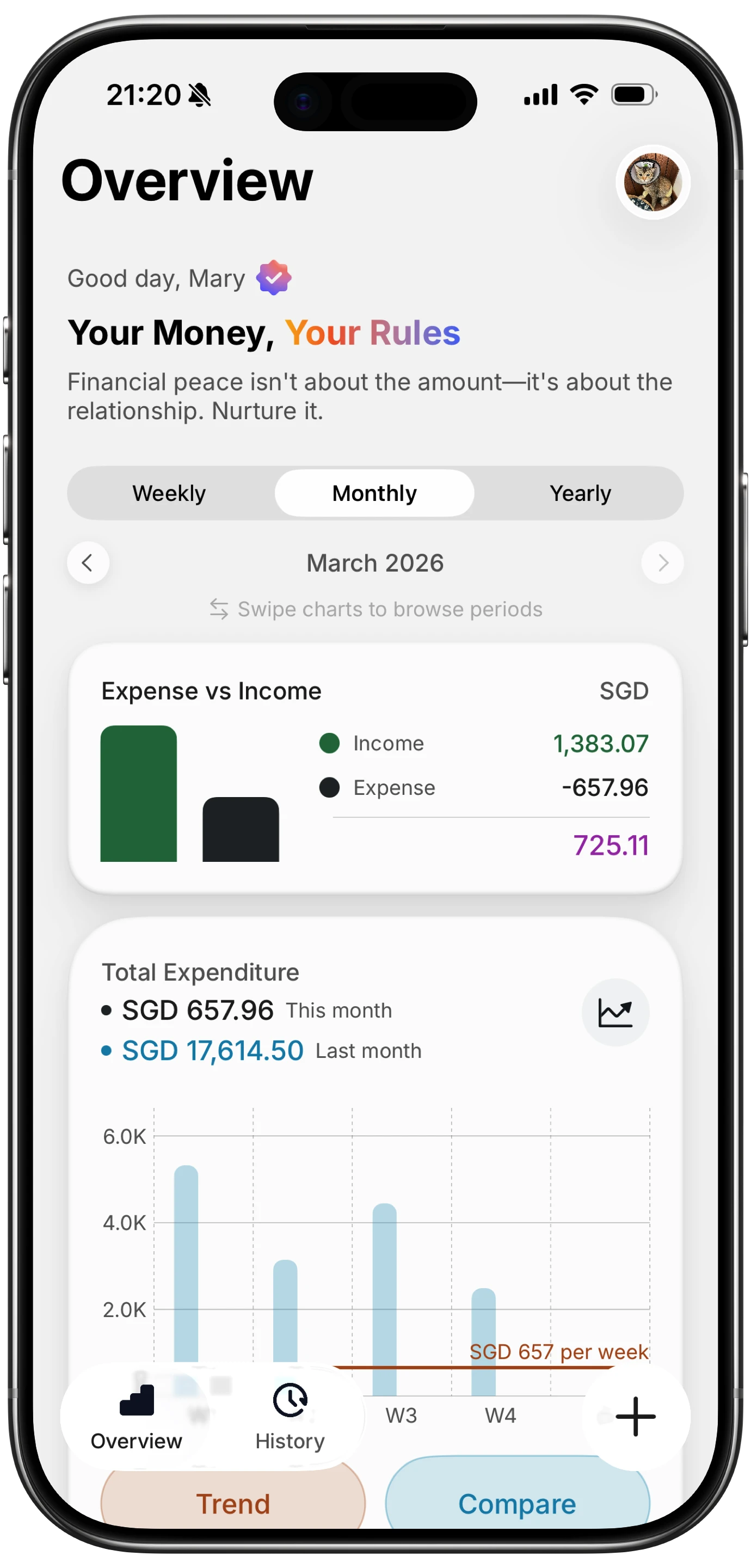
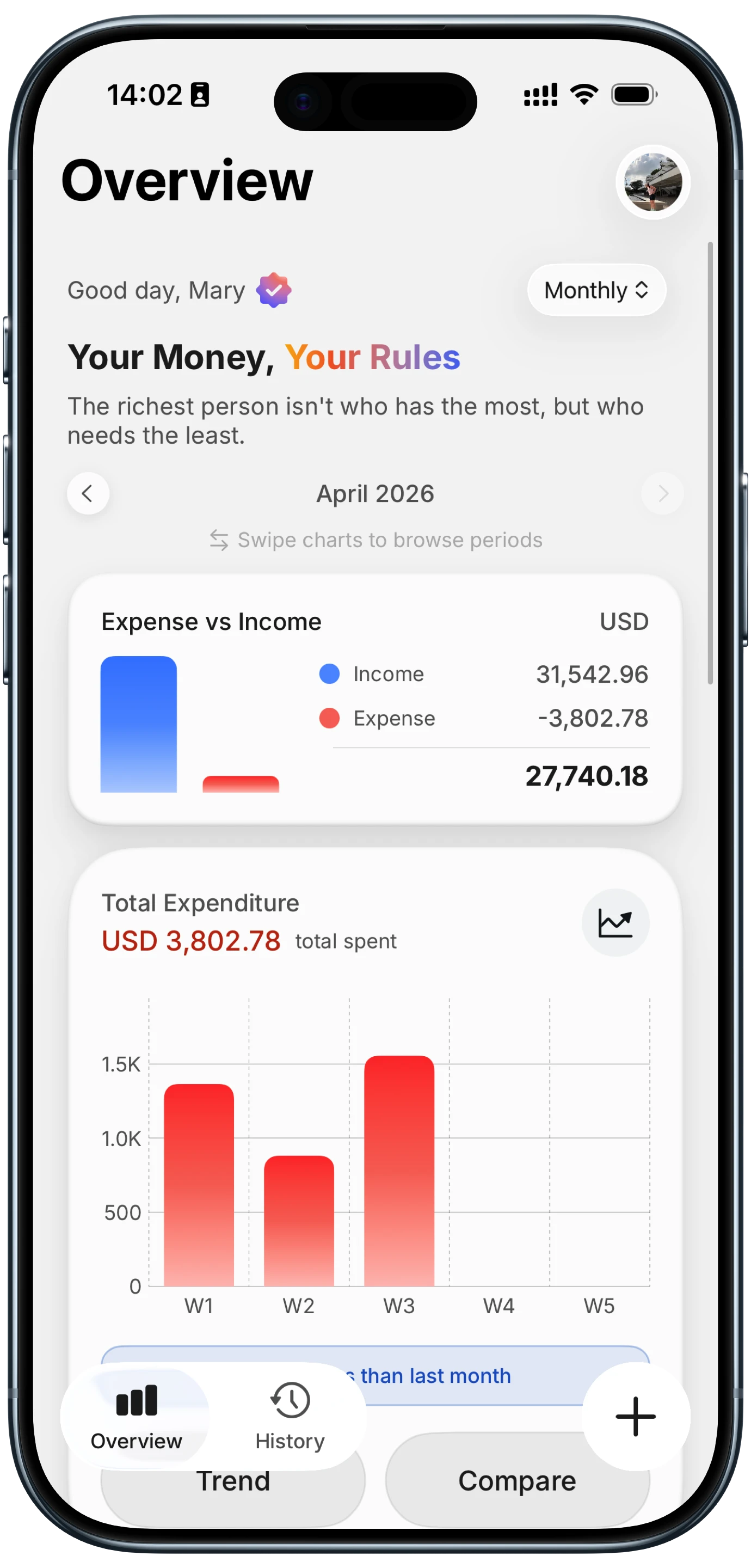
Finny app's Overview feature
Tracking your daily expenses reveals your actual savings capacity. When you know that dining out costs $400/month or subscriptions total $120/month, you can make informed trade-offs. Redirecting even $100/month to ETF purchases adds up to significant wealth over time through dollar cost averaging.
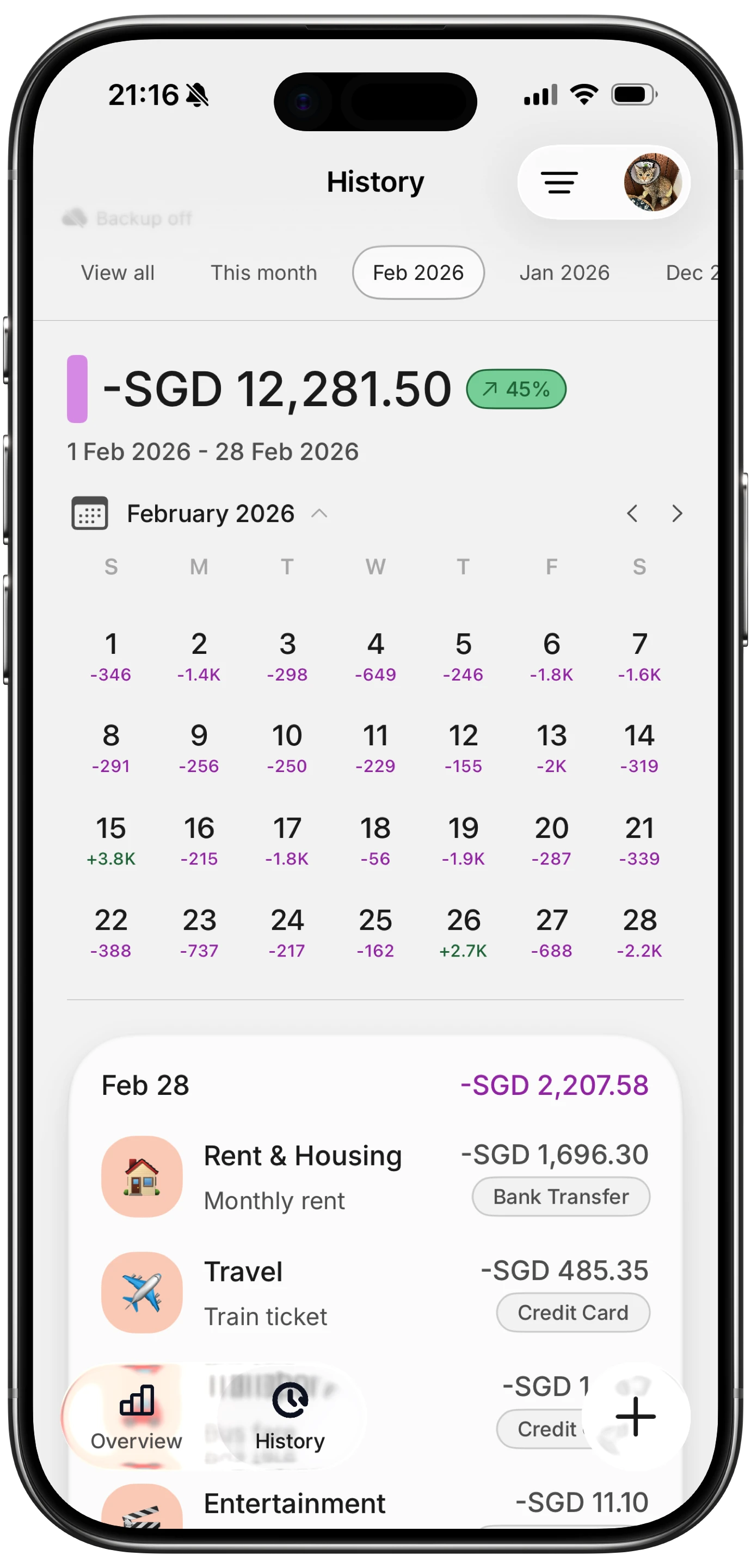
Finny app's History calendar feature
The habit of tracking spending and the habit of investing regularly reinforce each other. Both require small, consistent actions that compound into large results.
Common ETF Mistakes
Overtrading. Because ETFs trade like stocks, it is tempting to buy and sell frequently. This generates taxes and fees that erode returns. Buy and hold is the proven approach.
Chasing niche ETFs. Sector, thematic, and leveraged ETFs sound exciting but carry higher risk and fees. Broad market index ETFs should form the core of any portfolio.
Ignoring expense ratios. Two S&P 500 ETFs can track the same index but charge very different fees. Always compare expense ratios before choosing.
Not starting because of analysis paralysis. Choosing between nearly identical ETFs delays the most important step, which is investing at all. Any broad market ETF is a reasonable starting point.
The Bottom Line
An ETF is one of the simplest ways to start investing. It gives you diversified exposure to markets at minimal cost, with the flexibility to buy and sell during market hours. For most people, a few broad market index ETFs are all they need to build long-term wealth.
The practical barrier is not choosing the right ETF. It is finding consistent money to invest. That is where understanding your spending makes the difference. When you track expenses and see where every dollar goes, directing a portion toward ETFs becomes a deliberate choice rather than an afterthought.
Common Questions About ETFs
What is the difference between an ETF and a stock?
A stock represents ownership in a single company. An ETF holds a basket of many securities. Buying one ETF share gives you exposure to all the holdings in that fund, providing instant diversification that a single stock cannot.
How much money do I need to start buying ETFs?
You need enough to buy one share, which ranges from $30 to $500 depending on the ETF. Many brokerages now offer fractional shares, so you can start investing with as little as $1.
Are ETFs good for beginners?
Yes. Broad market index ETFs are widely considered one of the best starting points for new investors. They are simple, low-cost, diversified, and do not require stock-picking knowledge.
Do ETFs pay dividends?
Many ETFs do. Stock ETFs pass through dividends from their underlying holdings, typically distributed quarterly. You can reinvest dividends automatically through most brokerages.
Can I lose money in an ETF?
Yes. ETFs carry market risk. If the underlying assets lose value, the ETF loses value. However, broad market index ETFs have historically recovered from every downturn given enough time. They are not guaranteed, but they are well-diversified.
Want to find more money to invest every month?
Download Finny to track expenses with AI-assisted input. Understand your spending, identify savings, and build the investing habit on a foundation of financial awareness.