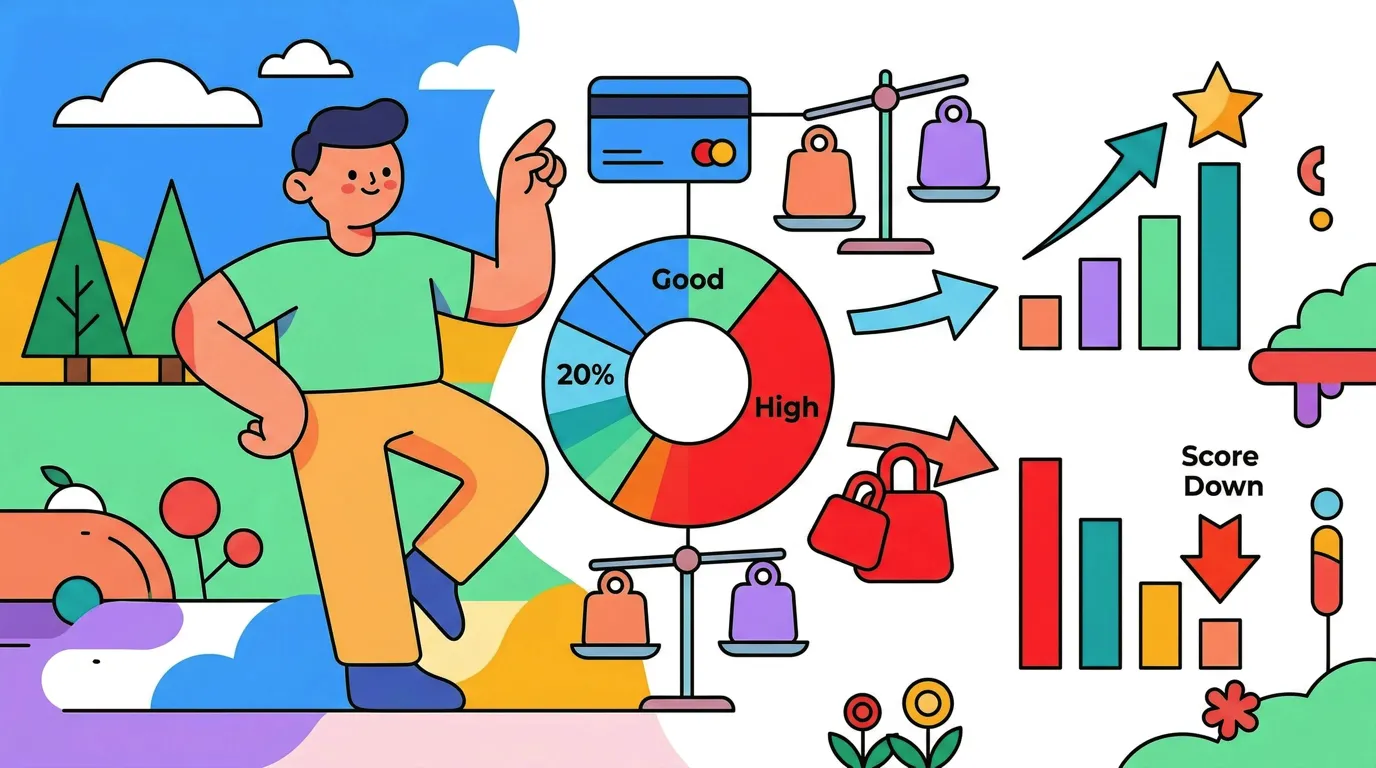
What Is Credit Utilization Ratio? How It Affects Your Score
Your credit score depends on five factors, and credit utilization is the second most important after payment history. Yet many people have never heard the term or do not realize that how much of their available credit they use directly impacts their score.
Credit utilization ratio is the percentage of your available credit that you are currently using. If you have a credit card with a $10,000 limit and a $3,000 balance, your utilization is 30%. Lenders view high utilization as a sign of financial stress, even if you pay your bills on time. For more on how credit scores work, see our credit score guide. Tracking your spending by credit card during the month makes it easier to spot a card that is carrying too much.
How to Calculate Credit Utilization
Credit Utilization = (Total Credit Card Balances / Total Credit Limits) x 100
Per-Card vs Overall Utilization
Both matter. Credit scoring models look at:
- Overall utilization: Total balances across all cards divided by total limits
- Per-card utilization: Each individual card's balance relative to its limit
| Card | Limit | Balance | Per-Card Utilization |
|---|---|---|---|
| Card A | $5,000 | $2,500 | 50% |
| Card B | $10,000 | $500 | 5% |
| Card C | $5,000 | $0 | 0% |
| Total | $20,000 | $3,000 | 15% overall |
In this example, overall utilization is 15% (good), but Card A is at 50% (high). Both numbers influence your score.
What Utilization Percentage Should You Aim For?
| Utilization | Impact on Score |
|---|---|
| 0% | Slightly negative (shows no credit activity) |
| 1%-9% | Best for credit score |
| 10%-29% | Good |
| 30%-49% | Starts hurting your score |
| 50%-74% | Significant negative impact |
| 75%+ | Severe negative impact |
The common advice to "stay under 30%" is a ceiling, not a target. For the best credit score impact, keep utilization under 10%. People with the highest credit scores typically use 1%-5% of their available credit.
Why Utilization Matters So Much
Credit utilization accounts for approximately 30% of your FICO score. It is the most volatile factor because it changes every month based on your balances.
Unlike payment history (which builds slowly over years), utilization can improve your score quickly. Pay down a high balance and your score can jump 20-50 points within a single billing cycle.
This also means utilization can hurt you quickly. A large purchase that pushes your utilization above 50% can drop your score significantly, even if you plan to pay it off next month.
How to Keep Utilization Low
Pay before the statement date. Credit card companies report your balance to credit bureaus on or near your statement date. If you pay before that date, a lower balance is reported.
Make multiple payments per month. Instead of one monthly payment, pay down your balance weekly or bi-weekly. This keeps the reported balance low even if you use the card frequently.
Request a credit limit increase. If your spending stays the same but your limit goes up, your utilization percentage drops. Only do this if you will not be tempted to spend more.
Spread spending across cards. Instead of putting everything on one card and maxing it out, distribute spending to keep per-card utilization low.
Do not close old cards. Closing a card reduces your total available credit, which increases your utilization ratio. Keep old cards open even if you rarely use them.
How Expense Tracking Prevents High Utilization
High utilization often happens because people lose track of their credit card spending. A $200 dinner here, a $150 online order there, and suddenly you are at 60% utilization without realizing it.
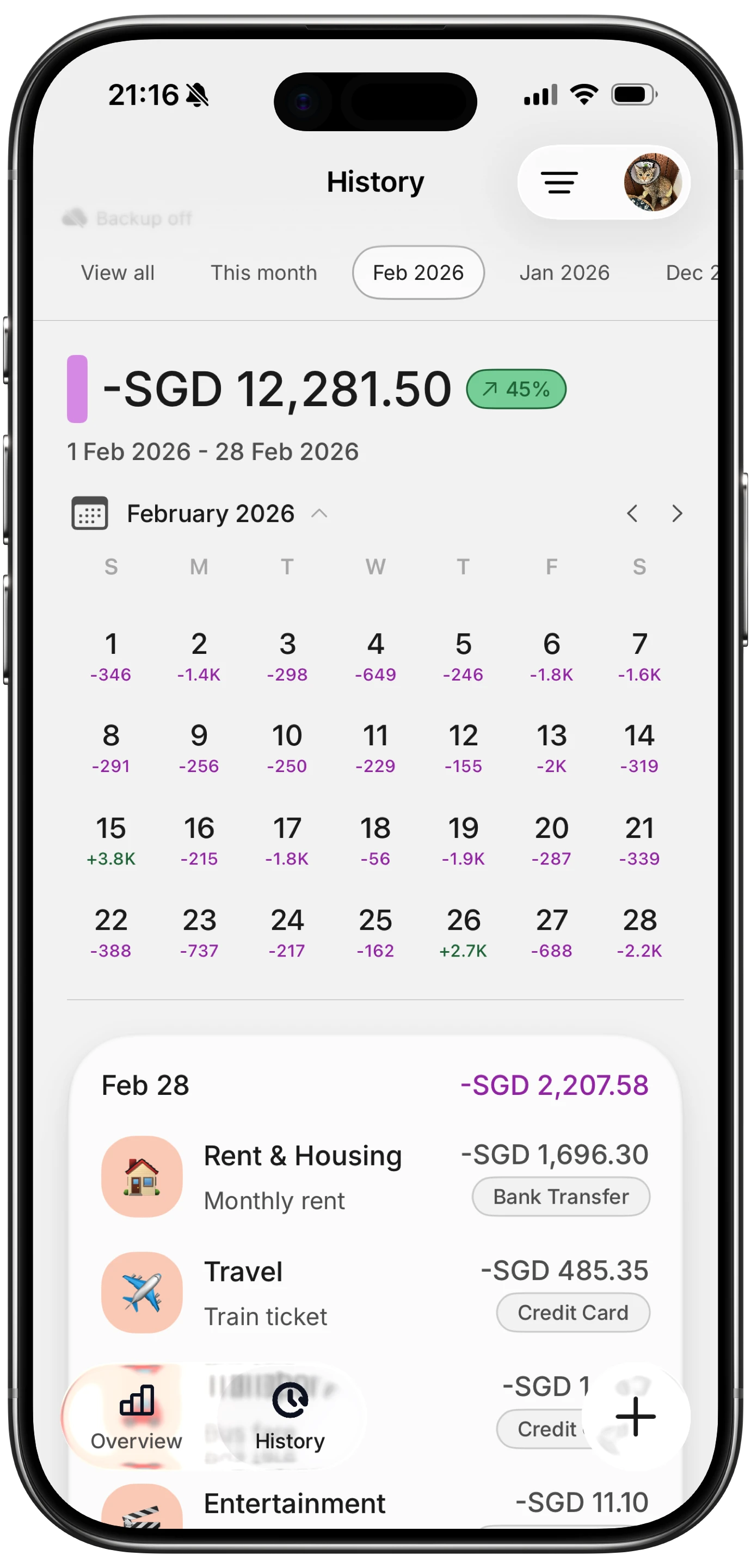
Finny app's History calendar feature
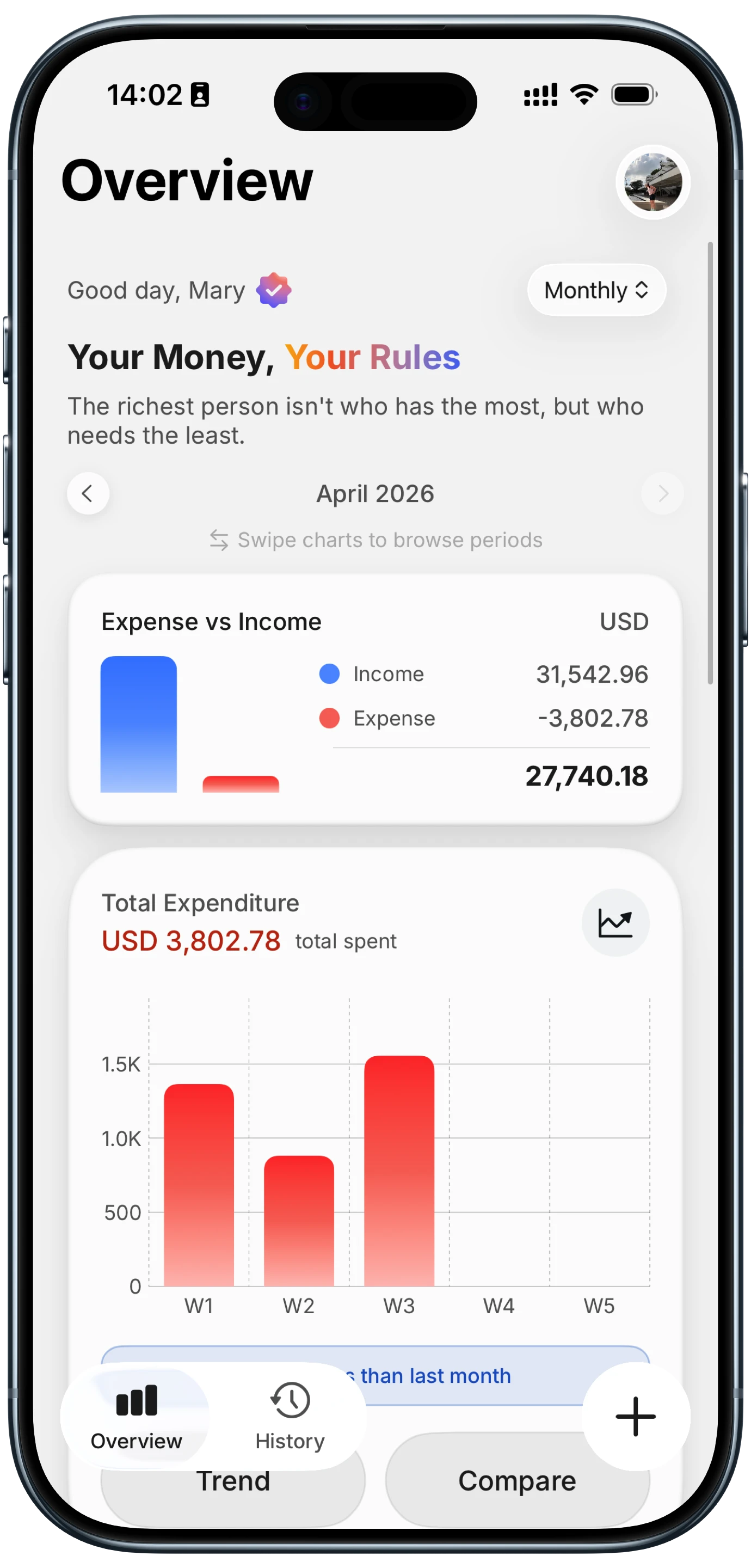
Tracking every expense in real time gives you visibility into your running balance. When you log "dinner $85" and "groceries $120" as they happen, you always know approximately where your utilization stands.
This is especially important if you use credit cards for daily purchases to earn rewards. The rewards strategy only works if you keep utilization low and pay the full balance. Tracking ensures you do not accidentally overshoot.
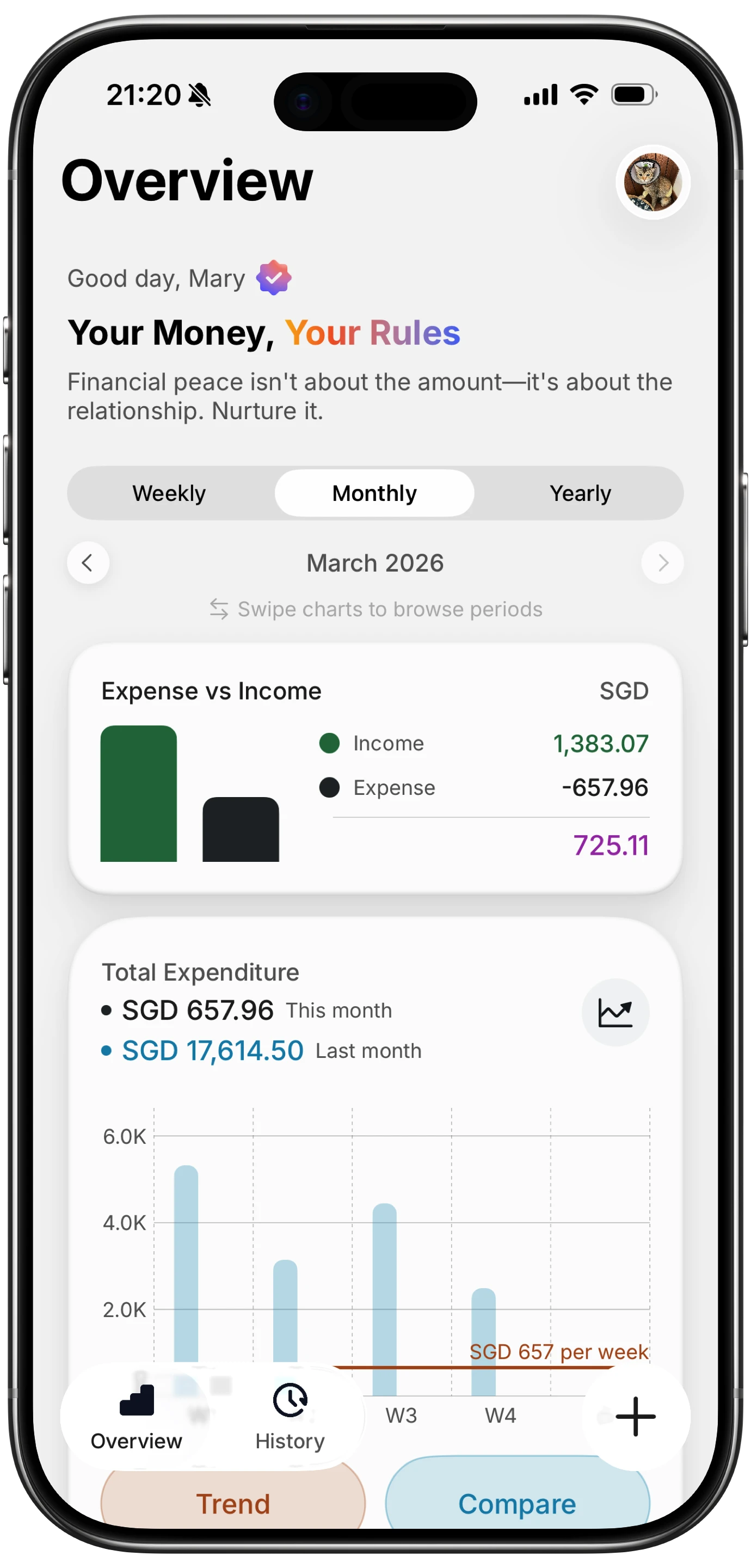
Finny app's Overview feature
For strategies on managing credit card spending within your budget, see our guide on how to stop overspending.
Utilization and Timing: When It Matters Most
Credit utilization is not a permanent record. Scoring models only look at your most recently reported balances. This means:
Before applying for a loan. Pay down your credit cards to under 10% utilization one to two billing cycles before applying for a mortgage, car loan, or new credit card. This gives you the best score possible for the application.
After a large purchase. If you put a big expense on a credit card, pay it off before the statement date to avoid the utilization spike being reported.
Monthly fluctuations are normal. Your utilization changes every month. A single month of high utilization has minimal long-term impact as long as you bring it back down.
The Bottom Line
Credit utilization is one of the most actionable factors in your credit score. Unlike payment history, which takes years to build, utilization can be improved within a single billing cycle. Keep overall utilization under 10%, watch per-card utilization, pay before statement dates, and track your spending so you always know where you stand. For a related ratio that lenders look at when you apply for a mortgage or large loan, see our debt-to-income ratio guide.
Common Questions About Credit Utilization
Does paying my credit card in full affect utilization?
It depends on when you pay. If you pay before the statement date, a low balance is reported. If you pay after, the full statement balance is reported to credit bureaus even though you paid in full. The utilization hit is temporary but real.
Is 0% utilization good for my credit score?
Not quite. Some scoring models slightly penalize 0% utilization because it shows no credit activity. Using your cards for small purchases and paying in full is better than not using them at all.
How fast does credit utilization affect my score?
Very fast. Changes to utilization are reflected in your credit score within one to two billing cycles, typically 30 to 60 days.
Does utilization on a debit card matter?
No. Debit cards are not credit products and are not reported to credit bureaus. Only credit card balances and lines of credit affect your utilization ratio.
Should I close credit cards I do not use?
Generally, no. Closing a card reduces your total available credit, which increases your utilization ratio. Keep old cards open with a small occasional purchase to maintain the account.
Want to keep your credit card spending in check?
Download Finny to track every purchase in real time with AI-assisted input. Know your running balance, stay under utilization targets, and protect your credit score.