What Is Debt-to-Income Ratio? How to Calculate Yours
When you apply for a mortgage, auto loan, or credit card, lenders look beyond your credit score. They want to know how much of your income is already committed to debt payments. That measurement is your debt-to-income ratio, and it can determine whether you get approved, denied, or offered unfavorable terms.
Your debt-to-income ratio (DTI) is the percentage of your gross monthly income that goes toward monthly debt payments. It tells lenders (and you) how much financial room you have to take on additional obligations. For a broader overview of managing your finances, see our personal finance guide.
How to Calculate Your DTI
The formula is straightforward:
DTI = (Total Monthly Debt Payments / Gross Monthly Income) x 100
What Counts as Debt Payments
- Mortgage or rent payment
- Car loan payments
- Student loan payments
- Credit card minimum payments
- Personal loan payments
- Child support or alimony
- Any other recurring debt obligation
What Does Not Count
- Utilities (electricity, water, internet)
- Insurance premiums (unless bundled with mortgage)
- Groceries and food
- Subscriptions
- Transportation costs beyond car payments
Example Calculation
| Monthly Debt Payment | Amount |
|---|---|
| Mortgage | $1,500 |
| Car loan | $400 |
| Student loans | $300 |
| Credit card minimums | $150 |
| Total debt payments | $2,350 |
If your gross monthly income is $6,500:
DTI = ($2,350 / $6,500) x 100 = 36.2%
What Is a Good Debt-to-Income Ratio?
| DTI Range | Rating | Lender View |
|---|---|---|
| Under 20% | Excellent | Best rates and terms available |
| 20%-35% | Good | Approved for most loans |
| 36%-43% | Acceptable | May face higher rates or conditions |
| 44%-50% | High | Difficult to get approved for mortgages |
| Over 50% | Critical | Most lenders will decline |
For conventional mortgages, most lenders require a DTI below 43%. FHA loans may allow up to 50% in some cases. For the best interest rates, aim for under 36%.
Front-End vs Back-End DTI
Mortgage lenders often look at two DTI numbers:
- Front-end DTI: Housing costs only (mortgage, taxes, insurance) divided by income. Ideally under 28%.
- Back-end DTI: All debt payments divided by income. Ideally under 36%.
Why Your DTI Matters Beyond Lending
Even if you are not applying for a loan, your DTI is a useful personal metric. It tells you how much of your income is locked into obligations versus available for saving, investing, and discretionary spending.
A DTI over 40% means nearly half your income is spoken for before you buy groceries or pay utilities. That leaves very little margin for unexpected expenses, investing, or building an emergency fund.
How to Lower Your DTI
There are only two levers: reduce debt payments or increase income.
Reduce Debt Payments
- Pay off smallest debts first. Eliminating a $150/month payment improves your DTI immediately. For strategies, see our guide on debt snowball vs avalanche.
- Refinance at lower rates. If interest rates have dropped, refinancing can reduce monthly payments.
- Avoid new debt. Each new loan increases your DTI. Delay large purchases until existing debts are reduced.
- Pay more than minimums on credit cards. Reducing balances lowers minimum payments over time.
Increase Income
- Negotiate a raise or promotion.
- Add a side income source. Even $500/month of additional income can meaningfully reduce your DTI percentage.
How Expense Tracking Reveals Your Real DTI Picture
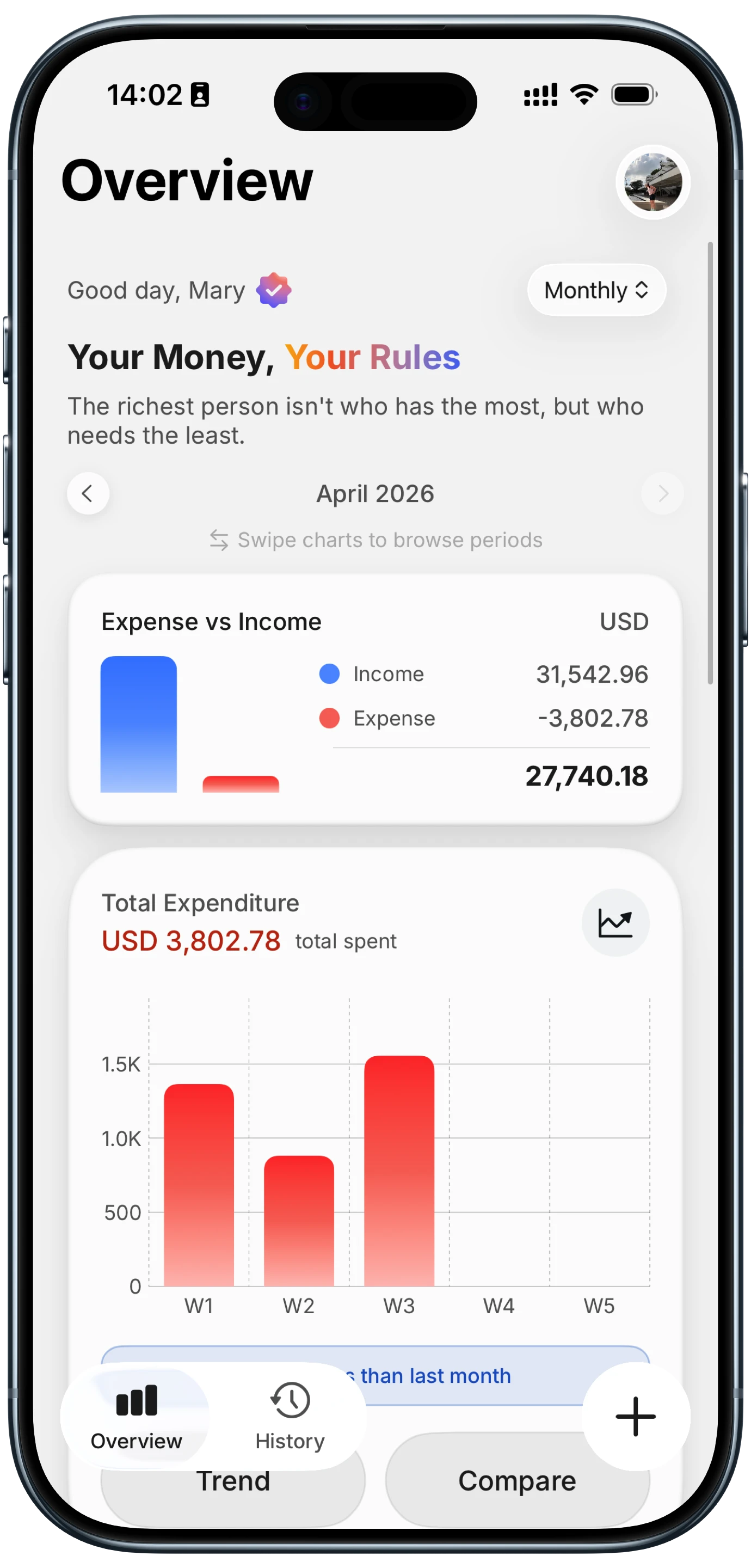
Your official DTI only counts debt payments. But your actual financial flexibility depends on all your spending. Two people with the same DTI can have very different financial health if one spends $500/month on dining out while the other spends $100.
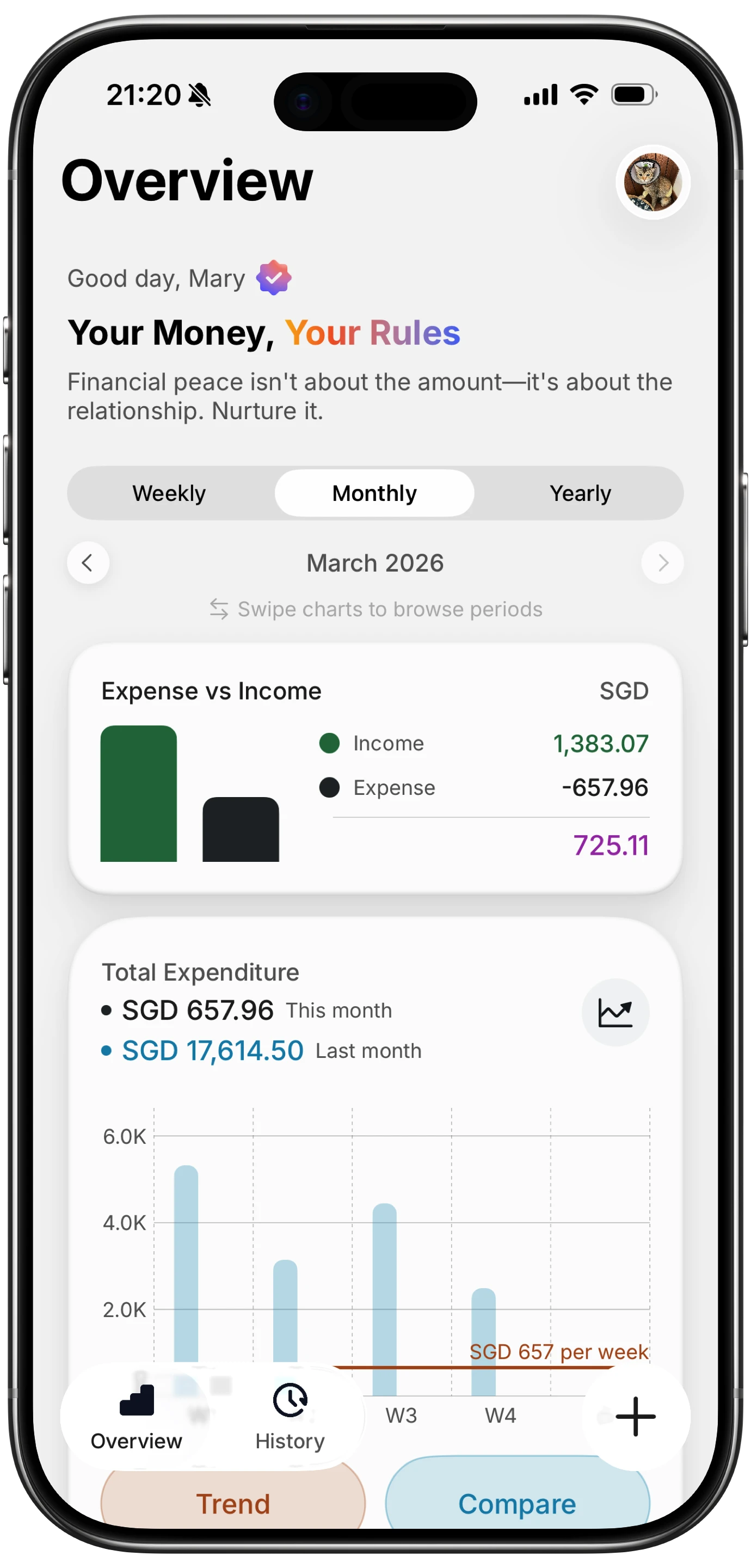
Finny app's Overview feature
Tracking all expenses gives you a complete picture:
- See your total obligations. Debt payments plus essential expenses show your true committed spending.
- Find money for extra debt payments. When you see exactly where discretionary spending goes, you can redirect some toward paying down debt faster.
- Monitor progress. As you pay off debts, tracking shows your DTI improving in real time.
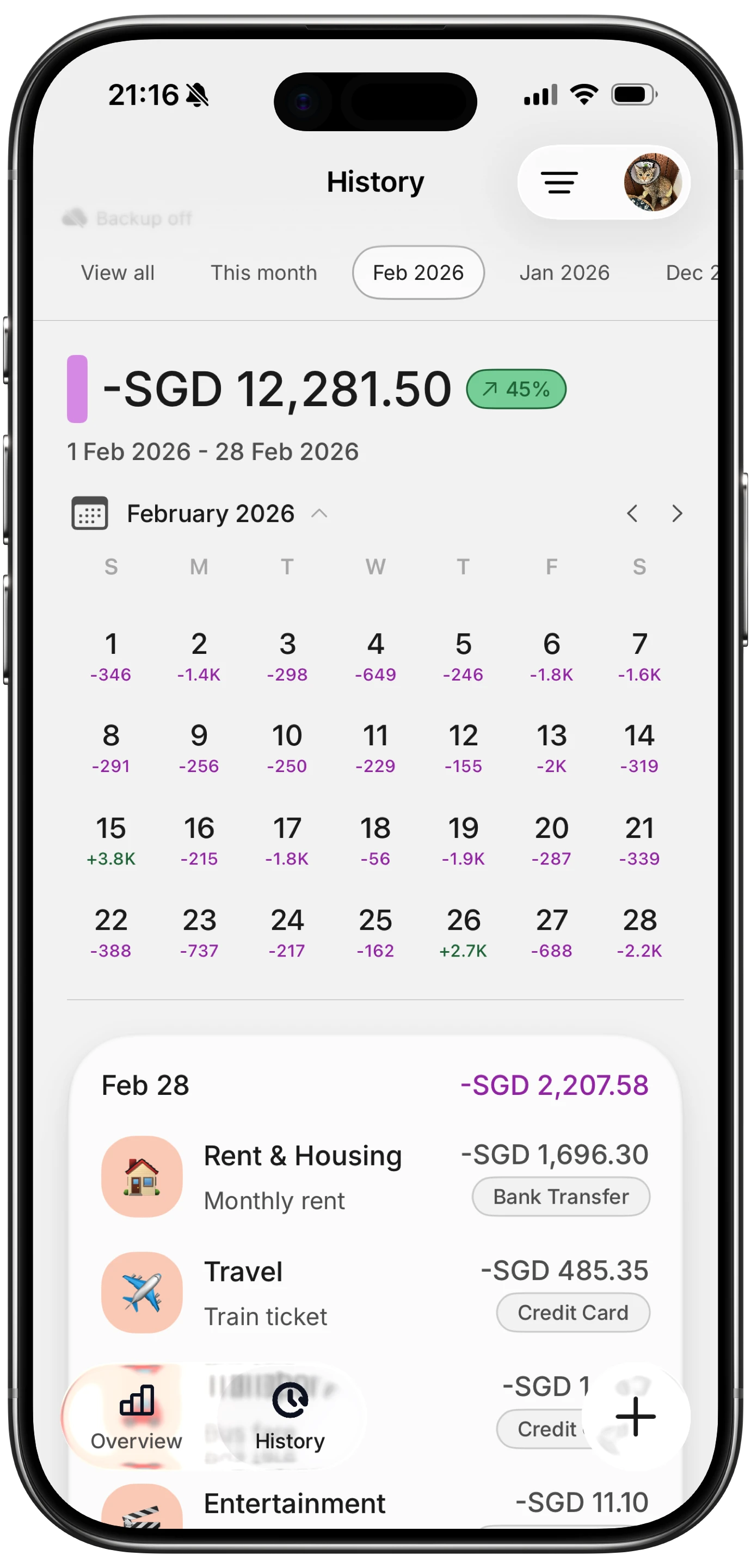
Finny app's History calendar feature
The goal is not just a good DTI number for loan approval. It is building a sustainable financial structure where debt payments consume a manageable portion of your income, leaving room for everything else.
DTI and Major Life Decisions
Your DTI affects more than loan applications:
Renting an apartment. Many landlords check DTI. A ratio over 40% can lead to denial or requiring a co-signer.
Switching jobs. If you are considering a lower-paying job for better quality of life, your DTI tells you whether your debt obligations allow it.
Starting a family. Adding childcare expenses does not change DTI directly, but understanding your debt load helps you plan for reduced income during parental leave.
Retirement planning. Entering retirement with a high DTI means your fixed income must cover significant debt payments, reducing your quality of life.
The Bottom Line
Your debt-to-income ratio is one of the clearest indicators of financial health. It is simple to calculate, directly affects your access to credit, and reveals how much financial flexibility you actually have.
Lowering your DTI requires either reducing debt or increasing income. Tracking your expenses supports both: it reveals where money is going so you can redirect it toward debt payoff, and it shows you the full picture of your financial commitments beyond just debt payments.
Common Questions About Debt-to-Income Ratio
What is an ideal debt-to-income ratio?
Under 36% is considered good by most lenders. Under 20% is excellent. For mortgage qualification, staying below 43% is typically required for conventional loans.
Does rent count in debt-to-income ratio?
It depends on the context. When applying for a mortgage, your current rent is often excluded since it will be replaced by the mortgage payment. When renting, landlords may calculate DTI including your other debts relative to income.
How quickly can I lower my DTI?
Paying off a small debt can lower your DTI immediately. For example, eliminating a $200/month car payment on a $5,000 income reduces DTI by 4 percentage points. The fastest path is targeting your smallest monthly payments for elimination.
Does my DTI affect my credit score?
Not directly. Credit scores do not use income data. However, high debt levels increase your credit utilization, which does affect your score. DTI and credit score measure different aspects of financial health.
Should I include my spouse's income when calculating DTI?
For joint loan applications, yes. Lenders combine both incomes and both debt obligations. For personal financial planning, calculate both individual and combined DTI to understand each person's financial position.
Want to understand your full financial picture?
Download Finny to track all your expenses alongside debt payments. See where your money goes, find room to pay down debt faster, and improve your DTI with data, not guesswork.