You have multiple debts: credit cards, maybe student loans, perhaps a car payment. You know you should pay them off aggressively, but where do you start? Which debt gets extra payments while others receive minimums? Before diving into strategy, it helps to understand the difference between good debt and bad debt, since not all debt is equally urgent to pay off.
Two strategies dominate this decision: the debt snowball (smallest balance first) and the debt avalanche (highest interest rate first). Both work. Both have devoted advocates. Neither is universally correct. If your priority is speed on the high-interest accounts, our guide on how to pay off bad debt fast walks through the aggressive tactics that pair with either method.
This guide explains how each method works, compares them with real numbers, and helps you choose based on your actual situation rather than theoretical optimization. For broader budgeting context, see budgeting for beginners.
How Debt Snowball Works
The debt snowball method prioritizes psychological momentum over mathematical optimization.
The Process
- List all debts from smallest balance to largest
- Make minimum payments on all debts
- Put all extra money toward the smallest balance
- When the smallest is paid off, roll that payment into the next smallest
- Repeat until debt-free
Why It Works Psychologically
Paying off debts quickly provides dopamine hits that sustain motivation:
- First debt eliminated in weeks, not years
- Visible progress maintains commitment
- Each payoff creates sense of achievement
- Reduced number of debts simplifies life
Example: Debt Snowball
| Debt | Balance | Interest Rate | Minimum Payment |
|---|---|---|---|
| Store card | $800 | 24% | $25 |
| Credit card | $4,500 | 19% | $90 |
| Car loan | $12,000 | 6% | $350 |
| Student loan | $28,000 | 5% | $280 |
Extra monthly payment available: $500
Snowball order:
- Store card ($800) - paid off in ~2 months
- Credit card ($4,500) - paid off with rolled payments
- Car loan ($12,000) - paid off with accumulated payments
- Student loan ($28,000) - final target
The store card disappears almost immediately, providing early motivation. Each subsequent payoff adds more payment power to the next target.
How Debt Avalanche Works
The debt avalanche method prioritizes mathematics over psychology.
The Process
- List all debts from highest interest rate to lowest
- Make minimum payments on all debts
- Put all extra money toward the highest-rate debt
- When that debt is paid off, roll that payment into the next highest rate
- Repeat until debt-free
Why It Works Mathematically
Higher interest rates cost more over time. Eliminating them first minimizes total interest paid:
- Stops the most expensive debt from growing
- Reduces total cost of debt payoff
- Optimal strategy in pure financial terms
- Faster payoff in total months (usually)
Example: Debt Avalanche
Using the same debts:
| Debt | Balance | Interest Rate | Minimum Payment |
|---|---|---|---|
| Store card | $800 | 24% | $25 |
| Credit card | $4,500 | 19% | $90 |
| Car loan | $12,000 | 6% | $350 |
| Student loan | $28,000 | 5% | $280 |
Avalanche order:
- Store card ($800, 24%) - highest rate, paid first
- Credit card ($4,500, 19%) - next highest
- Car loan ($12,000, 6%) - third priority
- Student loan ($28,000, 5%) - lowest rate, paid last
In this case, avalanche and snowball happen to align (smallest balance is also highest rate). When they differ, the comparison becomes meaningful.
Side-by-Side Comparison
Consider a different debt situation where methods diverge:
| Debt | Balance | Interest Rate | Minimum Payment |
|---|---|---|---|
| Credit card A | $3,000 | 22% | $60 |
| Personal loan | $1,500 | 10% | $75 |
| Credit card B | $8,000 | 18% | $160 |
| Car loan | $15,000 | 5% | $300 |
Extra payment: $400/month
Snowball Order
- Personal loan ($1,500) - smallest, ~3 months
- Credit card A ($3,000) - next smallest
- Credit card B ($8,000) - third
- Car loan ($15,000) - largest
First payoff: Month 3 (Personal loan)
Avalanche Order
- Credit card A ($3,000, 22%) - highest rate, ~6 months
- Credit card B ($8,000, 18%) - next highest
- Personal loan ($1,500, 10%) - third
- Car loan ($15,000, 5%) - lowest rate
First payoff: Month 6 (Credit card A)
The Numbers
Running both scenarios through full payoff:
| Method | Total Interest Paid | Months to Debt-Free | First Win |
|---|---|---|---|
| Snowball | $4,850 | 32 months | Month 3 |
| Avalanche | $4,320 | 31 months | Month 6 |
Avalanche saves: $530 and 1 month Snowball provides: First win 3 months sooner
The mathematical difference is $530 over nearly 3 years. The psychological difference is 3 months versus 6 months to first victory.
When Each Method Works Best
Choose Debt Snowball If:
You have motivation challenges:
- Past attempts to pay off debt failed
- You tend to lose focus on long projects
- Quick wins keep you engaged
You have many small debts:
- Multiple credit cards under $1,000
- Store cards, medical bills, small loans
- Consolidation not practical
Interest rates are similar:
- All debts cluster around 15-20%
- Mathematical advantage of avalanche is minimal
- Psychological advantage of snowball matters more
You need simplified finances:
- Too many minimum payments to track
- Reducing number of debts reduces cognitive load
- Fewer accounts means fewer opportunities for missed payments
Choose Debt Avalanche If:
You are analytically motivated:
- Knowing you chose the optimal strategy motivates you
- You can sustain effort without early wins
- Mathematical correctness matters to you
You have high-rate debt:
- Credit cards at 24%+ coexisting with low-rate loans
- The spread between highest and lowest rate is large
- Interest costs are visibly hurting you
You have large balances at high rates:
- $10,000+ credit card at 22%
- This debt is growing faster than you can pay it
- Every month of high interest matters
You will stick with it regardless:
- Strong financial discipline
- Clear long-term vision
- No history of abandoning financial plans
Hybrid Approaches
You do not have to choose purely one method.
Rate Threshold Hybrid
Pay high-rate debts (above 15%) by avalanche. Pay low-rate debts by snowball.
Logic: Eliminate expensive debt mathematically. Use momentum for cheaper debt.
Smallest First, Then Switch
Start with snowball to eliminate first 1-2 debts and build momentum. Switch to avalanche for remaining debts.
Logic: Get psychological wins early, then optimize for math.
Balance-Rate Ratio
Prioritize debts with high rate relative to balance. A $500 debt at 24% beats a $5,000 debt at 24% because it is eliminated faster while still hitting the high rate.
Logic: Combines elements of both methods.
What the Research Says
Studies on debt payoff behavior reveal:
Completion rates matter more than optimization: Many people abandon debt payoff before completion. A method that keeps you engaged beats a method that is theoretically optimal but gets abandoned.
Small wins significantly impact persistence: Research from Harvard Business Review found that completing small tasks significantly increased motivation to continue larger projects. Snowball leverages this effect.
Psychological factors outweigh mathematical factors for most people: The interest savings from avalanche are typically modest (hundreds to low thousands over years). The behavioral impact of maintaining motivation is larger.
Both methods work when followed consistently: Either approach leads to debt freedom if sustained. The worst outcome is analysis paralysis or method-switching that delays progress.
Using Apps to Track Debt Payoff
Whatever method you choose, tracking progress matters.
What to Track
Debt balances: Update monthly to see progress Interest paid: Monitor the cost of your debt Payoff projections: When will each debt be eliminated? Extra payment allocation: Where is additional money going?
Tracking Options
| App Type | Best For |
|---|---|
| Finny | Tracking expenses to find extra payment money |
| Debt-specific apps | Payoff projections and method comparison |
| Spreadsheets | Full customization and scenario modeling |
| Budgeting apps (YNAB) | Integrating debt payoff with overall budget |
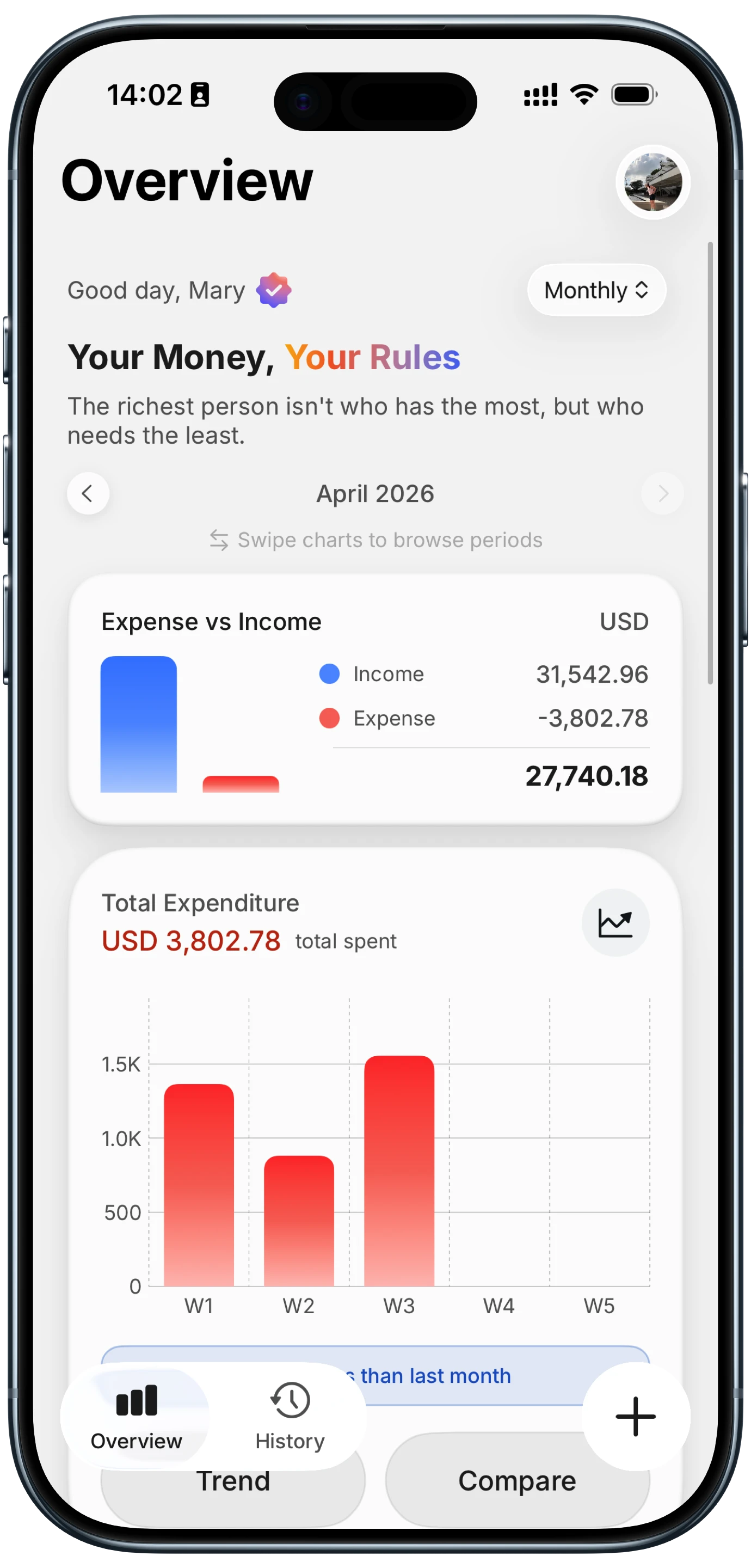
Finny helps by tracking expenses to identify where extra debt payment money can come from. Reducing spending in low-priority categories frees up funds for aggressive debt payoff.
See how to track expenses for strategies to find extra money for debt payments.
Accelerating Either Method
Beyond choosing snowball or avalanche, increase payoff speed:
Find More Money
Expense reduction:
- Audit subscriptions (see stop subscription creep)
- Reduce discretionary categories
- Negotiate bills
Income increase:
- Side gig income directed to debt
- Overtime when available
- Selling unused items
Reduce Interest
Balance transfer cards:
- Move high-rate debt to 0% promotional rate
- Pay aggressively during promotional period
- Watch for balance transfer fees
Debt consolidation loan:
- Combine multiple high-rate debts
- Lower single rate
- Simplified single payment
Direct negotiation:
- Call credit card companies
- Request rate reduction
- Success varies but costs nothing to try
Prevent New Debt
Emergency fund minimum:
- Even $500-1,000 prevents debt for small emergencies
- Build small fund before maximum debt aggression
- See what is an emergency fund
Expense tracking:
- Know where money goes
- Catch spending creep early
- Prevent new debt while paying old
Common Mistakes in Debt Payoff
Paying Extra on Everything
Splitting extra payments across all debts feels fair but slows progress. Concentrate on one target for faster momentum.
Ignoring Minimums
Focusing so hard on the target debt that you miss minimums on others damages credit and triggers fees. Always pay all minimums first.
Not Having a Target
"Paying extra when I can" without a specific method leads to scattered, ineffective effort. Choose a method and follow it.
Stopping When Motivation Drops
Every debt payoff journey has low-motivation periods. Automate payments so progress continues even when enthusiasm fades.
Taking on New Debt While Paying Off Old
The goal is debt elimination, not debt rotation. Avoid new debt unless absolutely necessary during payoff period.
The Bottom Line
Both debt snowball and debt avalanche work. The mathematical difference between them is typically a few hundred to a few thousand dollars over the payoff period. The psychological difference can be the difference between success and abandonment.
Choose snowball if: Motivation is your challenge, you have many small debts, or you need early wins to stay committed.
Choose avalanche if: You are analytically motivated, you have large high-rate debts, and you can sustain effort without quick wins.
Choose hybrid if: Neither pure approach fits perfectly.
What matters most is picking a method, committing to it, and following through. Analysis paralysis wastes months. Perfect method selection saves maybe 5-10% of interest. Consistent execution makes or breaks debt freedom.
Start today with whichever method feels right. Adjust if needed. But start.
Common Questions About Debt Payoff Strategies
Which method pays off debt faster?
Debt avalanche typically pays off debt 1-5% faster in total time by minimizing interest. However, debt snowball provides first wins faster, which helps motivation. Both work if followed consistently.
How do I stay motivated during debt payoff?
Track progress visibly (charts, apps, physical trackers). Celebrate milestones. Automate payments so motivation dips do not stop progress. Consider snowball method if motivation is historically challenging.
Should I save while paying off debt?
Maintain a small emergency fund ($500-1,500) to prevent new debt from emergencies. Beyond that minimum, focus on debt payoff, especially for high-rate debt. Low-rate debt can coexist with moderate saving.
What about debt consolidation?
Consolidation can lower rates and simplify payments. It works best when you will not accumulate new debt during payoff. It fails when people consolidate, then rack up new debt on cleared credit cards.
How do I calculate my debt-free date?
List all debts with balances, rates, and minimum payments. Add extra payment amount. Use a debt payoff calculator (many free online) to project payoff dates under different scenarios.
Ready to track expenses and find more money for debt payoff?
Download Finny to see exactly where your money goes. Identify categories to reduce and redirect that money toward becoming debt-free faster.