What Is Diversification? Why You Should Not Put All Eggs in One Basket
If one stock in your portfolio drops 50%, your reaction depends entirely on how much of your money was in that stock. If it was 2% of your portfolio, you barely notice. If it was 80%, you are in serious trouble. That difference is diversification at work.
Diversification is an investment strategy that spreads your money across different types of assets, industries, and geographies to reduce the impact of any single investment performing poorly. It does not eliminate risk, but it prevents one bad outcome from devastating your finances. For a broader perspective on managing money, see our personal finance guide.
How Diversification Works
The core principle is simple: different investments respond differently to the same events. When tech stocks decline, bond prices often rise. When US markets struggle, international markets may hold steady. By holding a mix, your overall portfolio stays more stable than any individual piece.
This works because asset classes have imperfect correlations. They do not all move in the same direction at the same time. A diversified portfolio captures growth from whatever is performing well while limiting losses from whatever is performing poorly.
A Simple Example
| Portfolio | If Tech Drops 30% | If Everything Drops 15% |
|---|---|---|
| 100% tech stocks | -30% | -15% |
| 50% tech, 50% bonds | -12% | -7.5% |
| 33% US stocks, 33% international, 33% bonds | -8% | -10% |
The diversified portfolios do not avoid losses entirely, but they reduce the magnitude. Over time, this smoother ride makes it easier to stay invested rather than panic-selling during downturns.
Types of Diversification
Asset Class Diversification
Spread investments across fundamentally different asset types:
- Stocks: Higher growth potential, higher volatility
- Bonds: Lower returns, more stability, income through interest
- Real estate: Can provide income and inflation protection
- Cash/money market: Lowest return, highest stability
Geographic Diversification
Do not concentrate everything in one country's economy:
- Domestic stocks: Your home country's market
- Developed international: Europe, Japan, Australia
- Emerging markets: China, India, Brazil, and others with higher growth potential and risk
Sector Diversification
Avoid overconcentration in one industry:
- Technology, healthcare, financials, energy, consumer goods, industrials, utilities
- A broad market index fund automatically provides sector diversification
Time Diversification
Invest consistently over time rather than all at once. This is dollar cost averaging, and it reduces the risk of investing everything at a market peak.
How Much Diversification Do You Need?
Research shows that most of the risk-reduction benefit comes from the first 20 to 30 holdings. Beyond that, adding more individual stocks provides diminishing returns.
The practical solution: index funds. A single total stock market index fund holds thousands of stocks across all sectors. Add a total international fund and a bond fund, and you have comprehensive diversification through just three investments. For more on this approach, see our guide on index funds.
Common Diversification Mistakes
Over-diversification. Holding 15 different funds that all track similar segments of the market adds complexity without reducing risk. Two overlapping S&P 500 funds do not diversify each other.
Home country bias. Many investors put 90%+ of their money in their home country's stock market. The US represents roughly 60% of global market capitalization, not 100%.
Ignoring bonds. Stocks get more attention, but bonds serve a critical role in reducing portfolio volatility, especially as you approach retirement.
Concentration in employer stock. If your income already depends on your employer, holding significant company stock in your 401k doubles your exposure to one company's fortunes.
Confusing diversification with safety. A diversified portfolio still carries risk. It will lose value during market downturns. The benefit is smaller, more manageable losses rather than catastrophic ones.
How Expense Tracking Supports a Diversified Portfolio
Building and maintaining a diversified portfolio requires consistent contributions. The biggest threat to consistent investing is not market volatility. It is running out of money to invest because you did not track your spending.
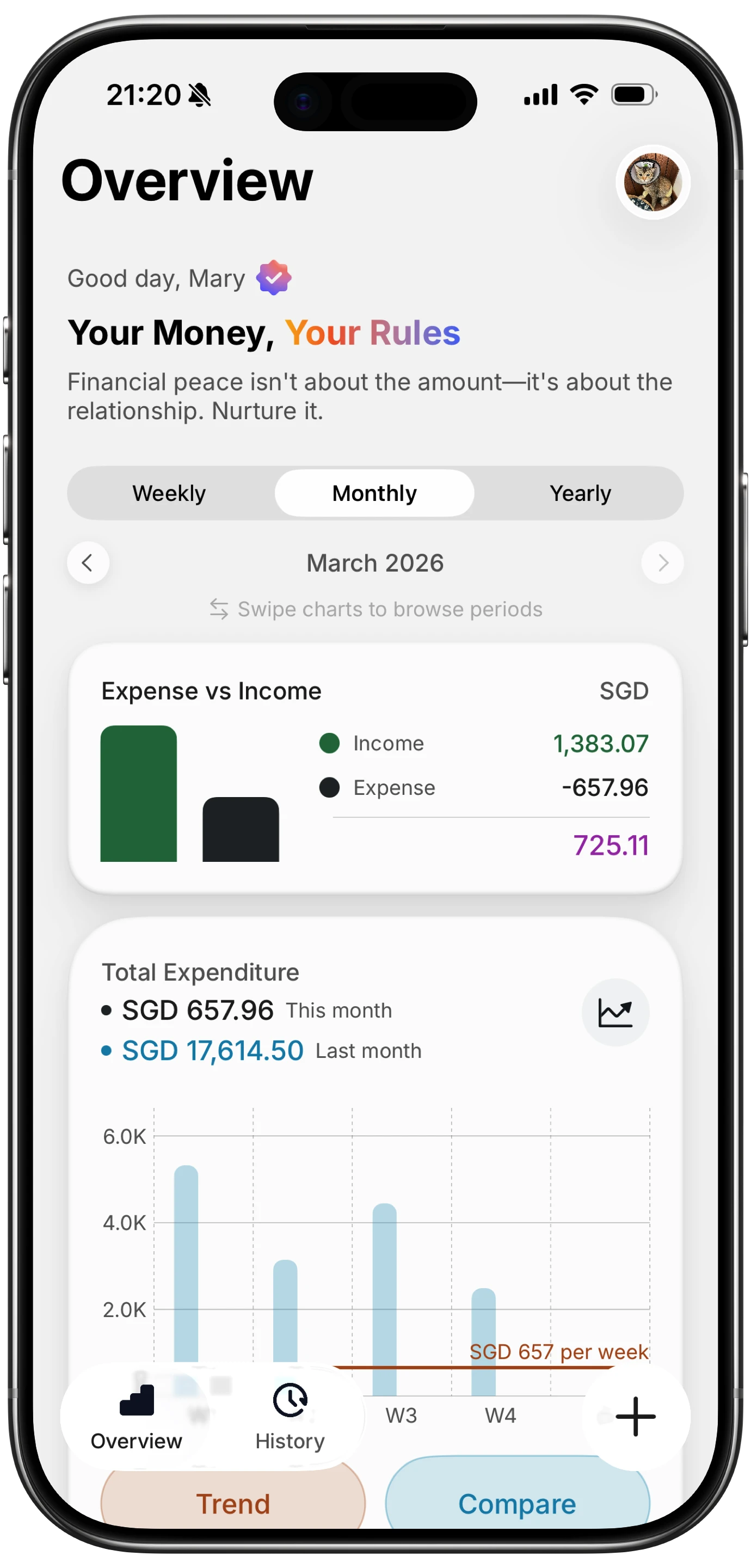
Finny app's Overview feature
When you track expenses, you can:
- Identify a realistic monthly investment amount based on actual spending, not guesses.
- Maintain contributions during tight months because you see exactly where to cut temporarily.
- Avoid selling investments to cover expenses because you have visibility into your cash flow.
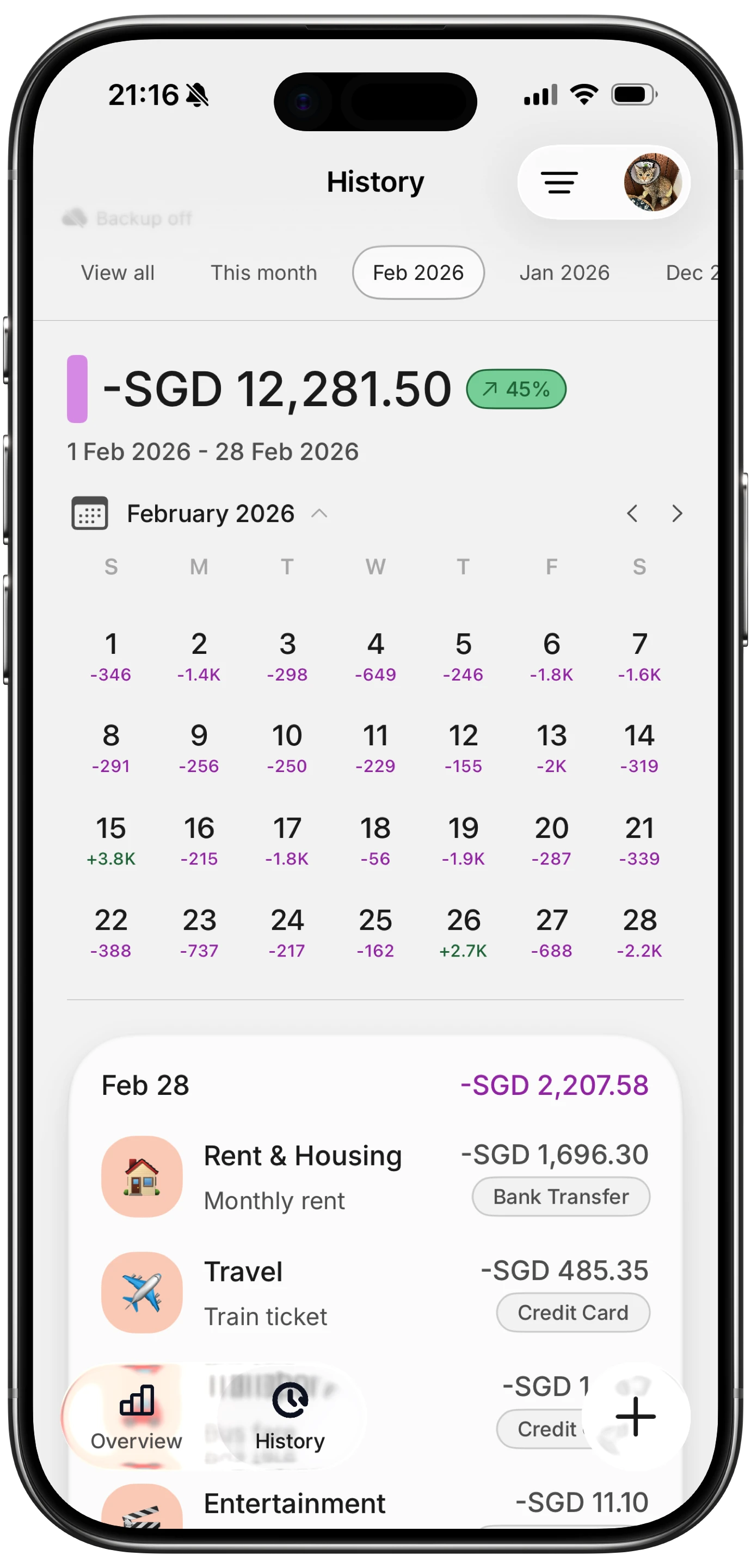
Finny app's History calendar feature
The goal of diversification is staying invested through market cycles. The goal of expense tracking is making sure you always have money to invest. They work together.
The Bottom Line
Diversification is the closest thing to a free lunch in investing. It reduces risk without necessarily reducing long-term returns. The simplest way to achieve it is through a small number of broad market index funds covering US stocks, international stocks, and bonds.
The practical challenge is not building a diversified portfolio. It is funding it consistently. Understanding your spending through daily tracking ensures that investing remains a priority rather than something that only happens when there is money left over.
Common Questions About Diversification
How many investments do I need to be diversified?
With index funds, as few as two or three: a total US stock market fund, a total international fund, and a bond fund. This covers thousands of individual securities through just three purchases.
Does diversification guarantee I will not lose money?
No. Diversification reduces risk but does not eliminate it. During severe market downturns, nearly all asset classes can decline simultaneously. The benefit is that losses are typically smaller and recovery is faster than with a concentrated portfolio.
Should I diversify across different brokerages?
For most individual investors, this is unnecessary. Brokerage accounts are protected by SIPC insurance up to $500,000. If you have more than that, multiple brokerages may make sense.
Is it possible to be too diversified?
Practically, yes. Holding many overlapping funds increases complexity and fees without improving risk-adjusted returns. A simple three-fund portfolio is more diversified than most people realize.
When should I rebalance my diversified portfolio?
Check your allocation annually or when it drifts more than 5% from your target. For example, if stocks surge and your 60/40 stock-bond split becomes 70/30, sell some stocks and buy bonds to rebalance.
Want to invest consistently? Start by understanding your spending.
Download Finny to track daily expenses with AI-assisted input. Know exactly where your money goes so you can direct more of it toward building a diversified portfolio.