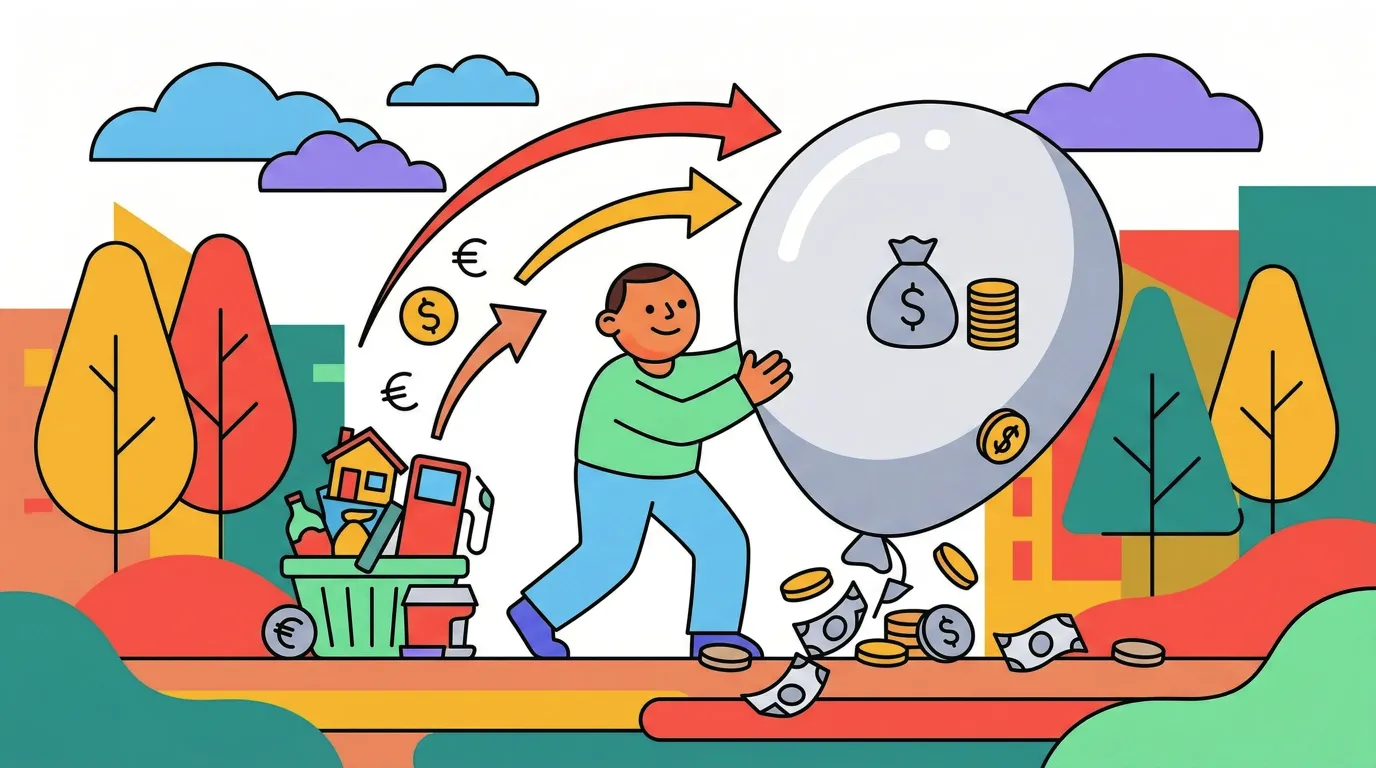
Groceries cost more than they did two years ago. So does rent. So does the oil change you used to budget $40 for. You have not changed your habits, but your money covers less than it used to. That gap between what your dollar bought then and what it buys now has a name.
Inflation is the gradual increase in the general price level of goods and services over time. It means each unit of currency purchases fewer items than it did before. Understanding how inflation works is not just an economics exercise. It directly shapes how you budget, save, and plan for the future. For a broader look at managing your finances, see our complete guide to personal finance.
What Is Inflation in Simple Terms
Inflation is the rate at which prices rise across an economy. When inflation is 3%, something that cost $100 last year now costs $103. Your income may or may not keep pace. If your salary stays the same while prices climb, you are effectively earning less.
A small amount of inflation is considered normal and even healthy. Most central banks, including the U.S. Federal Reserve, target an annual inflation rate around 2%. At that rate, price increases are gradual enough that wages and investment returns can keep up. Problems arise when inflation accelerates beyond that target, or when it persists at elevated levels for extended periods.
Deflation, the opposite of inflation, sounds appealing at first. Prices drop. But widespread deflation discourages spending (why buy today if it will be cheaper tomorrow?), slows economic growth, and can trigger recessions. A modest, steady inflation rate keeps the economy moving.
How Inflation Is Measured: The Consumer Price Index
The most widely cited measure of inflation in the United States is the Consumer Price Index, or CPI. The Bureau of Labor Statistics (BLS) calculates CPI by tracking the prices of a fixed basket of goods and services that a typical urban household purchases. This basket includes categories like:
- Housing (rent, mortgage costs, utilities)
- Food (groceries and dining out)
- Transportation (gas, car payments, public transit)
- Medical care (insurance premiums, prescriptions, doctor visits)
- Education and communication
- Apparel
- Recreation
Each category carries a different weight based on how much of the average household budget it represents. Housing, for example, accounts for roughly one-third of the CPI calculation. When rent rises sharply, it pulls the overall index up even if clothing prices stay flat.
CPI vs. Core CPI
You will sometimes hear about "core CPI," which strips out food and energy prices. These two categories are volatile. Gas prices can spike 20% in a month due to geopolitical events, then drop just as quickly. Core CPI gives economists a cleaner read on underlying price trends, but for your household budget, the headline CPI (including food and energy) is more relevant. You buy groceries and fill your tank regardless of what economists prefer to measure.
Other Inflation Measures
CPI is not the only metric. The Personal Consumption Expenditures (PCE) price index, which the Federal Reserve prefers for policy decisions, measures inflation slightly differently. It accounts for substitution effects (when beef gets expensive, people buy chicken) and covers a broader range of spending. For everyday budgeting purposes, CPI remains the most practical reference point.
How Inflation Affects Your Purchasing Power
Purchasing power is what your money can actually buy. When inflation rises, purchasing power falls. This relationship is straightforward but its consequences compound over time.
Consider a simple example. If inflation averages 3% annually:
| Time Period | Value of $1,000 in Today's Dollars |
|---|---|
| Today | $1,000 |
| 5 years | $863 |
| 10 years | $744 |
| 20 years | $554 |
| 30 years | $412 |
That $1,000 sitting in a checking account earning no interest loses nearly 60% of its purchasing power over 30 years. This is why financial advisors stress investing over long-term saving in low-yield accounts. Even a high-yield savings account may only partially offset inflation.
Where You Feel It Most
Inflation does not hit every category equally. In recent years, housing, healthcare, and education have outpaced general inflation significantly. Someone spending a large share of income on rent and medical expenses may experience a personal inflation rate well above the national average.
Food prices also tend to fluctuate more than the headline number suggests. A 3% overall CPI figure might include 6% food inflation offset by flat electronics prices. Your actual experience depends on where your money goes.
Recent Inflation Trends and What They Mean for You
After years of low inflation hovering near 2%, prices surged beginning in 2021. Supply chain disruptions, increased consumer demand following pandemic-era lockdowns, and energy price spikes pushed CPI above 9% in mid-2022, the highest level in four decades.
The Federal Reserve responded with aggressive interest rate hikes, raising the federal funds rate from near zero to over 5% by mid-2023. These rate increases gradually cooled inflation, and by 2025, CPI had settled closer to the 2-3% range. With inflation moderating, the conversation has shifted to how falling rates affect savers and borrowers. For a closer look at what declining rates mean for your financial decisions, see our post on falling interest rates in 2026.
The key takeaway from this period: inflation can change quickly and dramatically. Budgets built on the assumption that prices stay constant are fragile. Building flexibility into your spending plan is not optional.
How to Adjust Your Budget for Inflation
You cannot control inflation, but you can adapt your budget to account for it. Here are practical steps to keep your spending plan aligned with reality.
1. Review Your Budget Categories Quarterly
Prices shift throughout the year. A budget you set in January may not reflect April's grocery prices or a mid-year rent increase. Review your spending categories every three months and adjust allocations based on what you are actually paying.
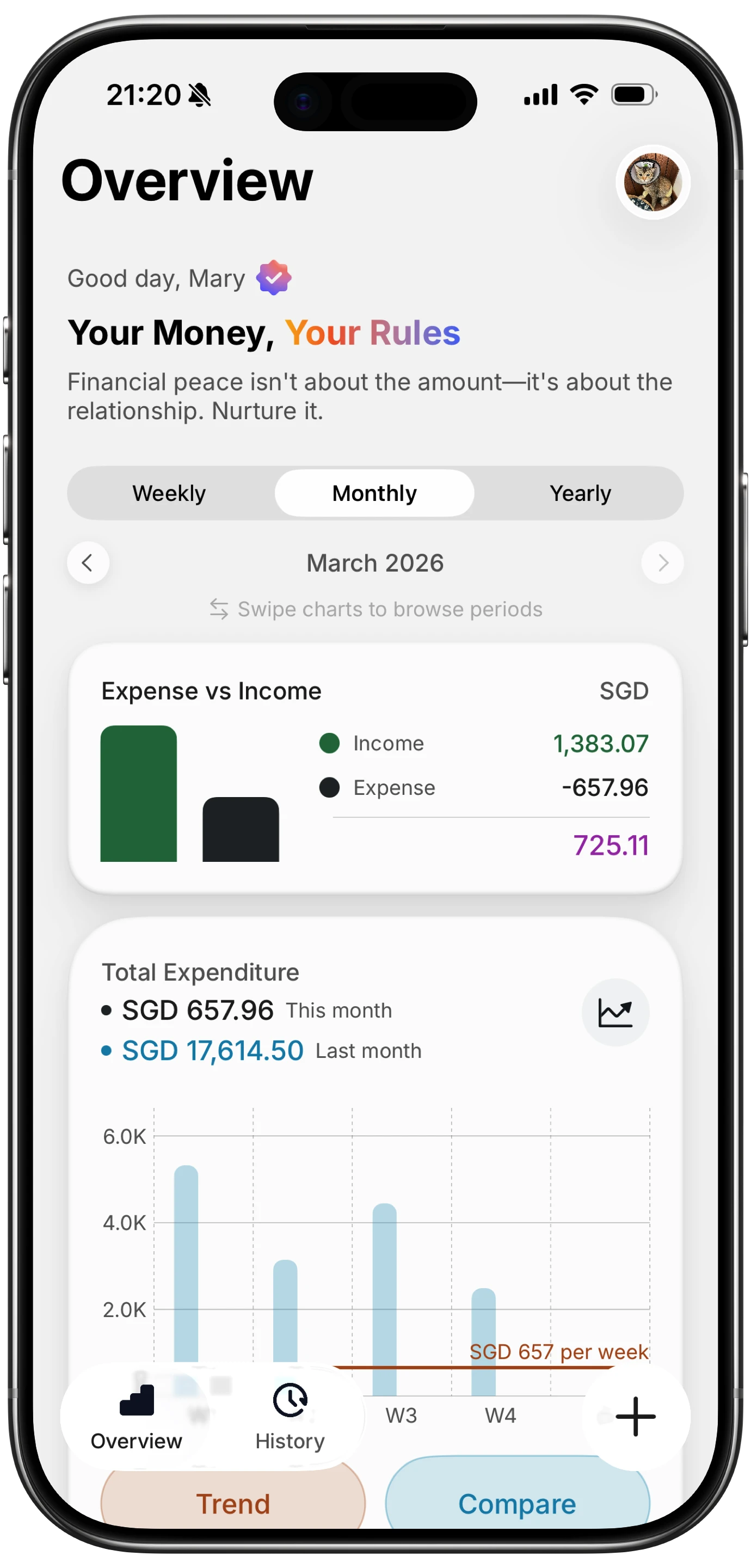
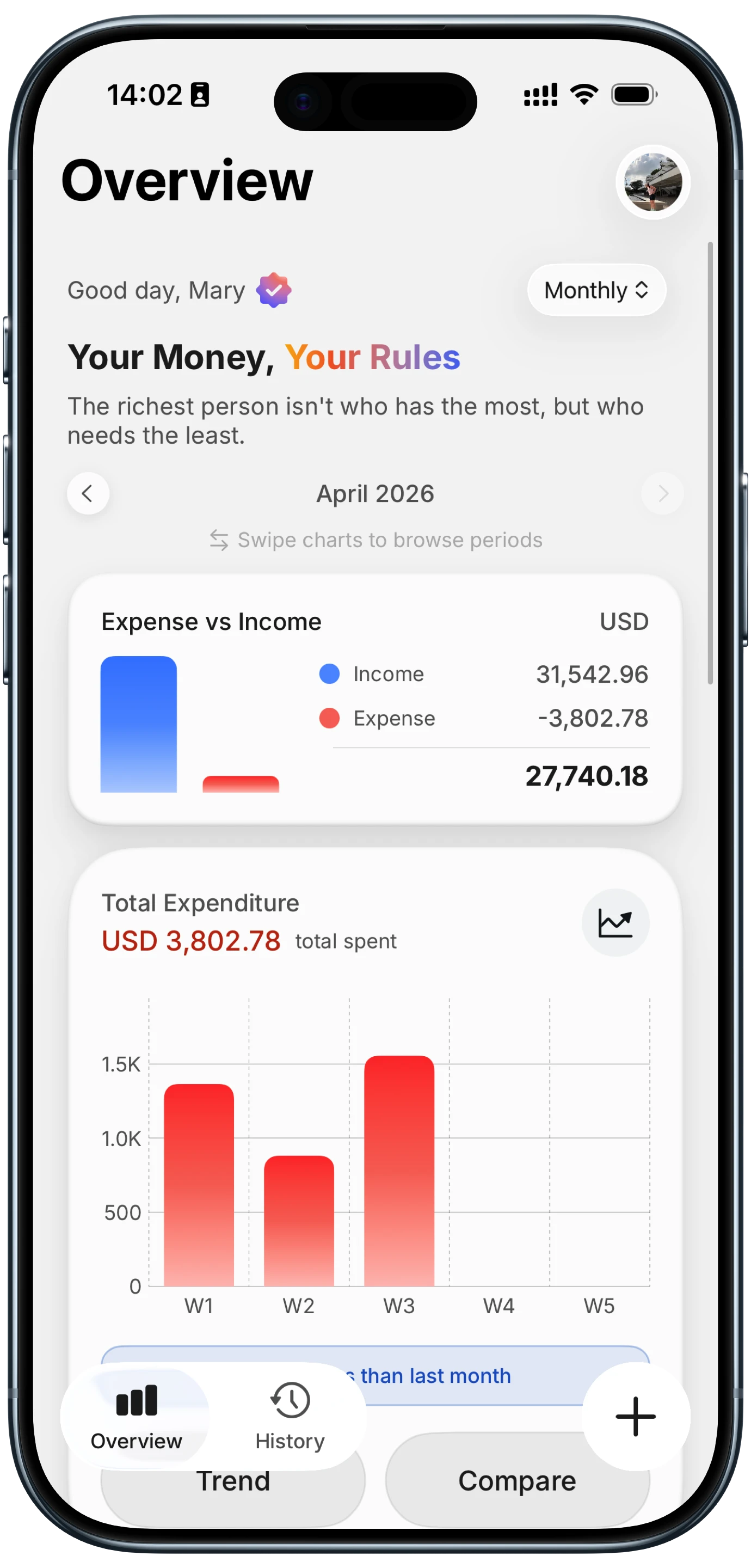
Finny app's Overview feature
An expense tracking app like Finny makes this easier by showing spending trends over time. When your grocery category creeps up by 10% over three months, the data makes it visible before it becomes a crisis.
2. Build a Buffer Into Variable Categories
Fixed expenses like rent and loan payments change on set schedules. Variable expenses like groceries, gas, and utilities fluctuate with inflation in real time. Add a 5-10% buffer to these categories so that price increases do not immediately blow your budget.
3. Prioritize Needs Over Wants When Prices Rise
During periods of higher inflation, discretionary spending is the first place to look for savings. This does not mean eliminating all enjoyment. It means being deliberate about where flexible dollars go. Cooking at home more often, reducing subscription services, or delaying non-urgent purchases can free up room for higher essential costs. For more strategies on controlling discretionary spending, see our guide on how to stop overspending.
4. Negotiate Fixed Costs When Possible
Some "fixed" costs are negotiable. Insurance premiums, phone plans, internet service, and even rent (in some markets) can sometimes be reduced by calling providers and asking for better rates. In an inflationary environment, even small savings on recurring bills add up.
5. Increase Income Strategically
When expenses rise faster than your ability to cut, the other side of the equation matters. Asking for a raise, taking on freelance work, or developing higher-paying skills are longer-term inflation hedges that no budgeting trick can replace.
How Tracking Spending Reveals Your Personal Inflation Rate
The national CPI is an average across millions of households. Your spending patterns are unique. A retiree spending heavily on healthcare experiences different inflation than a young renter spending mostly on food and transportation. Your personal inflation rate is what actually matters for your budget.
Here is how to calculate it:
Step 1: Track Every Expense for at Least Three Months
Consistent expense tracking gives you a baseline. Log every purchase, from rent to coffee, so you have accurate category totals to compare over time.
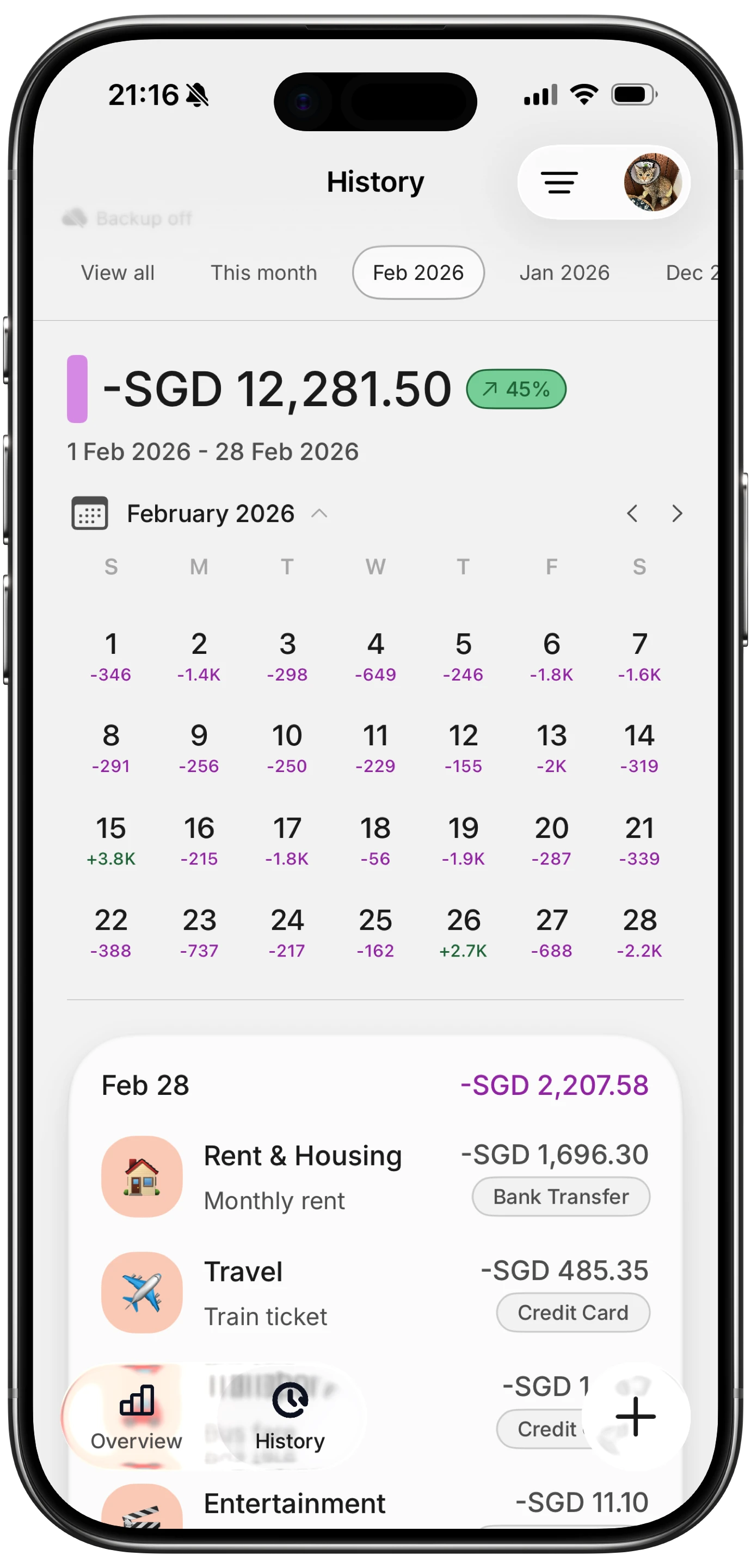
Finny app's History calendar feature
Step 2: Compare the Same Month Year Over Year
Pull your spending data for a specific month (say, January) and compare it to the same month the previous year. Look at each category individually:
| Category | January 2025 | January 2026 | Change |
|---|---|---|---|
| Groceries | $520 | $565 | +8.7% |
| Gas | $180 | $170 | -5.6% |
| Dining out | $200 | $220 | +10.0% |
| Utilities | $150 | $162 | +8.0% |
| Rent | $1,400 | $1,470 | +5.0% |
| Total | $2,450 | $2,587 | +5.6% |
In this example, the household's personal inflation rate is 5.6%, well above the national average. The data tells a story that the headline CPI number cannot.
Step 3: Identify Which Categories Drive Your Inflation
Once you see the numbers, you can act. If groceries are your biggest inflation driver, you might switch stores, buy in bulk, adjust meal plans, or substitute expensive ingredients. If rent is the culprit, the options are different: negotiate renewal terms, consider a roommate, or evaluate whether relocating makes financial sense.
Step 4: Adjust Your Budget Based on Your Data
Use your personal inflation rate, not the national one, to set next month's budget. If your food costs have risen 8% over the past year, budgeting the same amount as last year guarantees overspending.
Finny's visual analytics help here by surfacing month-over-month trends across categories. Instead of guessing whether prices have gone up, you can see exactly how your spending has shifted and plan accordingly.
Inflation and Long-Term Financial Planning
Inflation does not just affect monthly budgets. It shapes long-term financial goals too.
Retirement planning: If you need $50,000 per year in retirement and inflation averages 3%, you will need roughly $90,000 per year in 20 years to maintain the same lifestyle. Retirement calculators that ignore inflation produce dangerously optimistic numbers.
Emergency funds: The conventional advice is to save 3-6 months of expenses. But if your monthly expenses rise with inflation, your emergency fund target should increase too. Review and top up your emergency fund annually.
Debt: Inflation has a silver lining for borrowers with fixed-rate debt. A mortgage payment of $1,500 per month feels smaller over time as your income (ideally) rises with inflation while the payment stays the same. Variable-rate debt, on the other hand, often increases alongside inflation as central banks raise interest rates.
Investments: Cash and low-yield savings accounts lose value to inflation. Historically, diversified stock market investments, real estate, and inflation-protected securities (like TIPS) have outpaced inflation over long periods. Keeping all your savings in a checking account is one of the most reliable ways to lose purchasing power.
The Bottom Line
Inflation is not abstract. It shows up in your grocery bill, your rent, and the gap between what you budgeted and what you actually spent. Understanding how inflation works, how it is measured, and how it specifically affects your household puts you in a position to respond rather than react.
The most powerful tool you have is data. By tracking your spending consistently and comparing it over time, you can calculate your personal inflation rate and adjust your budget before rising prices derail your financial plans. National averages tell part of the story. Your own spending data tells the rest.
Common Questions About Inflation
What is inflation in simple terms?
Inflation is the rate at which prices for goods and services increase over time. When inflation is high, your money buys less than it did before. A 3% inflation rate means something that cost $100 last year now costs $103.
How does inflation affect my savings?
Inflation erodes the purchasing power of money sitting in low-interest accounts. If your savings account earns 1% but inflation is 3%, you are losing 2% in real value each year. High-yield savings accounts and investments can help offset this loss.
What causes inflation?
Inflation can result from increased demand for goods (demand-pull), rising production costs (cost-push), or expansion of the money supply. Often, multiple factors contribute simultaneously. Supply chain disruptions, energy price shocks, and government fiscal policy all play roles.
How can I protect my budget from inflation?
Track your spending to identify your personal inflation rate. Review and adjust your budget quarterly. Build buffers into variable expense categories. Prioritize essential spending during high-inflation periods. Consider investments that historically outpace inflation for long-term savings.
What is the difference between CPI and core CPI?
CPI measures price changes across all consumer goods and services, including food and energy. Core CPI excludes food and energy because their prices are highly volatile. For household budgeting, headline CPI is more relevant since you cannot exclude groceries and gas from your life.
Ready to see how inflation is affecting your actual spending?
Download Finny to track expenses, compare monthly spending trends, and uncover your personal inflation rate. No bank connections required, fully offline capable, and designed to give you clear visibility into where your money goes.