Most people budget by paying bills first, spending on daily needs second, and saving whatever remains. The problem: nothing remains. Expenses expand to fill available money, and savings stay at zero month after month.
Pay yourself first reverses this order. Savings come out immediately when you receive income, before bills, before groceries, before anything else. What remains is what you have to spend. This simple reordering changes saving from an afterthought to a guarantee.
This guide explains what pay yourself first means, how to implement it in your monthly budget, and why it works when other approaches fail. For more budgeting foundations, see our budgeting for beginners guide.
What Does Pay Yourself First Mean
Pay yourself first is a budgeting strategy where you allocate money to savings immediately upon receiving income, before paying any other expenses. The "payment" goes to your future self through savings, investments, or debt reduction.
The concept comes from the classic personal finance book "The Richest Man in Babylon," which advised saving at least 10% of all earnings before any other spending. Modern financial advisors have adopted and expanded this principle.
In practice, pay yourself first means:
- Income arrives (paycheck, freelance payment, etc.)
- A predetermined amount transfers immediately to savings
- Remaining money covers bills and living expenses
- Discretionary spending comes from what is left
The order matters. By making savings automatic and first, you remove the decision-making that typically kills savings goals.
Why Pay Yourself First Works
Eliminates Decision Fatigue
Every spending decision depletes your willpower. By the end of a month full of bills, groceries, and daily choices, you have no mental energy left to "decide" to save money. Automating savings removes it from the decision queue entirely.
Adjusts Spending Naturally
When savings come out first, your available spending money decreases. You naturally adjust: packing lunch instead of buying it, skipping unnecessary purchases, finding cheaper alternatives. The adjustment happens without conscious effort.
Makes Saving Invisible
Money you never see in your checking account does not feel like a sacrifice. After a few months, you forget that the automatic transfer happens. Your lifestyle calibrates to the lower amount, and savings accumulate without friction.
Prioritizes Future Over Present
Most budgets prioritize present needs and wants, leaving the future last. Pay yourself first inverts this. Your future financial security takes precedence over today's convenience.
How Much Should You Pay Yourself First
The traditional recommendation is 10% of gross income. However, the right percentage depends on your situation.
| Situation | Suggested Rate | Notes |
|---|---|---|
| Just starting out | 5-10% | Build the habit first |
| Stable income, no debt | 15-20% | Maximize wealth building |
| High-interest debt | 5% + debt payments | Balance saving and debt reduction |
| Approaching retirement | 20-25% | Catch up if behind |
| High income, low expenses | 30%+ | Accelerate financial independence |
If 10% feels impossible, start with 1%. A small percentage that actually happens beats a large percentage that never starts. Increase by 1% every few months until you reach your target.
Pay Yourself First: Step-by-Step Implementation
Step 1: Calculate Your Starting Percentage
Review your income and essential expenses. Your pay-yourself-first amount must leave enough to cover necessities.
Example:
- Monthly take-home pay: $4,500
- Essential expenses (rent, utilities, food, transport, debt minimums): $3,200
- Available for savings + discretionary: $1,300
- Starting pay-yourself-first: 10% = $450
This leaves $850 for discretionary spending, which may require lifestyle adjustments.
Step 2: Choose Your Savings Destination
Decide where your pay-yourself-first money goes:
Emergency fund first: If you lack 3-6 months of expenses in accessible savings, prioritize this. Use a high-yield savings account (what is a high yield savings account explains why). If you are not sure how much to set aside, an Emergency Fund Calculator can help you find a target based on your monthly expenses, and what is an emergency fund walks through the calculation.
Retirement accounts: If emergency fund is complete, maximize tax-advantaged accounts like 401(k) or IRA. Many employers offer automatic payroll deductions. For the basics on these accounts, see our explainers on what is a 401(k) and what is a Roth IRA, and what is compound interest for why starting early matters.
Debt payoff: Some people direct pay-yourself-first money toward debt principal. This builds net worth by reducing liabilities.
Investment accounts: After emergency fund and retirement basics, taxable investment accounts grow long-term wealth.
You can split across multiple destinations: 5% to emergency fund, 5% to retirement, for example.
Step 3: Automate the Transfer
Set up automatic transfers that execute on payday or the day after. Most banks allow recurring transfers between accounts. For 401(k), set up payroll deduction through your employer.
Automation options:
- Bank automatic transfer: Checking to savings
- Payroll deduction: Direct deposit to multiple accounts
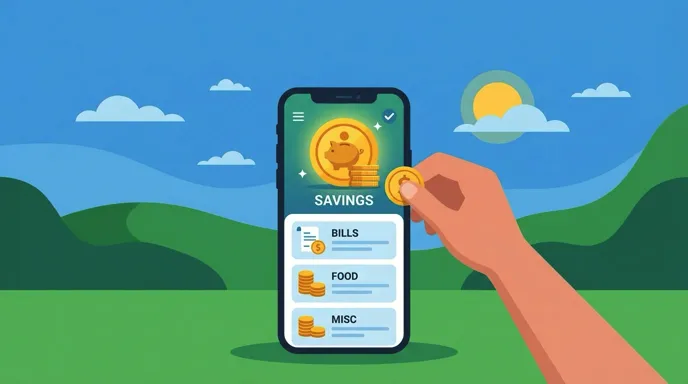
- App-based: Some finance apps automate savings
- Investment platform: Recurring deposits to brokerage
The key is removing manual action. If you must remember to transfer money, you will eventually forget or decide to skip it.
Step 4: Live on What Remains
Your checking account now contains your actual spending money: bills plus discretionary. Treat this as your total budget. When it runs low, spending stops until the next paycheck.
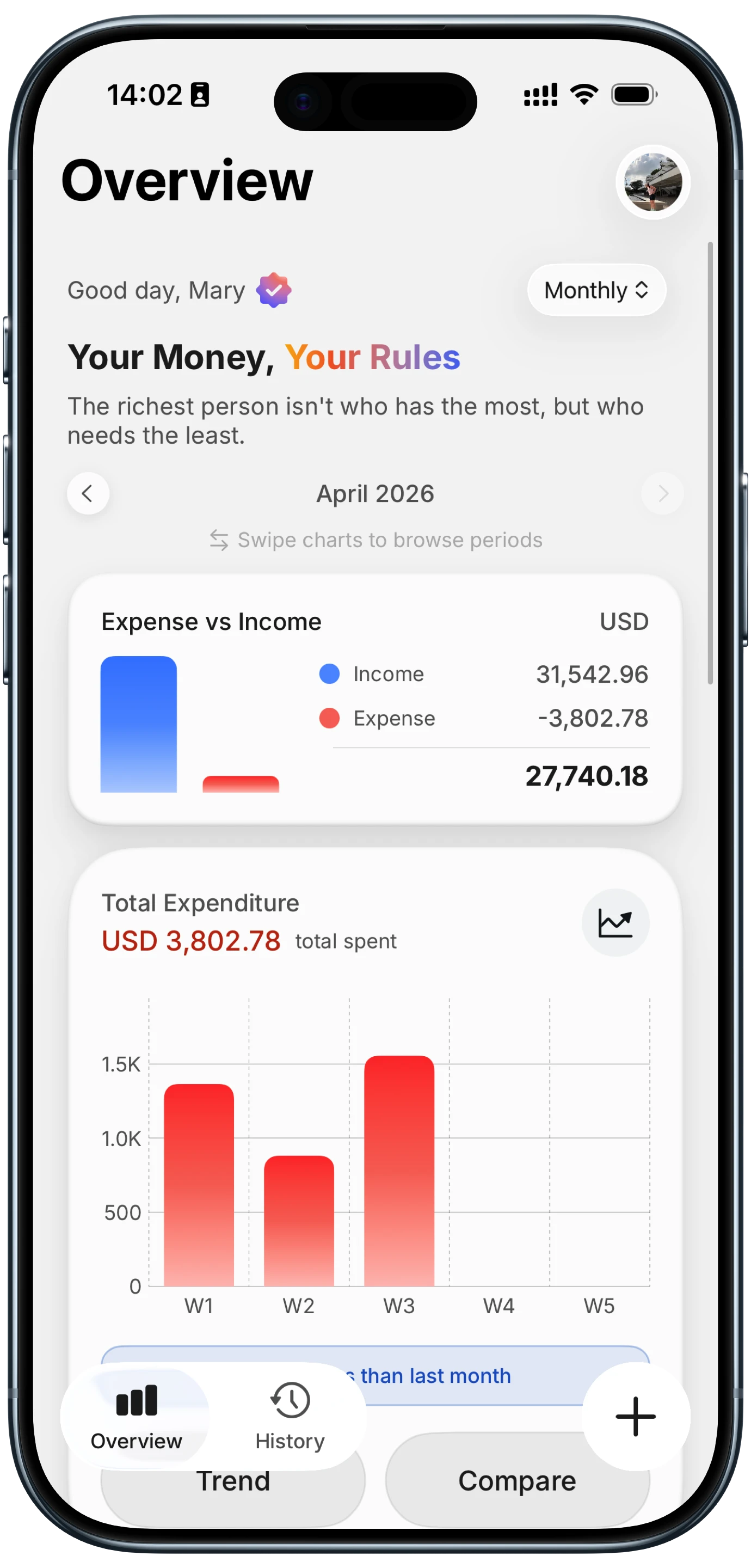
This requires tracking what you spend. An expense tracking app like Finny shows where money goes and warns when you are approaching your limit. Without tracking, you might overdraw or dip into savings, defeating the system.
Step 5: Increase Over Time
Once you adjust to your current percentage, increase it. A good trigger: every time you receive a raise, increase your pay-yourself-first percentage by half the raise amount. You still see some lifestyle improvement, but savings grow faster.
Pay Yourself First Budget Example
Here is a complete monthly budget using pay yourself first:
Income: $5,000/month take-home
Step 1: Pay Yourself First (15% = $750)
- Emergency fund: $250
- 401(k) additional: $300 (beyond employer deduction)
- Investment account: $200
Step 2: Fixed Expenses ($2,400)
- Rent: $1,400
- Utilities: $150
- Car payment: $350
- Insurance: $200
- Phone: $80
- Subscriptions: $50
- Minimum debt payments: $170
Step 3: Variable Necessities ($800)
- Groceries: $400
- Gas: $200
- Healthcare copays: $100
- Household supplies: $100
Step 4: Discretionary ($1,050 remaining)
- Dining out: $300
- Entertainment: $150
- Personal care: $100
- Clothing: $100
- Miscellaneous: $400
The order ensures savings happen. If discretionary spending exceeds $1,050, it comes from cutting back, not from raiding savings.
Pay Yourself First vs Other Budget Methods
vs Zero-Based Budgeting
Zero-based budgeting assigns every dollar a purpose. Pay yourself first can integrate with zero-based: savings categories get assigned first, then remaining dollars go to other categories.
vs 50/30/20 Rule
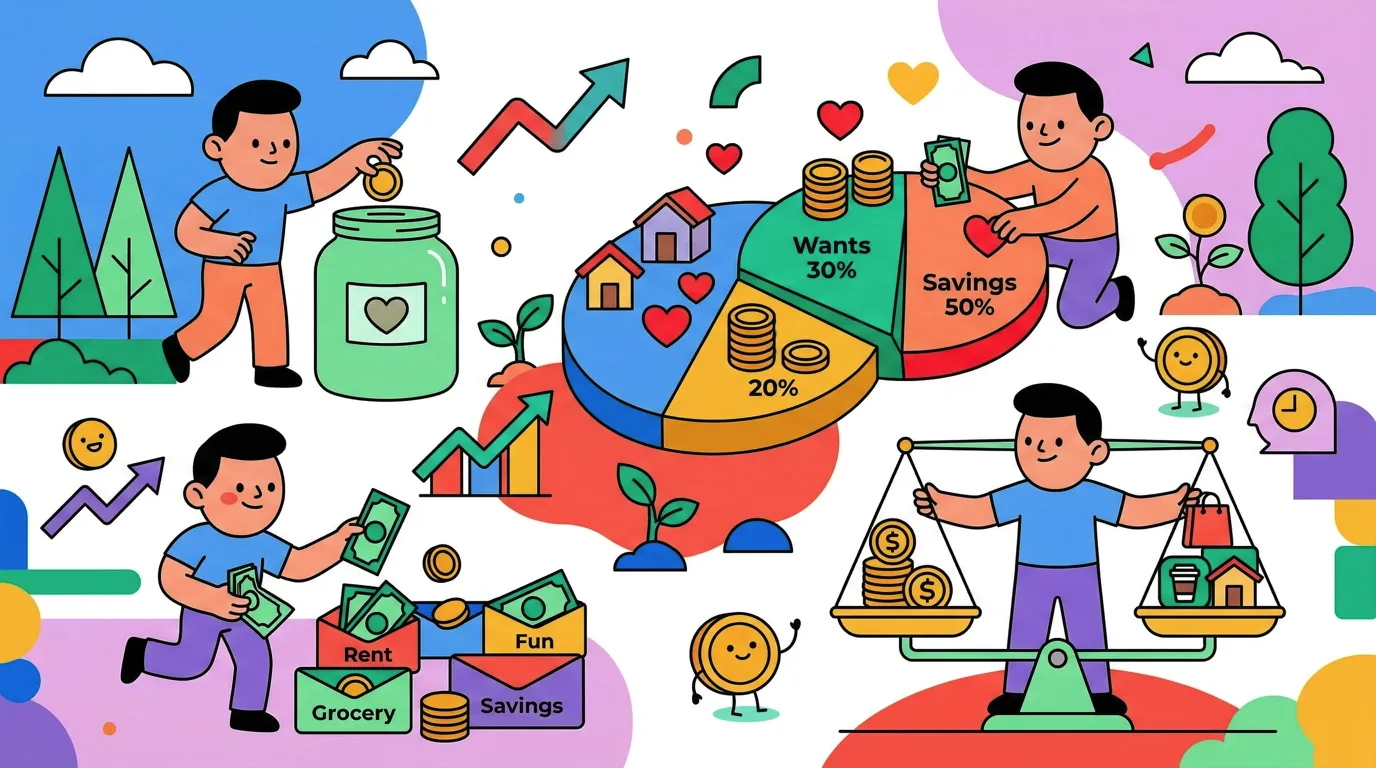
The 50/30/20 rule allocates 50% to needs, 30% to wants, and 20% to savings. Pay yourself first aligns with this: the 20% savings comes out first, then you manage needs and wants with the remaining 80%.
vs Envelope System
Envelope budgeting divides cash into spending categories. Pay yourself first works alongside it: savings transfer happens automatically, then remaining cash gets divided into envelopes.
Common Pay Yourself First Mistakes
Setting the Percentage Too High Initially
Starting at 20% when you have been saving 0% causes immediate lifestyle shock. The discomfort leads to raiding savings or abandoning the system. Start lower and build up.
Not Having a Buffer
If pay yourself first leaves zero margin, any unexpected expense forces you to pull from savings. Keep a small buffer in checking (maybe $500) to handle minor surprises without touching your pay-yourself-first money.
Treating Savings as Available
Once money transfers to savings, it is gone. Some people mentally treat savings as a backup checking account, dipping in for non-emergencies. This defeats the purpose.
Ignoring High-Interest Debt
If you have credit card debt at 20%+ interest, paying yourself first into a savings account earning 4% does not make mathematical sense. Consider directing pay-yourself-first money toward debt payoff instead, keeping only a minimal emergency fund.
Not Tracking Remaining Spending
Pay yourself first handles the saving side. You still need to manage spending on what remains. Without tracking, overspending creeps back, and you end up withdrawing from savings.
Tracking Spending After Paying Yourself First
Once savings are automated, your job is staying within the remaining amount. Expense tracking makes this manageable.
Log All Spending
Use Finny or another expense tracker to record every purchase. Categories show where money goes. Totals show how much remains.
Set Category Limits
Based on your budget, set spending limits per category. Tracking against these limits prevents overspending in any single area.
Review Weekly
A quick weekly review catches problems early. If you are 80% through your dining budget by week two, you know to cook at home for the rest of the month.
Adjust the Budget, Not the Savings
If you consistently overspend in one category, find cuts elsewhere. The pay-yourself-first amount stays untouched. Adjust discretionary categories instead.
Pay Yourself First for Irregular Income
Freelancers, contractors, and commission workers face variable income. Pay yourself first still works with modifications:
Percentage-Based Transfers
Instead of a fixed dollar amount, transfer a percentage of each payment received. A $3,000 payment means $450 to savings (at 15%). A $1,000 payment means $150. Income varies; savings rate stays consistent.
Income Smoothing Account
Deposit all income into a holding account. Pay yourself a consistent "salary" from this account, including the pay-yourself-first portion. This creates stability from irregular sources.
Higher Savings Rate When Possible
Good months allow higher contributions. If income exceeds normal, increase the percentage temporarily. This offsets slower months.
The Bottom Line
Pay yourself first means saving money immediately when income arrives, before paying bills or spending on anything else. By making savings automatic and non-negotiable, you eliminate the willpower required to save and guarantee progress toward financial goals.
Start with a percentage you can sustain, even if it is small. Automate the transfer so it happens without your involvement. Live on what remains and track spending to stay within bounds. Increase your percentage over time as your income grows or expenses decrease.
This single habit, consistently applied, builds wealth regardless of income level. The math is straightforward: money that never reaches your spending account cannot be spent. It accumulates, compounds, and funds your future.
Common Questions About Pay Yourself First
What does pay yourself first mean in simple terms?
Pay yourself first means automatically transferring money to savings immediately when you receive income, before paying any bills or expenses. Savings become a priority rather than an afterthought.
How much should I pay myself first each month?
Start with 5-10% if you are new to saving. Increase to 15-20% over time. The right amount leaves enough for essential expenses while building meaningful savings.
What if I cannot afford to pay myself first?
Start with 1% and increase gradually. Review expenses for cuts. Often, people spending "everything" have discretionary costs that could fund small savings. Track spending to find opportunities.
Where should pay yourself first money go?
Priority order: emergency fund (3-6 months expenses), employer 401(k) match, high-interest debt payoff, retirement accounts, then taxable investments. Adjust based on your situation.
Ready to implement pay yourself first with clear spending tracking?
Download Finny to track what you spend after savings, set category budgets, and ensure you stay within your means. Automated savings work best when paired with visible spending data.