W-2 vs 1099: Employee vs Contractor Taxes Explained
If you have ever freelanced, done contract work, or picked up a side gig alongside a regular job, you have encountered two different worlds of income and taxes. The form you receive, W-2 or 1099, determines how your income is taxed, what deductions you can take, and how much work you need to do at tax time.
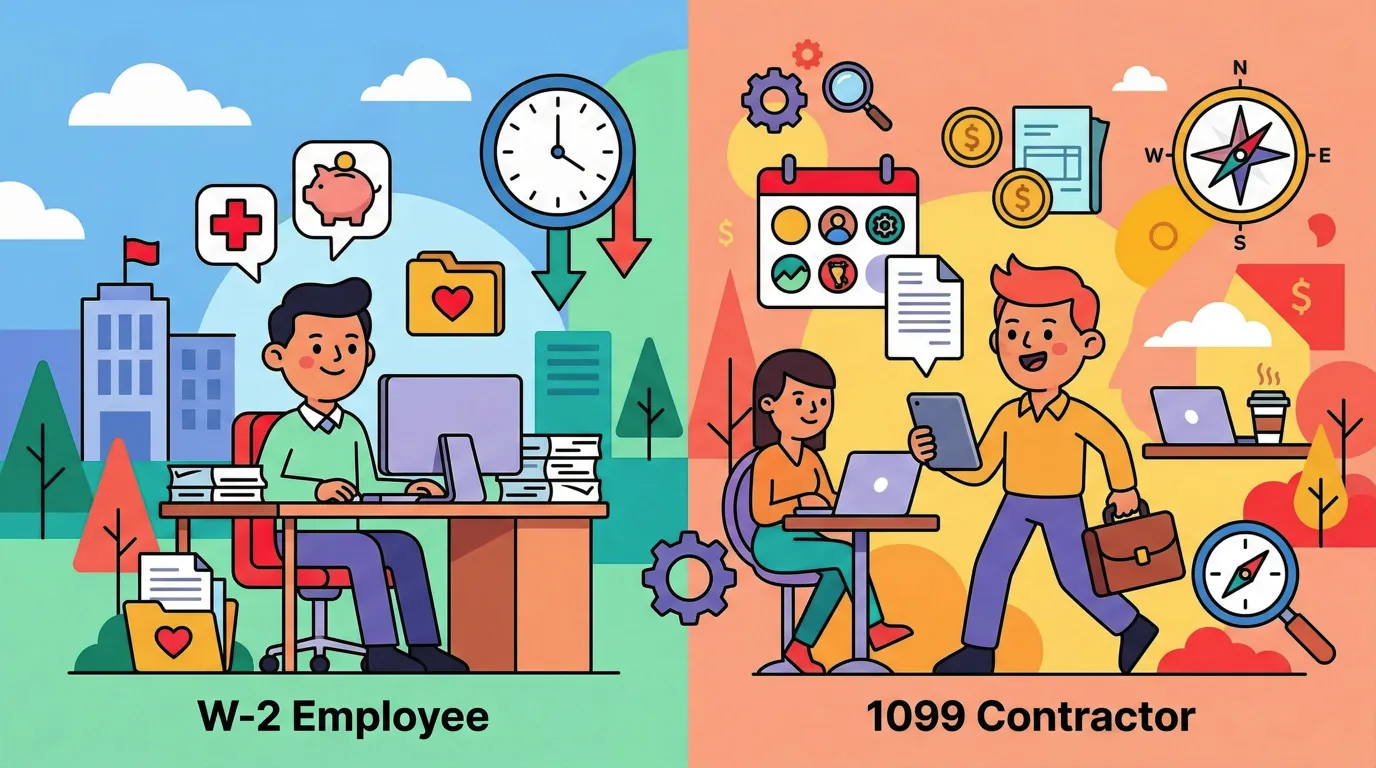
A W-2 is the tax form for employees whose employer withholds taxes from their paycheck. A 1099 (specifically 1099-NEC for non-employee compensation) is the form for independent contractors who receive full payment without tax withholding and are responsible for their own taxes. For a broader understanding of how income is taxed, see our guide on tax brackets.
Key Differences at a Glance
| Feature | W-2 Employee | 1099 Contractor |
|---|---|---|
| Tax withholding | Employer withholds income tax, Social Security, Medicare | No withholding; you pay everything |
| Self-employment tax | No (employer pays half of FICA) | Yes (15.3% on net earnings) |
| Benefits | Often included (health, retirement, PTO) | None from client |
| Deductions | Limited (standard deduction) | Business expenses are deductible |
| Tax filing complexity | Simple (one W-2) | More complex (Schedule C, quarterly payments) |
| Income stability | Generally predictable | Variable |
| Control over work | Less (employer directs) | More (you control how/when) |
How W-2 Taxes Work
As a W-2 employee, your employer handles most of the tax complexity:
- Income tax is withheld from each paycheck based on your W-4 elections.
- Social Security tax (6.2%) is split: you pay half, your employer pays half.
- Medicare tax (1.45%) is also split 50/50.
- State income tax is withheld where applicable.
By the time your paycheck hits your bank account, taxes are already paid. At tax time, you file your return, and either get a refund (overpaid) or owe a small amount (underpaid).
Your total FICA contribution: 7.65% of gross pay. Your employer matches it, paying another 7.65%.
How 1099 Taxes Work
As an independent contractor, you receive the full payment with no taxes withheld. This means:
Self-Employment Tax
You pay both the employee and employer portions of FICA: 15.3% on net self-employment earnings (12.4% Social Security + 2.9% Medicare). This is on top of income tax.
A contractor earning $80,000 pays approximately $11,300 in self-employment tax before income tax. The same income as a W-2 employee would cost $6,120 in FICA (with the employer paying the other $6,120).
Quarterly Estimated Tax Payments
The IRS expects taxes to be paid throughout the year, not in one lump sum in April. 1099 workers must make estimated quarterly payments:
- Q1: Due April 15
- Q2: Due June 15
- Q3: Due September 15
- Q4: Due January 15
Missing quarterly payments results in penalties and interest.
The Deduction Advantage
The trade-off for higher taxes is more deductions. As a 1099 contractor, you can deduct legitimate business expenses:
- Home office (dedicated space)
- Equipment and software
- Professional development
- Health insurance premiums
- Business travel
- Marketing and advertising
- Professional services (accounting, legal)
- Vehicle expenses for business use
- Internet and phone (business percentage)
These deductions reduce your taxable income, which reduces both income tax and self-employment tax.
The True Cost Comparison
| Metric | W-2 at $80,000 | 1099 at $80,000 |
|---|---|---|
| Gross income | $80,000 | $80,000 |
| FICA/SE tax (your share) | $6,120 | $11,304 |
| Business deductions | $0 | -$12,000 (example) |
| Taxable income | $80,000 | $68,000 |
| Federal income tax (est.) | $10,300 | $8,000 |
| Total tax | $16,420 | $19,304 |
| Net after tax | $63,580 | $60,696 |
The 1099 worker pays more in this example, but has deductions that reduce the gap. With more deductions or higher income, 1099 work can be competitive. The key variable is how many legitimate business expenses you can deduct.
Why Expense Tracking Is Critical for 1099 Workers
For W-2 employees, expense tracking is helpful for budgeting. For 1099 workers, it is essential for tax savings. Every business expense you miss tracking is a deduction you lose, which means paying more tax than necessary.
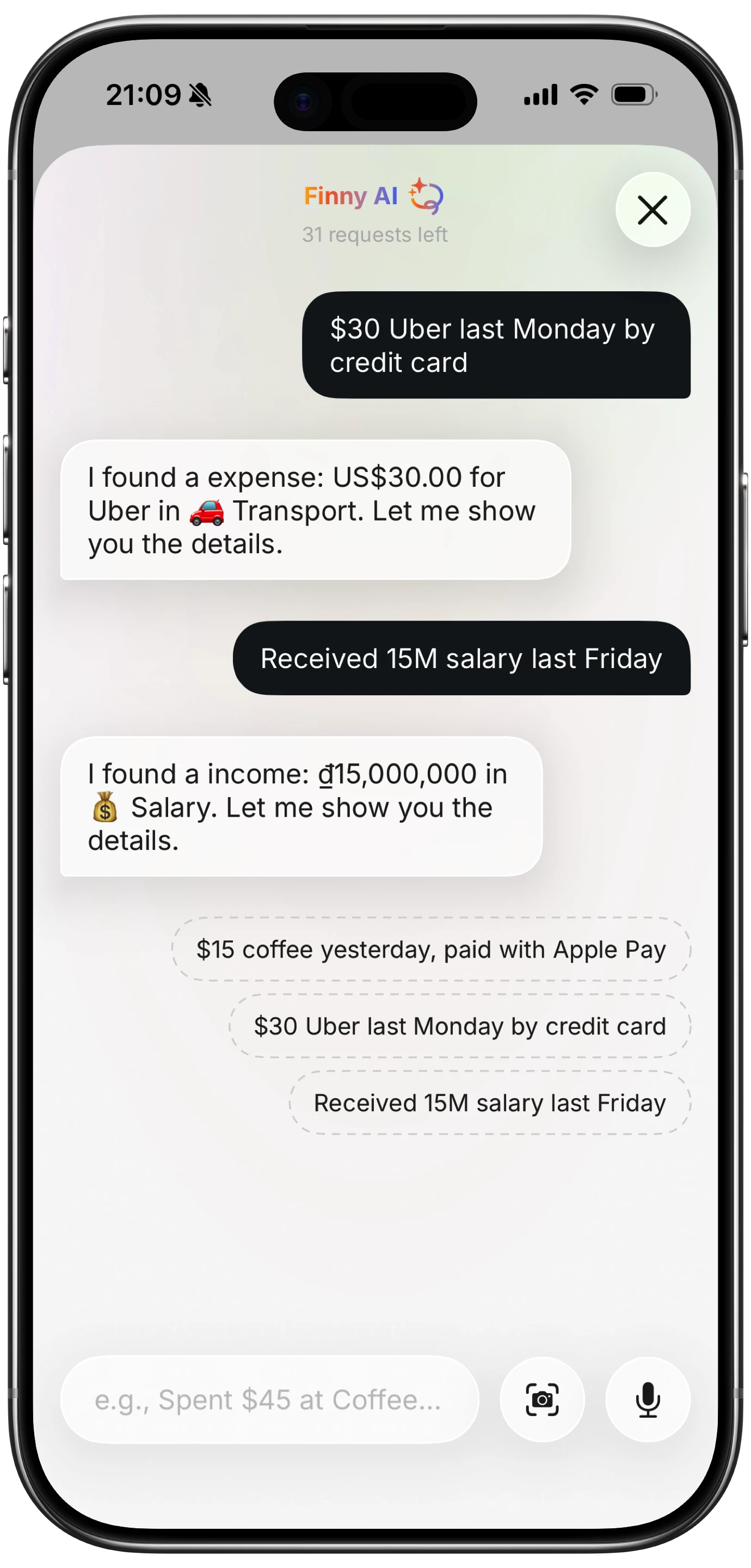
Finny app's AI chat feature
As a freelancer or contractor:
- Log every business expense as it happens. Type "Zoom subscription $15" or "client lunch $45" and categorize it immediately. Waiting until tax time means forgotten deductions.
- Separate business and personal expenses. Use categories or tags to distinguish business spending from personal spending. Clear separation simplifies Schedule C preparation.
- Keep receipt documentation. Scan receipts for business purchases. The IRS requires documentation for deductions, and "I remember buying it" is not sufficient.
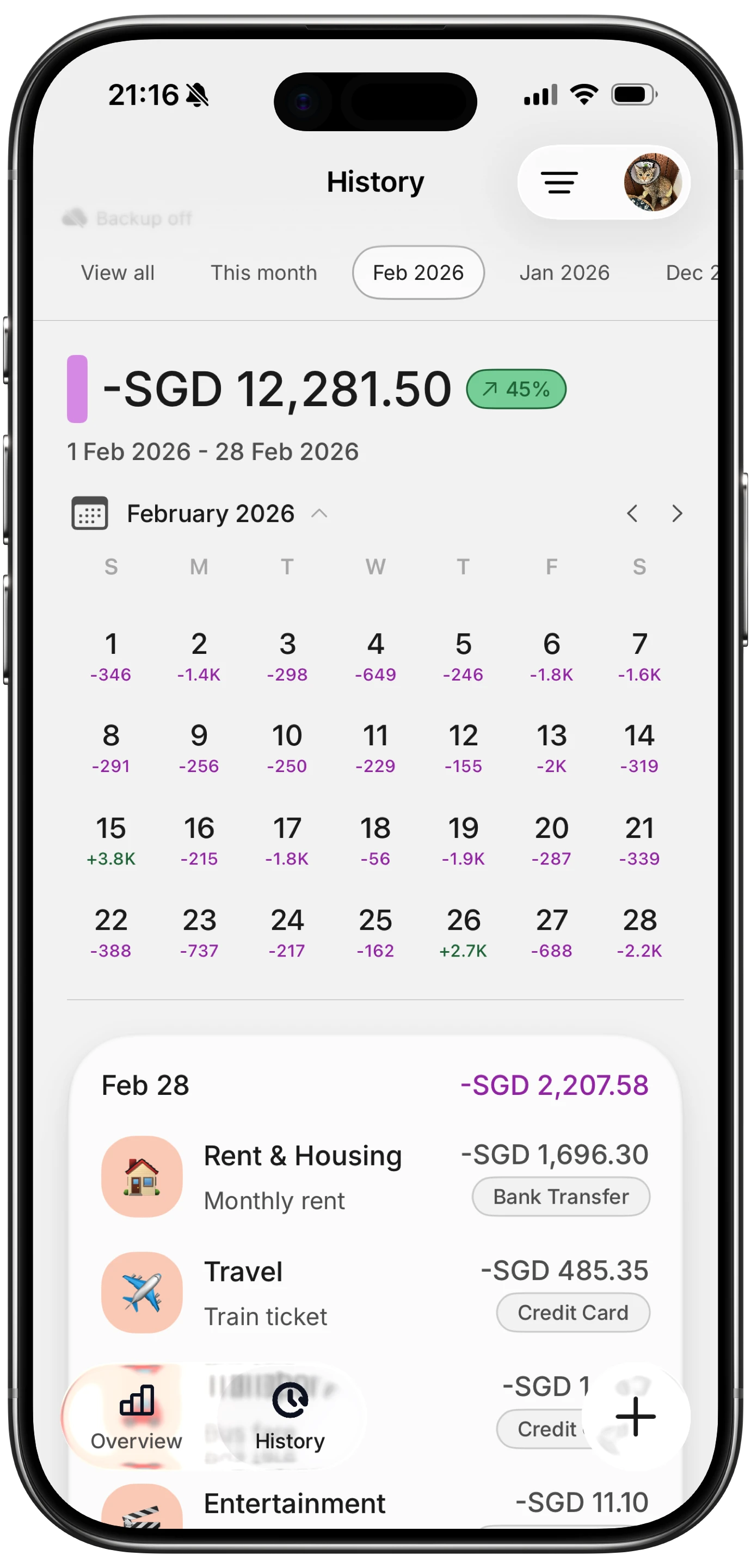
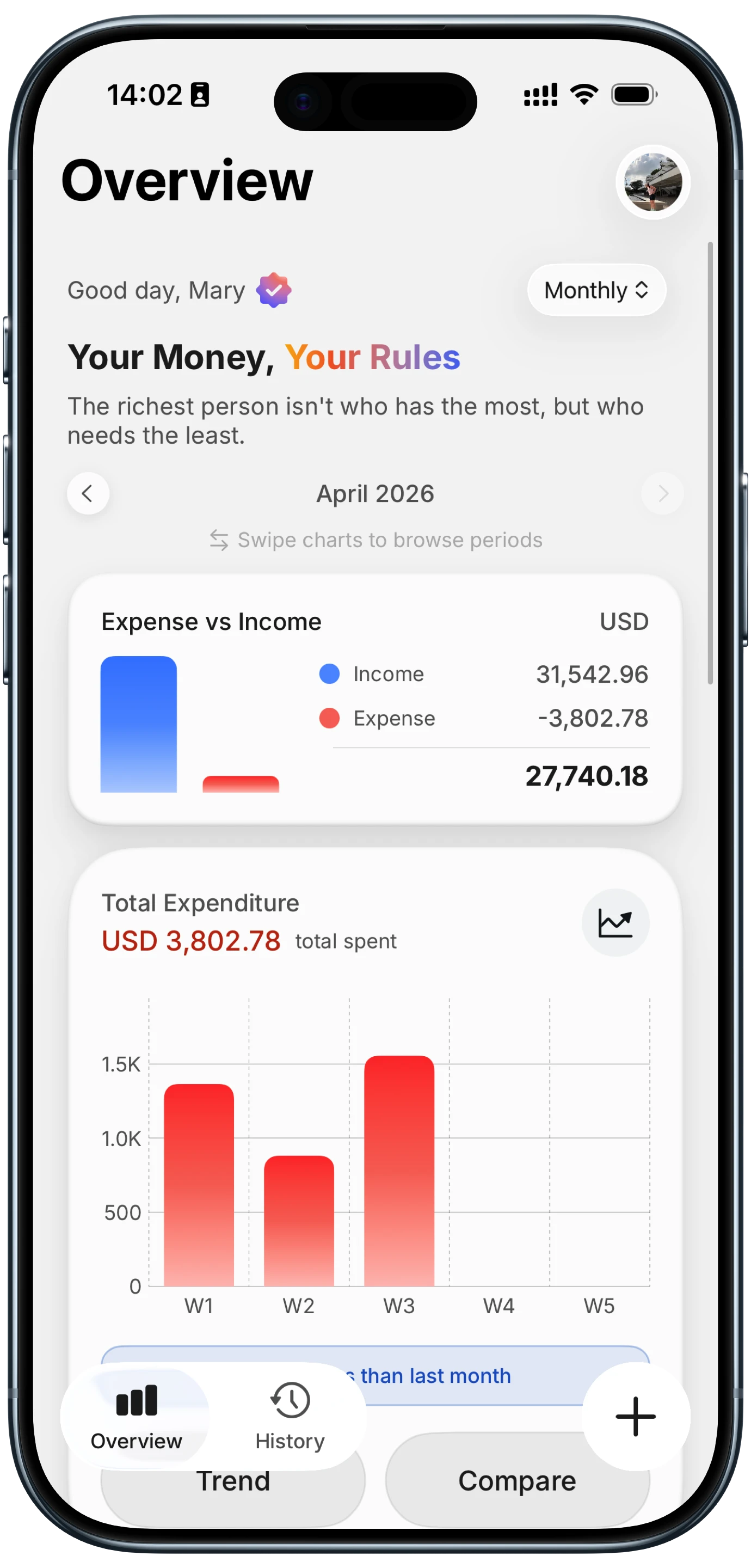
Finny app's History calendar feature
For more on tracking without linking bank accounts, see our guide on private expense tracking. For a complete walkthrough of organizing receipts and categories specifically for tax season, see our how to track expenses for taxes guide.
When You Have Both W-2 and 1099 Income
Many people have a regular job (W-2) and a side gig (1099). In this case:
- W-2 income is taxed normally through employer withholding.
- 1099 income is taxed at your marginal rate plus self-employment tax.
- Business expenses from the side gig are deductible against 1099 income.
- You may need to make quarterly estimated payments for the 1099 portion.
The side gig income is added to your W-2 income, which may push you into a higher tax bracket. Track both income streams and all business expenses carefully.
Common Mistakes
Not saving for taxes as a 1099 worker. Set aside 25-30% of every payment for taxes. Do not wait until April.
Missing deductions. Without consistent tracking, the average freelancer misses hundreds to thousands in deductible expenses annually.
Misclassifying workers. Employers sometimes classify employees as 1099 contractors to avoid payroll taxes and benefits. If you are told when, where, and how to work, you may be a misclassified employee.
Not making quarterly payments. Penalties for underpayment accumulate. Set calendar reminders and pay on time.
The Bottom Line
W-2 and 1099 income are taxed differently, and understanding the differences helps you plan, save, and file correctly. W-2 employees benefit from simplicity and employer-paid FICA. 1099 contractors pay more in self-employment tax but gain access to business deductions that can significantly reduce their tax burden.
For anyone with 1099 income, consistent expense tracking is not optional. It directly determines how much tax you pay. Every logged business expense is money saved at tax time.
Common Questions About W-2 vs 1099
Is it better to be a W-2 employee or 1099 contractor?
It depends on your situation. W-2 offers stability, benefits, and simpler taxes. 1099 offers flexibility, deductions, and potentially higher gross pay. Compare the total compensation package, not just the headline number.
How much should a 1099 worker save for taxes?
A common guideline is 25-30% of gross income. The exact amount depends on your tax bracket, state taxes, and deductions. Track expenses carefully to maximize deductions and reduce the amount owed.
Can I be both a W-2 employee and a 1099 contractor?
Yes. Many people have a regular job and freelance on the side. The W-2 income is taxed through employer withholding, and the 1099 income requires separate estimated payments and has its own deductible expenses.
What happens if I do not receive a 1099?
You are still required to report all income, even without a 1099 form. Clients are only required to send 1099s for payments of $600 or more. Track all income yourself regardless of whether forms are issued.
Do I need an accountant for 1099 income?
Not necessarily for simple situations, but an accountant can identify deductions you might miss and ensure compliance. The cost of an accountant is itself a tax-deductible business expense.
Freelancer? Track every business expense so you never miss a deduction.
Download Finny to log expenses instantly with AI-assisted input. Categorize business and personal spending separately, scan receipts, and have your data ready when tax time arrives.