What Is a Tax Bracket? How Marginal Tax Rates Work
One of the most common financial misunderstandings is how tax brackets work. Many people believe that earning more money can push all of their income into a higher tax rate, making them worse off after taxes. This is not how it works, and understanding the actual system can change how you think about earning, saving, and tax planning.
A tax bracket is a range of income that is taxed at a specific rate. The US uses a progressive tax system where different portions of your income are taxed at different rates. Only the income within each bracket is taxed at that bracket's rate, not your entire income. For a complete look at managing finances, see our personal finance guide.
How Marginal Tax Rates Work
The key concept is "marginal." Your marginal tax rate is the rate on your last dollar of income. Your effective tax rate is the average rate across all your income.
Example: Single Filer Earning $95,000
| Bracket | Income Range | Tax Rate | Tax Owed |
|---|---|---|---|
| 1st | $0 - $11,925 | 10% | $1,193 |
| 2nd | $11,926 - $48,475 | 12% | $4,386 |
| 3rd | $48,476 - $95,000 | 22% | $10,236 |
| Total | $15,815 |
- Marginal rate: 22% (the rate on the last dollar)
- Effective rate: 16.6% ($15,815 / $95,000)
If this person earns an additional $5,000, only that $5,000 is taxed at 22%. Their first $11,925 is still taxed at 10%, and the next chunk at 12%. Earning more never makes your overall tax bill increase by more than the additional income.
2026 Federal Tax Brackets
Single Filers
| Taxable Income | Tax Rate |
|---|---|
| $0 - $11,925 | 10% |
| $11,926 - $48,475 | 12% |
| $48,476 - $103,350 | 22% |
| $103,351 - $197,300 | 24% |
| $197,301 - $250,525 | 32% |
| $250,526 - $626,350 | 35% |
| Over $626,350 | 37% |
Married Filing Jointly
| Taxable Income | Tax Rate |
|---|---|
| $0 - $23,850 | 10% |
| $23,851 - $96,950 | 12% |
| $96,951 - $206,700 | 22% |
| $206,701 - $394,600 | 24% |
| $394,601 - $501,050 | 32% |
| $501,051 - $751,600 | 35% |
| Over $751,600 | 37% |
These brackets apply to taxable income, not gross income. Deductions (standard or itemized) reduce your taxable income before brackets are applied.
Common Tax Bracket Misconceptions
"I will earn less after taxes if I get a raise." False. A raise is always beneficial after taxes. If you earn $1,000 more and are in the 22% bracket, you keep $780. You never lose money by earning more.
"My entire income is taxed at my bracket rate." False. Only the portion within each bracket is taxed at that rate. The progressive system ensures lower rates on lower portions of income.
"I should avoid the next tax bracket." Rarely beneficial. The incremental tax increase from crossing into a higher bracket is small. Do not turn down income or bonuses to "stay in a lower bracket."
"Tax brackets only apply to W-2 income." False. All ordinary income (wages, self-employment, interest, rental income) is subject to the same bracket system. Profits from selling assets are treated differently under capital gains tax, which generally applies lower rates.
Tax Brackets and Financial Decisions
Understanding your marginal rate helps with several financial decisions:
Retirement Contributions
Traditional 401k and IRA contributions reduce your taxable income. If you are in the 22% bracket, a $5,000 contribution saves $1,100 in federal taxes. The higher your bracket, the more valuable pre-tax contributions become. For more on retirement accounts, see our 401k guide.
Roth vs Traditional
In the 12% bracket, Roth contributions (taxed now) may be better since you pay low rates today. In the 32% bracket, traditional contributions (taxed later) save more in current taxes. Your bracket informs this choice.
Charitable Giving
Tax deductions are worth your marginal rate. A $1,000 charitable donation saves $220 in taxes for someone in the 22% bracket and $350 for someone in the 35% bracket.
Side Income and Self-Employment
Side income is taxed at your marginal rate plus self-employment tax (15.3% on the first ~$160,000). Knowing your bracket helps you estimate quarterly tax payments accurately. How you receive that income also matters for filing purposes, so understanding the difference between W-2 and 1099 income is important for getting your taxes right.
How Expense Tracking Supports Tax Planning
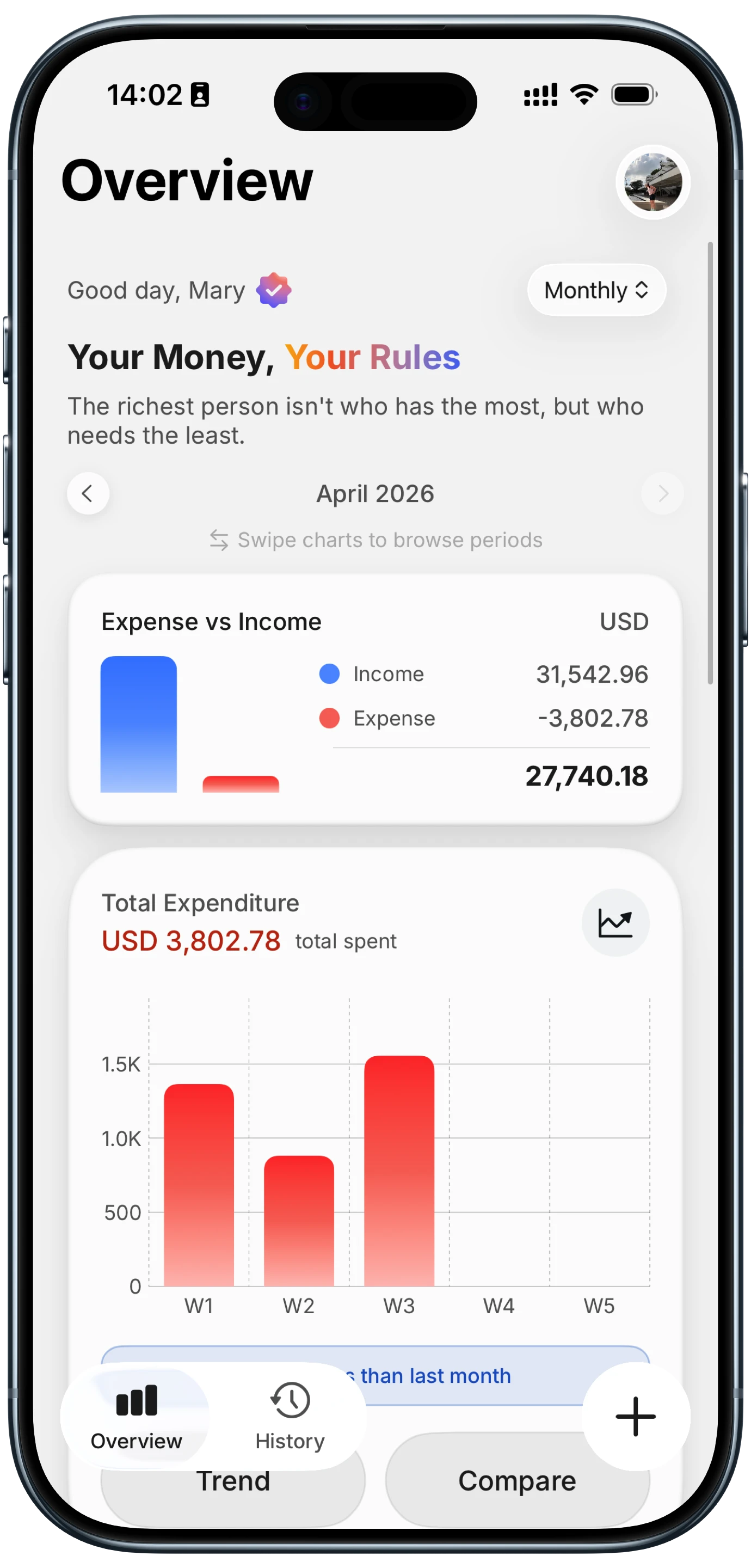
Tax planning is not just about income. It is also about deductions, and deductions require documentation.
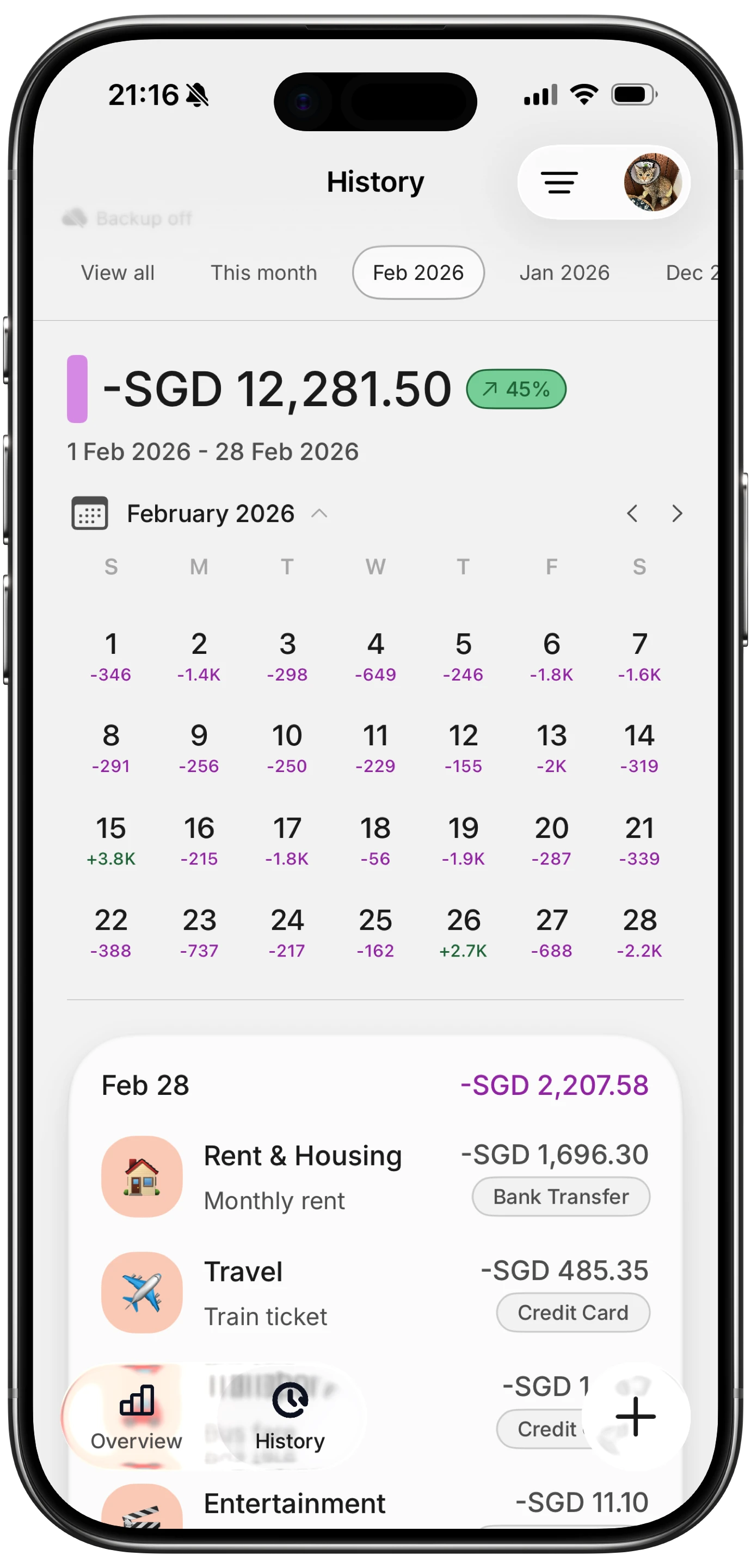
Finny app's History calendar feature
Tracking your expenses throughout the year helps you:
- Identify deductible expenses. Medical expenses, charitable donations, business expenses, and home office costs are often missed because they are not tracked.
- Estimate taxable income. When you know your total income and deductions, you can estimate which bracket you will land in and plan accordingly.
- Make year-end tax moves. In December, if you are close to a bracket boundary, you can accelerate deductions or defer income to optimize your tax position.
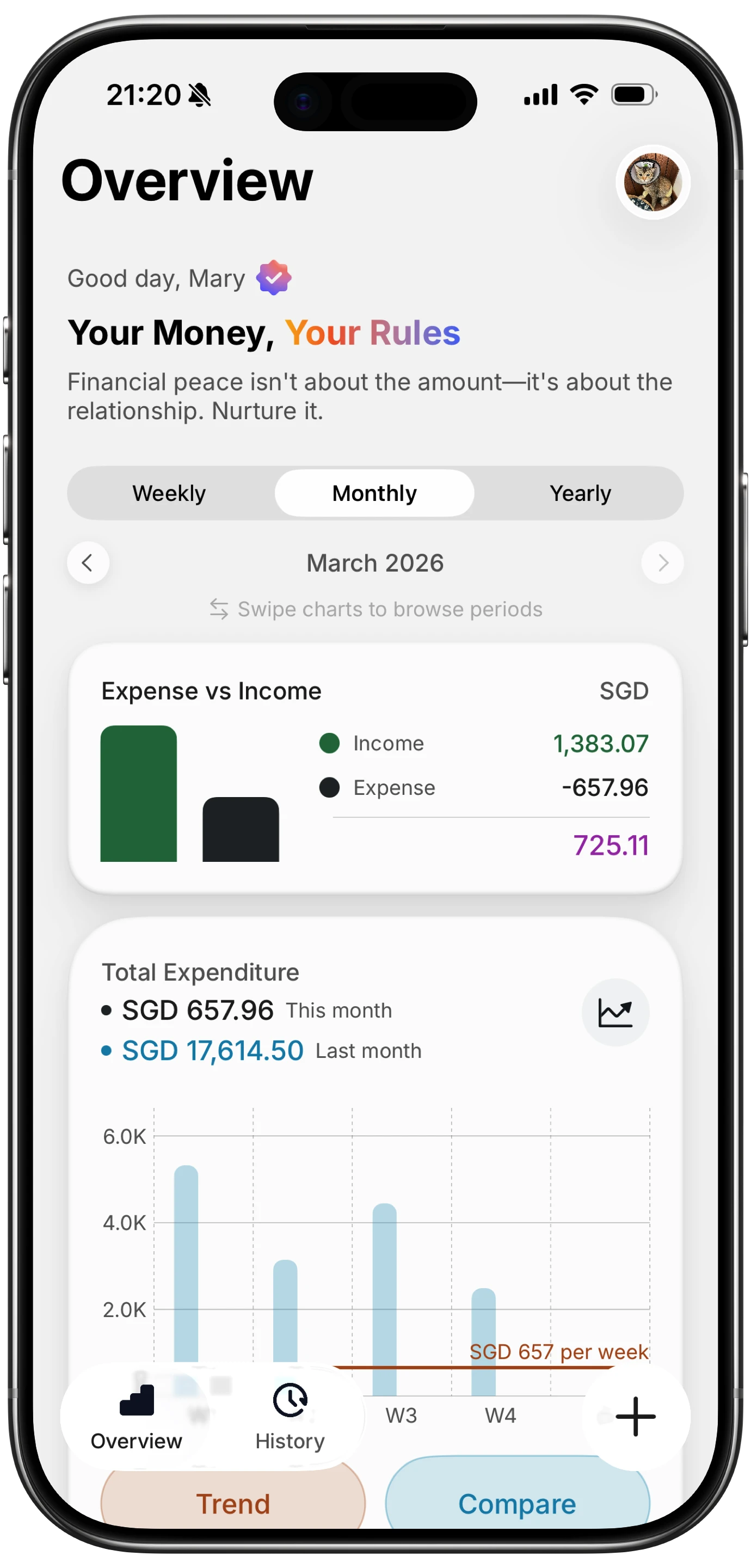
Finny app's Overview feature
For freelancers and self-employed individuals, tracking every business expense is essential. Missing deductions means paying more tax than necessary. For more on tracking without bank connections, see our guide on private expense tracking.
The Bottom Line
Tax brackets are progressive, not punitive. Every dollar you earn is worth earning after taxes. Understanding your marginal and effective rates helps you make smarter decisions about retirement contributions, investment accounts, and tax-advantaged strategies.
The practical step is knowing your numbers: your taxable income, your bracket, and your deductible expenses. Expense tracking throughout the year makes tax planning proactive rather than reactive.
Common Questions About Tax Brackets
What is the difference between marginal and effective tax rate?
Your marginal rate is the tax rate on your last dollar of income. Your effective rate is the average rate across all your income. Effective rate is always lower than marginal rate in a progressive system.
Do tax brackets change every year?
Yes. The IRS adjusts brackets annually for inflation. The changes are usually small (1-3%) but can affect where you fall, especially near bracket boundaries.
How do I find out what tax bracket I am in?
Subtract the standard deduction ($15,200 for single, $30,400 for married filing jointly in 2026) from your gross income. The result is your taxable income. Find which bracket range it falls into.
Do state taxes use the same brackets?
No. Each state sets its own tax rates and brackets. Some states have flat taxes, some have progressive brackets, and some have no income tax at all. Your total tax burden is federal plus state.
Can I lower my tax bracket?
Yes, by reducing taxable income. Common methods include traditional 401k/IRA contributions, HSA contributions, and itemized deductions. These do not reduce your actual income, just the portion subject to taxation.
Want to track deductible expenses throughout the year?
Download Finny to log every expense with AI-assisted input. Categorize spending as it happens, so tax time is a review, not a scramble.