Is Rocket Money Safe? A 2026 Privacy Review
Rocket Money (formerly Truebill) is one of the most downloaded personal finance apps in the United States. It finds forgotten subscriptions, cancels them on your behalf, and negotiates bills like internet and phone. Helpful in theory. The catch is that it can only do those things if you give it broad read access to your bank account through Plaid. For broader context on the category, see our apps like Rocket Money comparison and the best subscription tracker apps in 2026.
So is Rocket Money safe? Short answer: it is built to industry-standard security and has no reported data breaches as of mid-2026, but "safe" depends on what you mean. This review covers the security model, the data practices, the FTC history, and a few alternatives for users who want the benefits without the bank connection. For a broader look at trade-offs in this category, see our finance app security and privacy overview.
What Rocket Money Actually Does
Rocket Money connects to your bank accounts and credit cards through Plaid, scans recent transactions to identify recurring charges, and surfaces a dashboard of your subscriptions and bills. Premium features include subscription cancellation on your behalf and bill negotiation for services like cable, internet, and phone.
To do its job, Rocket Money requires:
- Read-only access to checking, savings, and credit accounts
- Permission to view transaction history (typically two years)
- Permission to read account balances
- For negotiation features, limited personal information (name, address, account numbers)
Rocket Money does not have write access to your accounts. It cannot move money, cancel charges by reaching into your bank, or initiate transfers. It can only read.
The Security Model
Rocket Money's security stack as of 2026:
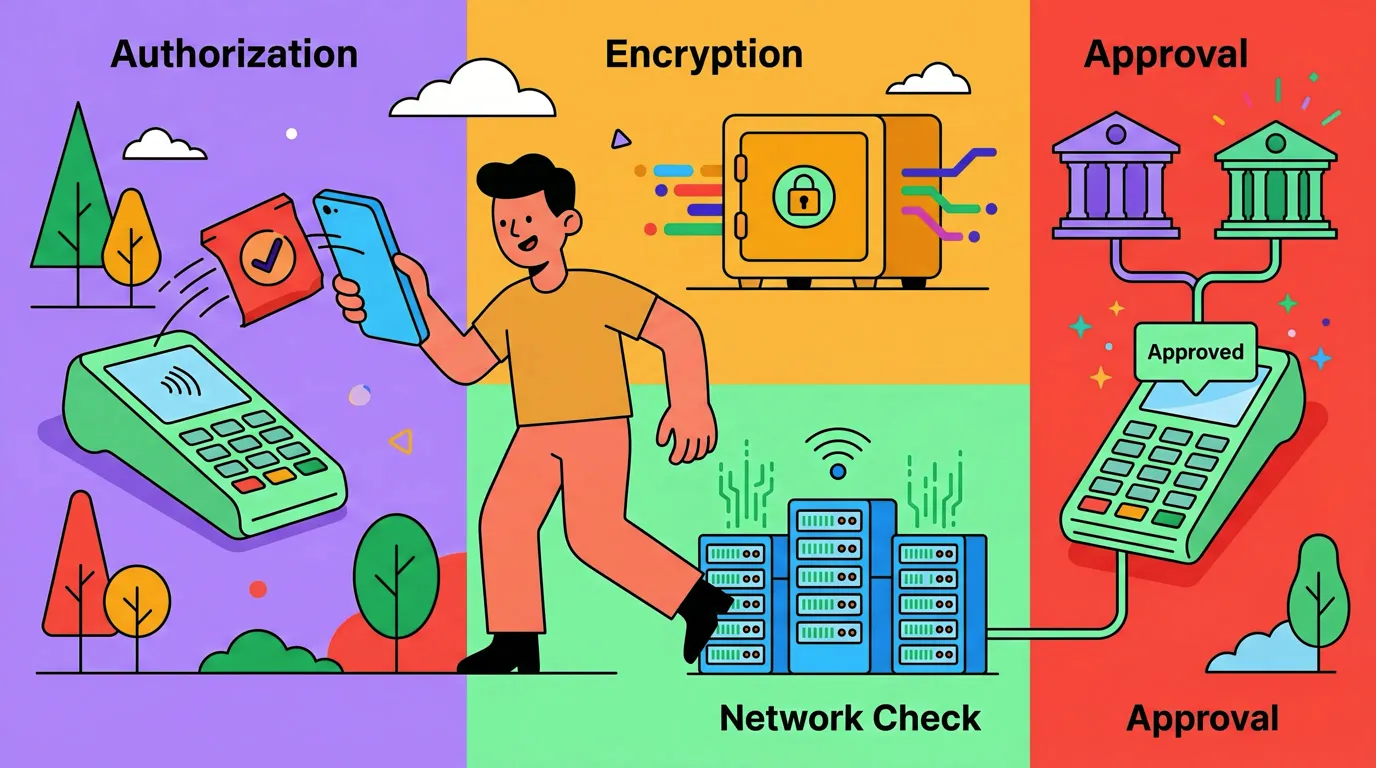
- 256-bit AES encryption for data in transit and at rest
- Two-factor authentication available (not required by default)
- Bank credentials handled by Plaid, never stored directly by Rocket Money
- SOC 2 Type II compliance for internal controls
- Biometric login on supported devices
This is the same baseline used by Mint (before shutdown), Monarch Money, Copilot Money, and most US fintech apps. It is industry standard, not exceptional.
The honest framing: the security of the app itself is solid. The risk question is not "will Rocket Money's servers get breached" (low probability, robust controls). The risk question is "do I want another party reading my bank transactions for the next several years."
What "Bank-Level Security" Actually Means
The phrase "bank-level security" gets used a lot in this category, and it can be misleading. It refers to the encryption and access controls being similar to what a bank uses to protect your data. It does not mean:
- That Rocket Money is regulated like a bank (it is not).
- That FDIC insurance applies to anything Rocket Money holds (it does not, because Rocket Money does not hold money).
- That the company is incapable of using or selling data within the bounds of its privacy policy.
Encryption protects against unauthorized access. It does not protect against authorized use.
Data Practices and the Privacy Policy
Rocket Money's privacy policy as of 2026 says the company:
- Collects transaction data, account balances, and personal information.
- Uses that data to provide the service, improve features, and target relevant marketing.
- Shares aggregated and de-identified data with partners for research and analytics.
- Does not sell personally identifiable data to third parties for advertising.
The "aggregated and de-identified" caveat matters. Anonymized transaction data is genuinely useful to financial research firms and ad networks, and reselling aggregated patterns is legal and common across the industry. If "I do not want a third party making any commercial use of my spending patterns" is your bar, that bar excludes most bank-aggregator apps, not just Rocket Money.
FTC History and Past Complaints
In April 2024, the FTC announced a settlement with Rocket Money's parent company (then operating as Truebill) over allegations related to misleading subscription cancellation practices and unclear billing for the premium tier. The settlement required clearer disclosure and refunds to affected users.
Two takeaways from that history:
- Operational practices got better after the settlement. Cancellation flows are more transparent in 2026, and the premium-tier pitch is clearer about what is included versus what costs extra.
- The settlement was about advertising and billing, not a data breach. No customer financial data was exposed. The complaints were about how the service was sold, not how it was secured.
Whether that history changes your trust calculus is a judgment call. Some users see "settled, fixed, moved on." Others see "had to be told to be transparent."
Who Should Use Rocket Money
Use Rocket Money if: finding hidden subscriptions and negotiating bills is the specific problem you want solved, you are comfortable with Plaid bank connections, and you would rather pay a service to cancel things than do it yourself.
Skip Rocket Money if: you do not want any third party reading your transaction history, you already know what your subscriptions are and just want them organized, or you are price-sensitive and do not want to pay 35 to 60 percent of first-year savings on negotiated bills.
Privacy-First Alternatives
For users who want subscription awareness without bank linking, three categories of alternatives exist.
Manual subscription trackers
Apps like Bobby and Subby let you log subscriptions by hand and remind you before renewal. They cannot discover hidden charges, but they keep what you know about organized. Pricing is one-time or under $20 per year.
Expense trackers without bank access
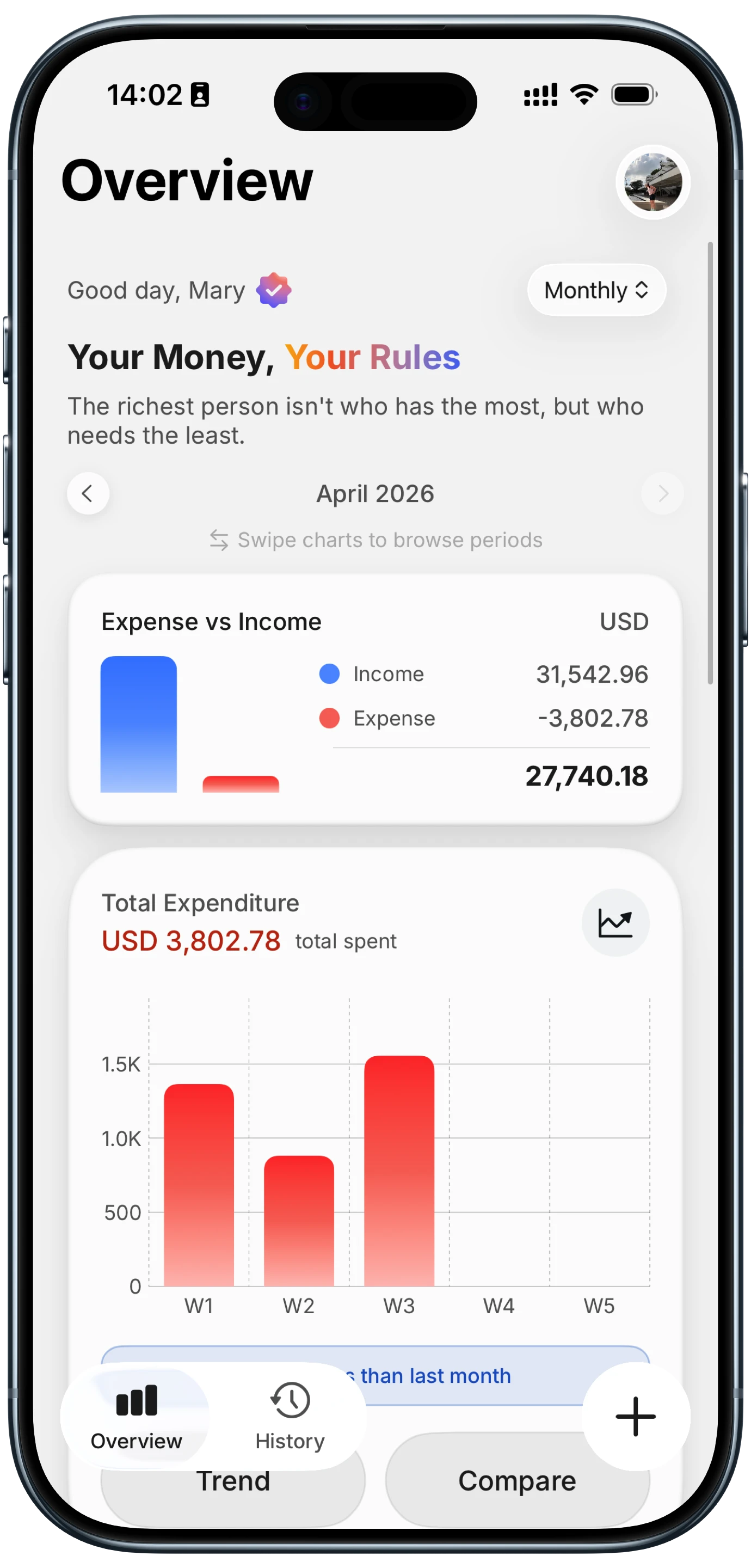
Finny tracks your spending inside a general expense tracker without ever connecting to your bank. You can log a subscription once with a monthly cadence so it shows up in your category totals, and for everyday spending it captures transactions automatically two ways: Tap to Track logs Apple Pay purchases on their own, and Screen Log records any payment on your screen (an online receipt, a bank app, a renewal email) with a single press. Because nothing is linked, there is no years-long transaction feed for a third party to hold. The tradeoff is the same as Bobby: without reading your bank, it cannot surface subscriptions you have already forgotten about.
Here is Screen Log capturing a payment straight from the screen, with no bank connection involved:
For broader context on no-bank-link options, see our track expenses without linking your bank guide and the best expense trackers without bank login for 2026 roundup.
Quarterly manual audits
The lowest-tech option is the most effective. Once a quarter, open Settings on iPhone, Apple ID, Subscriptions to catch App Store charges. Then search your email for "receipt" and "renewal" over the last 30 days to catch direct-billed services. Then scan your last credit card statement for monthly charges between $5 and $30, the price band where forgotten subscriptions hide.
This takes 20 minutes per quarter and reliably catches most of what Rocket Money would find, without giving any third party bank access. Our guide on how to audit subscriptions in 20 minutes walks through the exact checklist, and our piece on how to stop subscription creep covers the prevention side.
The Real Question
"Is Rocket Money safe?" The cleanest honest answer:
Yes, in the sense that the security and privacy practices are within industry norms and there are no known breaches. No reasonable expert would call the app "unsafe" in 2026.
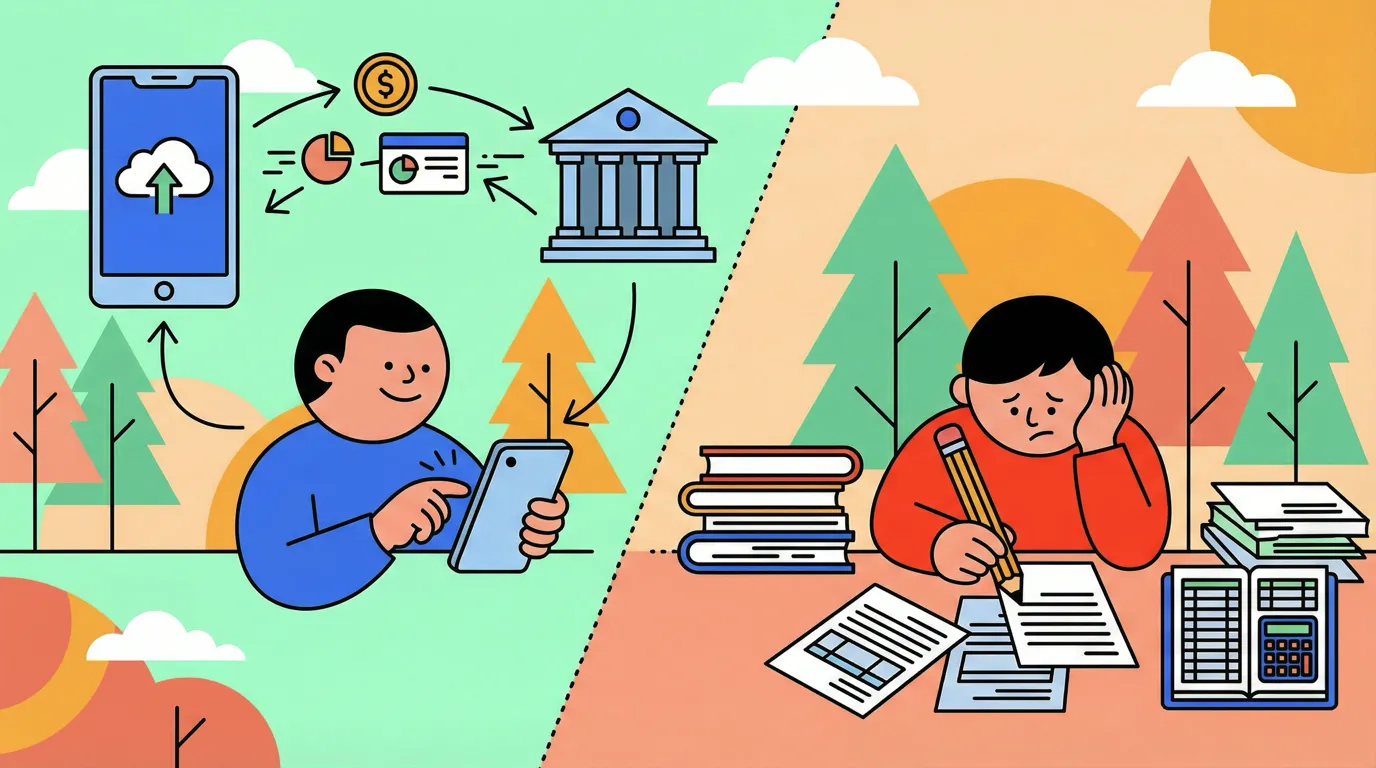
The harder question is "is this trade-off worth it for me." Rocket Money exchanges bank read access for a service that finds and cancels recurring charges. If finding hidden charges is your real problem and you trust bank-aggregator apps in general, the trade is fine. If finding hidden charges is a smaller problem than you think, or you are uncomfortable with the aggregator model, the alternatives above do most of the same work without the trade.
Common Questions About Rocket Money Safety
Has Rocket Money ever been hacked?
There are no publicly reported data breaches of Rocket Money or its predecessor Truebill as of mid-2026. The 2024 FTC settlement was about marketing and billing practices, not a security incident.
Does Rocket Money sell my data?
Rocket Money's privacy policy states that it does not sell personally identifiable data for advertising, but it does share aggregated and de-identified data with partners for research and analytics. That practice is common across the bank-aggregator industry.
Can Rocket Money access my money?
No. Rocket Money has read-only access through Plaid. It cannot initiate transfers, move money, or charge accounts directly. The cancellation service requires you to grant separate authorization, and bill negotiation requires you to provide additional account details.
What is a safer alternative to Rocket Money?
For users who want subscription tracking without bank linking, manual-entry apps like Bobby, Subby, or Finny avoid the aggregator model entirely. The tradeoff is they cannot discover charges you have forgotten about. For pure discovery, no major alternative skips the bank connection, because discovery requires reading transactions.
Is Plaid safe to use?
Plaid is the largest financial data aggregator in the US and uses 256-bit AES encryption with read-only credential handling. It has not had a major breach. The privacy criticism of Plaid is structural, not security-based: connecting through Plaid means another party has ongoing access to your transaction data.
Want subscription awareness without giving any app access to your bank account?
Download Finny to log subscriptions and expenses by AI text, voice, or receipt scan. No bank connections, offline support, and a low-cost Pro tier.