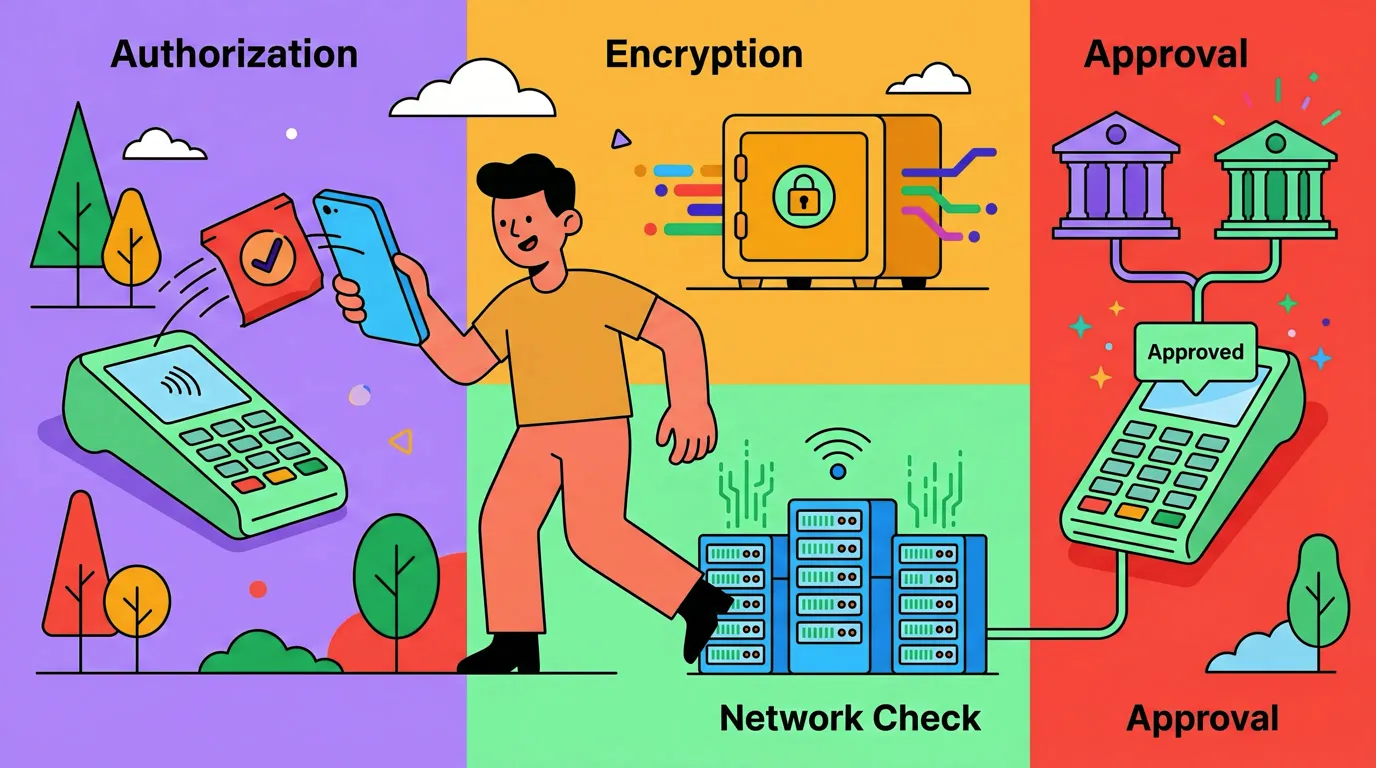
Swiping a card barely registers as spending. Tap, beep, done. The number in your bank account changes, but the experience of parting with money is nearly invisible. Over weeks and months, this disconnect leads to spending patterns that feel automatic rather than intentional.
A cash diet addresses this by forcing you to use physical cash (or a fixed cash-equivalent allowance) for all discretionary spending. The constraint is the point. When you hand over bills and watch your wallet thin out, every purchase becomes a conscious decision. This guide covers how a cash diet works, who benefits most, how long to try one, and how to run a digital version that keeps the discipline intact. If you have been struggling with impulse purchases, our guide on how to stop overspending pairs well with this approach.
What Is a Cash Diet
A cash diet is a spending method where you limit discretionary purchases to a fixed amount of physical cash for a set period, usually one week. You withdraw your allowance at the start of the period, and once the cash runs out, you stop spending. Bills, rent, and other fixed obligations still come from your bank account, but everything else, including dining out, coffee, entertainment, clothing, and impulse buys, comes from the cash in your wallet.
The concept borrows from the envelope budgeting system, where you divide money into physical envelopes labeled by category. A cash diet simplifies this by using a single envelope: your total discretionary allowance for the period.
The core rules are straightforward:
- Fixed amount: Decide on a weekly or biweekly cash allowance
- Physical withdrawal: Take the cash out at the start of each period
- No refills: When the money is gone, discretionary spending stops
- Fixed expenses excluded: Rent, utilities, insurance, and debt payments still go through your bank
- No card backup: Leave debit and credit cards at home for daily errands
Why Cash Spending Feels Different
Research in consumer psychology consistently shows that paying with cash activates a stronger sense of loss than card payments. Handing over physical bills creates what researchers call the "pain of paying," a mild discomfort that naturally slows spending decisions.
This is not a flaw. It is a feature. That friction gives you a moment to ask whether the purchase is worth it. Card payments, especially contactless ones, remove this pause entirely.
A cash diet reintroduces friction intentionally. It does not require willpower to resist every temptation. It changes the environment so that spending requires more deliberate action. For people who find themselves repeatedly overspending despite knowing better, this environmental shift can be more effective than budgets alone.
Who Benefits Most from a Cash Diet
A cash diet is not necessary for everyone. It works best for people in specific situations:
Chronic overspenders: If you consistently exceed your discretionary budget, the hard ceiling of a cash allowance prevents overruns in a way that mental budgets cannot.
Credit card debt cyclers: If you pay off credit cards only to run them back up, removing cards from daily use breaks the cycle. A cash diet forces you to spend only money you currently have.
People who lose track of small purchases: Coffee, snacks, convenience store runs, and app purchases add up. Cash makes these micro-expenses visible because you physically see your money shrinking.
Anyone resetting spending habits: Even if you do not need a permanent change, a short cash diet works as a reset. It recalibrates your sense of what things cost and how quickly money moves.
If you already track spending carefully and stay within budgets, a cash diet may add unnecessary friction. It is a tool for specific problems, not a universal rule.
How to Start a Cash Diet
Step 1: Calculate Your Discretionary Budget
Review your income and subtract all fixed expenses: rent or mortgage, utilities, insurance, loan payments, subscriptions, and savings contributions. What remains is your discretionary budget.
If you are not sure where your money goes, tracking daily spending for a few weeks first will clarify the picture. See our guide on how to track daily spending for practical methods.
Step 2: Set Your Cash Allowance
Your cash allowance should be slightly below your current discretionary spending. The goal is to create a modest constraint, not to slash spending so aggressively that the diet fails in three days.
For example, if you typically spend $500 per month on discretionary items, start with $400 to $450. Divide that by the number of weeks in the month:
| Monthly Discretionary | Weekly Allowance |
|---|---|
| $300 | $70-75 |
| $400 | $90-100 |
| $500 | $115-125 |
| $600 | $140-150 |
Round to an amount that is easy to withdraw from an ATM.
Step 3: Withdraw and Commit
On the first day of each week, withdraw your allowance. Put it in your wallet. Leave your debit and credit cards at home, or at minimum, move them out of easy reach. Some people freeze cards in a block of ice (literally) to add friction to card usage.
Step 4: Spend Only Cash for Discretionary Purchases
Groceries, dining, entertainment, personal care, clothing, and hobbies all come from the cash. Fixed bills continue through your bank. When you reach midweek and your cash is running low, you have a clear signal to slow down.
Step 5: Review at the End of Each Week
At the end of the week, count what remains. Did you run out early? Did you have money left over? Both results are useful data. Running out early means your allowance needs adjusting or your spending habits need more work. Money left over means you are building the right instincts.
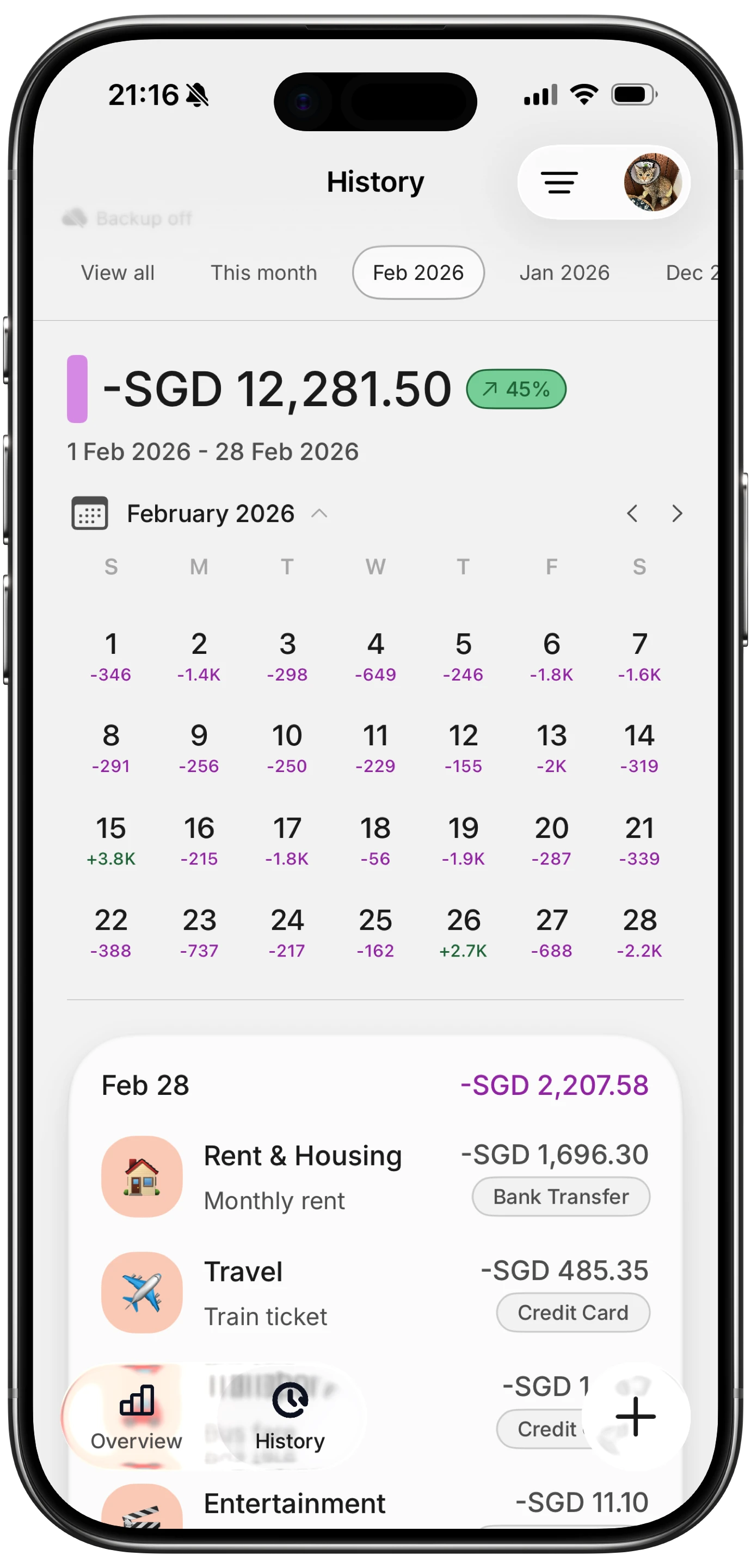
Finny app's History calendar feature
How Long Should You Try a Cash Diet
A cash diet is most effective as a temporary reset, not a permanent lifestyle. Here are general guidelines:
Minimum trial: 4 weeks. The first week is adjustment. The second and third weeks reveal your actual patterns. By week four, you have enough data to evaluate whether the approach is working.
Recommended duration: 8 to 12 weeks. Two to three months gives enough time to build new spending habits. Research on habit formation suggests that 8 to 10 weeks is sufficient for most behavioral changes to start feeling automatic.
When to stop: Once you have internalized the spending awareness that cash provides, you can transition back to cards with better habits. Some people keep a partial cash diet, using cash only for their highest-risk categories (dining out, entertainment) while using cards for everything else.
If the cash diet reveals that your real problem is income, not habits, no spending method will fix that. A cash diet works on behavior, not math.
The Digital Cash Diet
Physical cash has limitations. You cannot use it for online purchases, it is inconvenient for some transactions, and it leaves no paper trail for tracking. A digital cash diet preserves the core principle, a fixed discretionary allowance with a hard ceiling, while adapting it for modern spending.
Here is how a digital version works:
Use a separate debit card or prepaid card. Load your weekly allowance onto it. When the balance hits zero, discretionary spending stops. This mimics the hard ceiling of cash without requiring physical bills.
Pair it with daily tracking. The disadvantage of digital spending is the same disconnect that cards create. Counter this by logging every purchase immediately. When you record each transaction, you recreate the awareness that cash provides naturally.
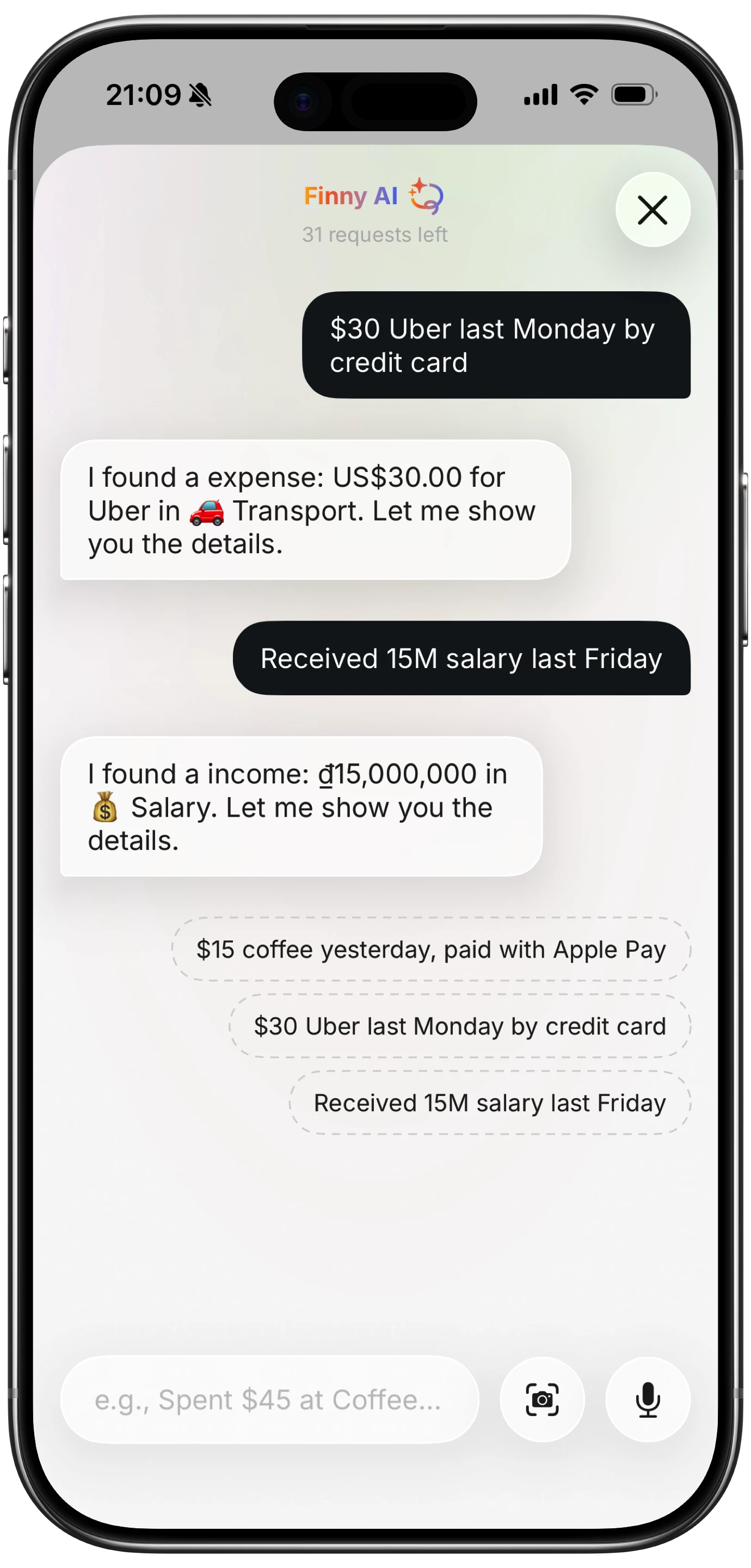
Finny app's AI chat feature
Set spending alerts. Configure notifications at 50% and 75% of your weekly budget so you get early warnings before running out.
A digital cash diet also solves the record-keeping problem. With physical cash, you have to manually note every purchase or rely on memory. With a tracking app, every transaction is recorded and categorized automatically.
Tracking Your Cash Diet in an App
Whether you use physical cash or a digital version, tracking is what turns a cash diet from a short-term experiment into lasting behavior change. Without records, you lose the ability to spot patterns, identify problem categories, and measure progress over time.
An expense tracking app like Finny supports a cash diet in several ways:
Quick logging preserves the habit. The biggest risk with cash spending is losing track of where the money went. Logging each purchase immediately, even with a quick text note, keeps your records complete. Finny's AI-assisted input lets you type something like "lunch 12" and it creates a categorized entry in seconds.
Category breakdowns reveal weak spots. After a few weeks, your spending data shows which categories consume the most cash. Maybe dining out takes 60% of your weekly allowance. That insight lets you make targeted adjustments rather than cutting everything equally.
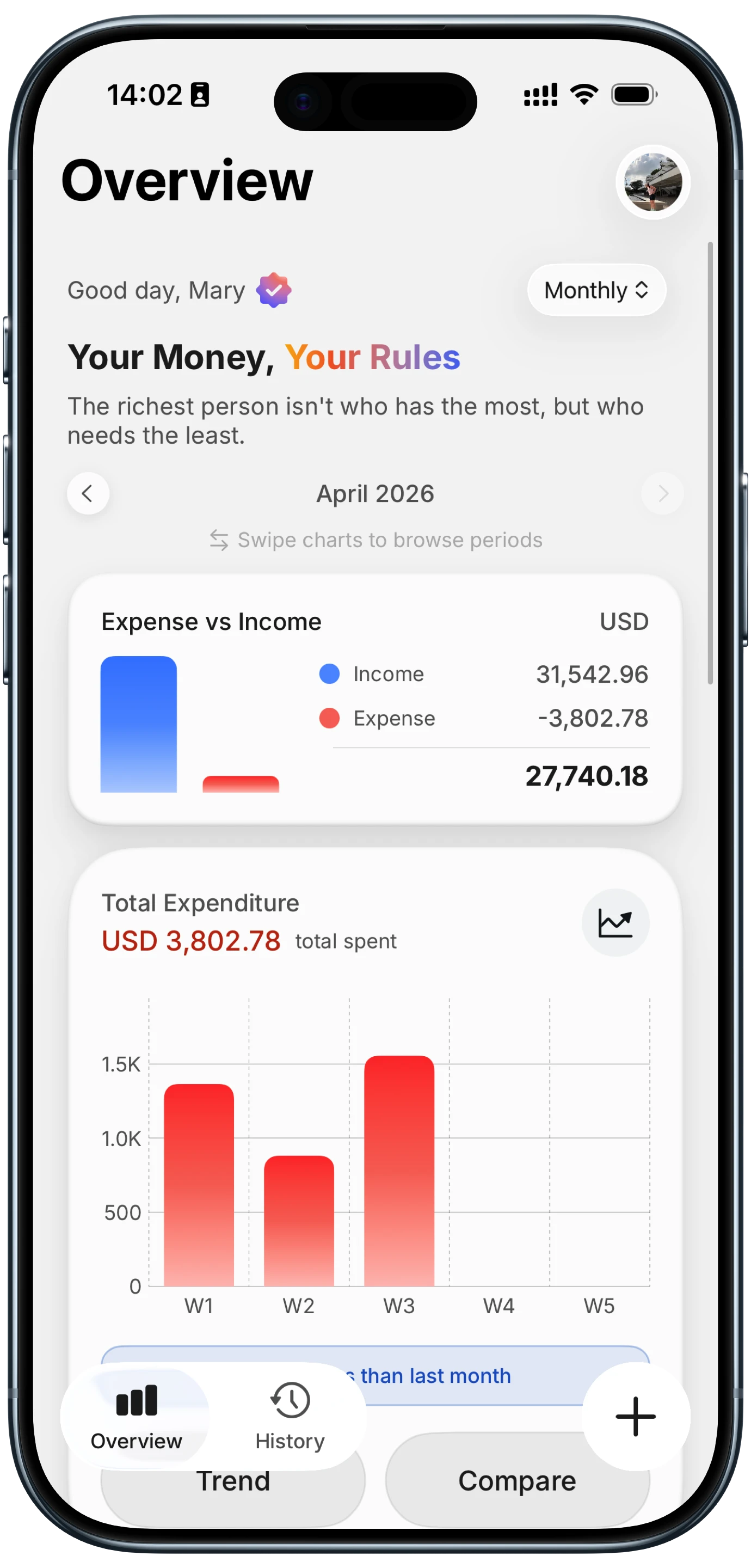
Weekly summaries replace guesswork. Instead of counting bills at the end of the week, your app shows exactly how much you have spent, what you spent it on, and how your current week compares to previous ones.
Offline logging keeps records complete. If you are paying with cash at places without reliable internet, an offline-first app ensures you can still log the transaction on the spot and sync later. For a deeper how-to on running a cash-only ledger, see our guide on how to track cash spending only.
Combining the discipline of a cash diet with the visibility of digital tracking gives you the best of both approaches: the spending friction of cash and the analytical power of an app.
No-Spend Days and Cash Diets
A cash diet pairs naturally with no-spend days. On a no-spend day, you commit to zero discretionary purchases. Within a cash diet framework, no-spend days extend your weekly allowance by creating buffer days where your cash stays untouched.
For example, if your weekly allowance is $100 and you designate two no-spend days per week, you effectively have $100 spread across five spending days instead of seven. That raises your daily budget on spending days while still keeping the weekly total fixed.
For more on this approach, see our guide on what is a no-spend day.
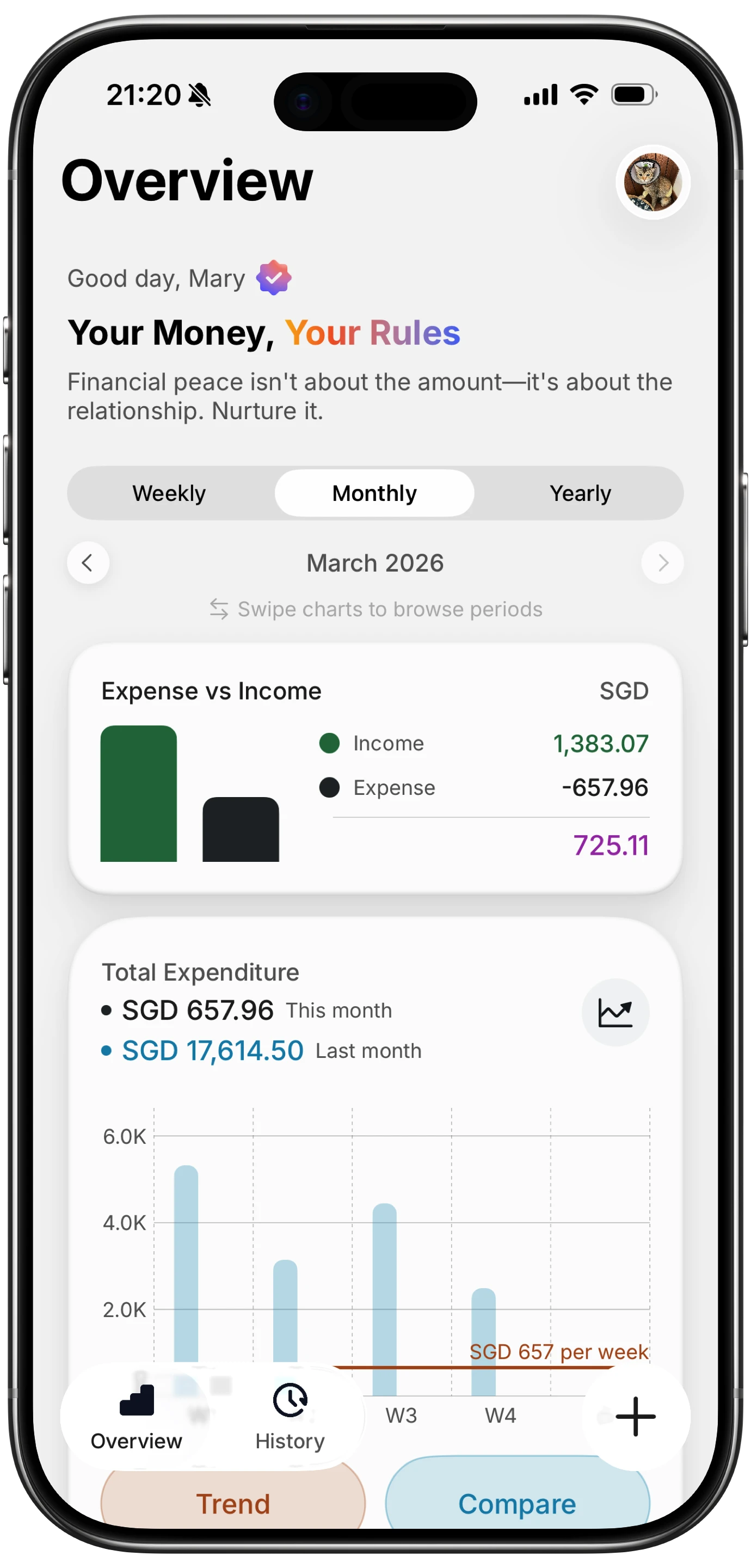
Finny app's Overview feature
Common Cash Diet Mistakes
Setting the Allowance Too Low
Aggressive targets fail fast. If your current discretionary spending is $600 per month and you set a $200 cash allowance, the gap is too large to sustain. Start with a 10-20% reduction and tighten gradually.
Keeping Cards Easily Accessible
The whole point of a cash diet is removing the option to swipe. If your credit card is in your phone case "just in case," you will use it. Create real friction between yourself and card spending.
Not Tracking Cash Purchases
Cash spent without a record is invisible money. You will reach the end of a week with an empty wallet and no idea where $100 went. Log purchases as they happen, not at the end of the day from memory.
Treating It as Punishment
A cash diet is a tool, not a penalty. The goal is awareness and control, not deprivation. If the allowance is reasonable and the tracking is consistent, the experience should feel clarifying rather than restrictive.
The Bottom Line
A cash diet works by reintroducing friction into spending. Whether you use physical bills or a prepaid card with a fixed balance, the hard ceiling forces you to prioritize purchases and confront spending decisions directly. Most people benefit from trying it for 8 to 12 weeks, long enough to build new habits without committing to a permanent system.
The key to making it stick is tracking. Cash without records is just money that disappears. Cash with tracking becomes a feedback loop: you see what you spend, you adjust, and your habits improve over time. Pairing the discipline of a fixed allowance with the visibility of an expense tracker turns a simple constraint into genuine financial awareness.
Common Questions About Cash Diets
What is a cash diet in simple terms?
A cash diet means using only physical cash or a fixed prepaid allowance for discretionary spending over a set period. Fixed bills still come from your bank. The hard spending ceiling prevents overspending without requiring constant willpower.
How much cash should I allow per week?
Start with your current monthly discretionary spending, reduce it by 10-20%, and divide by four. If you currently spend $500 on discretionary items, a weekly allowance of $90 to $100 is a reasonable starting point.
Can I do a cash diet without using physical cash?
Yes. A digital cash diet uses a prepaid card or a separate debit card loaded with your weekly allowance. Pair it with an expense tracking app to maintain the spending awareness that physical cash provides naturally.
How long should a cash diet last?
Try it for at least 4 weeks to gather useful data. An 8 to 12 week period is ideal for building lasting habits. Most people transition back to cards afterward but with improved spending awareness.
Does a cash diet work for online shopping?
Physical cash does not cover online purchases. For a digital version, use your prepaid card for online shopping as well, keeping the total within your weekly allowance. Alternatively, designate one day per week for online purchases and set a fixed limit.
Ready to start a cash diet with clear spending records?
Download Finny to log every cash purchase quickly, track your weekly allowance, and see exactly where your discretionary money goes. AI-assisted input, offline support, and visual analytics keep your cash diet on track without the guesswork.