Money is one of the leading sources of tension in relationships. Not because couples disagree about wanting financial security, but because they rarely sit down to talk about money in a calm, structured way. Conversations happen reactively, usually after an unexpected bill or a credit card statement that looks too high.
A money date changes this pattern. It is a regular, scheduled check-in where you and your partner review your finances together, align on goals, and make decisions as a team. When you have shared expense data in front of you, the conversation shifts from blame to problem-solving. For couples looking for the right tools to support this, see our guide on the best budgeting app for couples.
What Is a Money Date
A money date is a recurring time you and your partner set aside specifically to review your financial situation together. It is not a crisis meeting triggered by overspending. It is not a lecture from one partner to the other. It is a planned, low-pressure conversation where both people look at the same data and make joint decisions.
The concept borrows from business: companies hold regular financial reviews because waiting until something goes wrong is too late. The same logic applies to household finances. When couples review spending, savings, and goals on a predictable schedule, small issues get addressed before they become big problems.
A money date typically covers:
- Recent spending: What went out since the last check-in
- Budget progress: Are you on track for the month or quarter
- Upcoming expenses: Bills, events, or purchases on the horizon
- Financial goals: Progress toward savings targets, debt payoff, or investments
- Adjustments: Changes needed based on what the numbers show
The goal is not perfection. It is visibility and alignment.
Why Money Dates Matter for Couples
Financial disagreements are consistently cited as a top predictor of relationship stress. But the root cause is rarely about how much money a couple has. It is about how they communicate about it.
The same logic applies once a year at a larger scale. Our year-end money review is a one-hour version both partners can do together.
They Prevent Resentment
When one partner handles all the finances, the other is left in the dark. The managing partner may feel burdened. The uninvolved partner may feel controlled. Money dates distribute financial awareness equally, so neither person carries the full weight alone.
They Reduce Surprise Conflicts
Most money arguments happen in the moment: "Why did you spend $200 on that?" A money date moves these conversations to a neutral setting where both partners can look at spending data calmly. Reviewing a transaction history together is very different from confronting someone about a purchase.
They Build Financial Trust
Transparency builds trust. When both partners see the same numbers on the same screen, there is no room for assumptions or suspicion. You are both looking at reality, and you are deciding together what to do about it.
They Keep Goals Alive
It is easy to set a savings goal in January and forget about it by March. Regular money dates keep goals visible. You see the progress, celebrate small wins, and adjust timelines when life changes.
How to Structure a Money Date
A money date does not need to be complicated. The best format is simple, repeatable, and short enough that neither partner dreads it.
Step 1: Set a Regular Schedule
Choose a frequency that works for your situation:
- Weekly: Best for couples actively paying off debt or on a tight budget
- Biweekly: Works well for most couples as a steady rhythm
- Monthly: Sufficient for couples with stable finances and few variable expenses
Pick a consistent day and time. Sunday evenings and the first Saturday of the month are common choices. Put it on a shared calendar so it becomes routine rather than an afterthought.
Step 2: Gather Your Data
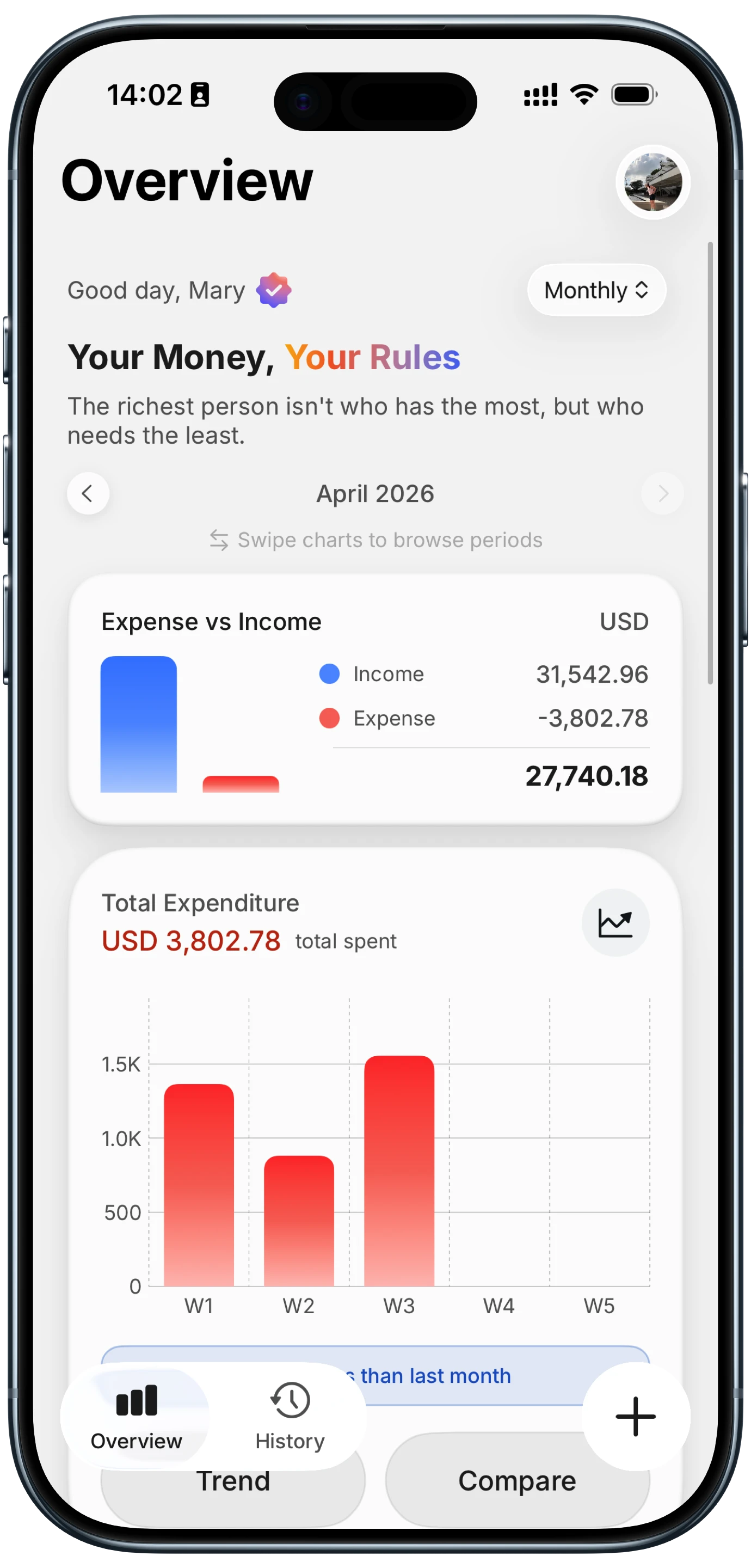
Before the conversation, pull together the numbers you need. This is where an expense tracking app saves significant time. Instead of digging through bank statements and receipts, you open your tracker and the data is already organized.
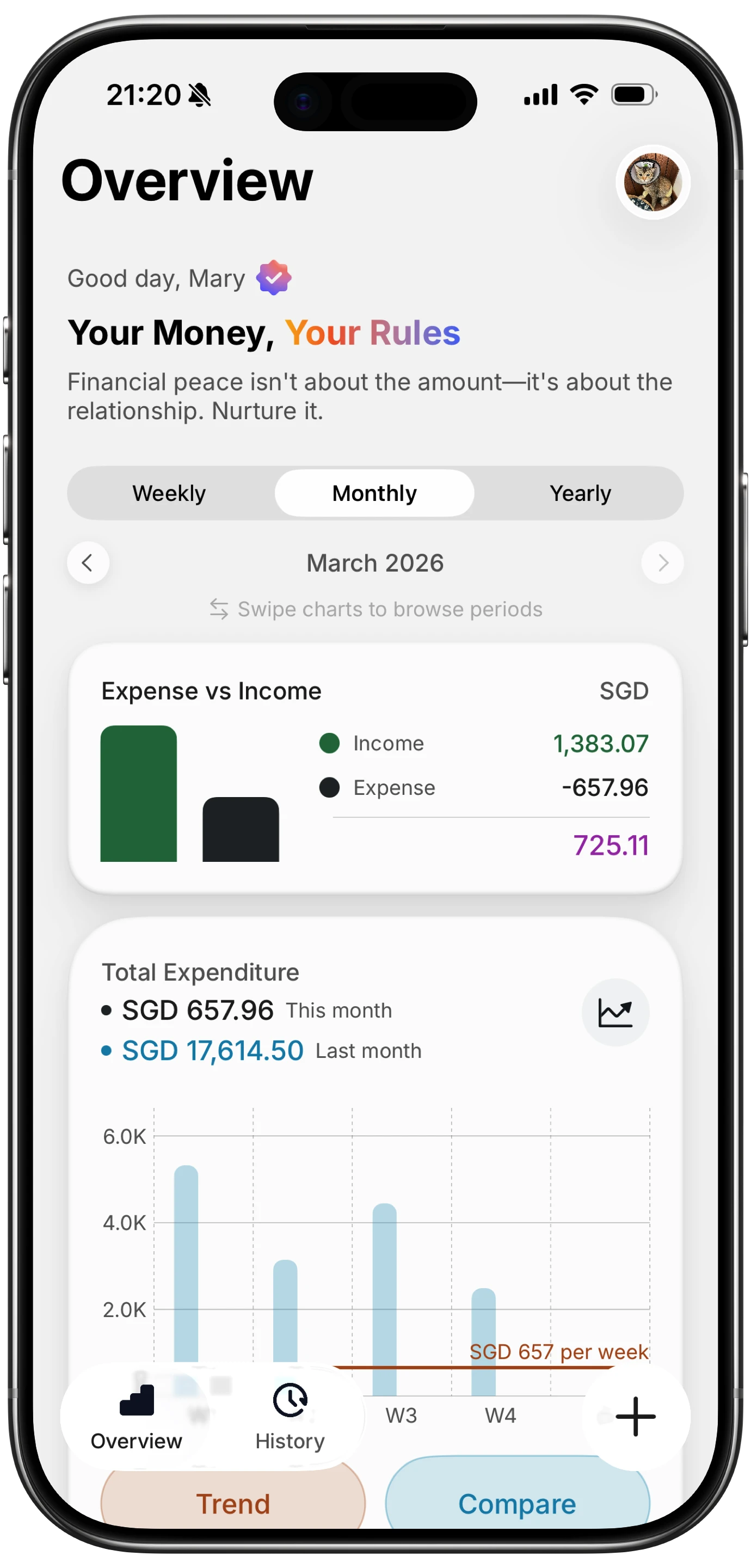
Finny app's Overview feature
With Finny, both partners can review categorized spending, see trends over time, and compare the current month to previous ones. Having this data ready turns a potentially awkward conversation into a straightforward review.
Step 3: Follow a Simple Agenda
Keep the structure consistent so both partners know what to expect:
- Review spending since last check-in: Look at categories, totals, and anything unusual
- Check budget status: Are you within your planned amounts for the month
- Discuss upcoming expenses: Birthdays, travel, car maintenance, subscriptions renewing
- Review goal progress: Savings targets, debt balances, investment contributions
- Make decisions together: Adjust budgets, set new priorities, agree on large purchases
A typical money date should take 20 to 40 minutes. If it consistently runs longer, you may be trying to cover too much ground. Keep it focused.
Step 4: End on a Positive Note
Finish by acknowledging something that went well. Maybe you stayed under budget in a category, or you hit a savings milestone, or you simply showed up and had the conversation. Positive reinforcement makes the next money date easier to start.
What to Discuss During a Money Date
Having an agenda is important, but knowing what topics to raise and how to raise them matters just as much.
Spending Patterns
Look at where your money went, not to assign blame, but to understand patterns. Are grocery costs creeping up? Did dining out spike this month? Are subscriptions accumulating quietly?
Comparing your spending month over month makes these patterns visible. Our guide on how to compare monthly spending walks through this process in detail.
Shared vs Individual Spending
Many couples maintain both shared and personal spending categories. A money date is the right time to review shared expenses and make sure the split still feels fair. Individual spending can remain private if that is what works for your relationship, but shared costs need shared oversight.
Short-Term and Long-Term Goals
Short-term goals might include paying off a credit card, saving for a vacation, or building an emergency fund. Long-term goals might be a house down payment, retirement contributions, or education savings.
Review where you stand on each goal. If progress has stalled, discuss why without judgment. Life happens. The point is to adjust the plan, not to feel guilty about it.
Upcoming Financial Decisions
Large purchases, career changes, insurance renewals, lease agreements: these decisions are better made together, with data, rather than under pressure. Use the money date to flag decisions on the horizon and start discussing them before deadlines force a rushed choice.
Tips for Keeping Money Dates Positive
The biggest risk with money dates is that they turn into arguments. Here are practical ways to prevent that.
Use Data, Not Feelings
"I feel like you spend too much on clothes" is an opinion that invites defensiveness. "Clothing spending was $340 this month, up from $180 last month" is a fact that invites discussion. Let the numbers lead the conversation.
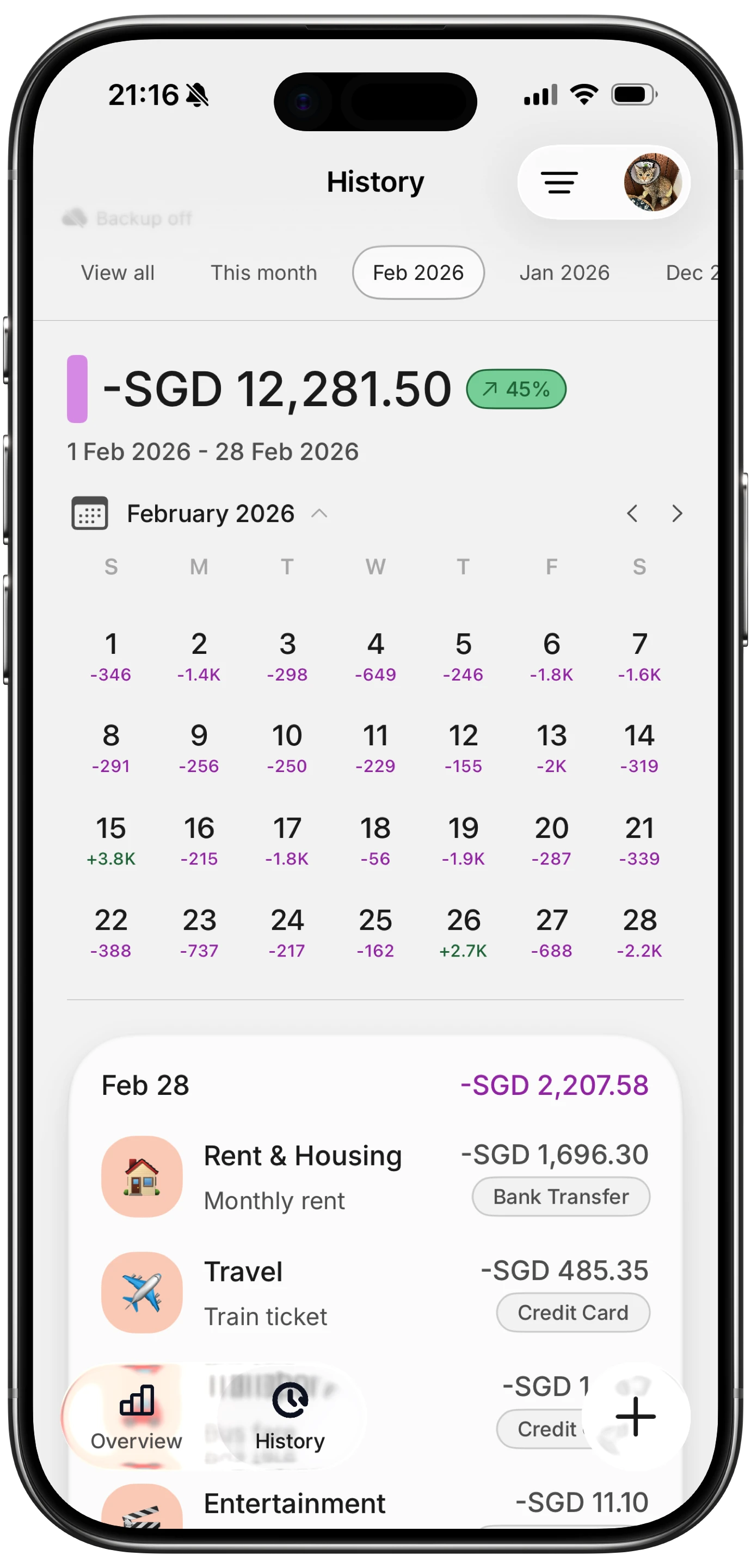
Finny app's History calendar feature
Set Ground Rules
Before your first money date, agree on a few ground rules:
- No ambushes: Do not save up complaints to unleash during the check-in
- No blame language: Replace "you always" with "we spent" or "this category increased"
- Equal participation: Both partners review the data and contribute to decisions
- Time limits: If a topic gets heated, table it and revisit with cooler heads
Make It Comfortable
A money date does not need to feel like a board meeting. Make coffee, sit somewhere comfortable, or combine it with a low-key activity you both enjoy. Some couples go to a quiet cafe. Others review numbers over a home-cooked meal. The setting matters less than the consistency.
Celebrate Progress
Did you pay off a credit card? Put an extra $500 into savings? Go three months without overdrafting? Acknowledge it. Financial progress is often invisible because the wins are quiet. A money date is where you make them visible.
Accept Imperfection
Not every month will go according to plan. Unexpected expenses happen. Spending spikes around holidays. One partner might slip on a budget category. The goal of a money date is not to be perfect. It is to stay informed and stay aligned.
How Shared Expense Tracking Makes Money Dates Productive
The difference between a productive money date and a stressful one often comes down to data. Without clear records, conversations rely on memory and estimates, which leads to disagreements about what actually happened.
Shared expense tracking solves this by giving both partners access to the same information:
- Categorized spending shows exactly where money went
- Monthly comparisons reveal trends over time
- Visual analytics make patterns obvious at a glance
- Transaction histories provide receipts for any question about a specific purchase
When you sit down for a money date with organized data, you skip the "I think we spent about..." phase and go straight to "Here is what we spent, and here is what we want to change."
Finny supports this by letting you log expenses quickly through text, voice, or receipt scanning, then presenting that data in clear visual summaries. Both partners can review the same dashboard, making the money date a collaborative review rather than one person reporting to the other.
For tips on tracking expenses effectively, see our guide on how to track expenses.
How Often Should You Have a Money Date
There is no single right answer. The best frequency depends on your financial situation and comfort level.
| Situation | Recommended Frequency | Why |
|---|---|---|
| Paying off debt | Weekly | Close monitoring keeps payoff on track |
| Building savings | Biweekly | Regular check-ins maintain momentum |
| Stable finances | Monthly | Enough to catch issues without over-monitoring |
| Major life change | Weekly until settled | Job change, move, or new baby needs closer attention |
| New to money dates | Weekly for first month | Builds the habit before extending intervals |
Start more frequently and dial back once the habit is established. A couple who has never discussed finances together will benefit from weekly check-ins at first, even if they eventually move to monthly.
Common Mistakes to Avoid
Skipping When Things Are Good
It is tempting to cancel a money date when finances feel fine. But consistency is what makes the system work. Skipping creates gaps where small issues grow unnoticed.
Letting One Partner Dominate
If one person does all the talking, the other disengages. Both partners should review the data beforehand and come prepared with observations or questions.
Focusing Only on Problems
If every money date is about what went wrong, both partners will start dreading them. Balance problem-solving with progress reviews and goal-setting.
Making It Too Long
Anything over 45 minutes risks fatigue and frustration. Keep it focused. If a topic needs deeper discussion, schedule a separate conversation for it.
The Bottom Line
A money date is one of the simplest tools couples have for building financial alignment. It replaces reactive arguments with proactive reviews. It turns vague money stress into concrete, solvable problems. And it gives both partners equal ownership of the household's financial direction.
The key ingredients are consistency, shared data, and a collaborative tone. You do not need to be financial experts. You just need to show up, look at the numbers together, and make decisions as a team.
Common Questions About Money Dates
What is a money date?
A money date is a scheduled time when couples sit down together to review their finances. It typically covers recent spending, budget progress, upcoming expenses, and financial goals. The purpose is to maintain open communication about money in a calm, structured setting.
How long should a money date last?
Most money dates take 20 to 40 minutes. Keep the agenda focused and consistent. If conversations regularly run over 45 minutes, consider splitting topics across multiple sessions or simplifying your review process.
What if my partner does not want to have money dates?
Start small. Suggest a 15-minute check-in once a month with no pressure. Focus on shared goals rather than individual spending. Having organized data from an expense tracker can make the conversation feel less personal and more collaborative.
Do we need to combine finances to have a money date?
No. Money dates work regardless of how you structure your accounts. Couples with fully separate finances can review shared expenses and goals. Couples with joint accounts can review everything together. The format adapts to your arrangement.
What tools do we need for a money date?
At minimum, you need access to your spending data. A shared expense tracking app simplifies this significantly. Beyond that, a simple agenda and a consistent schedule are all you need.
Ready to make your money dates productive and stress-free?
Download Finny to track shared expenses, review categorized spending together, and walk into every money date with clear data instead of guesswork.