Most people know they should be saving for retirement, but figuring out which account to use is where things get confusing. Between 401(k)s, traditional IRAs, and Roth IRAs, each option comes with different tax rules, contribution limits, and withdrawal restrictions.
A Roth IRA stands out because it offers something rare in the tax code: completely tax-free growth and tax-free withdrawals in retirement. You pay taxes on your contributions now, and in return, every dollar of growth belongs to you when you take it out later. Understanding how this account works, and whether it fits your situation, is one of the most practical financial decisions you can make. For a broader look at managing your money, see our guide on how to manage personal finances.
What Is a Roth IRA
A Roth IRA is an individual retirement account that you fund with after-tax dollars. Unlike a traditional IRA, where contributions may be tax-deductible, Roth contributions give you no upfront tax break. The advantage comes later: qualified withdrawals in retirement are entirely tax-free, including all investment gains.
The account was introduced in 1997 and named after Senator William Roth, who championed the legislation. Since then, it has become one of the most popular retirement savings vehicles for people who expect their tax rate to stay the same or increase over time.
Key features of a Roth IRA:
- After-tax contributions: You pay income tax before putting money in
- Tax-free growth: Investments grow without annual tax drag
- Tax-free withdrawals: Qualified distributions in retirement are not taxed
- No required minimum distributions: Unlike traditional IRAs and 401(k)s, you are never forced to withdraw
- Flexible access to contributions: You can withdraw your contributions (not earnings) at any time without penalty
Roth IRA vs Traditional IRA
The core difference between a Roth IRA and a traditional IRA is when you pay taxes.
| Feature | Roth IRA | Traditional IRA |
|---|---|---|
| Tax break timing | Retirement (withdrawals) | Now (contributions) |
| Contributions | After-tax dollars | Pre-tax or tax-deductible |
| Growth | Tax-free | Tax-deferred |
| Withdrawals in retirement | Tax-free | Taxed as ordinary income |
| Required minimum distributions | None | Start at age 73 |
| Income limits for contributions | Yes | No (but deduction may be limited) |
| Early withdrawal of contributions | Penalty-free | Subject to penalty and taxes |
When a Roth IRA makes more sense: You are early in your career, in a lower tax bracket now, or expect higher income (and higher taxes) in retirement. You also value the flexibility of no required minimum distributions.
When a traditional IRA makes more sense: You need a tax deduction this year, are in a high tax bracket now, or expect lower income in retirement. The upfront tax savings can be reinvested for additional growth.
For many people, the answer is not either/or. Using both account types across your career gives you tax diversification in retirement, meaning you can draw from taxable and tax-free sources strategically.
2026 Roth IRA Contribution Limits
For the 2026 tax year, the IRS allows the following Roth IRA contributions:
- Under age 50: $7,000 per year
- Age 50 and older: $8,000 per year (includes $1,000 catch-up contribution)
These limits apply to your total IRA contributions across all accounts. If you contribute $3,000 to a traditional IRA, you can only put $4,000 into a Roth IRA (assuming the $7,000 limit).
You can contribute for the 2026 tax year until the tax filing deadline in April 2027. This gives you extra time if you cannot max out contributions within the calendar year.
Breaking down the annual limit into monthly contributions makes it more manageable. At $7,000 per year, that is roughly $583 per month or $269 per biweekly paycheck. Knowing your actual spending patterns helps you figure out how much you can realistically set aside. An expense tracker like Finny can show you where your money goes each month so you can identify room for consistent contributions.
Roth IRA Income Limits for 2026
Not everyone qualifies to contribute directly to a Roth IRA. The IRS sets income limits based on your modified adjusted gross income (MAGI):
Single filers:
- Full contribution: MAGI under $150,000
- Reduced contribution: MAGI between $150,000 and $165,000
- No direct contribution: MAGI above $165,000
Married filing jointly:
- Full contribution: MAGI under $236,000
- Reduced contribution: MAGI between $236,000 and $246,000
- No direct contribution: MAGI above $246,000
If your income exceeds these limits, you may still be able to use a "backdoor Roth IRA" strategy: contribute to a traditional IRA (non-deductible) and then convert it to a Roth IRA. This is legal and widely used, though you should be aware of the pro-rata rule if you have existing pre-tax IRA balances.
Tax Advantages of a Roth IRA
The Roth IRA's tax benefits are powerful when given time to compound:
Tax-Free Compounding
In a taxable brokerage account, you owe taxes on dividends, interest, and capital gains each year. In a Roth IRA, your investments compound without any tax drag. Over decades, this difference is significant.
For example, $7,000 invested annually for 30 years at a 7% average return grows to roughly $661,000. In a Roth IRA, that entire amount is yours. In a taxable account, annual taxes on dividends and eventual capital gains taxes would reduce your effective balance considerably.
Tax-Free Income in Retirement
When you withdraw from a Roth IRA in retirement, those distributions do not count as taxable income. This matters because taxable income in retirement can:
- Push you into a higher tax bracket
- Increase the taxes on your Social Security benefits
- Raise your Medicare premiums through IRMAA surcharges
Roth withdrawals avoid all of these issues, giving you more control over your tax situation in retirement.
No Required Minimum Distributions
Traditional IRAs and 401(k)s force you to start withdrawing money at age 73, whether you need it or not. These required minimum distributions (RMDs) create taxable income you cannot avoid. Roth IRAs have no RMDs during your lifetime, allowing your money to continue growing tax-free for as long as you want. This also makes the Roth IRA an effective wealth transfer tool, since your heirs inherit tax-free money.
Roth IRA Withdrawal Rules
Understanding when and how you can access your money is essential:
Contributions: Available Anytime
You can withdraw your original contributions at any time, at any age, for any reason, with no taxes or penalties. This is because you already paid taxes on that money before contributing it. This makes the Roth IRA more flexible than most retirement accounts.
Earnings: The Five-Year Rule
To withdraw earnings tax-free and penalty-free, two conditions must be met:
- Age requirement: You must be at least 59 and a half years old
- Five-year rule: At least five years must have passed since your first Roth IRA contribution
If you withdraw earnings before meeting both conditions, you will owe income taxes and potentially a 10% early withdrawal penalty on the earnings portion.
Exceptions to the Early Withdrawal Penalty
Even before age 59 and a half, you can withdraw earnings penalty-free (though taxes may still apply) for:
- First-time home purchase (up to $10,000 lifetime)
- Qualified education expenses
- Disability
- Certain medical expenses exceeding 7.5% of AGI
Roth IRA vs 401(k)
Many people have access to both a Roth IRA and an employer-sponsored 401(k). Here is how they compare:
| Feature | Roth IRA | Traditional 401(k) | Roth 401(k) |
|---|---|---|---|
| 2026 contribution limit | $7,000 | $23,500 | $23,500 |
| Employer match | No | Yes | Yes |
| Investment choices | Unlimited | Plan-limited | Plan-limited |
| RMDs | None | Yes, at age 73 | Yes, at age 73 |
| Tax treatment | After-tax in, tax-free out | Pre-tax in, taxed out | After-tax in, tax-free out |
| Income limits | Yes | No | No |
A common and effective strategy is to contribute enough to your 401(k) to capture the full employer match, then direct additional savings to a Roth IRA for its broader investment options and lack of RMDs. If you still have money to invest after maxing out both, return to the 401(k) to use the remaining contribution room.
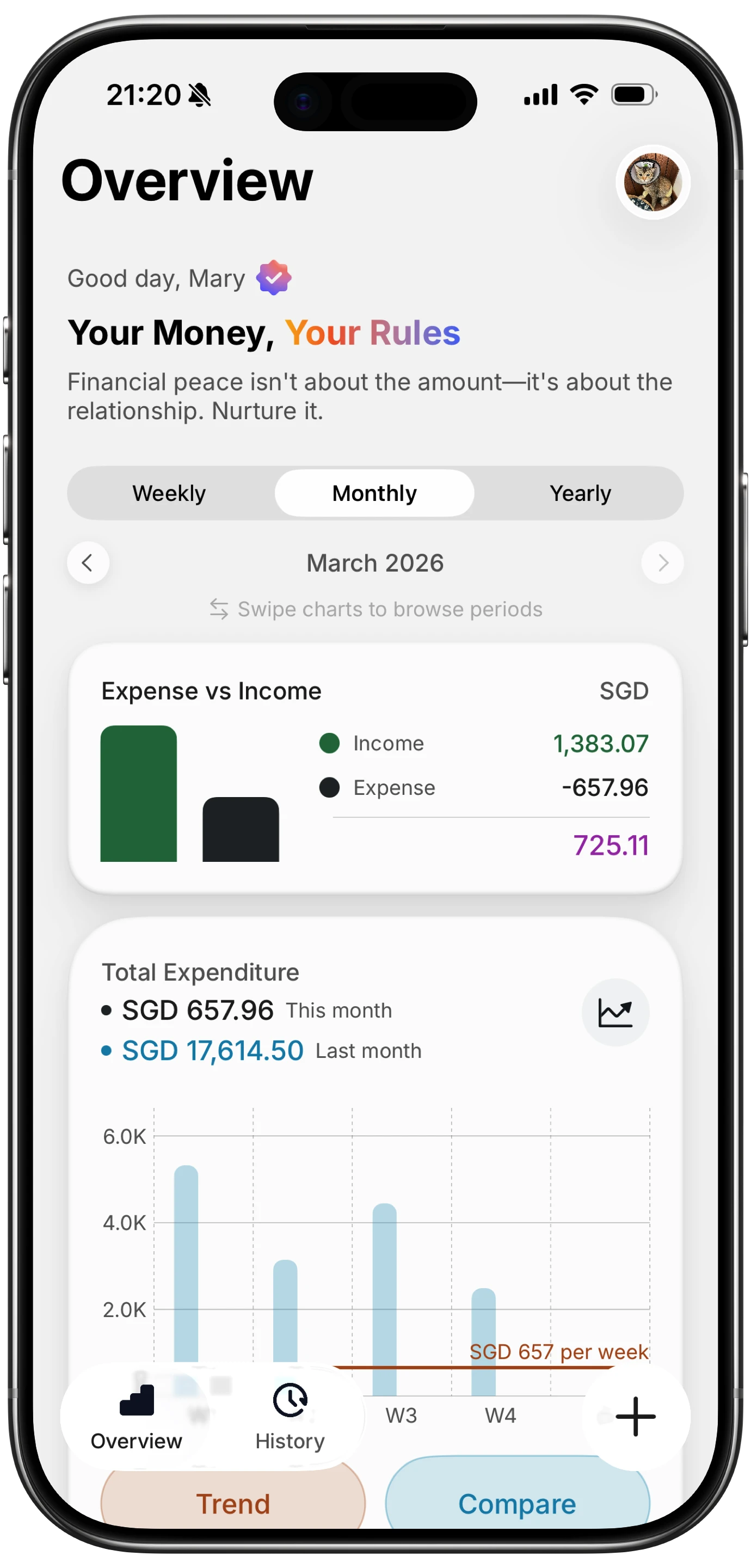
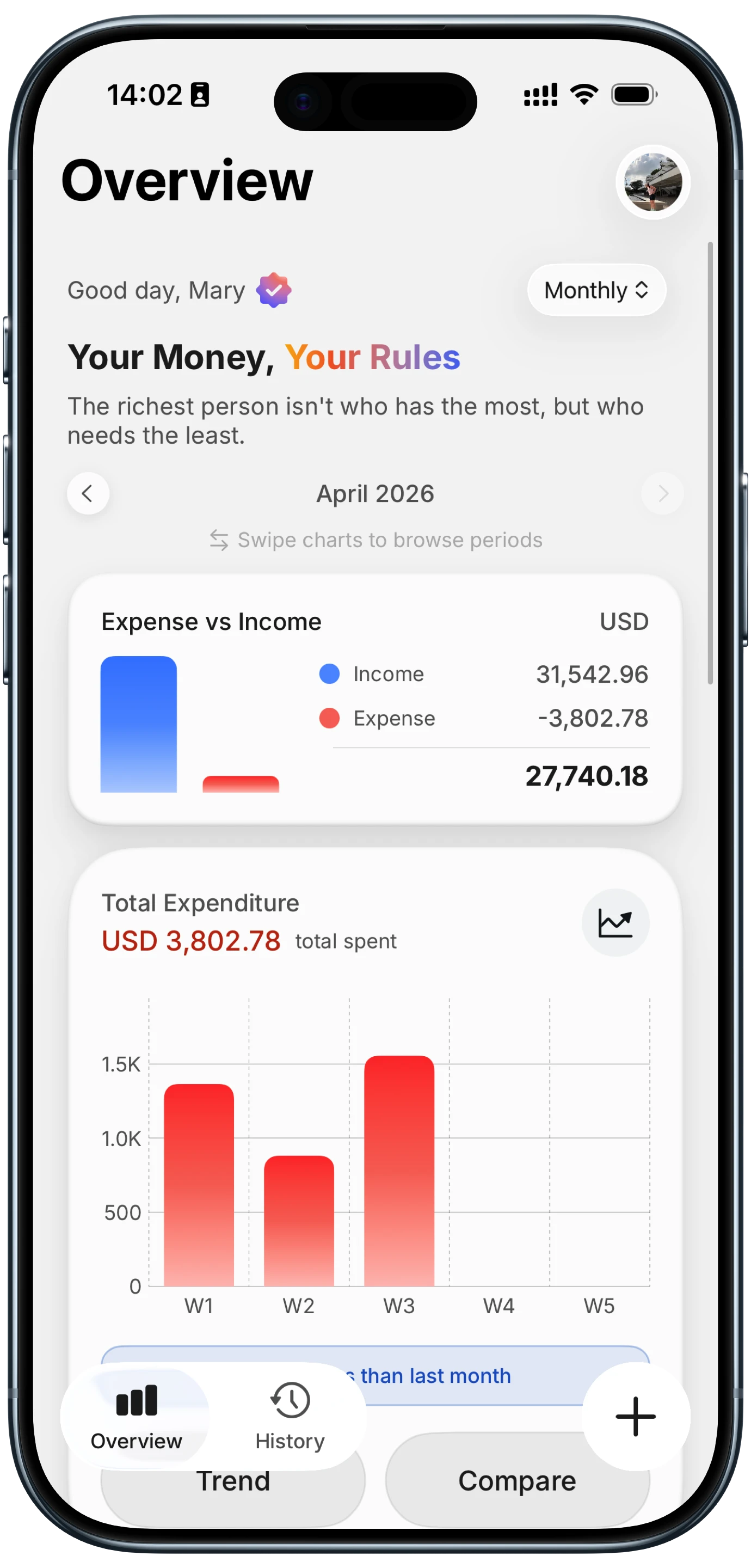
Finny app's Overview feature
Who Should Open a Roth IRA
A Roth IRA is a strong fit for several groups:
Young professionals and early-career workers: If you are in a lower tax bracket now than you expect to be later, paying taxes at today's rate and growing money tax-free is a favorable trade. Starting early maximizes the compounding advantage.
Mid-career earners below the income limit: Even if you are in a moderate tax bracket, the flexibility of tax-free withdrawals and no RMDs adds significant value to your retirement plan.
People who want tax diversification: Having both pre-tax (401k, traditional IRA) and after-tax (Roth IRA) accounts gives you options in retirement. You can strategically draw from different sources to manage your taxable income each year.
Those who value contribution accessibility: Because you can withdraw contributions at any time without penalty, a Roth IRA doubles as a backup savings layer. It is not ideal to raid your retirement account, but knowing the option exists provides peace of mind.
Parents and grandparents planning wealth transfer: Since Roth IRAs have no RMDs and pass tax-free to heirs, they are one of the most efficient tools for leaving money to the next generation.
How Tracking Expenses Helps You Fund a Roth IRA
The biggest barrier to consistent Roth IRA contributions is not understanding the account. It is finding the money to put in. Most people know they should contribute but feel like there is nothing left after bills, groceries, and daily spending.
This is where expense tracking becomes practical. When you log your spending consistently, patterns emerge that are invisible otherwise:
- Subscriptions you forgot about or rarely use
- Categories where spending creeps up gradually (dining out, convenience purchases)
- Small daily expenses that add up to hundreds per month
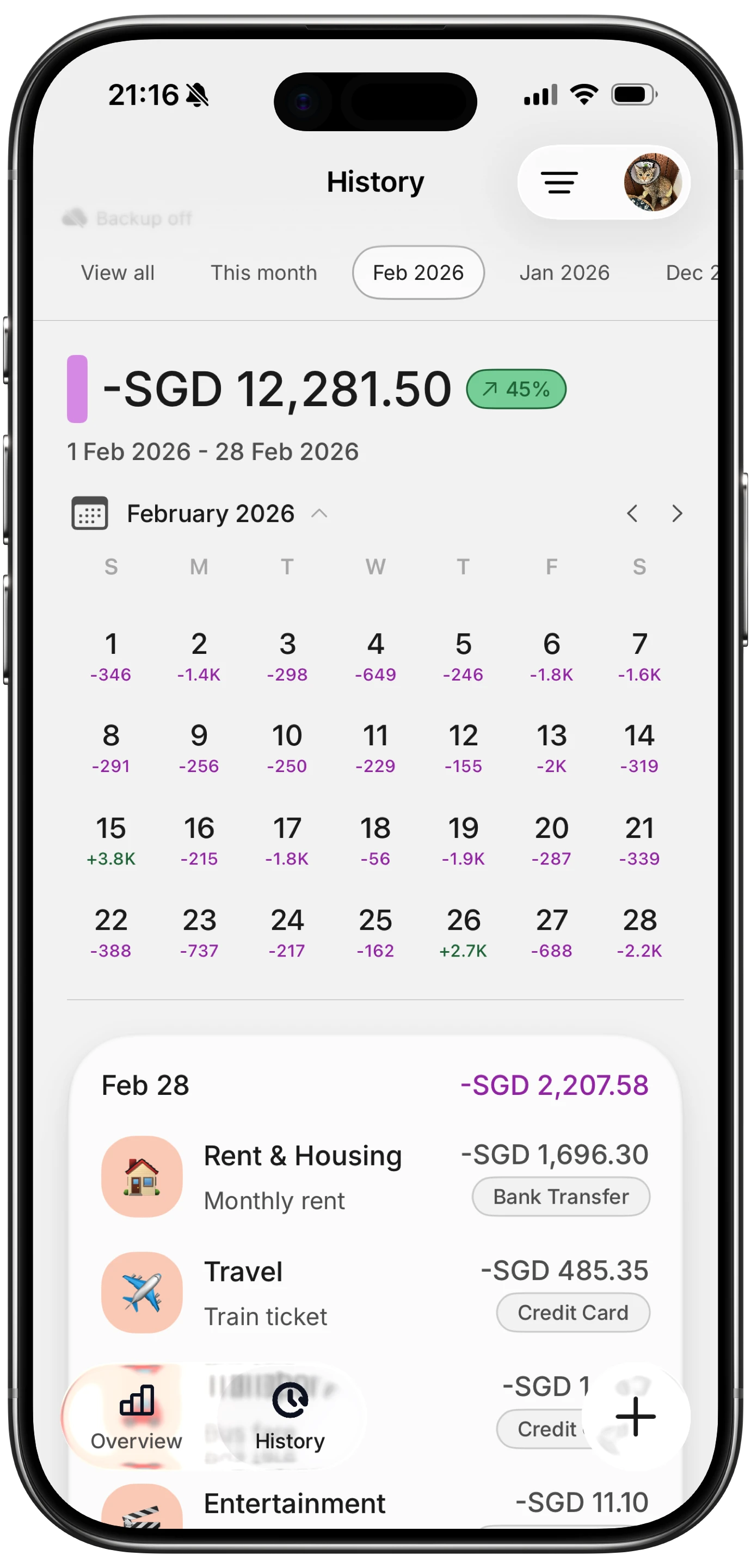
Finny app's History calendar feature
Even finding $200 per month through better spending awareness puts $2,400 into your Roth IRA annually. Over 30 years at 7% growth, that alone grows to roughly $227,000, entirely tax-free.
Finny helps with this by making daily expense logging quick and frictionless. You can use AI text input, receipt scanning, or voice logging to capture spending in seconds. When you review your spending categories weekly, you get a clear picture of where money can be redirected toward long-term goals like a Roth IRA. For tips on building this habit, see our guide on how to track daily spending.
The key is consistency over perfection. You do not need to max out your Roth IRA immediately. Start with whatever amount your budget allows, automate the contribution, and increase it as you find more room through better spending awareness.
How to Open and Fund a Roth IRA
Getting started is straightforward:
- Choose a brokerage: Fidelity, Schwab, and Vanguard are popular options with no account minimums and low-cost index funds
- Open the account: The application takes about 15 minutes online. You will need your Social Security number and bank details
- Set up contributions: Link your bank account and schedule automatic transfers, ideally aligned with your paydays
- Choose investments: For simplicity, a target-date retirement fund or a total stock market index fund is a solid starting point
- Track and adjust: Review your contributions quarterly and increase them when your budget allows
For a deeper look at budgeting strategies that free up money for investing, check out our guide on budgeting for beginners.
The Bottom Line
A Roth IRA offers tax-free growth, tax-free withdrawals in retirement, no required minimum distributions, and flexible access to your contributions. For anyone who qualifies based on income limits, it is one of the most powerful retirement accounts available.
The account itself is simple to open and maintain. The real challenge is contributing consistently, and that comes down to understanding your cash flow. When you know exactly where your money goes each month, carving out space for retirement contributions becomes a concrete action rather than a vague intention.
Start with what you can afford, automate the process, and let compounding do the heavy lifting over time.
Common Questions About Roth IRAs
What is a Roth IRA in simple terms?
A Roth IRA is a retirement account where you contribute money you have already paid taxes on. Your investments grow tax-free, and you can withdraw the money tax-free in retirement after age 59 and a half.
Can I lose money in a Roth IRA?
A Roth IRA is an account, not an investment. Your balance depends on what you invest in. Stock-based investments can lose value in the short term, but historically, diversified portfolios grow significantly over long holding periods.
How much should I put in my Roth IRA each month?
The 2026 annual limit is $7,000 ($8,000 if you are 50 or older). That works out to about $583 per month. If you cannot contribute the full amount, start with whatever your budget allows and increase over time.
Can I have both a Roth IRA and a 401(k)?
Yes. Many financial advisors recommend contributing enough to your 401(k) to get the full employer match, then funding a Roth IRA, then returning to the 401(k) for additional contributions.
When can I withdraw from my Roth IRA?
You can withdraw your contributions at any time without taxes or penalties. To withdraw earnings tax-free, you must be at least 59 and a half and the account must be at least five years old.
What happens to my Roth IRA if I exceed the income limit?
If your income grows beyond the limit, you cannot make new direct contributions. Money already in the account continues to grow tax-free. You may be able to use a backdoor Roth IRA strategy to continue contributing indirectly.
Ready to find room in your budget for retirement contributions?
Download Finny to track your daily spending, spot savings opportunities, and build the consistency you need to fund a Roth IRA every month. AI-assisted logging, receipt scanning, and visual analytics make it easy to see where your money goes.