What Is a Spending Fast? Rules, Benefits, and How to Do One
A spending fast is a financial reset. You stop all non-essential spending for a defined period, typically one to four weeks, to break unconscious spending habits, save money quickly, and gain clarity on what you actually need versus what you mindlessly buy.
A spending fast is a temporary commitment to spend money only on essentials: rent, utilities, groceries, transportation, and existing financial obligations. Everything else, dining out, shopping, entertainment, subscriptions you can pause, stops for the duration of the fast. For a less intense version, see our guide on no-spend days.
How a Spending Fast Works
What You Can Spend On
- Rent or mortgage
- Utilities (electricity, water, internet)
- Groceries (not restaurants or takeout)
- Transportation to work (gas, transit pass)
- Insurance premiums
- Debt payments
- Medical necessities
- Existing contracts you cannot pause
What You Stop Spending On
- Restaurants and takeout
- Coffee shops
- Online shopping
- New clothes
- Entertainment (streaming you can pause, movies, concerts)
- Hobbies and recreation
- Gifts (plan around this)
- Alcohol
- Any non-essential subscription
The distinction is straightforward: if you need it to survive and meet obligations, pay it. If you could live without it for a few weeks, stop.
Spending Fast vs No-Spend Day vs Cash Diet
| Approach | Duration | What's Restricted | Intensity |
|---|---|---|---|
| No-spend day | 1 day | All discretionary spending | Low |
| Cash diet | 2-4 weeks | Card spending (use cash only) | Medium |
| Spending fast | 1-4 weeks | All non-essential spending | High |
A no-spend day is a single-day challenge. A cash diet changes your payment method to increase spending awareness. A spending fast eliminates discretionary spending entirely for an extended period. Each serves a different purpose.
Benefits of a Spending Fast
Immediate savings. Most people save $500-$1,500 during a one-month spending fast, depending on their normal discretionary spending level.
Habit reset. Unconscious spending habits (daily coffee shop visit, browsing Amazon, ordering takeout when tired) are interrupted. After the fast, many of these habits do not resume because you realize you did not miss them.
Clarity on needs vs wants. After two weeks without discretionary spending, the difference between what you need and what you habitually buy becomes obvious.
Emotional awareness. You notice when you reach for your wallet out of boredom, stress, or social pressure rather than genuine need. This awareness persists long after the fast ends.
Debt acceleration. Money saved during the fast can go directly toward high-interest debt, creating momentum. For debt payoff strategies, see our guide on debt snowball vs avalanche.
How to Do a Spending Fast
Step 1: Choose Your Duration
- One week: Good for a first attempt. Low commitment, meaningful insight.
- Two weeks: Long enough to break minor habits and see real savings.
- One month: The full experience. Most habits are interrupted and savings are significant.
- Longer than one month: Diminishing returns and burnout risk. Not recommended for most people.
Step 2: Define Your Rules
Write down exactly what is and is not allowed. Ambiguity leads to justification creep ("this coffee is basically a necessity"). Be specific:
- "No eating out, including coffee shops."
- "No online purchases except pre-approved essentials."
- "No new subscriptions. Pause anything pausable."
Step 3: Prepare
- Stock your kitchen with groceries for the first week.
- Meal prep to avoid the "too tired to cook" takeout trigger.
- Unsubscribe from promotional emails.
- Remove shopping apps from your phone.
- Tell friends and family so social plans can adjust (host dinner instead of going out).
Step 4: Track Everything
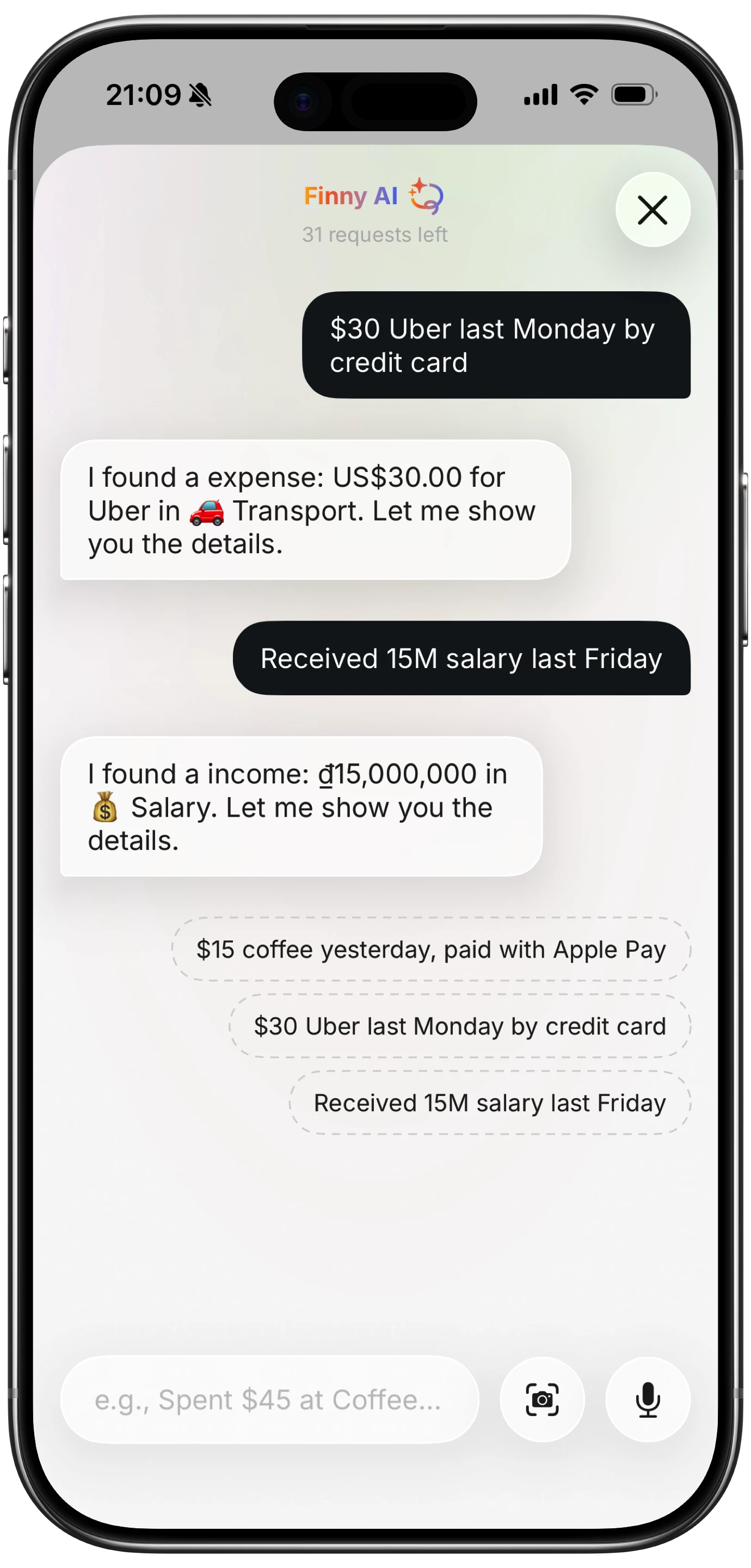
Finny app's AI chat feature
Continue tracking every expense during the fast. This serves two purposes: it keeps you accountable (you have to face every purchase), and it creates a dataset showing how much less you spend when you are intentional.
Step 5: Review and Adjust After
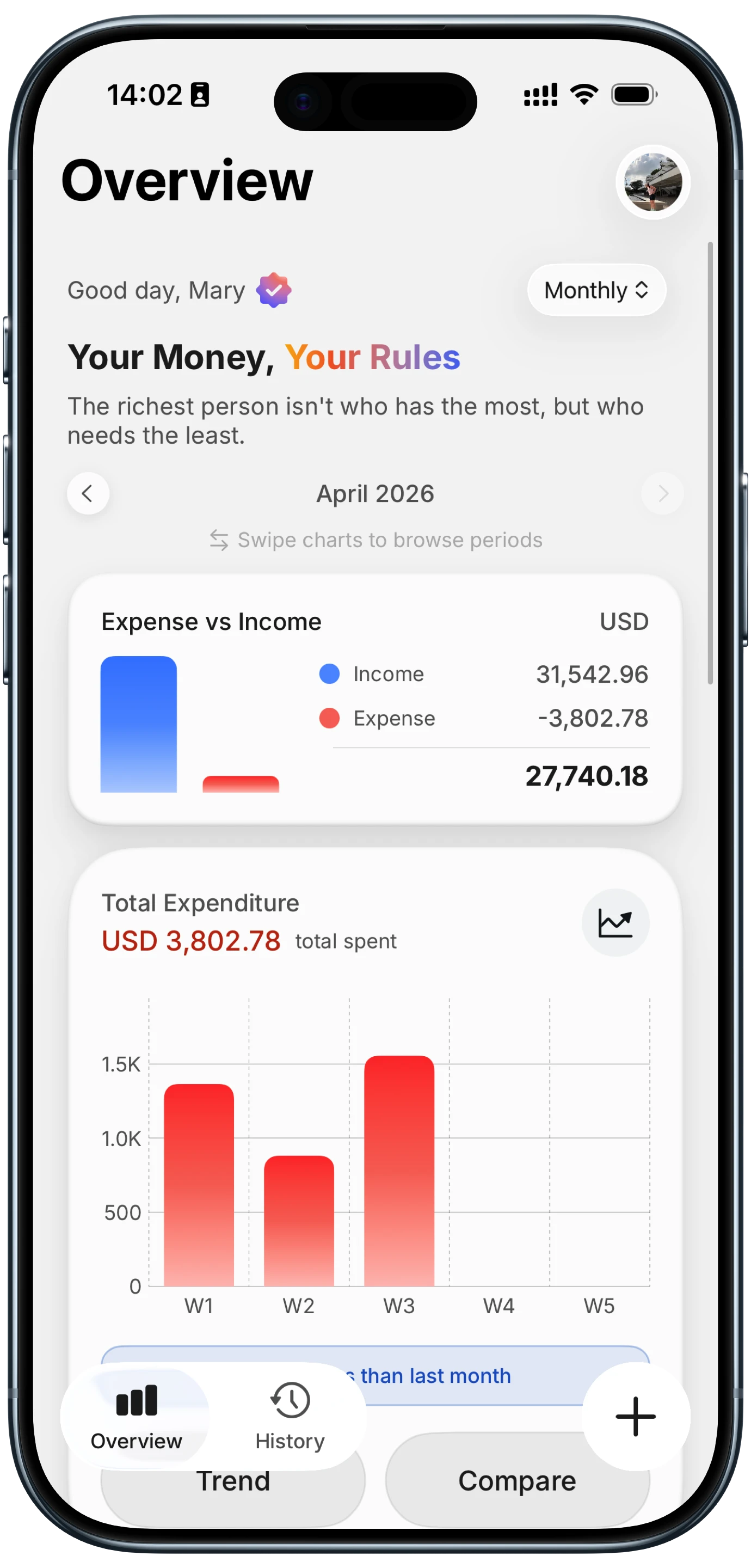
When the fast ends, do not immediately return to old habits. Review your spending data from the fast period versus a normal month. The difference shows exactly how much discretionary spending costs you and which categories you did not miss.
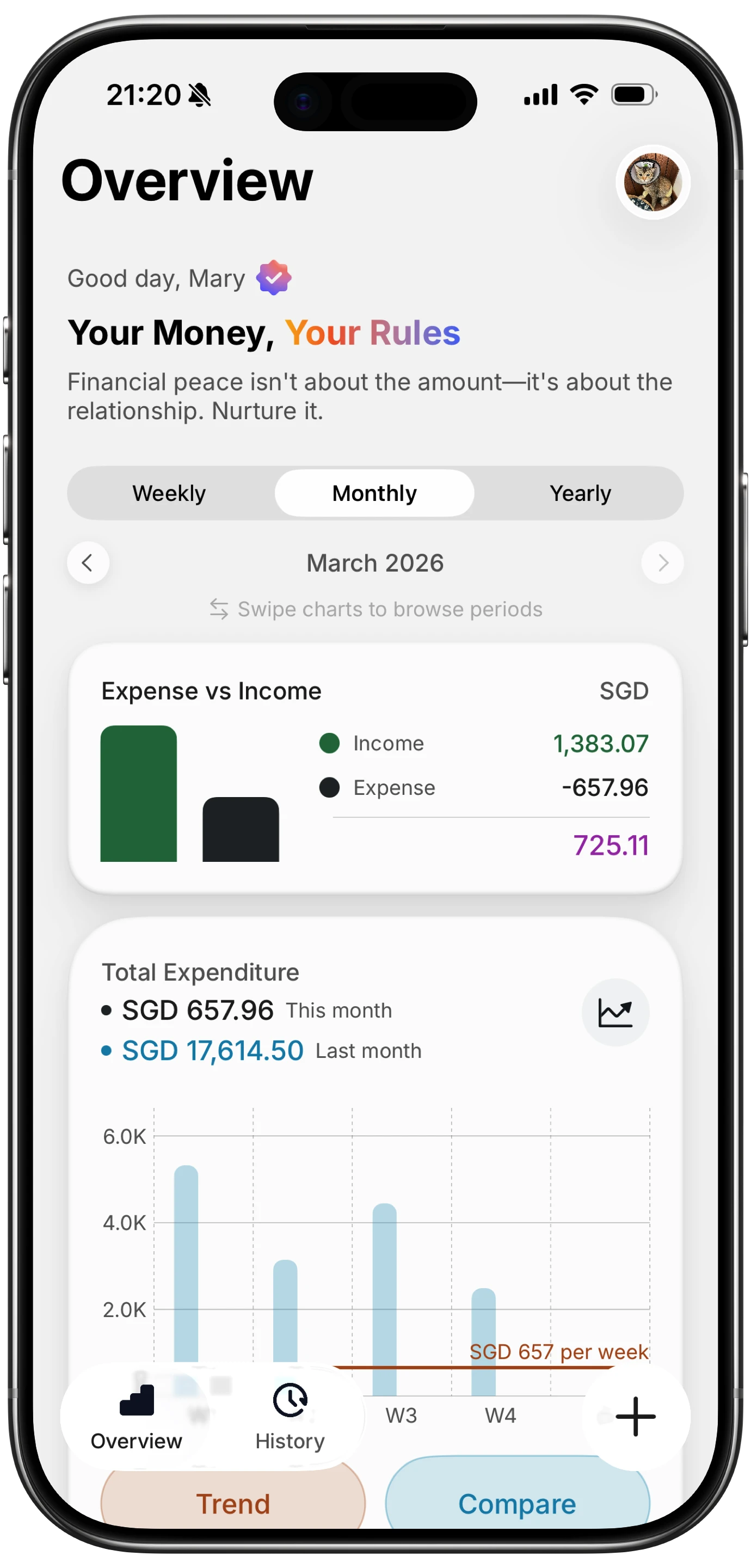
Finny app's Overview feature
Common Challenges and Solutions
Social pressure. Friends invite you out. Solution: suggest free alternatives (walks, home movie night, potluck dinner). Most friends understand and some will join the challenge.
Boredom spending. Without shopping as entertainment, you need alternatives. Read, exercise, cook, clean out closets, work on a project. Boredom spending is one of the biggest insights a fast reveals.
Justification creep. "I deserve this" or "it is on sale" or "it is only $10." Stick to your written rules. Every exception weakens the practice.
Partner or family resistance. Discuss the fast in advance. If your partner is not participating, agree on boundaries (shared meals at home, separate discretionary spending).
How Much Can You Really Save?
| Spending Category | Average Monthly | During Fast | Monthly Savings |
|---|---|---|---|
| Dining out | $300 | $0 | $300 |
| Coffee shops | $80 | $0 | $80 |
| Online shopping | $200 | $0 | $200 |
| Entertainment | $100 | $0 | $100 |
| Subscriptions (pausable) | $50 | $0 | $50 |
| Total | $730 | $0 | $730 |
These numbers vary widely by person, but the typical savings for a month-long fast range from $500 to $1,500. That money can go toward an emergency fund, debt payoff, or investments.
The Bottom Line
A spending fast is a temporary reset, not a permanent lifestyle. Its value is in the awareness it creates. After a fast, you see your spending habits more clearly and can make conscious choices about which ones to resume. The ones you do not miss were always unnecessary.
Track your expenses before, during, and after the fast. The data makes the experience concrete rather than abstract, showing you exactly what discretionary spending costs and what life looks like without it.
Common Questions About Spending Fasts
How long should a spending fast last?
One to four weeks. One week is enough for insight, two weeks breaks minor habits, and one month creates lasting change. Longer than a month risks burnout without additional benefit.
Will a spending fast hurt my social life?
It may change it temporarily. Most social activities can be adapted to low-cost or free alternatives. The friends who matter will understand, and you may discover that many social activities are just as enjoyable without spending.
What if I have a necessary unexpected expense during the fast?
Pay it. A spending fast covers discretionary spending, not genuine emergencies or necessities. If your car breaks down, fix it. The fast continues for everything else.
Can I do a spending fast with a family?
Yes, but it requires buy-in from everyone in the household. Frame it as a challenge or experiment rather than a punishment. Involve kids in cooking, free activities, and the tracking process.
How is a spending fast different from being frugal?
Frugality is a long-term approach to spending less across all categories. A spending fast is a short-term, intensive pause on discretionary spending designed to reset habits and create awareness. One is a lifestyle; the other is a tool.
Ready to see what happens when you stop spending on autopilot?
Download Finny to track every expense before, during, and after your spending fast. AI-assisted input makes logging fast, and the data reveals exactly how much you save when you spend intentionally.