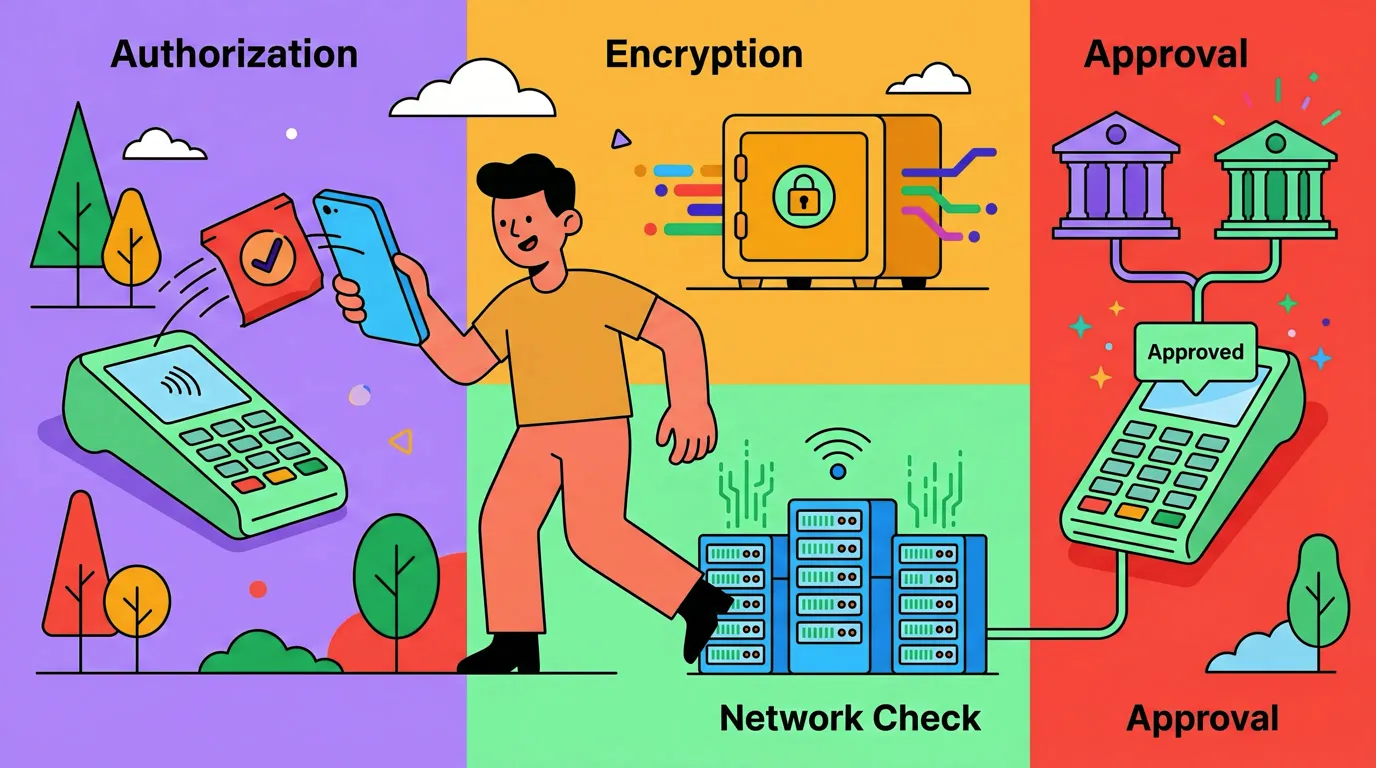
You pay rent on the first of every month, and the number never changes. Your electric bill, on the other hand, swings from $80 in spring to $200 in summer. Groceries cost more when you host dinner guests. Gas fluctuates with your commute and weekend plans. Some costs stay locked in place while others shift constantly.
Understanding the difference between these two types of spending is one of the most practical things you can do for your budget. A variable expense is any cost that changes in amount from month to month, and it is where most of your budgeting flexibility actually lives. Knowing how to categorize, track, and adjust variable expenses gives you real control over your finances. For a broader look at tracking methods, see our guide on how to track expenses.
What Is a Variable Expense
A variable expense is a cost that fluctuates based on your usage, behavior, or choices. Unlike bills with a set amount, variable expenses change each month depending on how much you consume, where you go, and what you decide to buy.
The defining characteristics of variable expenses:
- Amount changes monthly: The cost is different from one period to the next
- Influenced by behavior: Your choices directly affect how much you spend
- Harder to predict exactly: You can estimate a range, but not a precise number
- More controllable: You can often reduce these costs quickly when needed
Variable expenses are not inherently bad. They represent the part of your budget where you have the most room to make adjustments, whether that means cutting back during a tight month or spending more freely when you have margin.
What Is a Fixed Expense
A fixed expense is a cost that stays the same amount each billing cycle. You know exactly what it will be before the month starts, and it rarely changes without a deliberate action like renegotiating a contract or canceling a service.
Common fixed expenses include:
- Rent or mortgage payment
- Car payment or lease
- Insurance premiums (health, auto, renter's)
- Subscription services with set monthly fees
- Loan payments (student loans, personal loans)
- Internet and phone plans with flat rates
- Childcare or tuition with fixed monthly billing
Fixed expenses provide predictability. You can plan around them with confidence because the amounts do not surprise you. However, they are also harder to reduce quickly. Lowering your rent means moving. Reducing your car payment means refinancing or selling. These changes take time and effort.
Variable vs Fixed Expenses: A Clear Comparison
Understanding the differences at a glance helps when you sit down to build or revise your budget.
| Aspect | Fixed Expenses | Variable Expenses |
|---|---|---|
| Amount | Same each month | Changes monthly |
| Predictability | High | Low to moderate |
| Control | Hard to change quickly | Easier to adjust |
| Examples | Rent, insurance, subscriptions | Groceries, dining, gas, entertainment |
| Budget flexibility | Low | High |
| Reduction timeline | Weeks to months | Immediate |
Most household budgets are roughly split between fixed and variable costs. A common breakdown is 50-60% fixed and 40-50% variable, though this varies widely depending on your lifestyle, location, and income level.
Common Variable Expenses by Category
Here is a more complete picture of where variable spending typically shows up in a monthly budget.
Food and Dining
- Groceries
- Restaurants and takeout
- Coffee shops
- Work lunches
- Snacks and convenience store purchases
Food is often the largest variable expense category for most households. It is also one of the easiest to adjust. Cooking at home more often, meal planning, and reducing food waste can meaningfully lower this number.
Transportation
- Gas or fuel
- Ride-sharing services
- Public transit (if not a monthly pass)
- Parking fees
- Tolls
Utilities (Partially Variable)
- Electricity (usage-based)
- Water
- Natural gas or heating fuel
- Data overages on phone plans
Some utilities have a fixed base rate plus variable usage charges, making them a hybrid. For budgeting purposes, treat the variable portion as something you can influence through conservation habits.
Personal and Lifestyle
- Clothing and accessories
- Haircuts and personal care
- Entertainment (movies, concerts, events)
- Hobbies and recreation
- Gifts
Health and Wellness
- Gym drop-in fees (versus a fixed membership)
- Over-the-counter medications
- Copays for doctor visits
- Wellness products
Why Variable Expenses Matter for Budgeting
Fixed expenses set the floor of your monthly spending. Variable expenses determine whether you stay within budget or overshoot it. Here is why they deserve close attention.
They Are Where Overspending Happens
Nobody accidentally pays rent twice, but it is easy to spend $200 more than planned on dining out. Variable expenses are where small, repeated decisions add up. A $5 coffee three times a week is $60 a month and $720 a year. None of those individual purchases feel significant, but the total is substantial.
They Are Where Budget Flexibility Lives
When you need to cut spending quickly, variable expenses are your lever. You cannot reduce your mortgage payment this month, but you can eat at home instead of going to restaurants. You can skip a clothing purchase or choose a free weekend activity. This flexibility makes variable expenses the most important category to track accurately.
They Reveal Spending Patterns
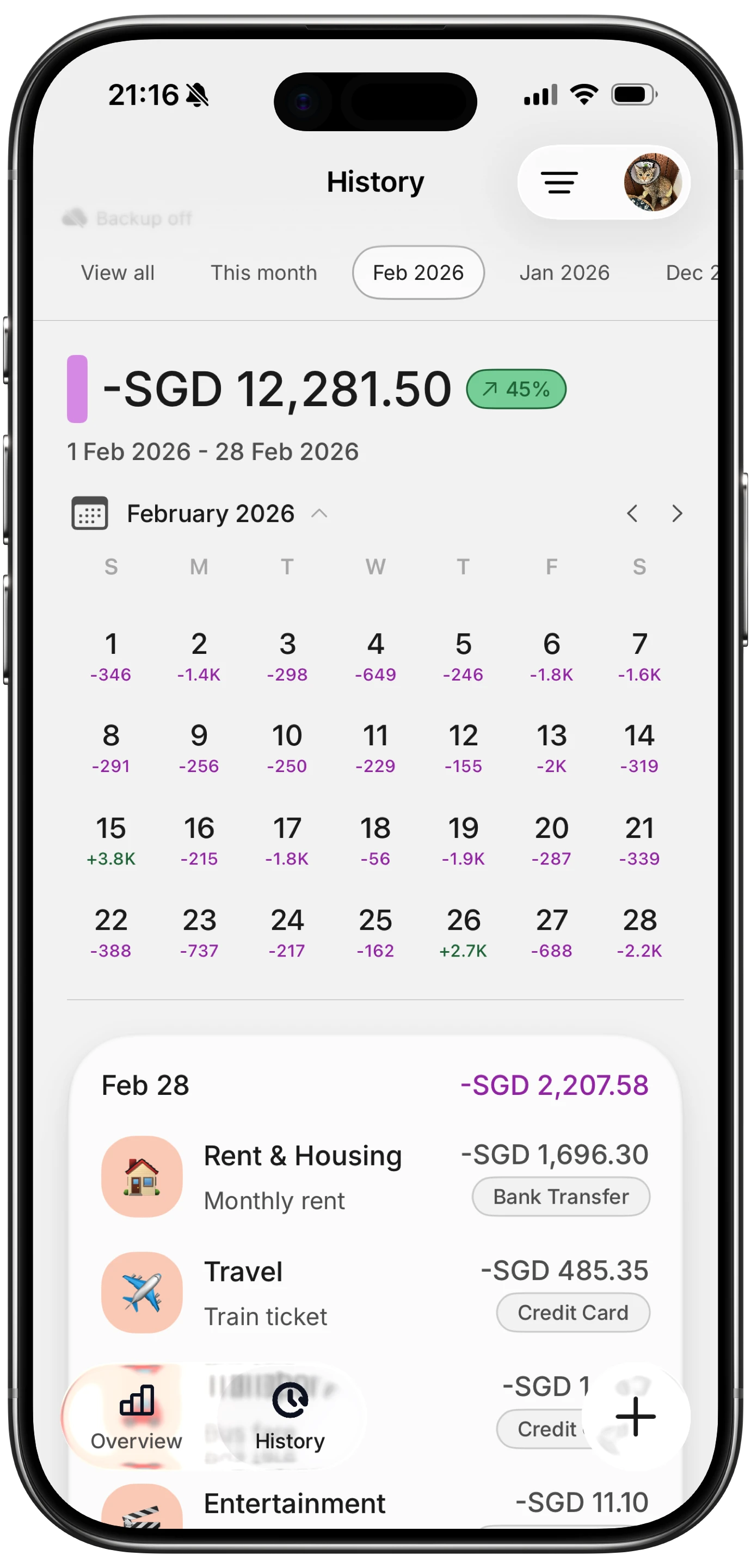
Finny app's History calendar feature
Tracking variable expenses over several months reveals patterns you might not notice otherwise. Maybe you consistently overspend on food in the first two weeks of the month. Maybe your entertainment spending spikes every time you travel. These patterns only become visible with consistent tracking.
For tips on identifying and adjusting these patterns, see our guide on how to stop overspending.
How to Categorize Your Spending
Sorting every transaction into fixed or variable is the first step toward a realistic budget. Here is a simple process.
Step 1: List Every Recurring Bill
Go through your bank statements or expense history and pull out every charge that appears at the same amount each month. These are your fixed expenses. Total them up. This is your baseline, the minimum you need to cover every month before any discretionary spending.
Step 2: Identify Your Variable Categories
Group your remaining spending into categories. Most people need 5-8 variable categories to capture their spending without overcomplicating things. Common groupings:
- Groceries and household supplies
- Dining out and takeout
- Transportation (gas, transit, parking)
- Entertainment and recreation
- Personal care and clothing
- Miscellaneous (gifts, one-off purchases)
Step 3: Calculate Your Monthly Averages
Look at 3-6 months of spending for each variable category and calculate the average. This gives you a realistic baseline, not an aspirational number, but what you actually tend to spend.
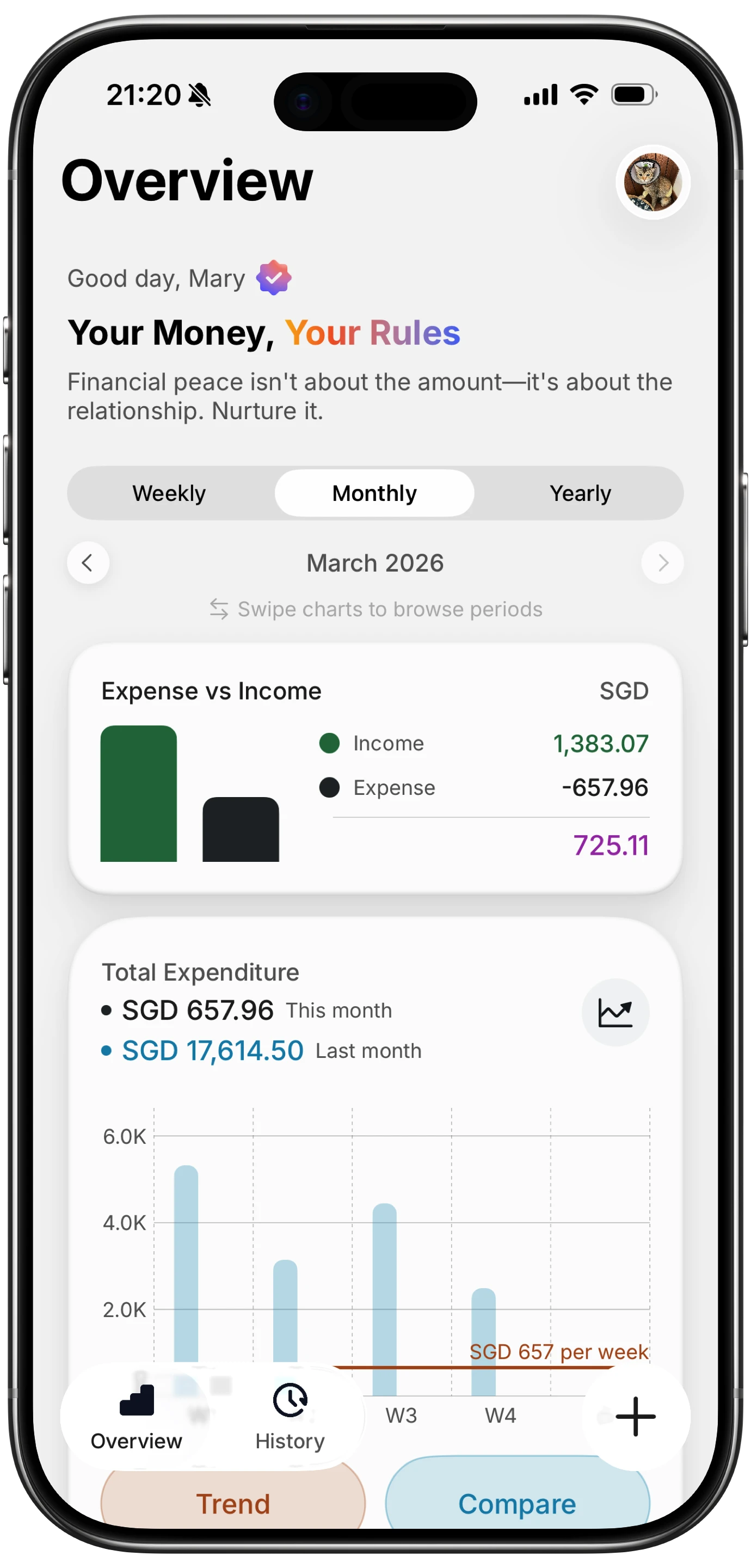
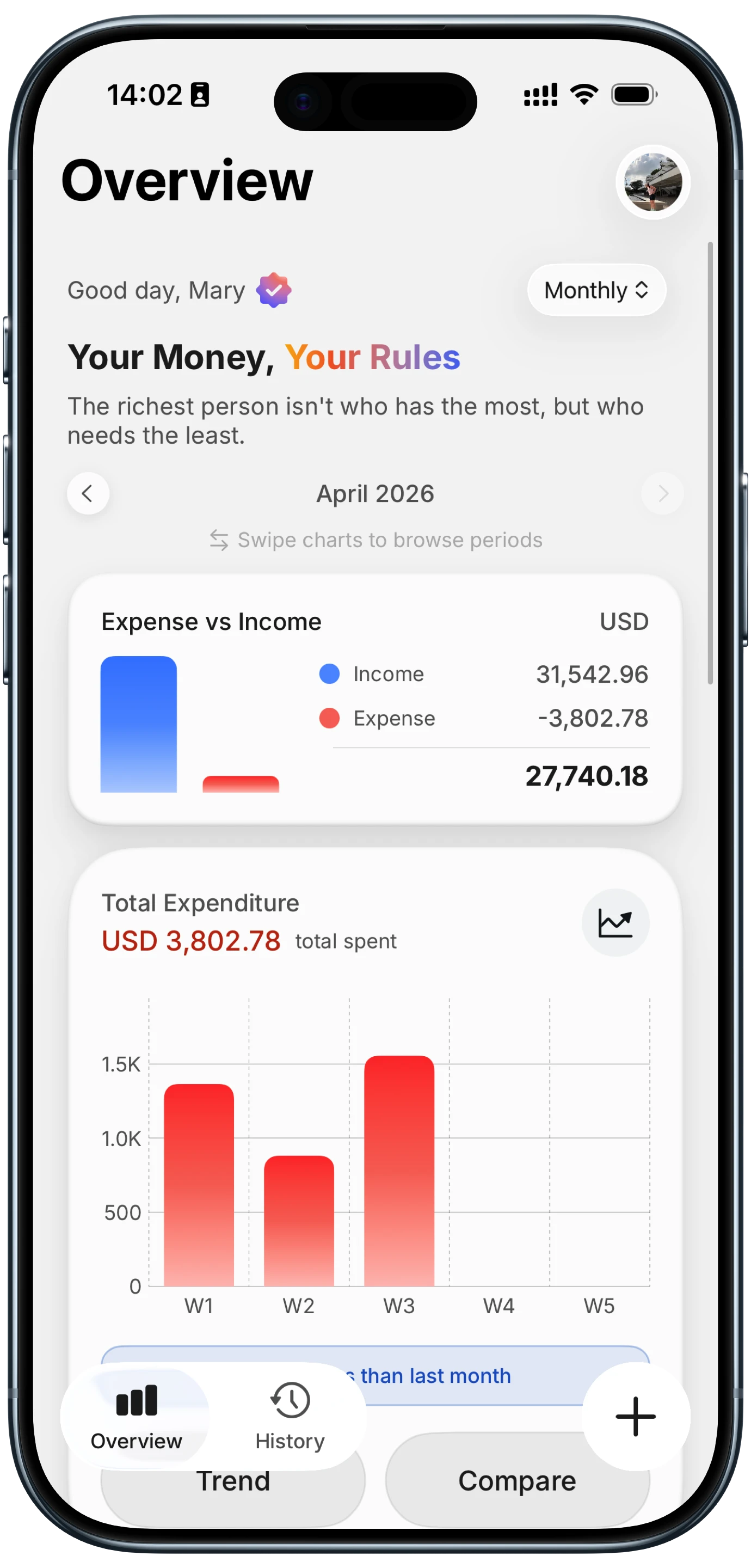
Finny app's Overview feature
An expense tracking app makes this step much faster. Finny automatically categorizes your logged expenses, so you can review category totals and monthly trends without doing manual math.
Step 4: Set Targets, Not Hard Caps
For each variable category, set a target range rather than a rigid cap. If your grocery average is $500, a target of $450-$525 is more realistic than demanding exactly $450 every month. Ranges acknowledge that life fluctuates while still giving you a number to aim for.
How to Track Both Types Effectively
Knowing the categories is only useful if you track spending consistently. Here are practical approaches.
Use an Expense Tracking App
The most reliable method is logging expenses as they happen. Apps that support quick entry, whether through text, voice, or receipt scanning, reduce the friction of daily tracking. When logging takes less than ten seconds, you are far more likely to do it consistently.
Finny supports all three input methods, letting you log a grocery trip by snapping a receipt photo or typing a quick note. The AI assists with categorization, so each entry lands in the right variable or fixed category without extra effort.
Review Weekly, Not Just Monthly
A monthly review catches overspending after it has already happened. A quick weekly check lets you course-correct mid-month. If you have spent 70% of your dining budget by week two, you know to cook at home for the rest of the month.
Separate Fixed and Variable in Your Tracking
Whether you use an app, spreadsheet, or notebook, keep fixed and variable expenses visually separated. This makes it obvious how much of your income goes to obligations versus flexible spending. Many people are surprised to discover that their fixed costs consume more of their income than they assumed.
For a complete system that combines both types, see our budgeting for beginners guide.
Adjusting Variable Expenses: Practical Strategies
When you need to tighten your budget, work through variable categories systematically.
Rank by Impact
Not all variable categories offer the same savings potential. Rank yours by monthly spend and identify the top two or three. Cutting 20% from a $600 grocery budget saves $120. Cutting 20% from a $30 entertainment budget saves $6. Focus your energy where the numbers are meaningful.
Use the "One Less" Approach
Instead of dramatic cuts, try removing one instance of a variable expense per week. One fewer restaurant meal. One fewer impulse purchase. One fewer paid activity replaced with a free alternative. Small, consistent reductions are more sustainable than sudden austerity.
Track Daily Spending Briefly
For one or two months, try logging every variable expense as it happens. This level of detail is not necessary forever, but it builds awareness of where money goes. Most people who track daily spending for a month discover at least one category where they spend significantly more than expected.
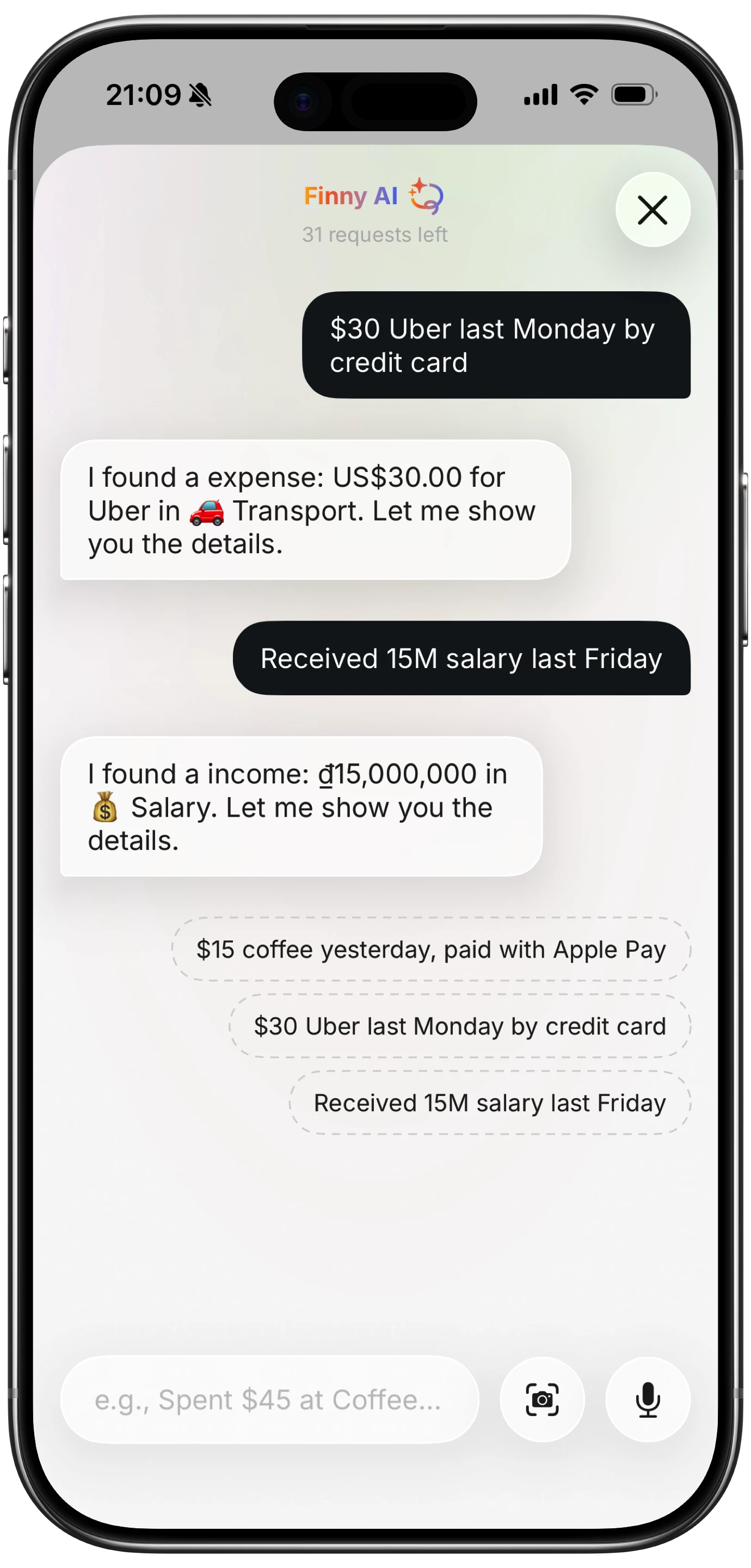
Finny app's AI chat feature
Semi-Variable Expenses: The Gray Area
Some expenses do not fit neatly into fixed or variable. These semi-variable or semi-fixed costs have a predictable base with a variable component.
Examples:
- Phone bill: Fixed plan cost plus occasional data overage charges
- Electricity: Base service fee plus usage-based charges
- Car costs: Fixed payment plus variable gas and maintenance
- Gym membership with add-ons: Fixed monthly fee plus occasional class fees
For budgeting, treat the fixed portion as fixed and the variable portion as variable. If your phone plan is $50 with occasional $10-$20 overages, budget $50 as fixed and $15 as variable.
The 50/30/20 Rule and Expense Types
The popular 50/30/20 budget framework maps directly to fixed and variable expenses:
- 50% Needs: Mostly fixed expenses (rent, insurance, minimum debt payments) plus essential variable costs (groceries, basic transportation)
- 30% Wants: Primarily variable expenses (dining out, entertainment, hobbies, non-essential shopping)
- 20% Savings and debt payoff: Fixed transfers to savings and extra debt payments
If your fixed expenses alone exceed 50% of your income, you have a structural problem that variable expense cuts cannot fully solve. You may need to address the fixed side: negotiating rent, refinancing loans, or canceling subscriptions you no longer use.
The Bottom Line
Every dollar you spend is either fixed or variable. Fixed expenses set your financial floor. Variable expenses determine how much room you have to save, invest, or enjoy life. Understanding both, and tracking them consistently, is what separates a budget that works from one that falls apart by mid-month.
The key insight is that variable expenses are not the enemy. They are your greatest source of flexibility. When money is tight, they are where you find savings. When you have margin, they are where you can spend more freely without guilt, because you know exactly where you stand.
Start by categorizing your last three months of spending. Calculate your fixed total, average your variable categories, and compare both against your income. That single exercise will tell you more about your financial reality than any budgeting theory.
Common Questions About Variable Expenses
What is the difference between a variable expense and a fixed expense?
A fixed expense stays the same amount each month, like rent or a car payment. A variable expense changes based on your usage and choices, like groceries, gas, or dining out. Fixed costs are predictable but hard to change quickly. Variable costs fluctuate but offer more room for adjustment.
What are the most common variable expenses?
The most common variable expenses are groceries, dining out, transportation (gas and ride-sharing), utilities (the usage-based portion), entertainment, clothing, and personal care. Food-related spending is typically the largest variable category for most households.
How do I budget for variable expenses when the amount changes?
Use a 3-6 month average of past spending for each category to set a realistic target. Build in a small buffer of 5-10% above the average to account for natural fluctuations. Review and adjust your targets quarterly as spending patterns shift.
Can I turn variable expenses into fixed expenses?
In some cases, yes. Meal planning and batch cooking can make grocery spending more predictable. Buying a monthly transit pass converts variable transit costs into a fixed amount. Setting a fixed weekly "fun money" allowance caps entertainment spending. These conversions add predictability but reduce flexibility.
How does tracking variable expenses help me save money?
Tracking reveals where money actually goes versus where you think it goes. Most people underestimate their variable spending by 20-30%. Once you see accurate numbers, you can identify specific categories to reduce. Even small adjustments, like cutting dining out by 25%, can free up hundreds of dollars per month for savings or debt payoff.
Ready to see where your variable spending actually goes?
Download Finny to log expenses quickly with AI-assisted input, categorize spending automatically, and review your fixed and variable costs with clear visual analytics. No bank connections required, and it works offline.