What Is Capital Gains Tax? Short-Term vs Long-Term Rates
When you sell an investment for more than you paid, the profit is not all yours. The government takes a cut called capital gains tax. How much depends on how long you held the investment, your income level, and the type of asset. Understanding this tax helps you make smarter decisions about when to sell and how to structure your portfolio.
Capital gains tax is a tax on the profit from selling an asset (stocks, bonds, real estate, cryptocurrency) for more than its purchase price. The rate you pay depends primarily on whether the gain is short-term (held one year or less) or long-term (held more than one year). For a broader overview of taxes, see our guide on tax brackets.
How Capital Gains Are Calculated
Capital Gain = Selling Price - Cost Basis
Your cost basis is what you paid for the asset, including purchase price and certain fees. If you bought 100 shares of a stock at $50/share ($5,000 total) and sold them at $70/share ($7,000), your capital gain is $2,000.
If you sell for less than your cost basis, you have a capital loss, which can offset gains and reduce your tax bill.
Short-Term vs Long-Term Capital Gains
The holding period determines which tax rate applies.
Short-Term Capital Gains (Held 1 Year or Less)
Taxed as ordinary income at your regular tax bracket rate. If you are in the 22% bracket, short-term gains are taxed at 22%.
Long-Term Capital Gains (Held More Than 1 Year)
Taxed at preferential rates that are lower than ordinary income rates for most people.
| Filing Status | 0% Rate | 15% Rate | 20% Rate |
|---|---|---|---|
| Single | Up to $48,350 | $48,351 - $533,400 | Over $533,400 |
| Married Filing Jointly | Up to $96,700 | $96,701 - $600,050 | Over $600,050 |
The Difference in Practice
| Scenario | Short-Term (22% bracket) | Long-Term (15% rate) |
|---|---|---|
| $10,000 gain | $2,200 in tax | $1,500 in tax |
| $50,000 gain | $11,000 in tax | $7,500 in tax |
Holding an investment for just one day past the one-year mark can save hundreds or thousands in taxes. This is one of the strongest arguments for long-term investing over frequent trading.
Assets Subject to Capital Gains Tax
| Asset | Taxable? | Notes |
|---|---|---|
| Stocks and ETFs | Yes | Most common source of capital gains |
| Bonds | Yes | If sold before maturity at a profit |
| Real estate | Yes | Primary home has $250K/$500K exclusion |
| Cryptocurrency | Yes | Treated as property by the IRS |
| Collectibles (art, coins) | Yes | Taxed at a maximum rate of 28% |
| Retirement accounts (401k, IRA) | No (until withdrawal) | Gains grow tax-deferred |
Strategies to Minimize Capital Gains Tax
Hold for More Than One Year
The simplest and most effective strategy. Patience alone can cut your tax rate from 22-37% (short-term) to 0-20% (long-term).
Tax-Loss Harvesting
Sell investments that have lost value to offset gains from winners. If you have $5,000 in gains and $3,000 in losses, you only pay tax on the net $2,000 gain. You can also deduct up to $3,000 in net losses against ordinary income per year.
Use Tax-Advantaged Accounts
Investments in 401k, IRA, and Roth IRA accounts grow without triggering capital gains tax. Roth IRAs are especially powerful: gains are never taxed if withdrawal rules are followed. See our Roth IRA guide for details.
Gift Appreciated Assets
Donating appreciated stock to charity lets you deduct the full market value without paying capital gains tax on the appreciation. This is more tax-efficient than selling, paying tax, and donating the cash.
Be Strategic About When You Sell
If your income is unusually low in a given year (job transition, sabbatical), you may fall into the 0% long-term capital gains bracket. Selling appreciated assets during low-income years can be tax-free.
How Expense Tracking Supports Tax Planning
Capital gains tax planning requires knowing your full financial picture: income, expenses, and investment activity.
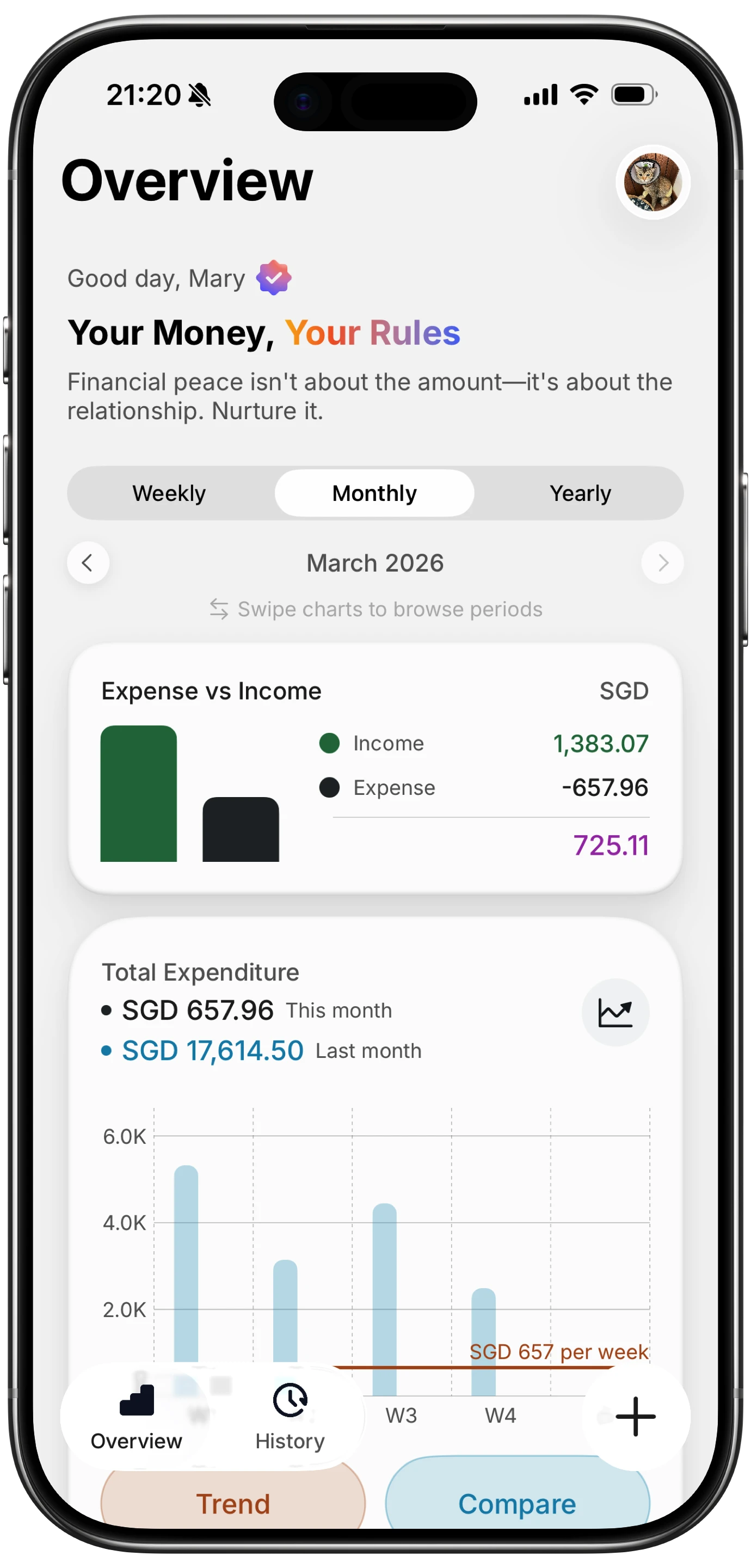
Finny app's Overview feature
Tracking your expenses helps you:
- Estimate your tax bracket. Your total income minus deductions determines which capital gains rate applies. Tracking expenses reveals deduction opportunities.
- Plan asset sales. If you know your income and expenses for the year, you can calculate whether selling investments will push you into a higher bracket.
- Document cost basis. For assets without automatic broker tracking (cryptocurrency, collectibles, real estate improvements), recording purchase costs as expenses ensures accurate gain calculations at sale time.
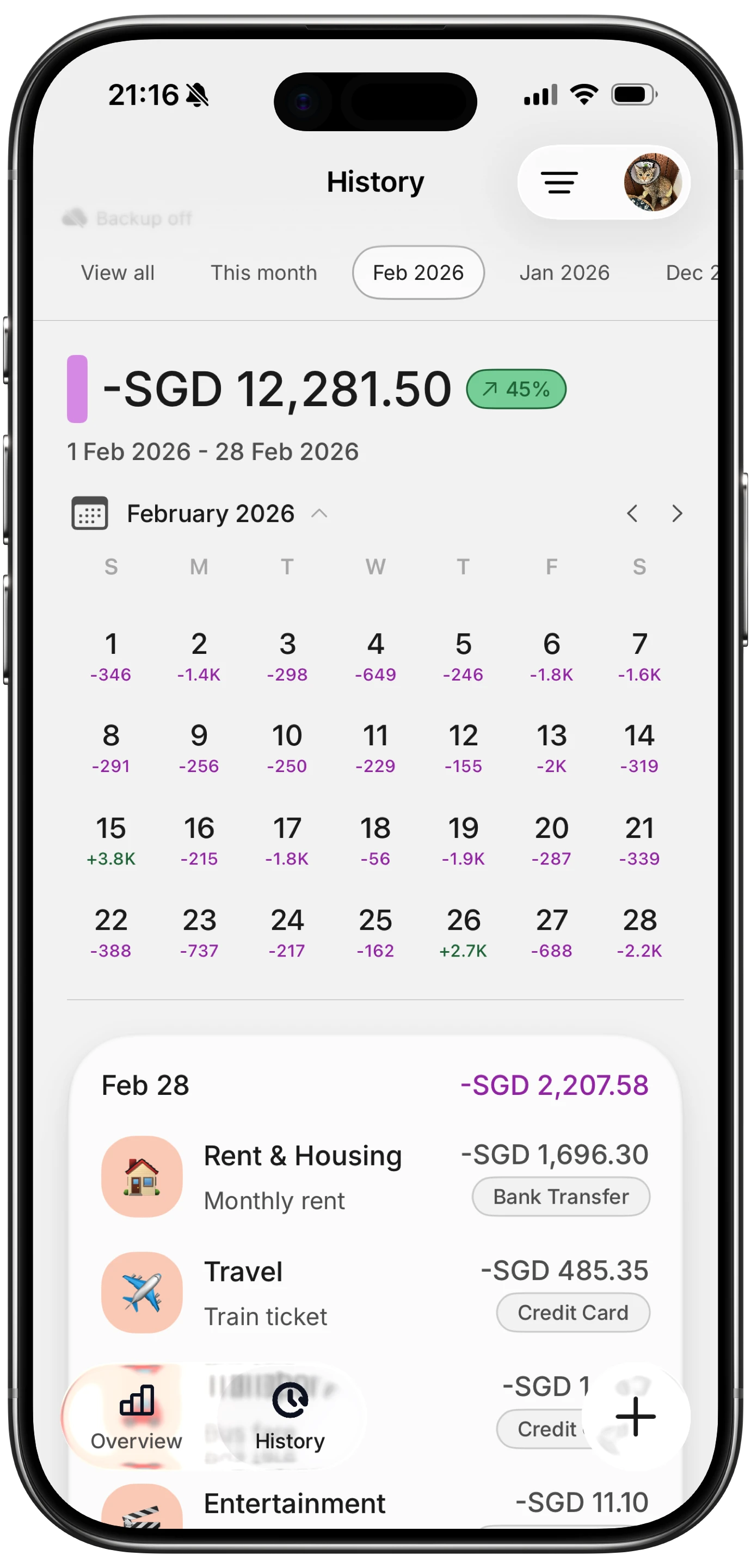
Finny app's History calendar feature
For more on tracking finances comprehensively, see our guide on how to track expenses.
Capital Gains and Real Estate
Your primary home receives special treatment. If you have lived in the home for at least two of the last five years, you can exclude up to $250,000 of gain (single) or $500,000 (married filing jointly) from capital gains tax.
For investment properties, capital gains are fully taxable. However, a 1031 exchange allows you to defer capital gains by reinvesting the proceeds into another qualifying property.
The Bottom Line
Capital gains tax is one of the most favorable tax treatments available to investors. Long-term rates are significantly lower than ordinary income rates, and multiple strategies exist to reduce or defer the tax further. The key is understanding the rules and planning accordingly.
The practical takeaway: hold investments for more than a year when possible, use tax-advantaged accounts for the bulk of your investing, and track your income and expenses so you can make informed decisions about when to sell.
Common Questions About Capital Gains Tax
Do I pay capital gains tax if I do not sell?
No. Capital gains tax is only triggered when you sell an asset at a profit. Unrealized gains (increases in value you have not sold) are not taxed.
What happens if I have more losses than gains?
You can deduct up to $3,000 of net capital losses against ordinary income per year. Losses beyond that carry forward to future years.
Are dividends taxed as capital gains?
Qualified dividends are taxed at the same preferential rates as long-term capital gains. Non-qualified (ordinary) dividends are taxed at your regular income tax rate.
Do I need to report cryptocurrency gains?
Yes. The IRS treats cryptocurrency as property. Every sale, trade, or use of crypto to buy goods is a taxable event. You must track your cost basis for each transaction.
How does capital gains tax work in retirement accounts?
Investments in traditional 401k and IRA accounts are not subject to capital gains tax while in the account. Withdrawals are taxed as ordinary income. Roth accounts are tax-free on withdrawal if rules are followed.
Want to keep your full financial picture clear for tax planning?
Download Finny to track all income and expenses with AI-assisted input. When tax time comes, your data is already organized and ready.