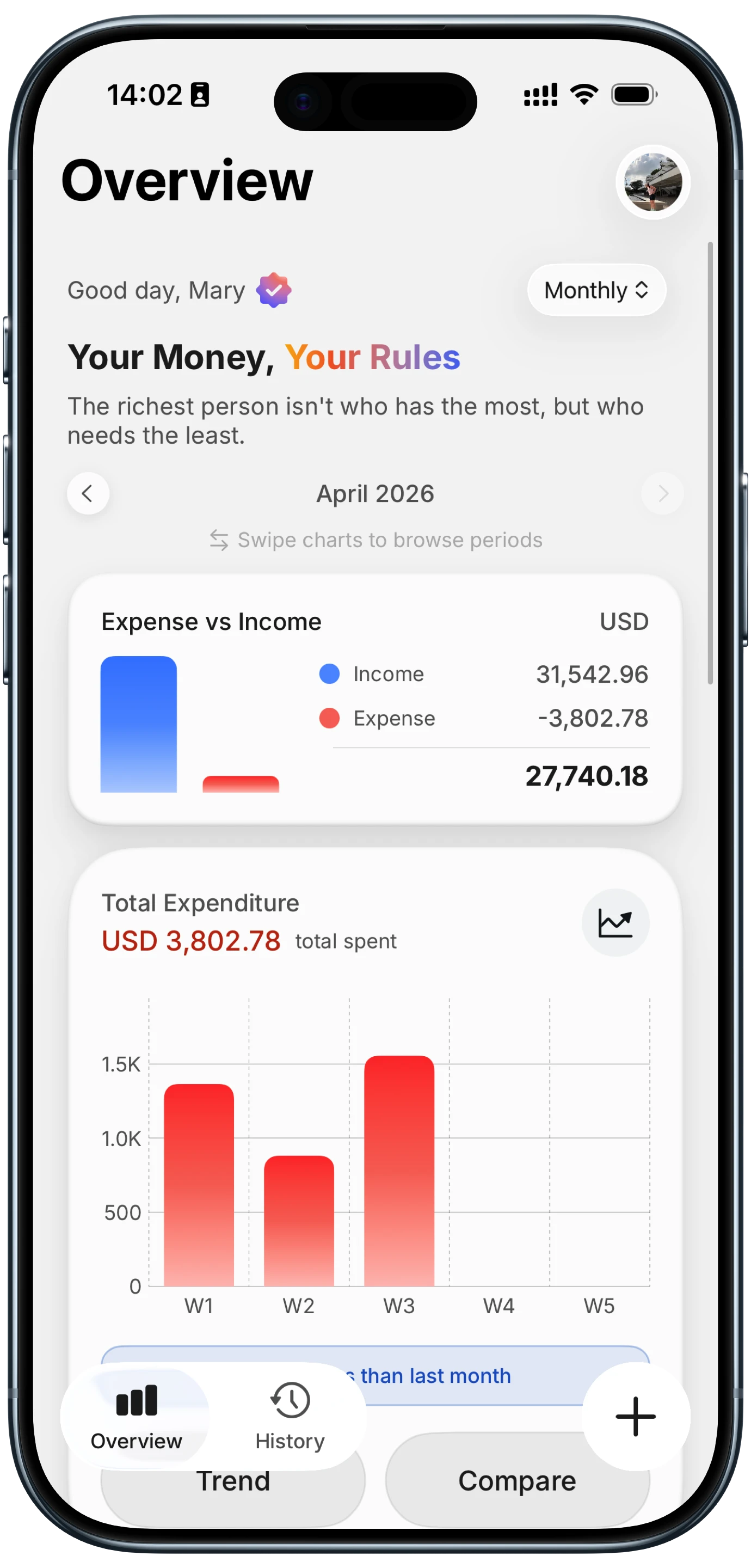
You have the money. You just spent it on the wrong things. That is the core problem most budgets fail to solve. People earn enough to cover their needs, but the dollars blend together in one account, and by the end of the month, rent money has quietly become restaurant money.
Envelope budgeting addresses this by dividing your income into categories before you spend it. Each category gets a fixed amount, and once it is gone, it is gone. The method is decades old, rooted in physical cash and paper envelopes, but the principle translates perfectly to digital tools. This guide walks through how the system works, how to set it up today, and how category-based expense tracking in apps has become the modern evolution of the envelope method. For a broader look at budgeting approaches, see our guide on how to budget money.
What Is Envelope Budgeting
Envelope budgeting is a spending management method where you divide your income into categories, each with a set limit. Traditionally, people used physical cash envelopes labeled with categories like "Groceries," "Gas," and "Entertainment." You put a fixed amount of cash into each envelope at the start of the month. When an envelope was empty, spending in that category stopped until the next month.
The system works because it creates hard boundaries. Unlike a single checking account balance that gives you a false sense of available money, envelopes show exactly how much remains for each purpose. You might have $400 in your account, but if $300 of that belongs to rent and utilities, only $100 is actually available for discretionary spending. Envelopes make that distinction visible.
The method gained popularity because it requires no spreadsheets, no formulas, and no financial expertise. If you can divide cash into labeled containers, you can do envelope budgeting.
How the Cash Envelope System Works
The traditional cash envelope system follows a simple process:
- Identify your spending categories (rent, groceries, transportation, dining out, entertainment, savings)
- Assign a dollar amount to each category based on your income and priorities
- Withdraw your budgeted cash at the start of each pay period
- Divide the cash into labeled envelopes
- Spend only from the appropriate envelope for each purchase
- Stop spending in a category when that envelope is empty
The physical version has clear advantages: it is tangible, it creates friction before spending, and it makes remaining balances impossible to ignore. Research on spending behavior consistently shows that people spend less when using cash compared to cards, because handing over physical money triggers a stronger sense of loss.
However, the cash system also has practical limitations. It does not work for online purchases, automatic bill payments, or subscriptions. Carrying large amounts of cash introduces security concerns. And tracking where the money went requires manual record-keeping after the fact.
Going Digital: Envelope Budgeting with Apps
The principles of envelope budgeting do not require cash. What matters is the structure: fixed category limits, visible balances, and hard stops when a category runs out. Digital tools replicate this with category-based expense tracking.
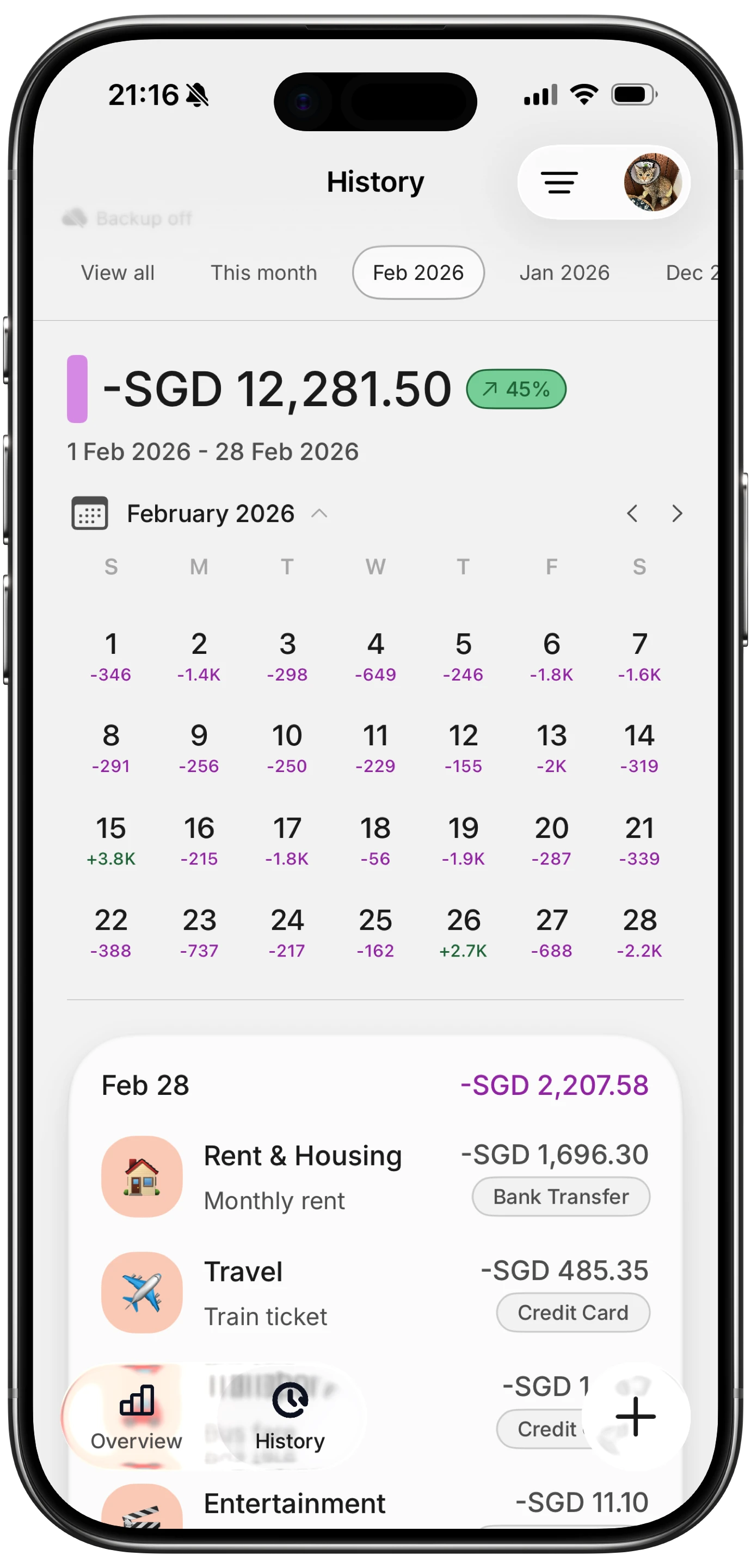
Finny app's History calendar feature
In a digital envelope system, your categories function as virtual envelopes. Each category has a monthly budget. Every transaction you log reduces the balance in that category. When you check your app, you see exactly how much remains in "Groceries" or "Entertainment" for the month, just as you would by counting cash in a physical envelope.
Several apps support this approach. YNAB built its entire product around the envelope concept, calling it "giving every dollar a job." Other apps offer category budgets as one feature among many. The key is choosing a tool that makes category tracking simple enough that you actually use it.
Finny takes a lightweight approach to this. You create custom categories, log expenses through text, voice, or receipt scanning, and review category totals to see where you stand. There is no need to connect bank accounts or set up complex rules. You control what gets logged and where it goes.
How to Set Up Envelope Budgeting: Step by Step
Step 1: Calculate Your Take-Home Income
Start with the money that actually reaches your account after taxes, retirement contributions, and insurance deductions. This is your total budget. Do not include irregular income like bonuses or side gig earnings unless they are consistent.
Step 2: List Your Spending Categories
Review two to three months of past spending to identify where your money goes. Common categories include:
- Housing (rent or mortgage)
- Utilities
- Groceries
- Transportation (gas, transit, car payment)
- Dining out
- Entertainment and subscriptions
- Clothing
- Personal care
- Savings and debt payments
Keep the list manageable. Ten to fifteen categories is a practical range. Too few and the system lacks precision. Too many and tracking becomes tedious.
Step 3: Assign Amounts to Each Envelope
Allocate your income across categories. Fixed expenses like rent and utilities get their exact amounts. Variable categories like groceries and dining require estimates based on past spending.
A sample allocation for $4,000 monthly take-home:
| Category | Envelope Amount |
|---|---|
| Rent | $1,400 |
| Utilities | $200 |
| Groceries | $500 |
| Transportation | $300 |
| Dining out | $200 |
| Entertainment | $150 |
| Clothing | $100 |
| Personal care | $50 |
| Savings | $600 |
| Debt payment | $300 |
| Miscellaneous | $200 |
| Total | $4,000 |
Every dollar should have a destination. If your allocations do not add up to your income, adjust until they do.
Step 4: Track Every Expense
This is where the system succeeds or fails. Each purchase must be logged to the correct category. With cash envelopes, this happens automatically since you pull from the right envelope. Digitally, it requires consistent logging.
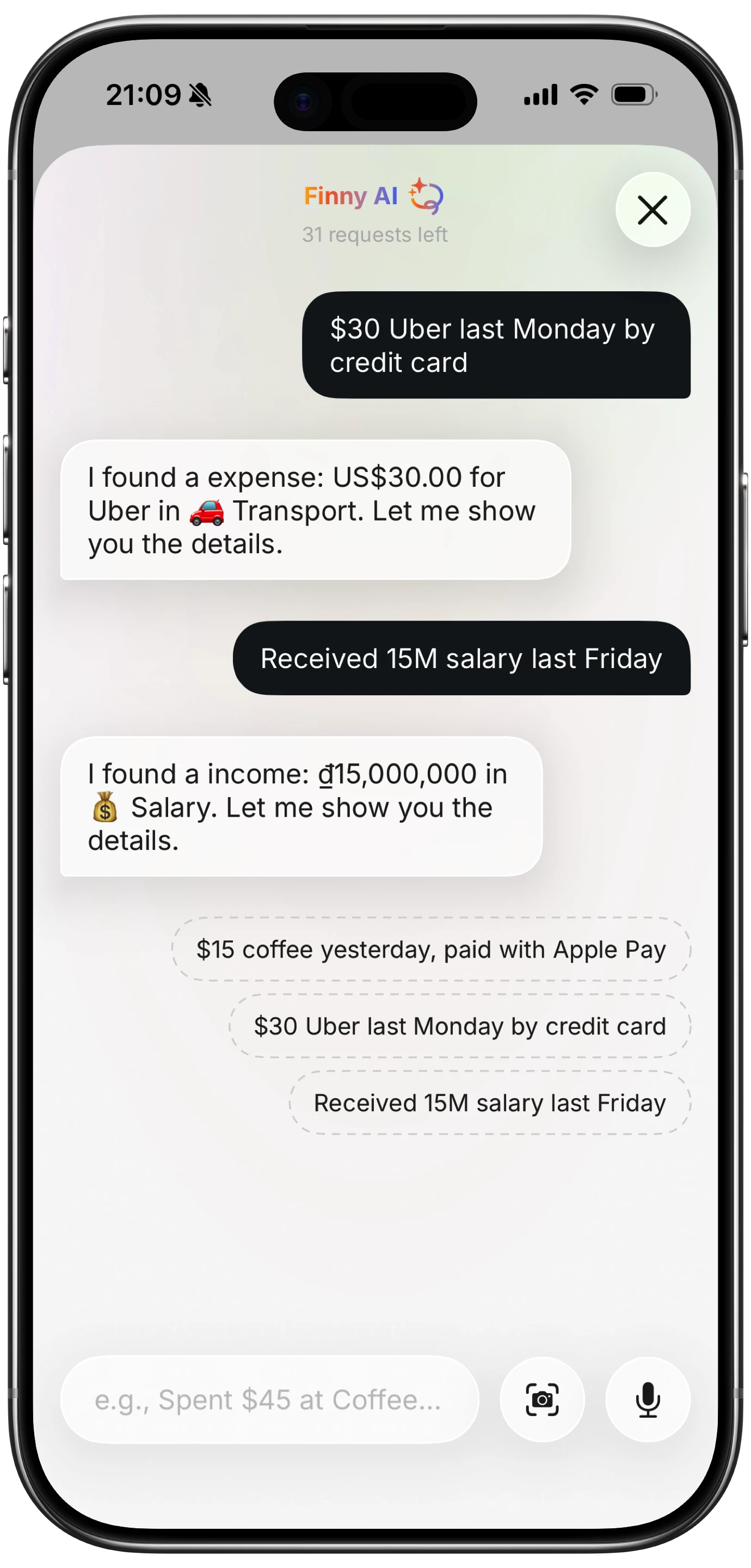
Finny app's AI chat feature
Apps with AI-assisted input reduce friction here. In Finny, you can type something like "lunch 14 dollars" and the app parses the amount and suggests a category. Receipt scanning handles purchases with multiple items. The less effort logging requires, the more likely you are to stick with it.
Step 5: Review and Adjust Monthly
At the end of each month, review your envelopes:
- Which categories ran out early?
- Which had money left over?
- Were any categories missing?
Adjust allocations for the following month based on what you learned. Envelope budgeting is not about getting it perfect on the first try. It is about refining your estimates until they match your actual life.
Pros and Cons of Envelope Budgeting
Advantages
Visual clarity: You always know how much remains in each category. No mental math required.
Spending awareness: Assigning every dollar to a purpose forces you to confront trade-offs. Spending more on dining means spending less on something else.
Overspending prevention: Hard category limits stop lifestyle creep before it starts. You cannot accidentally overspend on entertainment if the envelope is empty.
Simplicity: The concept requires no financial background. Anyone can understand "put money in categories, spend from the right one."
Flexibility: Categories and amounts are entirely customizable. The system adapts to any income level or lifestyle.
Disadvantages
Tracking effort: Every purchase needs to be categorized. Without consistent logging, the system breaks down.
Rigidity with shared expenses: Some purchases span multiple categories. A trip to a big-box store might include groceries, household supplies, and clothing in one receipt.
Difficulty with irregular income: Freelancers or commission-based workers may struggle to allocate fixed amounts when income varies month to month.
Cash limitations: The traditional cash version does not accommodate online spending, which is now the majority of transactions for most people.
Time investment: Setting up and maintaining envelopes takes more effort than simply checking your bank balance, especially in the first few months.
Envelope Budgeting vs Zero-Based Budgeting
These two methods share a core philosophy: every dollar gets a purpose. But they differ in structure and emphasis.
| Aspect | Envelope Budgeting | Zero-Based Budgeting |
|---|---|---|
| Core idea | Divide money into category limits | Assign every dollar a job until income minus budget equals zero |
| Focus | Spending limits per category | Complete income allocation |
| Flexibility | Envelopes can carry over month to month | Budget resets each month |
| Debt and savings | Handled as categories | Explicitly prioritized in allocation |
| Complexity | Lower, more intuitive | Slightly higher, more thorough |
| Best for | People who overspend in specific areas | People who want total control over every dollar |
In practice, the two approaches overlap significantly. Zero-based budgeting is essentially envelope budgeting with stricter accounting. Many people use a hybrid: envelope-style category limits with a zero-based approach to ensure every dollar is allocated.
For a deeper look at the zero-based method, see our guide on zero-based budgeting.
Category-Based Tracking: The Digital Evolution of Envelopes
The envelope system was invented because people needed a way to compartmentalize money. Today, category-based expense tracking in apps accomplishes the same goal without cash, labels, or physical storage.
When you set up spending categories in an app and log each transaction to its category, you are running a digital envelope system. The category balance is your envelope balance. The monthly budget for that category is the amount you "put in the envelope." The running total of logged expenses is what you have "spent from the envelope."
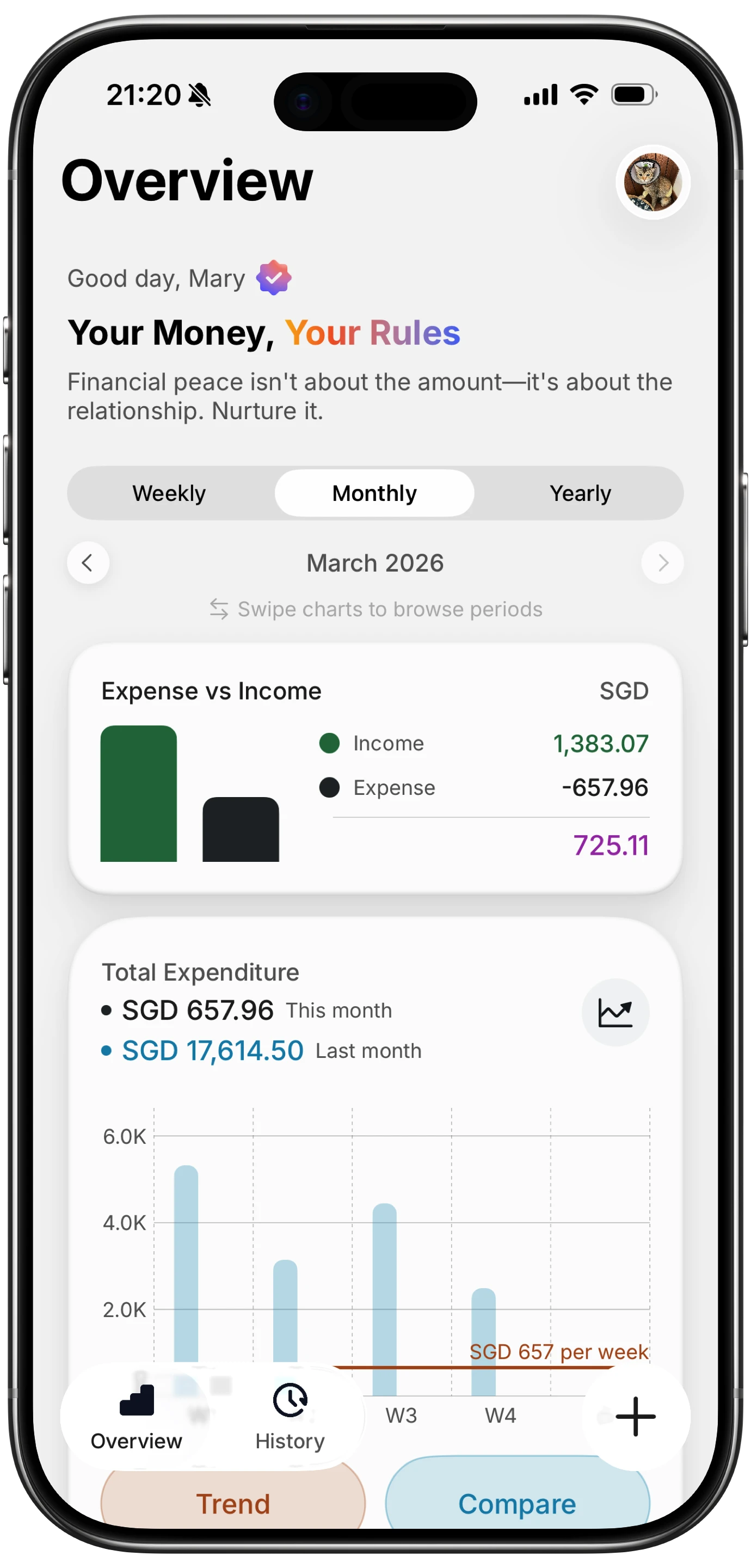
Finny app's Overview feature
This digital version improves on the original in several ways:
- Analytics: Apps show spending trends over time, not just current balances. You can see that your grocery spending has increased 15% over three months.
- Automation: AI-assisted categorization reduces manual effort. Receipt scanning handles multi-item purchases.
- Accessibility: Your budget travels with your phone. No need to carry cash or remember which envelope is at home.
- Flexibility: Moving money between digital categories takes seconds. With cash, you have to physically redistribute bills.
For people who want the discipline of envelope budgeting without the friction of cash, category-based tracking in an app like Finny is the practical path forward. You get the same mental framework, the same category limits, and the same spending awareness, delivered through a tool you already carry everywhere.
Tips for Making Envelope Budgeting Stick
Start with fewer categories. Five or six envelopes are easier to manage than fifteen. You can always add more once the habit is established.
Build in a buffer category. Label it "Miscellaneous" or "Flex." This catches expenses that do not fit neatly elsewhere and prevents frustration with rigid categories.
Use round numbers. Budgeting $200 for dining is easier to track than $187. Simplicity supports consistency.
Review weekly, not just monthly. A quick mid-week check on your category balances helps you pace spending. If your grocery envelope is half empty by Wednesday, you know to plan cheaper meals for the rest of the week.
Do not punish yourself for overspending. If you exceed a category, note it, adjust next month, and move on. The goal is awareness, not perfection. For more practical advice on controlling spending habits, read our guide on how to stop overspending.
The Bottom Line
Envelope budgeting works because it matches how people naturally think about money: in purposes, not in totals. A single bank balance tells you how much you have. Envelopes tell you how much you have for each thing that matters.
The cash version served its purpose for decades, and it still works for people who prefer tangible money management. But for most people today, category-based expense tracking in a budgeting app delivers the same benefits with less friction. You divide your income into categories, track spending against those limits, and adjust as you learn.
The method is not complicated. The challenge is consistency. Choose a tracking tool that makes logging easy, keep your categories simple, and review regularly. The envelope system has endured for generations because the underlying principle is sound: when you decide where money goes before you spend it, you spend it better.
Common Questions About Envelope Budgeting
What is envelope budgeting in simple terms?
Envelope budgeting is a method where you divide your income into spending categories, each with a fixed limit. Traditionally done with cash in labeled envelopes, it now works digitally through category-based tracking in budgeting apps. When a category's limit is reached, spending stops until the next month.
Does envelope budgeting work with debit and credit cards?
Yes, but it requires manual tracking. With cash envelopes, spending limits enforce themselves. With cards, you need to log each purchase to the correct category and monitor balances yourself. Apps that support category budgets make this process significantly easier.
How many envelopes should I start with?
Start with five to eight categories covering your largest and most variable expenses. Fixed bills like rent do not need active envelope management since they are the same every month. Focus envelopes on categories where you tend to overspend, like dining, entertainment, and shopping.
Can I move money between envelopes?
Yes. If your grocery envelope runs out but your entertainment envelope has surplus, you can reallocate. The key is doing this consciously rather than reflexively. Every reallocation should be a deliberate decision, not an excuse to overspend.
Is envelope budgeting the same as zero-based budgeting?
They share the principle of assigning every dollar a purpose, but they are not identical. Envelope budgeting focuses on spending limits per category. Zero-based budgeting requires that income minus all allocations equals zero. Many people combine both methods for thorough budget management.
Ready to try envelope budgeting without the envelopes?
Download Finny to set up custom spending categories, log expenses with AI-assisted input, and track your category balances in real time. No cash, no bank connections, just clear visibility into where every dollar goes.