You have probably seen the claim: "Make money while you sleep." It sounds appealing, but it paints an incomplete picture. Most sources of income that people call "passive" required significant effort, capital, or both to set up. The income may flow with less daily involvement, but it rarely appears from nothing.
Passive income is real, but understanding it honestly is the first step toward building it. This guide covers what passive income actually means, the most common types, how much you realistically need to generate meaningful returns, and why tracking income alongside expenses reveals your true progress toward financial independence. For a broader look at managing your money, see our complete personal finance guide.
What Is Passive Income
Passive income is earnings that require minimal ongoing effort to maintain after the initial setup. The IRS has a narrow definition (primarily limited to rental activities and businesses you do not materially participate in), but in everyday personal finance, the term is used more broadly to describe any income stream that does not require trading hours for dollars on a continuous basis.
The key distinction: with active income, you stop working and the money stops. With passive income, the money continues flowing even when you step away, at least for a period of time.
That said, "minimal ongoing effort" does not mean zero effort. A rental property still needs a landlord or property manager. A dividend portfolio still needs periodic rebalancing. A book still needs marketing. Passive income sits on a spectrum, not a switch.
The Active-to-Passive Spectrum
It helps to think of income sources on a continuum rather than in two rigid categories.
| Income Type | Effort Level | Examples |
|---|---|---|
| Fully active | Constant time for money | Salary, hourly wages, freelancing |
| Semi-active | Regular but reduced involvement | Consulting retainer, managed rental |
| Semi-passive | Occasional maintenance | Dividend portfolio, digital products |
| Mostly passive | Rare involvement after setup | Index fund interest, royalties on older works |
Very few income sources are truly hands-off forever. Even a savings account requires you to compare rates occasionally and move money if your bank cuts yields. The goal is not zero effort. The goal is decoupling your time from your earnings as much as practically possible.
Real Examples of Passive Income
Dividends from Stocks and Funds
When you own shares in companies that distribute profits, you receive dividends. Index funds and ETFs that track dividend-paying companies can provide quarterly payments without individual stock picking.
The reality check: to generate $500 per month from dividends at an average yield of 3%, you need roughly $200,000 invested. Dividends are reliable for those with substantial capital, but they take time to accumulate for most people.
Interest from Savings and Bonds
High-yield savings accounts, certificates of deposit, and government bonds pay interest on your deposited money. With rates fluctuating, the returns vary, but the effort after setup is genuinely low.
A realistic example: $50,000 in a high-yield savings account at 4.5% APY generates about $2,250 per year, or roughly $188 per month. Useful as supplemental income, but not life-changing on its own.
Rental Income
Owning property and renting it out is one of the oldest forms of passive income. After accounting for mortgage payments, maintenance, insurance, property management fees, and vacancies, the net income is often lower than the gross rent suggests.
A single rental property might net $300 to $800 per month after all expenses, depending on market and mortgage status. The upfront cost (down payment, closing costs, repairs) can easily exceed $50,000 to $100,000.
Royalties and Licensing
Authors, musicians, photographers, and software creators can earn royalties from work completed in the past. A book published years ago can still generate sales. A stock photo can still be licensed.
The catch: most creative works earn very little over time. A small percentage of creators earn meaningful royalty income. The distribution follows a power law, where a few works generate most of the revenue.
Digital Products and Online Courses
Creating a course, template, or digital tool involves significant upfront work. Once published, sales can continue with modest marketing effort. Platforms handle delivery and payment processing.
This is one of the more accessible forms of passive income because it does not require large capital. It does, however, require expertise, content creation skills, and initial marketing effort that can take months.
How Much Do You Need to Generate Meaningful Passive Income
This is where honest math matters more than motivational quotes. Here is what different passive income targets require across common sources.
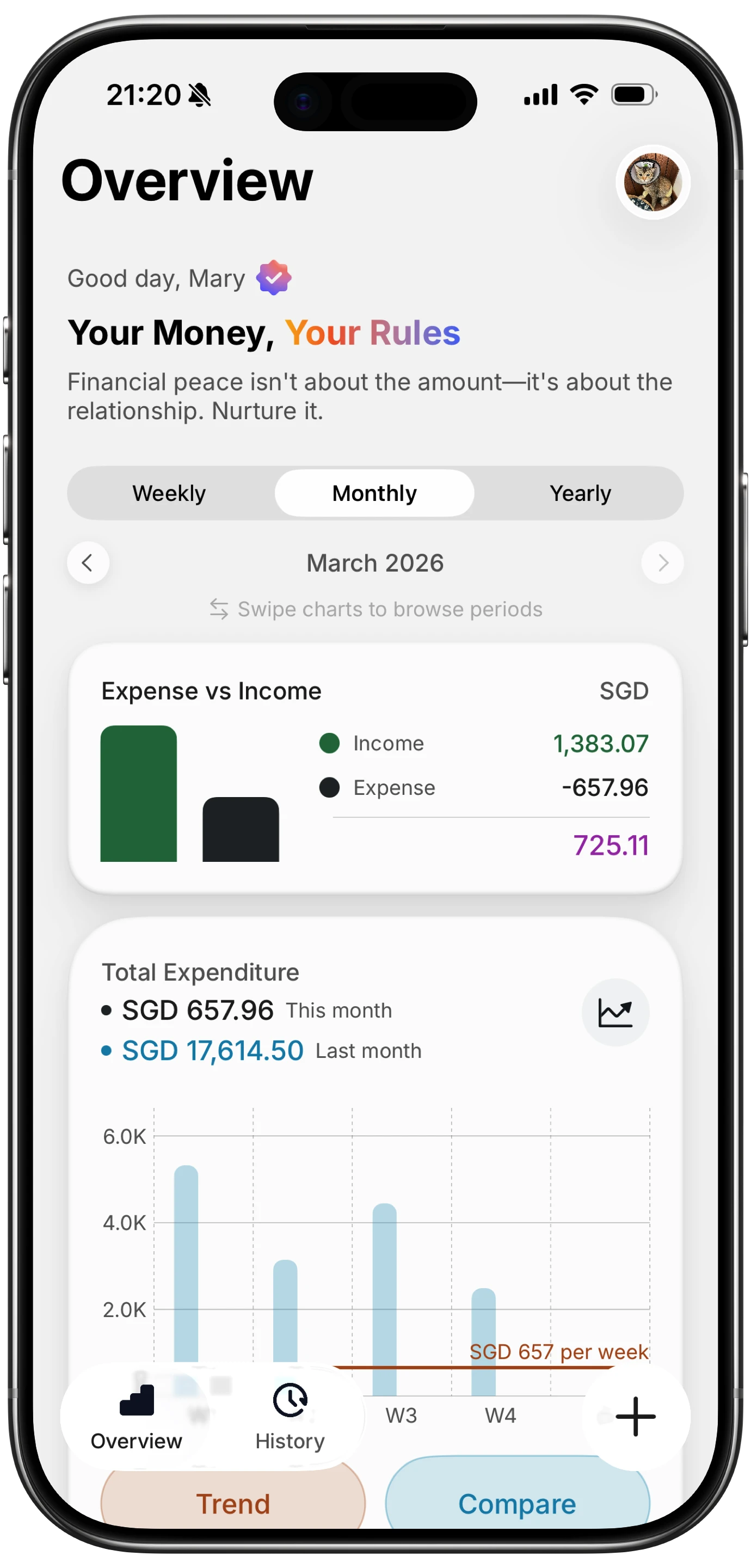
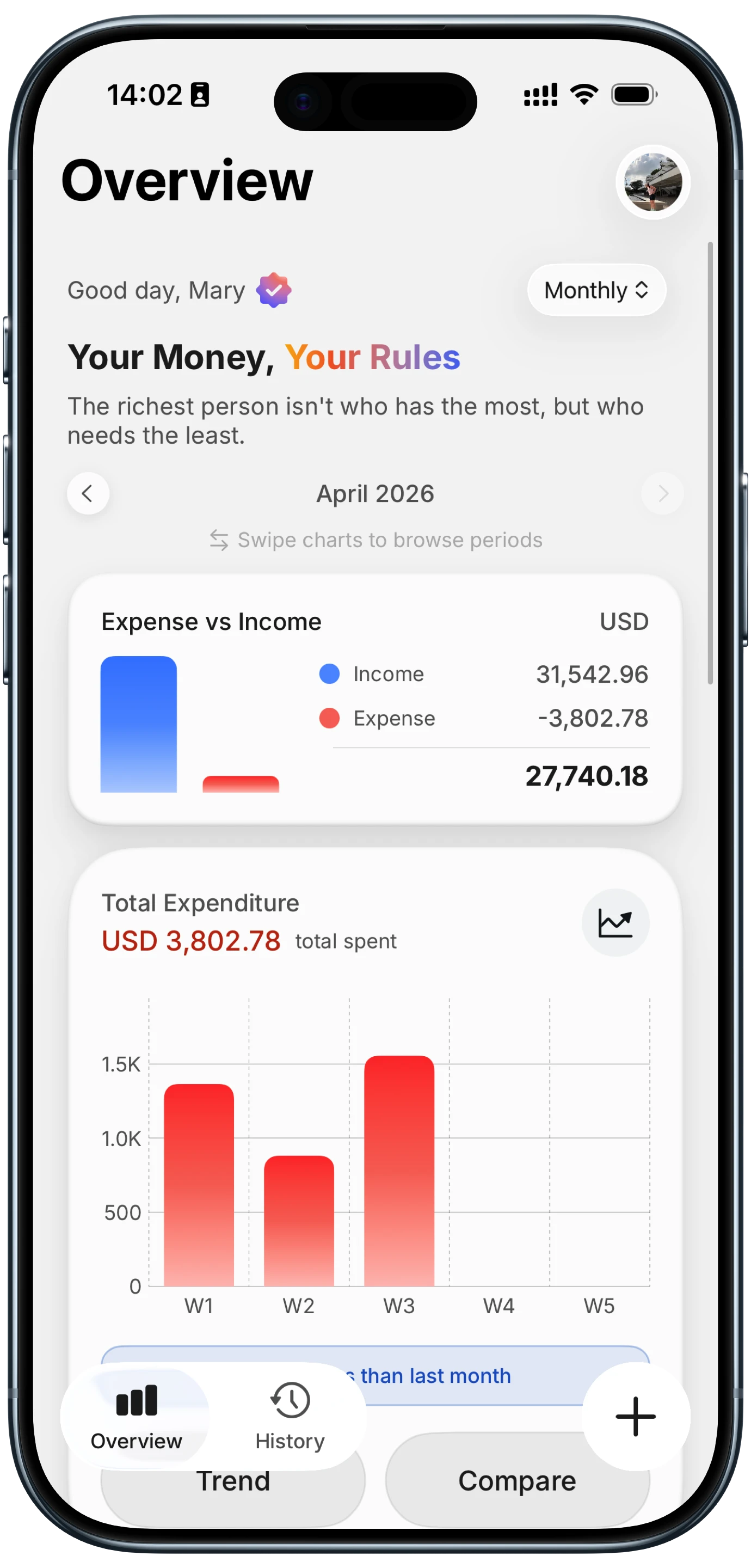
Finny app's Overview feature
| Monthly Target | Dividend Portfolio (3% yield) | Savings (4.5% APY) | Rental Properties (net) |
|---|---|---|---|
| $200/month | ~$80,000 invested | ~$53,000 deposited | Partial income from 1 unit |
| $500/month | ~$200,000 invested | ~$133,000 deposited | 1 property in a good market |
| $1,000/month | ~$400,000 invested | ~$267,000 deposited | 1-2 properties |
| $3,000/month | ~$1,200,000 invested | ~$800,000 deposited | 3-5 properties |
These numbers are not meant to discourage you. They are meant to ground your planning. Passive income is built over years, not weeks. The people earning $5,000 per month passively either invested large sums, built businesses over long periods, or both.
The practical takeaway: start with one source, reinvest the returns, and let compounding work over time. Even $100 per month in passive income is meaningful because it covers a bill, reduces pressure on your active income, and proves the concept works for your situation.
For a deeper look at how compound growth accelerates this process, see our guide on compound interest and how it works.
Building Passive Income: A Realistic Path
Step 1: Stabilize Your Active Income and Expenses
Before chasing passive income, make sure your active finances are solid. This means having a clear picture of what you earn, what you spend, and what remains. If your expenses consume all your active income, there is nothing left to invest in passive sources.
Tracking your spending is the foundation here. An expense tracker like Finny helps you see exactly where money goes each month, so you can identify surplus that could be redirected toward investments or savings.
Step 2: Build a Financial Buffer
An emergency fund comes before passive income investments. If you invest money you might need in three months, you risk selling at a loss or pulling from accounts with penalties. Three to six months of expenses in a high-yield savings account is the standard recommendation before allocating toward passive income goals.
Step 3: Choose One Starting Point
Trying to build five passive income streams simultaneously is a common mistake. Pick one that matches your current resources:
- Limited capital, some time: Create a digital product, start a blog, or build a small online business
- Some capital, limited time: Open a high-yield savings account or start investing in dividend ETFs
- Significant capital: Explore rental property or a diversified investment portfolio
Step 4: Track Income Alongside Expenses
This is where most passive income advice falls short. People focus on building income streams but never measure whether those streams are actually growing or making a difference in their overall financial picture.
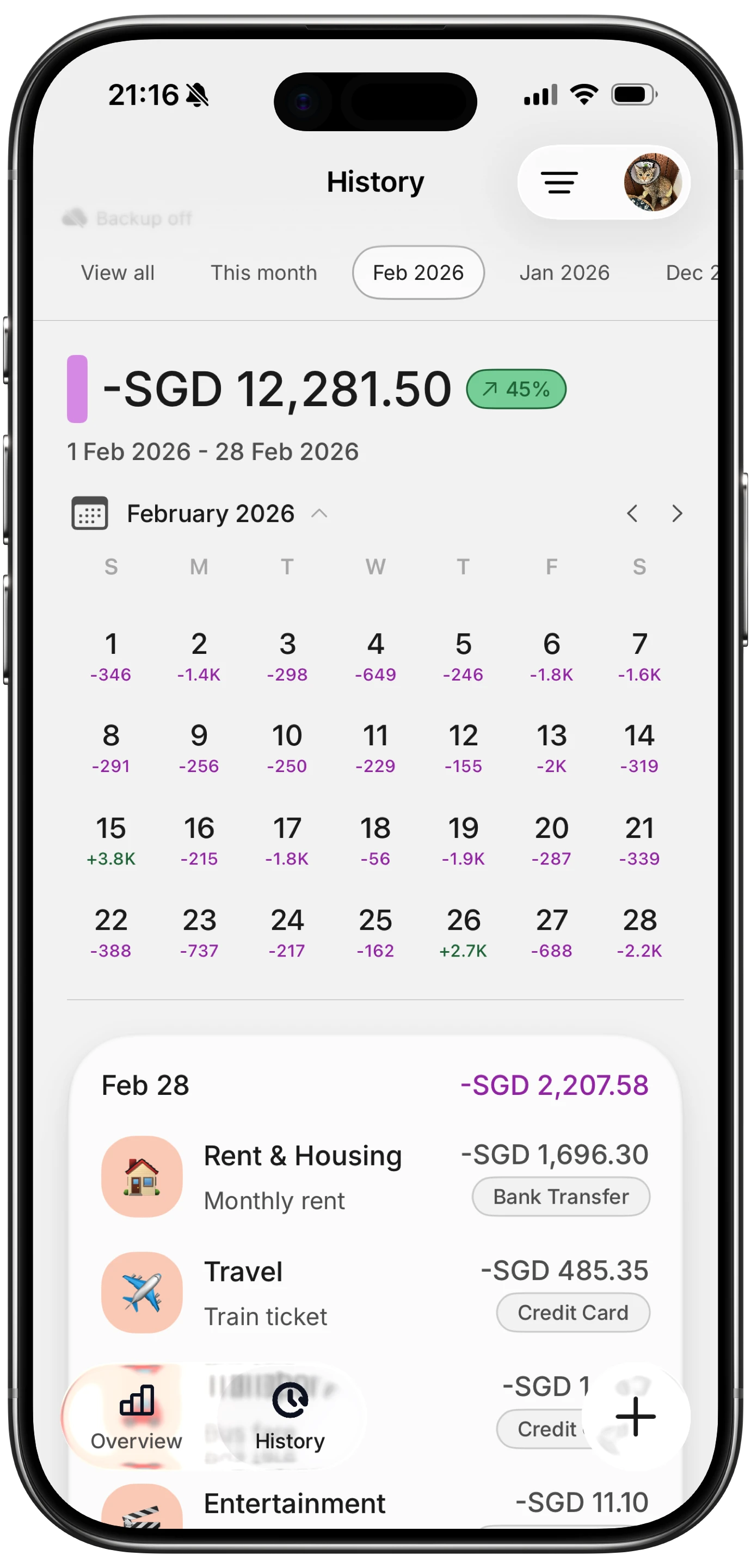
Finny app's History calendar feature
Logging passive income in the same place you track expenses gives you a complete view. You can see your net position: total income (active plus passive) minus total expenses. As passive income grows and expenses stay controlled, your dependency on active income decreases. That ratio is the real measure of progress toward financial independence.
In Finny, you can categorize different income sources separately, making it simple to see how much comes from your salary versus dividends, interest, or side projects. Over months, this data tells a clearer story than any projection spreadsheet.
Step 5: Reinvest Early Returns
In the early stages, passive income will be small. A few dollars in dividends, modest interest payments, or occasional digital product sales. Resist the urge to spend this money. Reinvesting early returns accelerates compounding and builds your passive income base faster.
The difference between spending $50 in monthly dividends versus reinvesting it over 10 years is substantial. At a 7% annual return, reinvesting $50 per month grows to over $8,600. Spending it gives you $6,000 in consumption with nothing accumulated.
Passive Income and Financial Independence
Financial independence means your passive income covers your living expenses. At that point, work becomes optional rather than mandatory. The formula is simple in theory:
Monthly passive income >= Monthly expenses = Financial independence
This is why tracking both sides of the equation matters equally. You can reach financial independence by increasing passive income, by reducing expenses, or ideally by doing both. Someone spending $3,000 per month needs less passive income than someone spending $6,000 per month, even if they earn the same active salary.
Tracking your expenses over time also reveals your real spending baseline, not what you think you spend, but what you actually spend. Many people overestimate how much passive income they need because they have never carefully measured their expenses. A few months of honest tracking with an app like Finny often reveals that the target is more reachable than expected.
For practical strategies on controlling the expense side, see our guide on how to stop overspending.
Common Passive Income Mistakes
Ignoring the Upfront Cost
Every passive income source requires an upfront investment of money, time, or both. Ignoring this leads to unrealistic expectations and abandoned projects. Be honest about what a given income stream requires before you start.
Chasing Too Many Streams at Once
Diversification matters eventually, but spreading yourself thin at the start means no single stream gets enough attention or capital to become meaningful. Build one stream to a stable level before adding another.
Confusing Revenue with Profit
A rental property generating $2,000 per month in rent is not $2,000 in passive income. After mortgage, taxes, insurance, maintenance, and management fees, the net might be $400. Always calculate net income, not gross.
Neglecting to Track Progress
If you are not measuring your passive income growth month over month, you have no way to know if your strategy is working. Small gains are easy to overlook without a system for recording them. Logging income in your expense tracker creates an automatic record of progress.
The Bottom Line
Passive income is not a shortcut and it is not a myth. It is income that requires less ongoing time than a traditional job, built on a foundation of upfront effort or capital. The honest version is less glamorous than social media suggests, but it is achievable with patience, realistic expectations, and consistent tracking.
Start by understanding your current financial position. Track what you earn and what you spend. Identify surplus. Direct that surplus toward one passive income source that fits your situation. Measure progress monthly. Reinvest early returns. Over time, the gap between your passive income and your expenses will narrow, and that narrowing gap is the clearest sign of growing financial independence.
Common Questions About Passive Income
What is passive income in simple terms?
Passive income is money you earn with minimal ongoing effort after an initial investment of time, money, or both. Common examples include dividends from stocks, interest from savings accounts, rental income, and royalties from creative work.
How much money do I need to start earning passive income?
It depends on the source. A high-yield savings account can start generating interest with as little as a few hundred dollars. Meaningful dividend income typically requires tens of thousands invested. Rental properties often need $50,000 or more upfront. Digital products require time rather than capital.
Is passive income really passive?
Most passive income sources require some ongoing involvement. Rental properties need maintenance decisions. Investment portfolios need periodic review. Digital products need occasional updates. The income is less time-intensive than active work, but rarely zero-effort.
How do I track passive income effectively?
Use an expense tracking app that lets you categorize income by source. Log dividends, interest, rental income, and other streams separately. Reviewing this data monthly shows whether your passive income is growing and how it compares to your expenses.
How long does it take to build meaningful passive income?
For most people, building passive income to a level that meaningfully impacts their finances takes several years of consistent saving and investing. Starting small and reinvesting returns accelerates the timeline through compounding.
Ready to track your income and expenses in one place?
Download Finny to log all your income sources alongside daily spending. With clear categories and visual analytics, you can measure your progress toward financial independence, one month at a time.