What Is the 30-Day Rule? Stop Impulse Purchases
You see something you want. Your brain says "buy it now." The 30-day rule says "wait." More often than you expect, waiting 30 days reveals that you did not actually want it that badly. The urge passes, your money stays in your account, and you feel no loss.
The 30-day rule is a personal finance strategy where you delay any non-essential purchase for 30 days before buying. If you still want the item after 30 days and can afford it, buy it. If the desire has faded, you have saved money without feeling deprived. For more strategies on managing impulse spending, see our guide on how to stop overspending.
How the 30-Day Rule Works
- See something you want to buy (non-essential).
- Write it down with the date and price instead of buying it.
- Wait 30 days.
- After 30 days, reassess. Do you still want it? Can you afford it? Does it fit your priorities?
- If yes to all three, buy it guilt-free. If not, move on.
The rule exploits a well-documented psychological pattern: the intensity of wanting something decays over time. The dopamine spike from discovering a desirable item fades within days. What feels urgent today often feels unnecessary in a week.
The Psychology Behind the 30-Day Rule
Impulse purchases are driven by emotion, not logic. Retailers know this, which is why they create urgency ("limited time offer"), scarcity ("only 3 left"), and ease ("one-click buy").
The 30-day rule interrupts this cycle by introducing a gap between the desire and the action. During that gap:
- Emotional arousal fades. The excitement of discovery wears off.
- Rational evaluation takes over. You consider whether the purchase fits your actual needs and budget.
- Opportunity cost becomes visible. You think about what else that money could do.
- Many desires self-resolve. You forget about the item entirely, proving it was not important.
Research on consumer behavior suggests that 40-70% of impulse purchase desires fade within a few days, let alone 30.
When to Apply the 30-Day Rule
The rule works best for discretionary purchases above a certain threshold. You do not need to wait 30 days for a $3 coffee. Apply it to:
| Purchase Type | Apply the Rule? |
|---|---|
| Clothing over $50 | Yes |
| Electronics and gadgets | Yes |
| Home decor and furniture | Yes |
| Subscription services | Yes (trial first) |
| Sale items ("deal too good to pass up") | Especially yes |
| Groceries | No |
| Essential replacements (broken appliance) | No |
| Small daily purchases under $20 | No (use a daily spending limit instead) |
Set your own dollar threshold. Some people apply the rule to anything over $30. Others use $100. The threshold should be low enough to catch impulse buys but high enough that you do not have to deliberate over minor purchases.
Practical Tips for Sticking to It
Keep a "want" list. Use a notes app or physical notebook to record every item you are tempted to buy. Include the date and price. This list serves as both a waiting mechanism and a reality check.
Remove items from your cart, do not close the tab. For online shopping, save items to a wishlist or leave them in your cart. Many retailers will send you a discount code if you "abandon" your cart.
Set a calendar reminder. When you add something to your want list, set a reminder for 30 days later. If you still want it when the reminder arrives, research the best price.
Review your want list weekly. You will be surprised how many items you cross off without buying. This reinforces the habit.
Track the money you save. Each time you decide not to buy something after 30 days, note the amount saved. Watching this number grow is motivating.
The 30-Day Rule and Expense Tracking
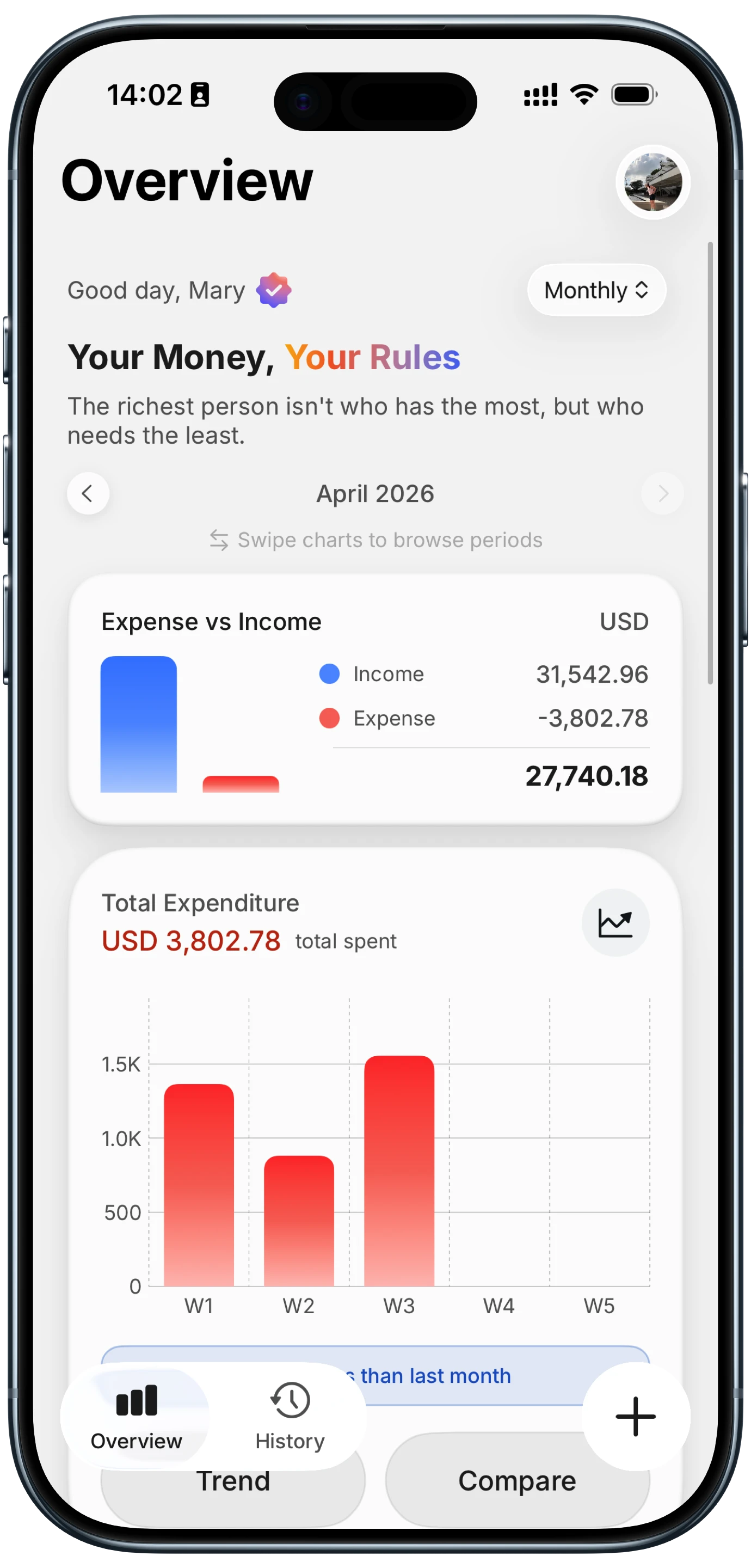
The 30-day rule is more effective when combined with expense tracking. Here is why:
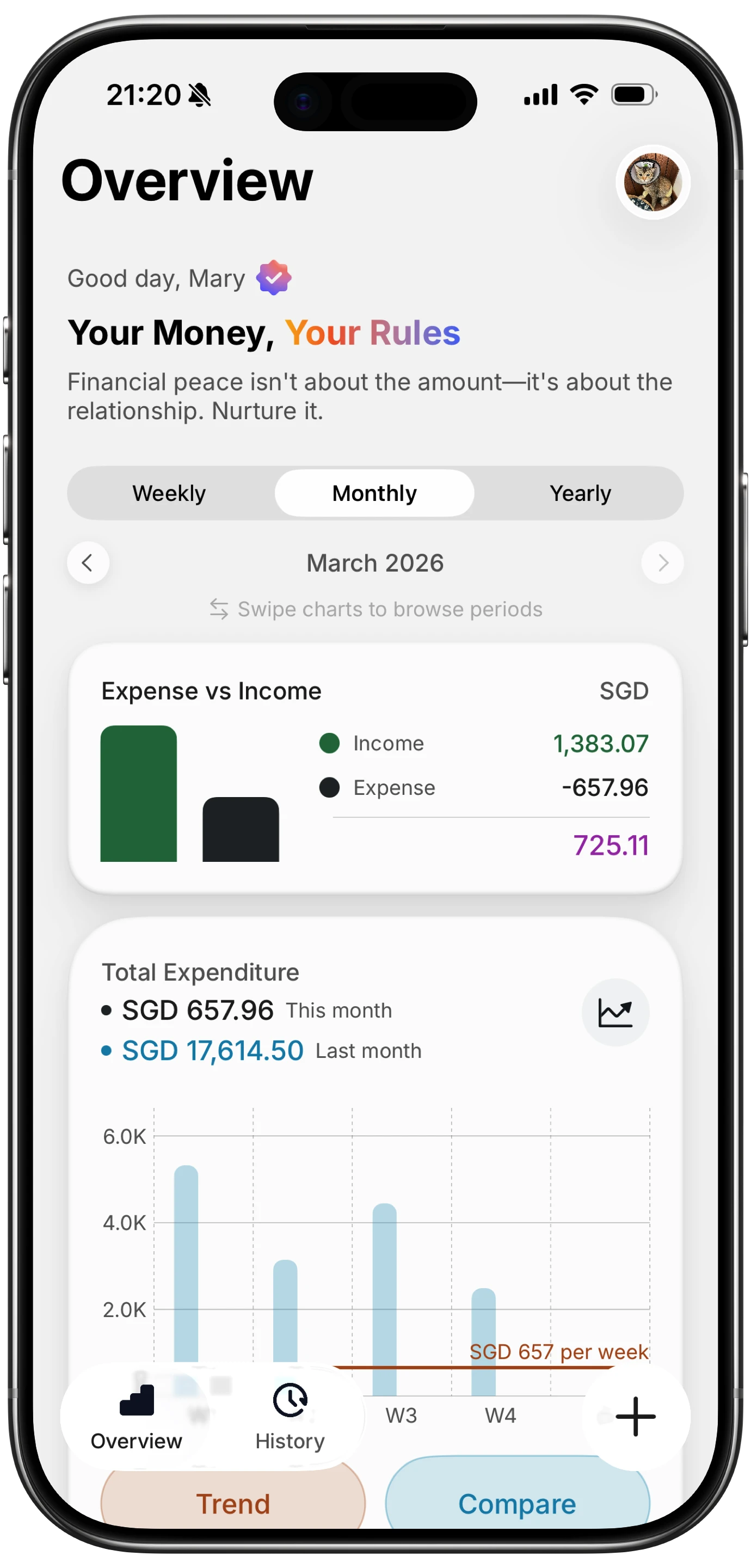
Finny app's Overview feature
Tracking reveals your impulse spending patterns. When you see how much goes to unplanned purchases each month, the motivation to apply the 30-day rule increases. Many people discover they spend $200-500/month on impulse buys they barely remember.
Data makes the wait easier. When your tracking shows that you spent $300 on random Amazon purchases last month, waiting 30 days on this month's temptations feels rational rather than restrictive.
The savings become visible. As impulse spending drops, your monthly totals in discretionary categories decline. That freed-up money can go toward goals you actually care about. For more on aligning spending with values, see our guide on what is discretionary spending.
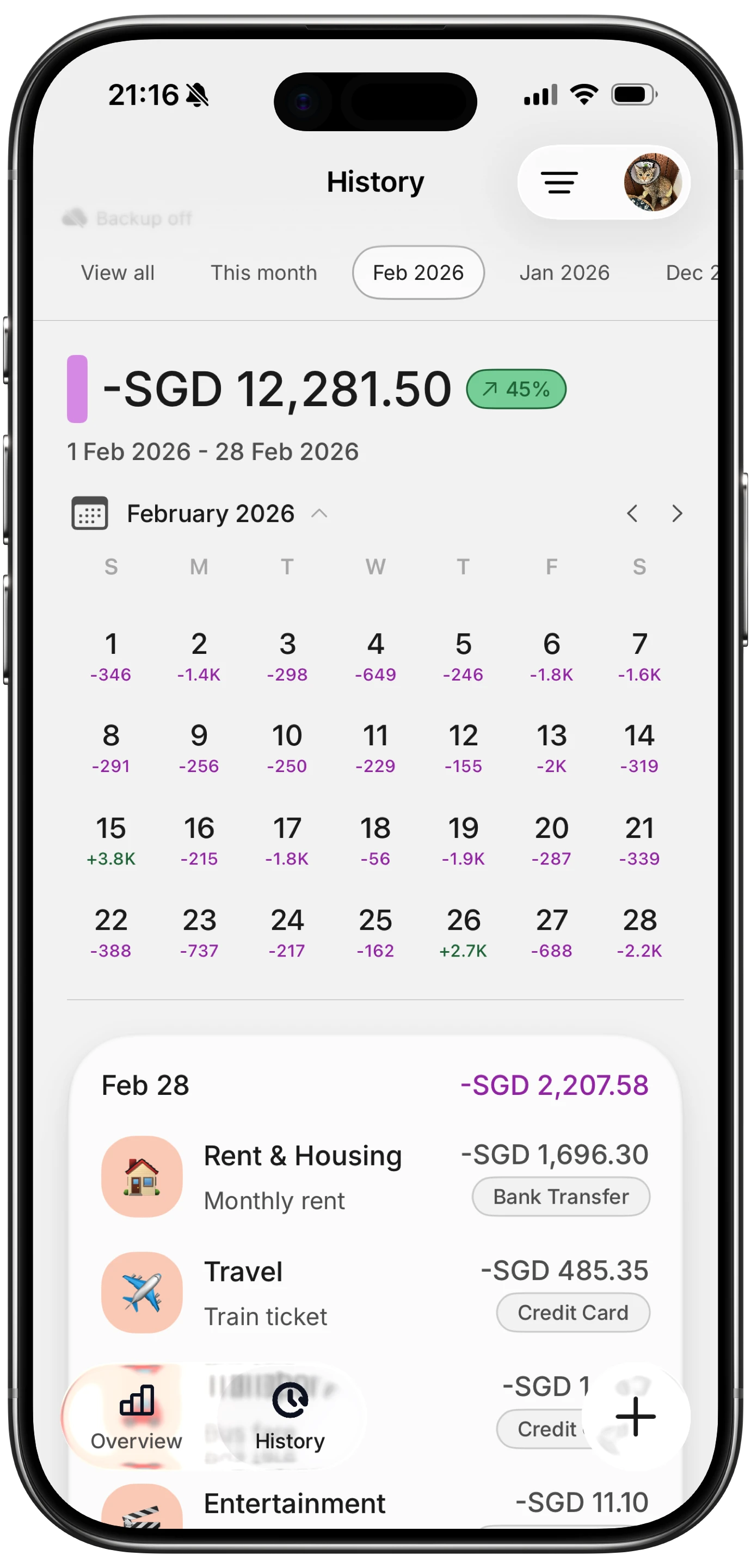
Finny app's History calendar feature
Variations of the Waiting Rule
The 30-day rule is the most common version, but variations exist:
- 24-hour rule: Wait one day before any unplanned purchase. Good for smaller items.
- 10-day rule: A middle ground between impulse and extended deliberation.
- Price-based rule: Wait one day for every $10 the item costs ($50 item = 5-day wait).
- Sleep on it: Never buy anything non-essential on the same day you discover it.
Any waiting period is better than none. Even a 24-hour delay eliminates a significant portion of impulse spending.
The Bottom Line
The 30-day rule is one of the simplest and most effective personal finance strategies. It costs nothing, requires no willpower beyond the initial decision to wait, and eliminates purchases you would not have valued anyway. Combined with expense tracking that reveals your actual impulse spending patterns, it becomes even more powerful.
The money you save is not lost enjoyment. It is money redirected from things you would have forgotten to things you genuinely care about.
Common Questions About the 30-Day Rule
Does the 30-day rule really work?
Yes. Studies on consumer behavior consistently show that purchase desire decays over time. Most people find that 50-70% of items they wait on are no longer wanted after 30 days.
What if there is a sale that expires before 30 days?
Sales are designed to create urgency. Most items go on sale regularly. If you miss one sale, another will come. The money saved by avoiding unnecessary purchases almost always exceeds any discount you might miss.
Should I apply the 30-day rule to everything?
No. Use it for discretionary purchases above your personal threshold. Essentials, groceries, and small daily purchases do not need a 30-day wait. The rule targets the purchases most likely to be impulsive.
What if I still want the item after 30 days?
Buy it. The rule is not about never spending money. It is about ensuring that your purchases are deliberate rather than impulsive. If you still want something after 30 days and can afford it, that is a considered decision.
Can the 30-day rule help with online shopping addiction?
It is a good starting point. Removing saved payment methods, unsubscribing from promotional emails, and deleting shopping apps from your phone are complementary strategies. The 30-day rule adds a deliberate pause to whatever shopping behavior remains.
Want to see how much you spend on impulse?
Download Finny to track every purchase with AI-assisted input. See your spending patterns, identify impulse buys, and save money by spending only on what you genuinely value.