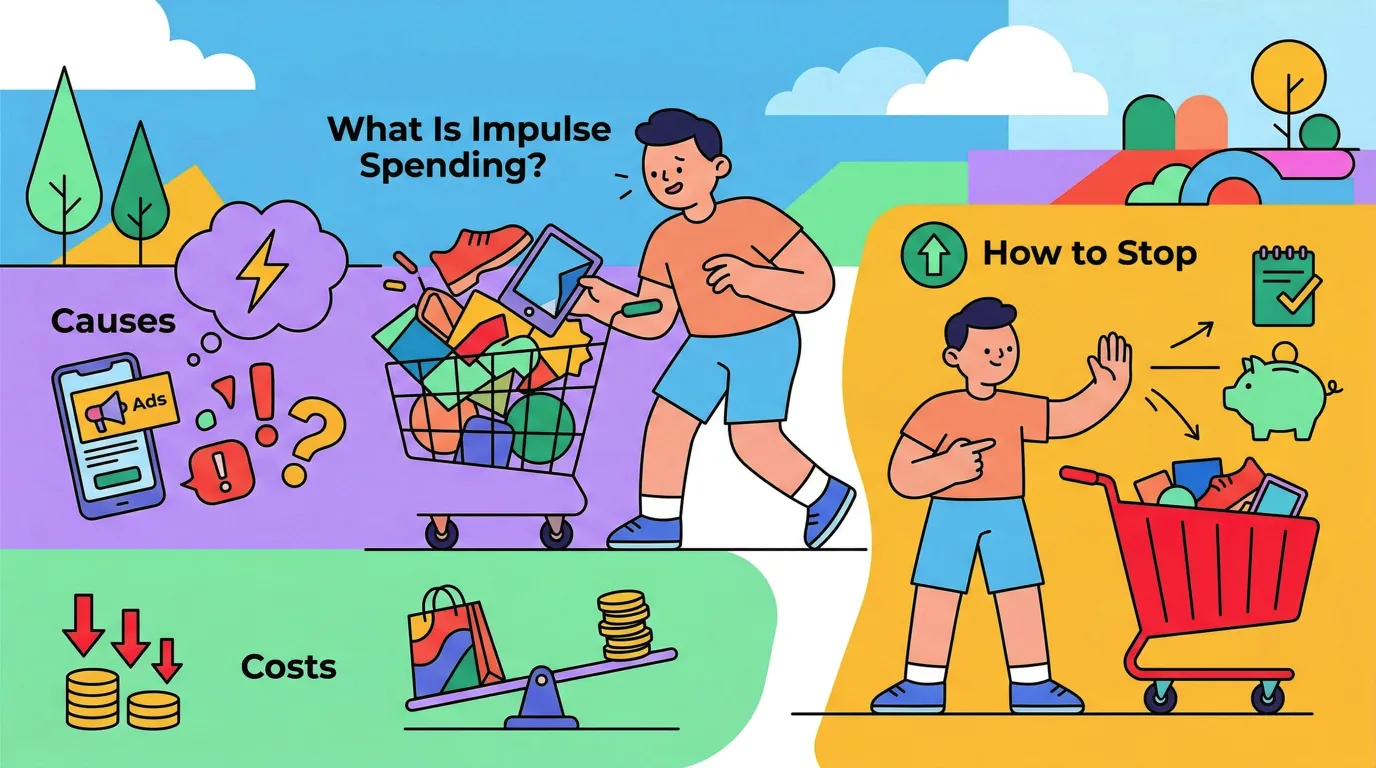
You walk into the grocery store for milk and eggs. You leave with a candle, a bag of chips, a kitchen gadget you will use once, and yes, the milk and eggs. The extra items were not on the list. They were not planned. They just happened.
Impulse spending is one of the most common financial habits, and also one of the most misunderstood. It is not a character flaw or a sign of financial irresponsibility. It is a deeply human response to how our brains process desire, reward, and convenience. Understanding the psychology behind it is the first step toward spending more intentionally. On iPhone, you can use Focus and Screen Time to stop impulse buys before they reach the cart.
This guide covers what impulse spending actually is, why it happens, how much it costs the average person, and practical strategies for reducing it. For a broader look at controlling spending habits, see our guide on how to stop overspending.
What Impulse Spending Actually Means
Impulse spending is any unplanned purchase made without deliberate consideration. It can range from a $3 coffee to a $300 pair of shoes. The defining characteristic is not the dollar amount but the absence of prior intent. You did not plan to buy it before the moment you encountered it.
Researchers distinguish impulse spending from other types of unplanned spending. A reminder purchase (seeing paper towels and remembering you are out) is unplanned but rational. A suggestion purchase (grabbing a phone case because the salesperson recommended it) involves outside influence. Pure impulse spending is driven entirely by an internal emotional response to a product or opportunity.
The problem is not that every impulse purchase is bad. Sometimes you stumble on something genuinely useful. The problem is frequency and volume. When impulse buys become a pattern, they quietly erode budgets and savings goals.
The Psychology Behind Impulse Buying
Understanding why impulse spending happens makes it easier to counteract. Several psychological mechanisms drive the behavior.
Dopamine and Anticipation
The brain releases dopamine not when you enjoy a purchase, but when you anticipate it. Seeing a product you want triggers a reward signal before you buy it. The act of purchasing satisfies that anticipation, but the satisfaction fades quickly. This cycle encourages repeated impulse buys as you chase the next small dopamine hit.
Decision Fatigue
Every decision you make throughout the day depletes a finite pool of mental energy. By the afternoon or evening, your ability to evaluate purchases rationally weakens. This is why impulse spending tends to spike later in the day and during stressful periods. Your brain takes shortcuts, defaulting to "yes" because saying "no" requires more effort.
The Pain of Paying
Research shows that paying with cash activates pain centers in the brain more than paying with cards or digital wallets. As payments become increasingly frictionless (tap to pay, one-click ordering, stored card details), the psychological barrier to spending drops. You spend more because spending feels like less.
Scarcity and Urgency
"Limited time offer." "Only 3 left in stock." "Sale ends tonight." These cues trigger a fear of missing out that overrides rational evaluation. Retailers have refined these tactics over decades. Online shopping has made them even more effective with countdown timers, low-stock warnings, and personalized deals. These tactics peak during sale events, which is why a Black Friday budget set in advance works better than willpower on the day.
Emotional Spending
Boredom, stress, sadness, and even celebration can trigger impulse purchases. Retail therapy is a real phenomenon. Buying something new provides a temporary mood boost. The purchase becomes a coping mechanism rather than a considered decision.
How Much the Average Person Spends on Impulse
The numbers are significant. According to consumer research, the average American spends roughly $150 to $200 per month on impulse purchases. That amounts to approximately $1,800 to $2,400 per year in unplanned spending.
Younger demographics tend to spend more impulsively. Surveys consistently show that adults under 35 report higher impulse spending, partly due to greater exposure to social media advertising and a more normalized culture of instant purchases.
Common impulse spending categories include:
- Food and beverages: Coffee, snacks, takeout, convenience meals
- Clothing and accessories: Items bought because they were on sale, not because they were needed
- Online shopping: Products discovered through ads, recommendations, or browsing
- Entertainment: Streaming subscriptions, in-app purchases, event tickets
- Home and lifestyle: Decor, gadgets, organizational products
The cumulative impact is striking. That $2,000 per year in impulse spending, invested instead at a 7% annual return, would grow to over $28,000 in ten years. Impulse spending does not just cost money today. It costs future wealth.
Common Triggers and When They Hit
Recognizing your personal triggers is essential. Most people have patterns, even if they have not identified them yet.
Environmental Triggers
- Store layouts designed to encourage browsing (end caps, checkout displays)
- Online recommendation algorithms showing "you might also like" products
- Social media ads targeted to your browsing history
- Proximity to stores or restaurants during daily routines
Emotional Triggers
- Stress after a difficult day at work
- Boredom during downtime or weekends
- Celebration after a win or accomplishment
- Loneliness or the desire for comfort
Situational Triggers
- Shopping while hungry
- Browsing online late at night
- Spending time with friends who spend freely
- Receiving a paycheck or bonus (the "flush with cash" feeling)
Tracking your spending for even two weeks can reveal patterns you did not notice. When you log every purchase, you start to see which triggers lead to unplanned buys. For guidance on building a daily tracking habit, see our post on how to track daily spending.
Strategies to Reduce Impulse Spending
Eliminating impulse spending entirely is unrealistic and unnecessary. The goal is to reduce it enough that your budget and savings goals stay on track. These strategies work because they target the psychological mechanisms described above.
The 24-Hour Rule
When you feel the urge to buy something unplanned, wait 24 hours. Write it down or add it to a list, but do not purchase it immediately. Most impulse urges fade within a day. If you still want the item after 24 hours, it may be a considered purchase rather than an impulse one.
For larger purchases (over $50), extend the waiting period to 48 or 72 hours. The bigger the expense, the more time your rational brain needs to catch up with your emotional brain.
Set a Fun Money Budget
Trying to eliminate all discretionary spending backfires. Instead, allocate a specific monthly amount for unplanned or "fun" purchases. When the fun money is gone, you stop. This approach satisfies the desire for spontaneous purchases without letting them consume your entire budget.
A common starting point is 5-10% of your take-home pay. If you learn you tend to overshoot, see our guide on how to budget money for frameworks that build in flexibility.
Unsubscribe and Unfollow
Remove the triggers you can control. Unsubscribe from retailer emails. Unfollow brands on social media. Delete shopping apps from your phone. Turn off push notifications for sales. Each removed trigger is one fewer decision your brain needs to make.
Use a Shopping List (and Stick to It)
For grocery and errand shopping, a list is one of the most effective tools. Write down what you need before you leave. Buy only what is on the list. This simple practice eliminates the "browsing and discovering" behavior that leads to impulse buys in physical stores.
Replace the Habit
If impulse spending serves an emotional function (stress relief, boredom cure), find a replacement behavior. A walk, a phone call with a friend, a saved article you have been meaning to read. The goal is to interrupt the trigger-to-purchase pathway with an alternative response.
How Real-Time Expense Tracking Creates a Pause
One of the most effective strategies for reducing impulse spending is logging every purchase in real time. This works because it inserts a moment of awareness between the purchase and moving on with your day.
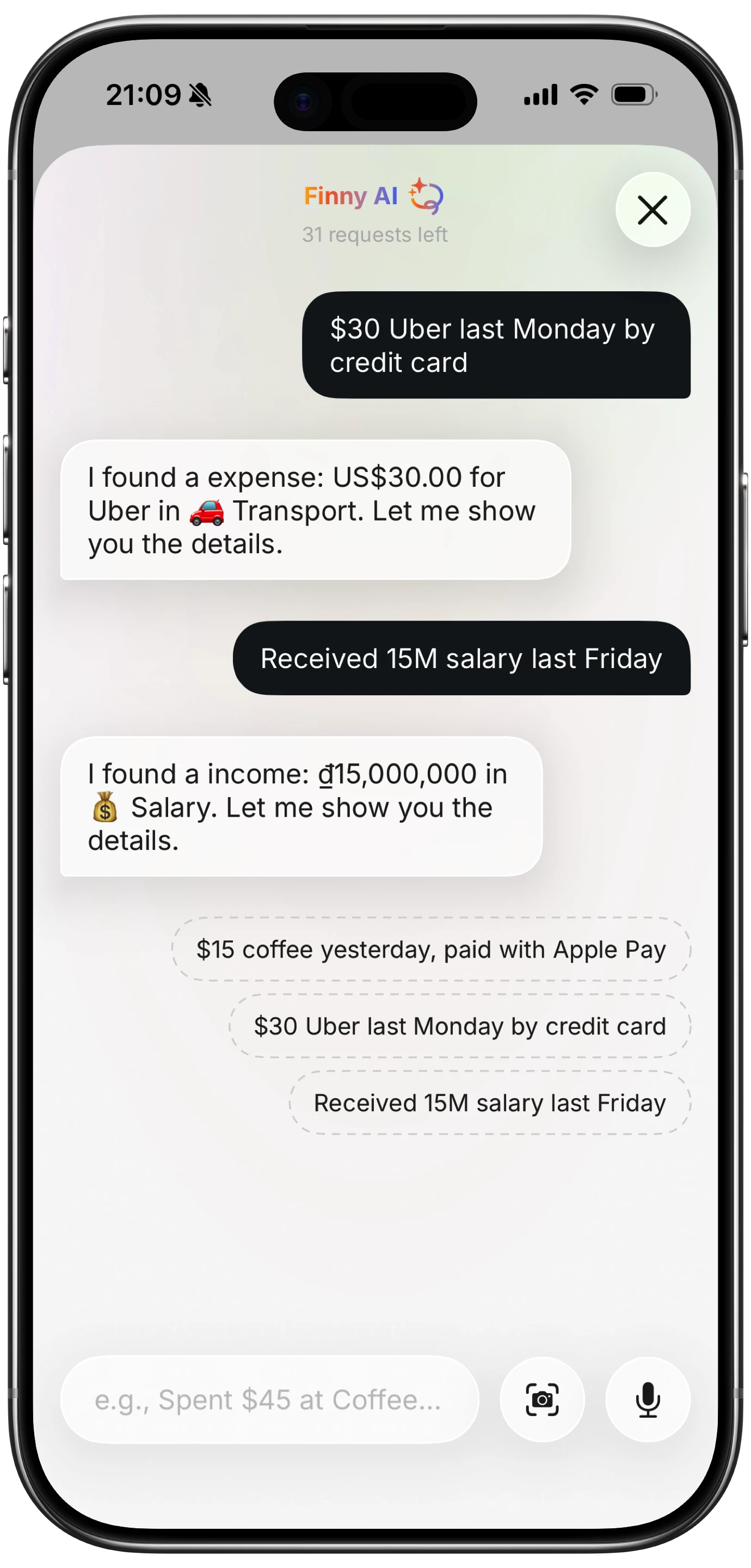
Finny app's AI chat feature
When you open an expense tracking app immediately after buying something, you are forced to confront the purchase. You see the amount. You assign it a category. You watch your daily or weekly total climb. That brief moment of reflection creates a psychological pause that accumulates over time.
This is not about guilt. It is about awareness. Most impulse spenders are not fully conscious of how much they are spending because the purchases are individually small and quickly forgotten. Real-time tracking makes the invisible visible.
Finny makes this process fast enough that it does not feel like a chore. You can type a quick natural-language entry like "coffee shop $5" or snap a photo of a receipt, and the AI handles categorization. The friction of logging is low, but the awareness it creates is high.
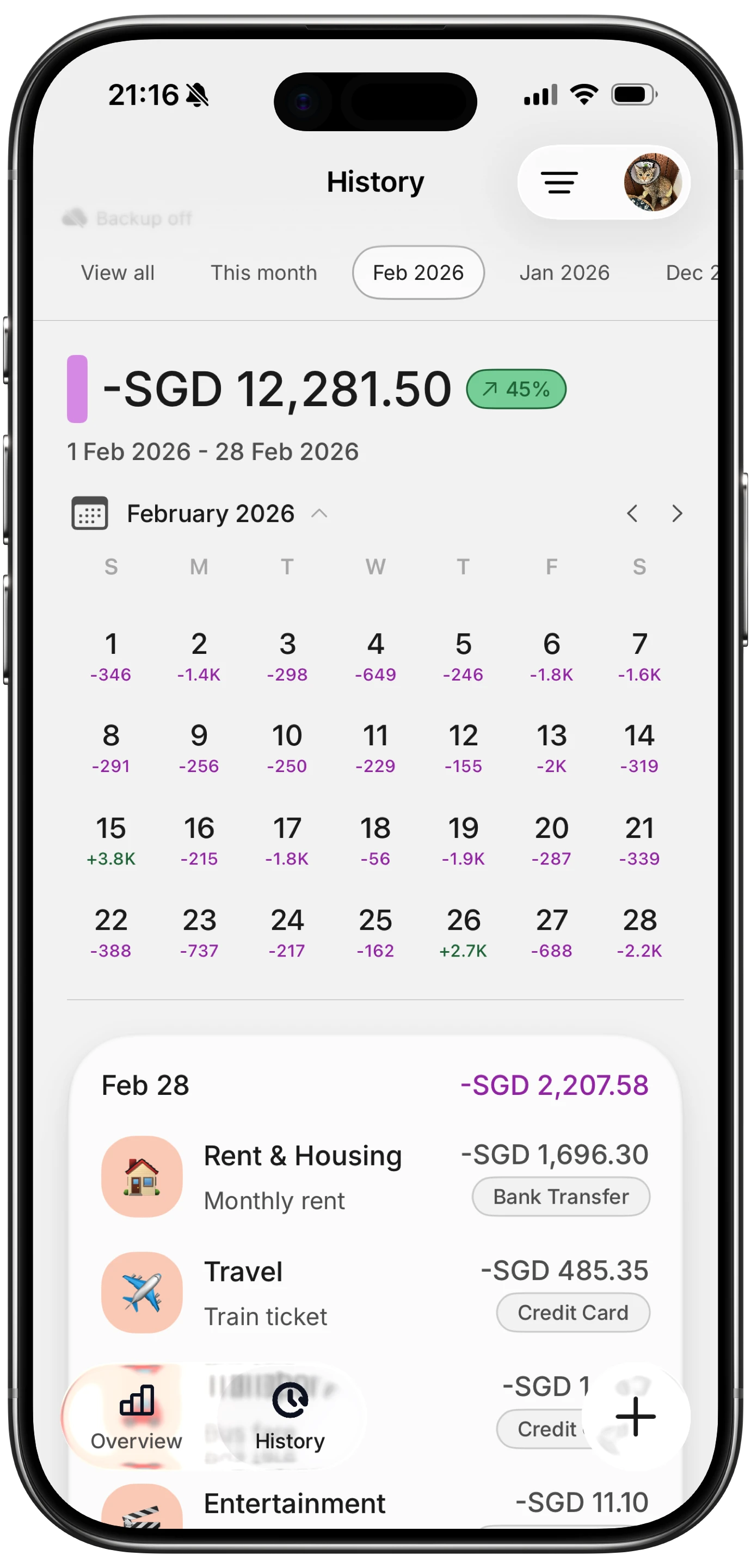
Finny app's History calendar feature
Over weeks, the data tells a story. You can see which categories accumulate the most impulse purchases. You can compare weeks where you tracked consistently against weeks where you did not. Most people find that the simple act of tracking reduces impulse spending by 10-20%, even without any other changes.
For more on how tracking builds financial awareness, see our guide on how to track expenses.
Building a Spending Awareness Habit
Reducing impulse spending is not about willpower. It is about building systems that work with your psychology rather than against it.
Start with these steps:
- Track everything for two weeks. Do not change your spending habits. Just log every purchase. Use Finny or any expense tracker that makes logging fast.
- Review the data. At the end of two weeks, sort your purchases into planned and unplanned. Calculate your impulse spending total.
- Identify your top three triggers. Look at when and where your impulse purchases happened. Time of day, location, emotional state.
- Pick one strategy. Do not overhaul everything at once. Choose the 24-hour rule, a fun money budget, or trigger removal. Apply it for a month.
- Compare your numbers. After a month, review your impulse spending total again. Even a small reduction is progress.
The key insight is that awareness precedes change. You cannot reduce spending you do not see. An expense tracker turns invisible habits into visible data, and visible data is easier to change.
The Bottom Line
Impulse spending is a natural human behavior driven by dopamine, decision fatigue, and a consumer environment designed to encourage unplanned purchases. The average person spends roughly $150 to $200 per month on impulse buys, adding up to thousands of dollars per year.
You do not need to eliminate impulse spending entirely. You need to make it visible, set boundaries around it, and replace automatic behavior with intentional choices. The 24-hour rule, a fun money budget, trigger removal, and real-time expense tracking are all practical tools that reduce impulse buys without requiring superhuman discipline.
The most powerful step is the simplest: start tracking. When every purchase gets logged, the unconscious becomes conscious. That small moment of awareness, repeated daily, changes spending patterns more effectively than any amount of willpower.
Common Questions About Impulse Spending
What counts as an impulse purchase?
Any purchase you did not plan before encountering the product or opportunity. The dollar amount does not matter. A $2 candy bar and a $200 jacket are both impulse purchases if you did not intend to buy them before the moment you decided.
How much does the average person spend on impulse buys?
Research estimates range from $150 to $200 per month for the average American adult. Annual impulse spending totals roughly $1,800 to $2,400. Younger adults and frequent online shoppers tend to report higher amounts.
Is impulse spending the same as overspending?
Not exactly. Overspending means spending more than your budget or income allows. Impulse spending is about unplanned purchases, which may or may not push you over budget. However, frequent impulse spending is one of the most common causes of overspending.
Can tracking expenses really reduce impulse buys?
Yes. Studies on financial awareness show that people who track spending consistently tend to spend less overall. The act of logging a purchase creates a moment of reflection that interrupts the automatic impulse-to-purchase cycle. Even without setting strict budgets, awareness alone reduces unnecessary spending.
What is the best way to stop impulse buying online?
Remove stored payment information from shopping sites. Delete shopping apps from your phone. Use browser extensions that block retail sites during certain hours. When you find something you want, add it to a wishlist and wait 24 to 48 hours before purchasing. Most items will lose their appeal after the waiting period.
Ready to see where your money really goes?
Download Finny to log expenses in seconds using AI, text, or receipt scanning. Real-time tracking makes impulse spending visible, and visible spending is easier to control.