You buy a $5 coffee every weekday morning. It feels like nothing. But over a year, that habit costs $1,300. Over a decade, factoring in what that money could have earned if invested, the number grows to something much harder to ignore.
This is the core idea behind the latte factor, a personal finance concept coined by author David Bach. Whether you agree with it or find it overly simplistic, understanding the latte factor is useful because it forces you to look at where your money actually goes each day. This guide breaks down the concept, runs the real math, presents both sides of the debate, and shows how tracking daily expenses reveals your own version of the latte factor. For a closer look at monitoring everyday costs, see our guide on how to track daily spending.
What Is the Latte Factor
The latte factor is a term popularized by David Bach in his 2004 book The Automatic Millionaire. The idea is straightforward: small, recurring, seemingly insignificant expenses, like a daily latte, add up to surprisingly large sums over time. Bach's argument is that most people do not realize how much they spend on minor daily purchases, and that redirecting even a portion of that money toward savings or investments could produce meaningful wealth over decades.
The latte itself is just a symbol. Bach was not exclusively targeting coffee drinkers. The concept applies to any habitual small purchase: bottled water, convenience store snacks, subscription services you barely use, impulse app purchases, or vending machine visits. The point is that people often search for big windfalls to improve their finances while overlooking the slow, steady leak of small transactions happening every day.
Bach's framing was intentionally provocative. A latte feels harmless. Telling someone their daily coffee habit is costing them a million dollars over a lifetime gets attention, and it did. The latte factor became one of the most discussed (and debated) ideas in personal finance.
The Math Behind the Latte Factor
Let us run the numbers with a few different daily spending amounts to see how the latte factor works in practice.
Simple Annual Cost
| Daily Expense | Weekly (5 days) | Monthly | Annual |
|---|---|---|---|
| $3 | $15 | $65 | $780 |
| $5 | $25 | $108 | $1,300 |
| $7 | $35 | $152 | $1,820 |
| $10 | $50 | $217 | $2,600 |
| $15 | $75 | $325 | $3,900 |
A $5 daily habit costs $1,300 per year. That alone is enough to fund an emergency starter fund, a weekend trip, or a meaningful contribution to a retirement account.
Compounded Over Time
The latte factor becomes more dramatic when you consider opportunity cost. If you invested that $5 per day instead, here is what it could grow to at a 7% average annual return (a common estimate for long-term stock market performance):
| Timeframe | Total Saved (No Growth) | With 7% Annual Return |
|---|---|---|
| 5 years | $6,500 | $7,800 |
| 10 years | $13,000 | $18,600 |
| 20 years | $26,000 | $54,800 |
| 30 years | $39,000 | $122,000 |
| 40 years | $52,000 | $248,000 |
Over 30 years, $5 a day becomes over $122,000 with compound growth. Over 40 years, it approaches a quarter of a million dollars. To understand why these numbers grow so dramatically, see our explanation of compound interest and how it works.
These figures illustrate why Bach's concept resonated with so many people. The gap between what you spend and what that money could become is genuinely striking.
The Case for the Latte Factor
The latte factor has real merit as a framework. Here is why it remains useful:
Awareness Is the First Step
Most people underestimate their daily spending by a wide margin. Studies consistently show that consumers forget or miscount small transactions. The latte factor forces you to confront reality: those "insignificant" purchases have a cumulative weight.
Small Changes Are Sustainable
Unlike drastic budget overhauls, cutting one or two small habits is manageable. Skipping a daily coffee shop visit does not require a lifestyle transformation. It requires remembering to brew coffee at home.
It Challenges Autopilot Spending
Many small purchases happen on autopilot. You walk past the same shop, you tap your card, you do not think about it. The latte factor encourages you to make those purchases deliberate rather than habitual. Even if you keep buying the coffee, you are now doing it consciously.
It Applies Beyond Coffee
The concept extends to any small recurring cost: streaming services you forgot about, premium app tiers you do not use, daily food delivery markups, or convenience fees you accept without question. Your personal latte factor might not involve coffee at all.
The Case Against the Latte Factor
The latte factor has also drawn significant criticism, and some of it is fair.
It Can Overemphasize Small Expenses
For many people, the biggest financial pressures come from housing, healthcare, student loans, and childcare, not from coffee. Telling someone drowning in rent costs to skip their latte can feel dismissive of structural financial challenges. A $5 daily savings will not offset a $2,000 monthly housing burden.
It Can Lead to Guilt Without Progress
Taken too literally, the latte factor creates guilt around every small purchase. This can lead to a scarcity mindset where you feel bad about spending any money on enjoyment. Personal finance should improve your life, not make you anxious about buying a cup of coffee.
The Math Is Idealized
The compounding projections assume you would actually invest every saved dollar consistently for decades at a steady return. In practice, money saved from skipping coffee often gets absorbed into other spending rather than directed to an investment account. The theoretical gains only materialize with deliberate action.
Quality of Life Matters
If a daily coffee genuinely improves your morning and you can afford it, eliminating it to save $5 may not be worth the tradeoff. Financial optimization should not come at the cost of daily satisfaction, especially when the amounts involved are modest relative to your income.
The Real Takeaway: Awareness, Not Deprivation
Both sides of the latte factor debate point to the same underlying truth: what matters is awareness.
The latte factor is not really about coffee. It is about knowing where your money goes. The person who tracks their spending and consciously decides to buy a daily latte is in a fundamentally different position than the person who has no idea they spend $400 a month on impulse purchases.
The real value of the latte factor concept is not the instruction to stop spending. It is the invitation to start noticing.
Here is a more balanced approach:
- Track your actual daily spending for at least one month without changing any habits
- Identify your personal latte factor, the small recurring expenses you did not realize were adding up
- Decide consciously which of those expenses bring real value and which are pure autopilot
- Redirect the autopilot money toward something more meaningful: savings, debt payoff, or investments
- Keep the purchases you genuinely enjoy without guilt
This approach respects both the insight of the latte factor (small things add up) and the valid criticism (not everything small should be cut).
Finding Your Personal Latte Factor with Daily Tracking
The original latte factor was based on averages and assumptions. Your personal latte factor is based on your actual spending, and the only way to find it is to track what you spend each day.
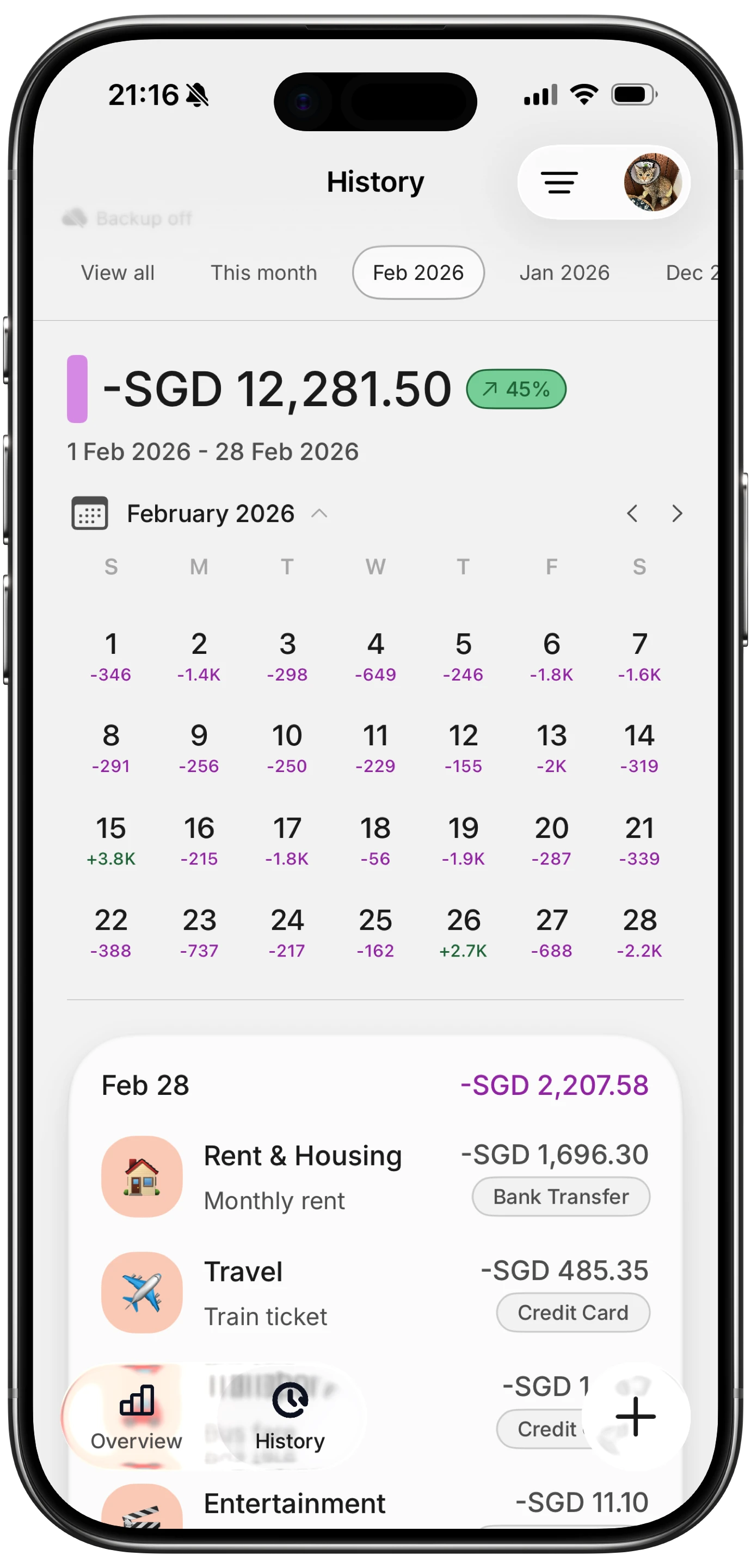
Finny app's History calendar feature
Why Tracking Beats Guessing
When asked to estimate daily discretionary spending, most people guess low. They remember the $50 grocery run but forget the $3 sparkling water, the $6 parking app fee, and the $4 afternoon snack. Daily expense tracking captures everything, including the purchases your memory conveniently drops.
To see where most people land, check our breakdown of average daily spending by category.
What to Look For
After a month of tracking, review your data for:
- Daily repeats: Purchases you make almost every day without thinking
- Convenience markups: Times you paid more for speed or ease (delivery fees, convenience store prices, ride-shares for walkable distances)
- Forgotten subscriptions: Small monthly charges you stopped noticing
- Category surprises: Spending categories that are higher than expected
These patterns are your personal latte factor. They are specific to your life, your habits, and your values, which makes them far more actionable than a generic example about coffee.
Using Finny to Surface Spending Patterns
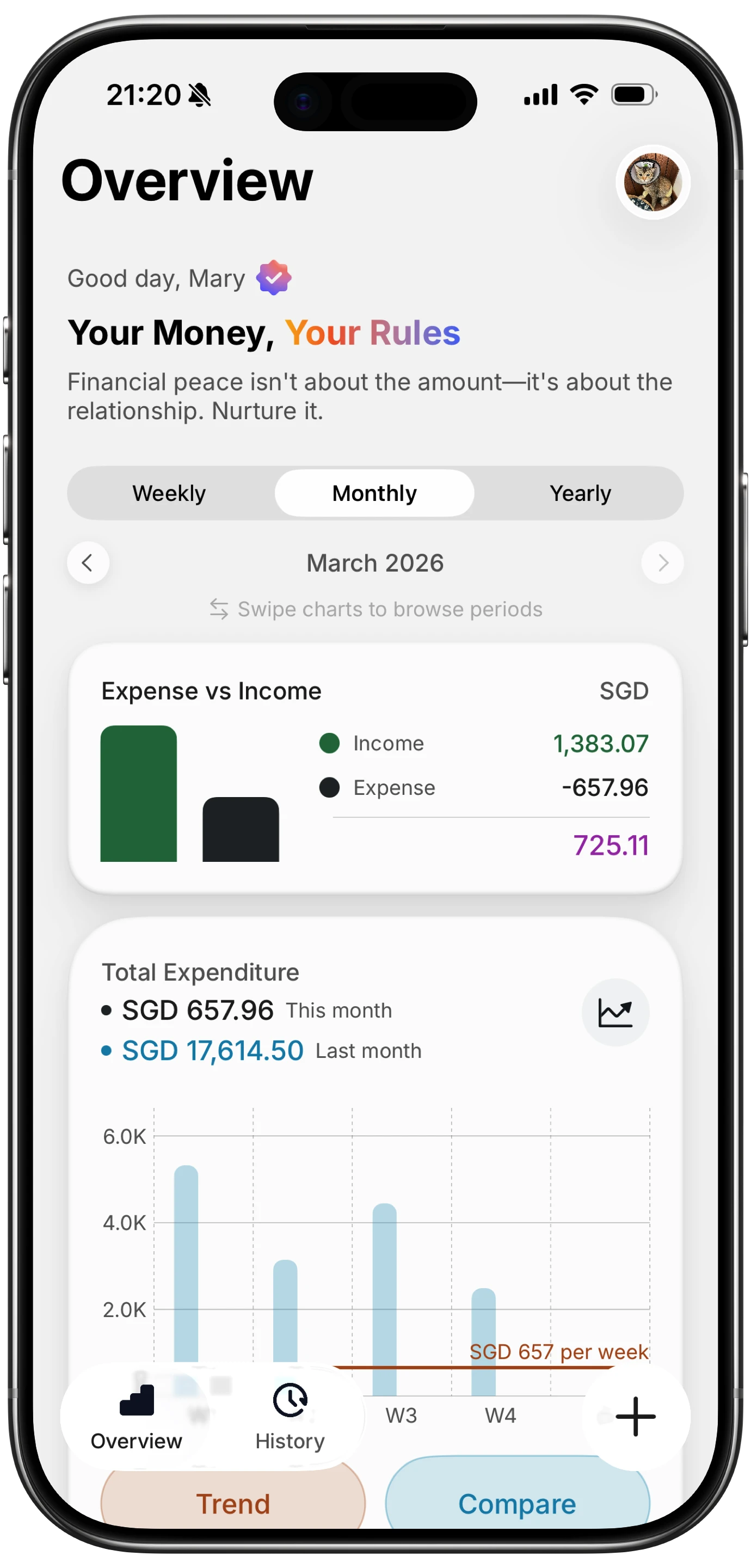
Finny app's Overview feature
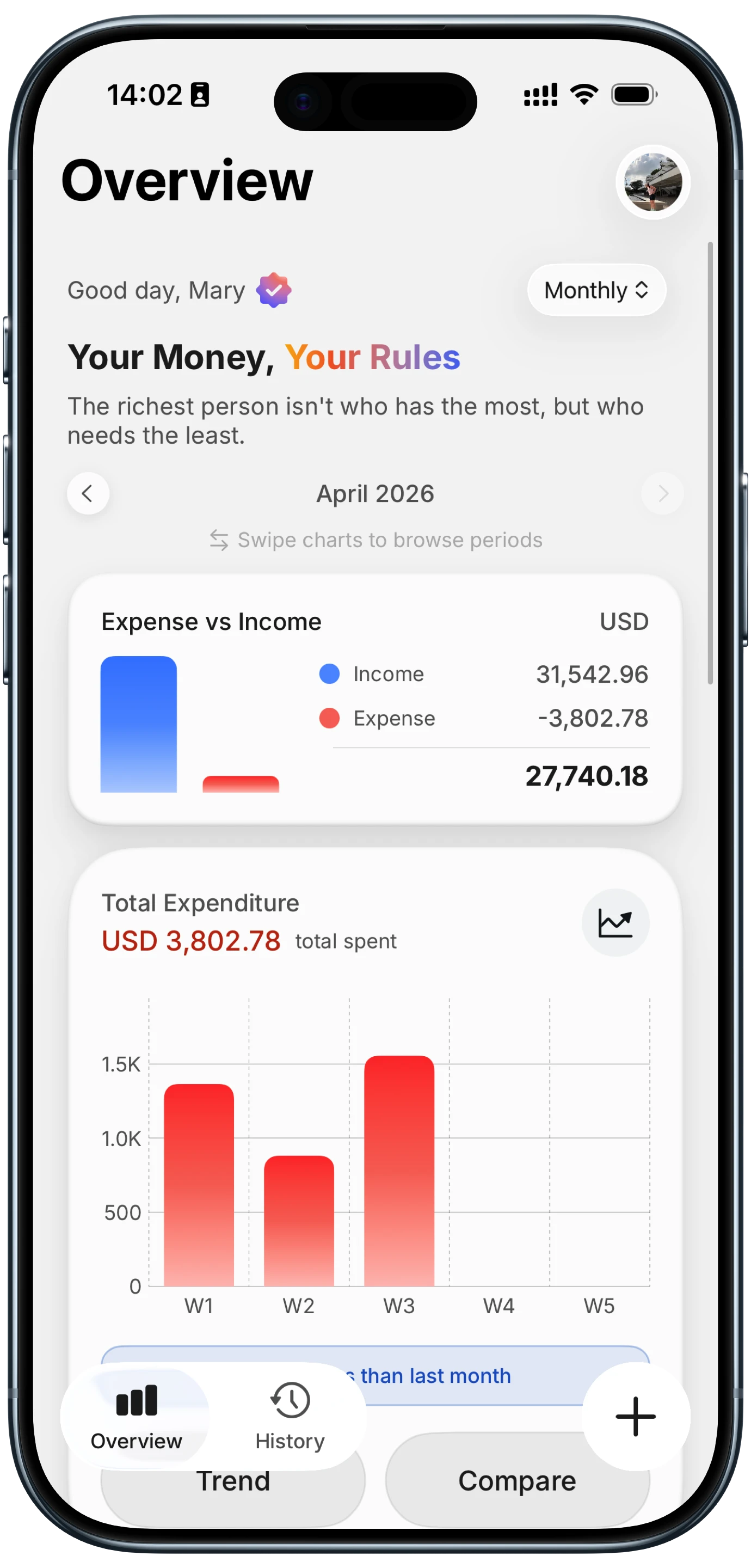
Logging daily expenses in Finny makes the review process straightforward. You can enter transactions through text, voice, or receipt scanning, whichever fits the moment. Over time, your spending history reveals patterns that are invisible in the moment but obvious in aggregate.
Categories and visual analytics show exactly where small expenses cluster. You might discover your actual latte factor is not coffee at all. It might be delivery app fees, impulse Amazon purchases, or subscription services running in the background. The data tells you what guessing cannot.
How to Act on What You Find
Once you have identified your personal latte factor, the goal is not to eliminate all small spending. It is to make informed choices.
Keep what matters. If your daily coffee is a genuine ritual that starts your day well, keep it. Knowing it costs $1,300 per year does not mean you have to stop. It means you are choosing to spend that amount with full awareness.
Cut what does not matter. The delivery fees you pay out of laziness, the subscription you forgot about, the snack run that happens out of boredom rather than hunger: these are candidates for reduction. Not because they are morally wrong, but because they are not adding value to your life.
Redirect with intention. The money you free up should go somewhere specific. Transfer it to savings, add it to an investment account, or put it toward debt. If saved money just floats back into general spending, the exercise produces awareness without results.
Common Questions About the Latte Factor
What is the latte factor in simple terms?
The latte factor is a personal finance concept by David Bach that highlights how small daily expenses, like a daily coffee, add up to large sums over time. It encourages people to notice and reconsider habitual small spending.
Is the latte factor actually true?
The math is accurate: small daily amounts do compound significantly over decades. The criticism is that the concept can oversimplify financial challenges by focusing on minor expenses while ignoring larger structural costs like housing and healthcare.
How do I calculate my own latte factor?
Track your daily spending for at least 30 days. Identify small, recurring purchases you make without much thought. Add them up monthly and annually to see their true cumulative cost.
Should I stop buying coffee to save money?
Not necessarily. The latte factor is about awareness, not deprivation. If you enjoy your daily coffee and it fits your budget, keep it. The value is in knowing the cost and choosing consciously rather than spending on autopilot.
What are common latte factor expenses besides coffee?
Convenience store snacks, food delivery fees, unused subscriptions, impulse online purchases, bottled water, vending machine visits, and premium app upgrades are all common examples.
Ready to find your personal latte factor?
Download Finny to track daily spending with minimal effort. Log expenses through text, voice, or receipt scanning, then review your patterns to see exactly where small purchases add up. No bank connections required, just honest data about your real spending habits.