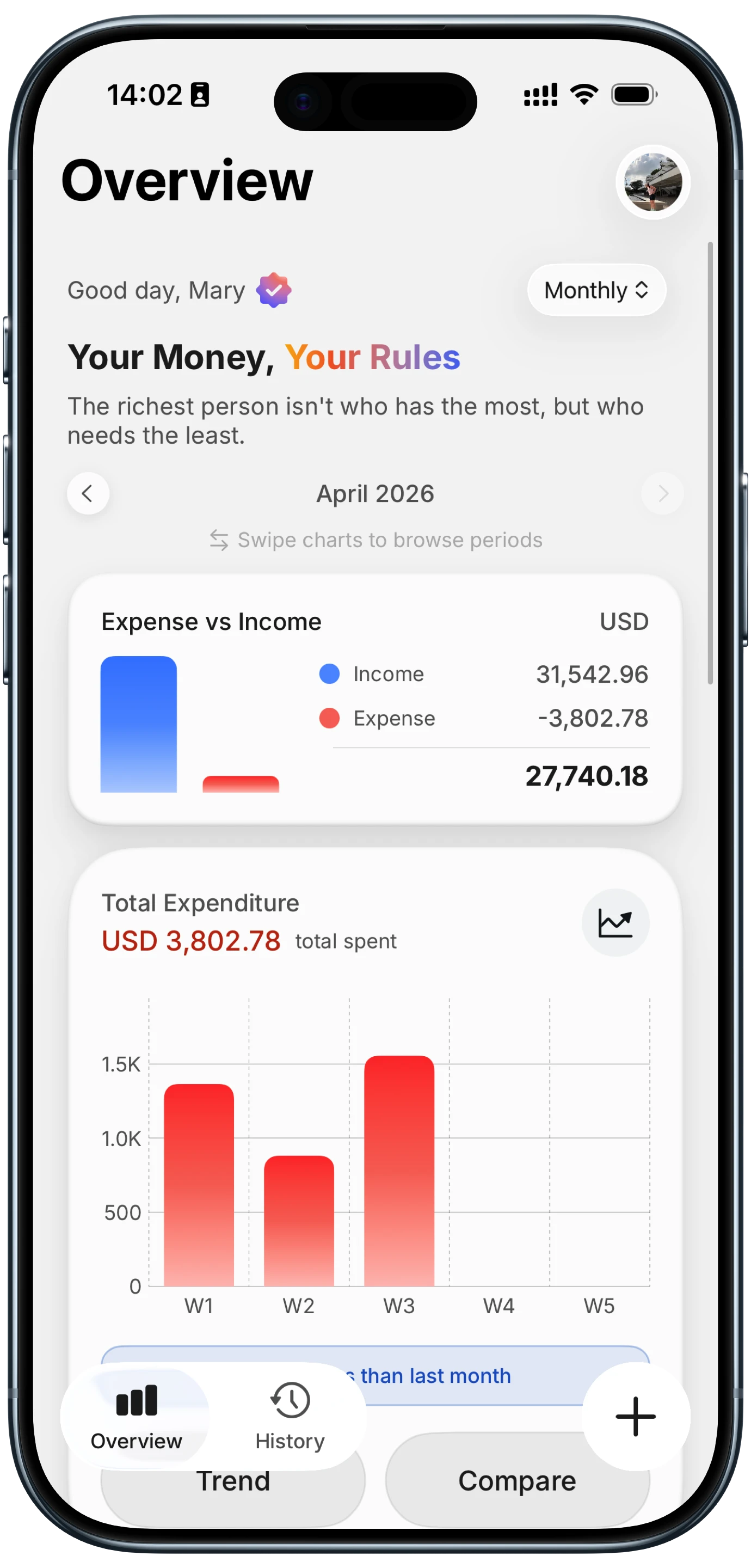
Copilot Money vs Rocket Money 2026: Full Comparison
Two of the most talked-about money apps in 2026 solve completely different problems, which makes choosing between them confusing. Copilot Money vs Rocket Money is not really a fight between two budgeting apps. It is a choice between a polished personal-finance tracker built for people who love their data, and a money-saving tool built for people who want to stop paying for subscriptions they forgot about.
Pick the wrong one and you will either pay a premium for tracking features you ignore, or hand a percentage of your savings to an app that barely tracks at all. This guide compares the two across pricing, features, hidden costs, and privacy, so you can match the app to the goal you actually have, not the one the marketing assumes you have.
Copilot Money vs Rocket Money at a Glance
Before the details, here is the quick version. The two apps overlap less than their App Store screenshots suggest, and the table below shows where they actually diverge.
| Feature | Copilot Money | Rocket Money |
|---|---|---|
| Price | $13/mo or $95/yr (~$7.92/mo) | Free, or Premium $7–$14/mo |
| Free tier | No (30-day trial, card required) | Yes |
| Platforms | iPhone, iPad, Mac, web (Apple-first) | iOS, Android, web |
| Bank link | Required | Required |
| Main purpose | Deep tracking + investments | Cancel subscriptions + negotiate bills |
| AI categorization | Yes (strong) | Basic |
| Investment tracking | Yes | Limited |
| Subscription cancellation | No | Yes (core feature) |
| Bill negotiation | No | Yes (takes 35–60% of savings) |
| Best for | Data lovers who want a clean tracker | People cutting recurring costs |
The headline: Copilot is a premium tracker, Rocket Money is a money-saving utility. One helps you see your finances clearly; the other helps you trim them. Keep that framing in mind as the differences add up.
What Each App Is Actually For
The single biggest mistake people make in this comparison is assuming both apps do the same job. They don't, and understanding the split makes the choice almost obvious.
Copilot Money: a clean tracker for data lovers
Copilot Money is a premium personal-finance app for the Apple ecosystem. It connects to your accounts, pulls in transactions, and automatically categorizes them with machine learning that learns your habits over time. Where it stands out is polish: clean charts, smooth animations, and an interface that makes reviewing your month genuinely pleasant.
Beyond spending, Copilot tracks investments and net worth, so brokerage balances, account performance, and cash flow all live in one place. It is closer to a full financial dashboard than a budgeting coach. There are no envelopes or zero-based rules forced on you. The pitch is simple: see everything clearly, and let the AI handle the busywork of sorting transactions.
For a wider look at similar trackers, see apps like Copilot Money.
Rocket Money: a tool for cutting recurring costs
Rocket Money approaches money from the opposite direction. Instead of helping you admire your data, it hunts for money you are wasting. Its headline features scan your linked accounts for recurring charges, surface forgotten subscriptions, and let you cancel many of them with a tap inside the app.
It also offers bill negotiation, where Rocket's team contacts providers (internet, phone, cable) to lower your rate on your behalf. Add basic budgeting, spending alerts, and a net worth view, and Rocket Money becomes a financial cleanup tool more than a tracking tool. Its categorization and charts work fine, but they are plain next to Copilot's.
If you want other options in this category, see apps like Rocket Money.
Pricing and Hidden Costs: Copilot Money vs Rocket Money
On paper, comparing prices looks easy. In practice, both apps carry costs that are not obvious from the App Store listing.
Copilot Money pricing and the card-required trial
Copilot Money costs $13 per month or $95 per year, which works out to roughly $7.92 a month if you pay annually. There is no free tier. New users get a 30-day free trial, but it requires a credit card up front and auto-renews unless you cancel before the trial ends. That is standard practice, but worth noting if you tend to forget trial deadlines, ironically the exact problem Rocket Money is built to solve.
What you will not find with Copilot are usage-based fees or commissions. The price is the price. For $95 a year you get the full app: AI categorization, investment tracking, and every feature with no upsell.
Rocket Money pricing and the bill-negotiation cut
Rocket Money is free to download and use for the basics: connecting accounts, viewing subscriptions, and simple budgeting. Premium uses a "pay-what's-fair" slider that lets you choose between $7 and $14 per month, billed annually. Some features, like canceling certain subscriptions and unlimited budgets, sit behind Premium.
The cost that surprises people is bill negotiation. When Rocket successfully lowers a bill, it charges 35% to 60% of your first-year savings as a one-time fee, and you pick the percentage when you submit the request. If Rocket saves you $300 over a year and you chose 40%, you owe $120 up front, though payment plans are available. The catch: that fee is calculated on 12 months of projected savings, even though many negotiated rates are promotional and revert after 6 to 24 months. You may pay for a full year of savings you do not ultimately keep.
None of this makes Rocket a scam. Free Rocket Money is genuinely useful. But Premium plus a successful bill negotiation can cost more in a year than Copilot's flat $95.
Privacy and Bank Connection: What You're Sharing
Here both apps land in the same place, and it matters more than most people think.
Both Copilot Money and Rocket Money require you to link your bank, card, and investment accounts to work at all. They connect through aggregators like Plaid, which means granting read access to your transaction history and balances, and in some flows your login credentials. Both companies say they do not sell your personal financial data and use bank-level encryption. For a closer look at Rocket's practices specifically, see is Rocket Money safe in 2026.
The trade-off is unavoidable: automated tracking and subscription detection only work if an app can see your accounts. For most people that is an acceptable exchange. For others, especially anyone uneasy about a third party holding bank credentials, it is a dealbreaker, and neither Copilot nor Rocket offers a no-link option.
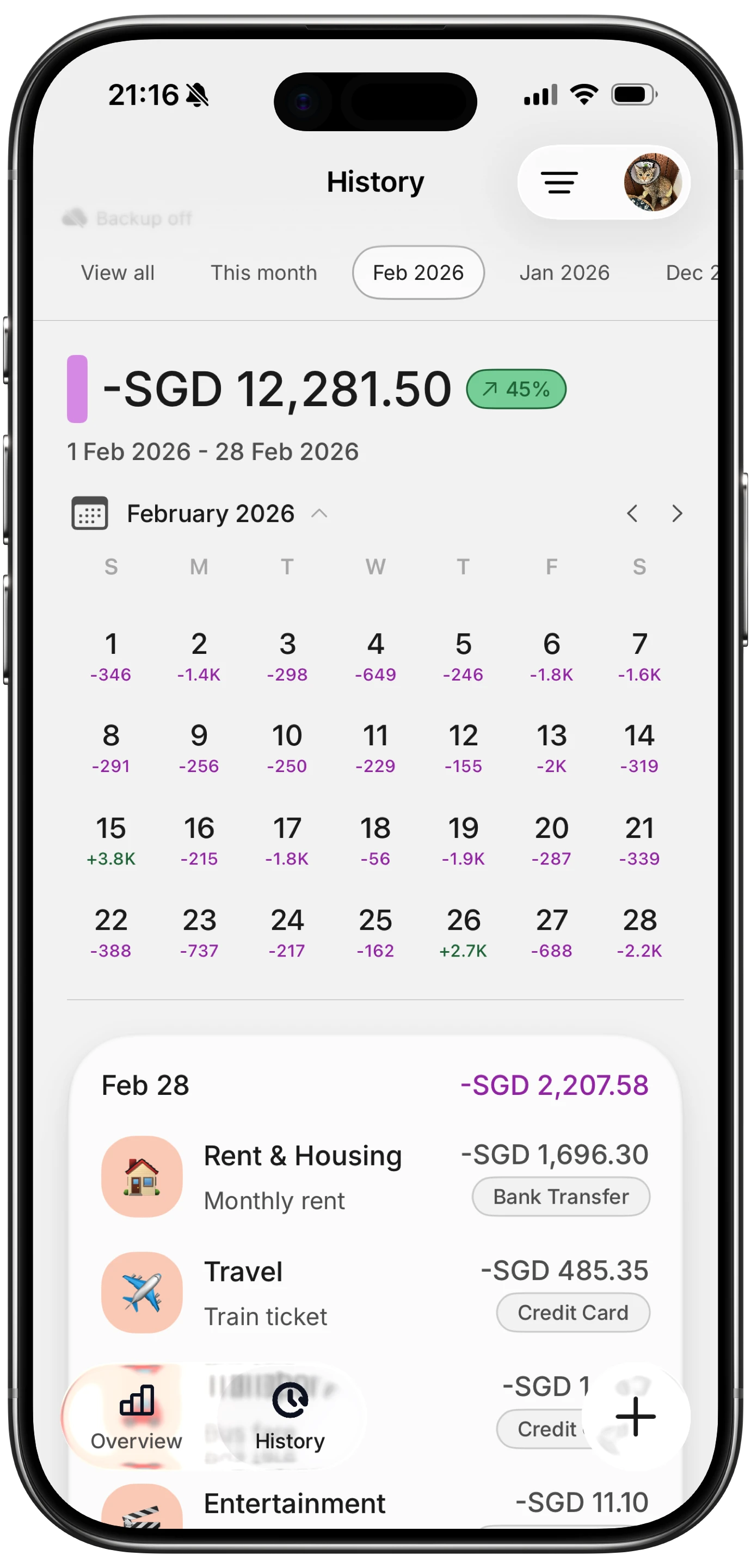
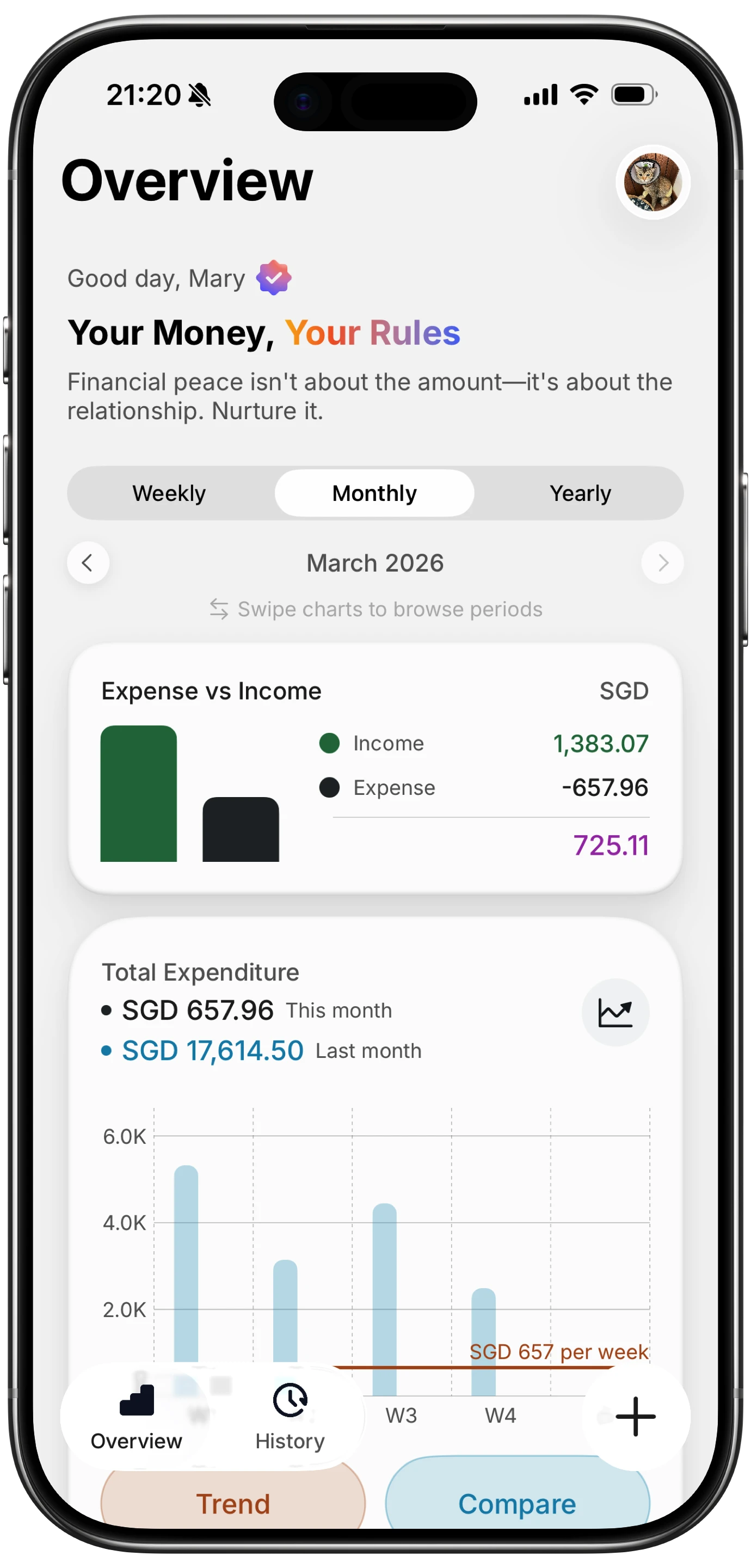
This is the gap a privacy-first tracker fills. Finny logs expenses without linking a bank at all, using Apple Pay auto-logging through iOS Shortcuts, AI text and voice input, and receipt scanning. You give up automatic subscription hunting, but you never hand over a bank login.
Which Should You Pick: Copilot Money or Rocket Money?
There is no universal winner, because these apps are not really competitors. The right choice depends entirely on what you are trying to do.
Choose Copilot Money if:
- You live in the Apple ecosystem (iPhone, iPad, Mac) and want one of the best-looking trackers available.
- You care about investments and net worth, not just day-to-day spending.
- You want AI to categorize transactions accurately with minimal cleanup.
- A flat ~$95 a year for a premium, ad-free experience feels fair.
Choose Rocket Money if:
- Your main goal is finding and canceling subscriptions you forgot about.
- You want help lowering bills and don't mind sharing the savings.
- You need a cross-platform app that works on Android as well as iPhone.
- You want a capable free tier before paying anything.
Consider Finny if:
- You want fast, private expense tracking without linking a bank.
- You are an iPhone user who finds $10–15 a month apps like Copilot overkill.
- You travel or spend across multiple currencies and want totals in your home currency.
Finny Pro costs a low yearly price, well below Copilot's $95 and Rocket Money's Premium, and it never asks for your bank login. It will not negotiate your cable bill or build an investment dashboard, but if the job is simply "track what I spend, quickly and privately," it does exactly that for a fraction of the price.
The Bottom Line
The Copilot Money vs Rocket Money decision comes down to one question: are you trying to understand your money or trim it? Copilot is the premium pick for people who want a clean, AI-assisted tracker with investments built in, and who happily pay around $95 a year for the polish. Rocket Money is the practical pick for people bleeding cash through forgotten subscriptions and overpriced bills, with a free tier that delivers real value before you spend a cent.
Just go in clear-eyed: Rocket's negotiation fee can eat a big chunk of your savings, and Copilot's trial needs a card and stays Apple-only. If neither the price nor the bank link sits right, a no-link tracker covers the basics without either.
Ready to track your spending without handing over your bank login? Download Finny and log your first expense in seconds, no account linking required.
Frequently Asked Questions
Is Copilot Money better than Rocket Money?
Neither is universally better, because they do different jobs. Copilot Money is the stronger tracker, with cleaner design, sharper AI categorization, and built-in investment tracking, ideal if you want to understand your finances in detail. Rocket Money is better at saving money, finding and canceling subscriptions and negotiating bills. If your goal is insight, Copilot wins. If your goal is cutting recurring costs, Rocket wins. Plenty of people would genuinely benefit from running one of each.
Does Rocket Money really save you money?
It can, but results vary. Rocket Money's biggest win is surfacing forgotten subscriptions you can cancel, which often delivers the largest savings and costs nothing on the free tier. Bill negotiation also works for some users, but Rocket keeps 35% to 60% of your first-year savings, charged up front on projected 12-month numbers. If a negotiated rate expires early, your real savings may be smaller than the fee implies, so read the terms before submitting a negotiation request.
Is Copilot Money worth $13 a month?
For the right user, yes. If you are an Apple user who values a polished, AI-assisted tracker with investment and net worth tracking built in, $13 a month (about $7.92 paid annually) buys a genuinely premium experience with no ads or upsells. If you only need basic expense tracking, or you mainly want subscription-cutting tools, it is overkill. Cheaper apps, including free ones, cover the everyday basics for a fraction of the price.
Which is cheaper, Copilot or Rocket Money?
Rocket Money is cheaper for most people. It has a free tier covering account connections, subscription tracking, and basic budgeting, while Copilot has no free option and costs $95 a year. Even Rocket's Premium starts at $7 a month. The exception is bill negotiation: in a year where Rocket negotiates a large bill, its percentage fee can push your total above Copilot's flat annual price.