Good Debt vs Bad Debt: How to Tell the Difference
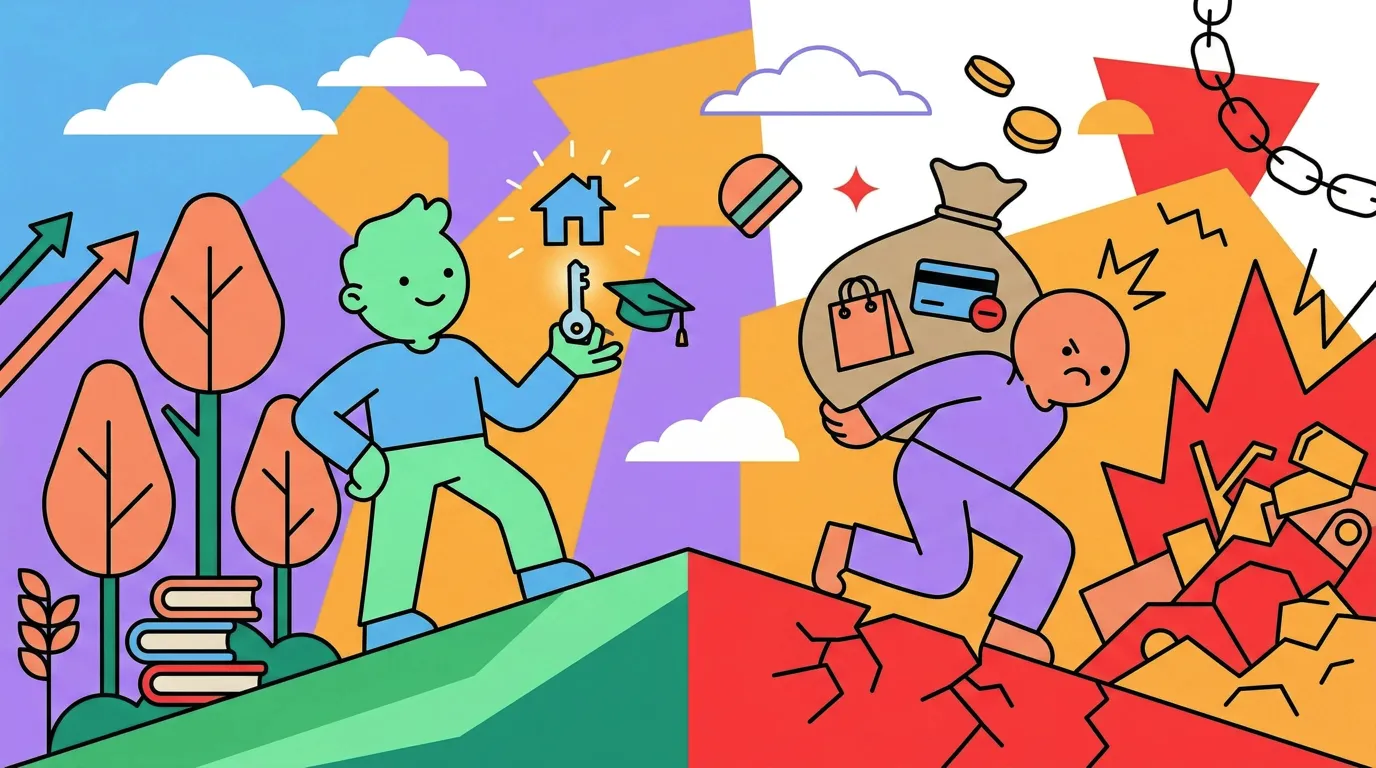
Not all debt is created equal. A mortgage that builds equity in a home and a credit card balance from impulse shopping are both debt, but they affect your financial future very differently. Understanding the distinction helps you make smarter borrowing decisions and prioritize which debts to pay off first.
Good debt is borrowing that increases your net worth or income potential over time. Bad debt is borrowing that loses value or funds consumption you cannot afford. The line between them is not always clean, but the framework is useful for making better financial decisions. For strategies on paying off debt, see our guide on debt snowball vs avalanche.
What Makes Debt "Good"
Good debt has three characteristics:
- It finances an appreciating asset or investment. The thing you borrow for gains value over time.
- It has a reasonable interest rate. The cost of borrowing is low enough that the investment return exceeds it.
- It increases your earning capacity. The debt enables you to earn more than you could without it.
Examples of Good Debt
Mortgage. Real estate generally appreciates over time, and mortgage interest rates are among the lowest available. You build equity with each payment, and housing costs would exist regardless (as rent).
Student loans (with caveats). Education that leads to higher earning potential can justify borrowing. The key is that the increased income must exceed the cost of the loans. A $30,000 degree that doubles your salary is good debt. A $200,000 degree for a field that pays $35,000 is not.
Business loans. Borrowing to start or grow a business that generates profit is an investment in income-producing capacity.
Real estate investment. Borrowing to purchase rental property that generates positive cash flow uses leverage productively.
What Makes Debt "Bad"
Bad debt has opposite characteristics:
- It finances depreciating assets or consumption. The thing you buy loses value immediately.
- It carries high interest rates. The cost of borrowing compounds faster than any possible return.
- It does not increase your earning capacity.
Examples of Bad Debt
Credit card balances. With average APRs around 20-25%, carrying a balance means paying significantly more than the original purchase price. The items bought are usually consumed or depreciated. For more on how interest compounds, see our APR vs APY guide.
Car loans for vehicles beyond your needs. A reliable $15,000 car serves the same transportation function as a $50,000 car. The extra $35,000 in borrowing finances depreciation, not value.
Payday loans. Interest rates can exceed 400% APR. These are almost always destructive to financial health.
Consumer financing (buy now, pay later). If you need to finance a $500 purchase over 12 months, you likely cannot afford it. The deferred interest penalties on many BNPL plans make them expensive if not paid on time.
The Gray Area
Some debts do not fit neatly into either category:
| Debt Type | Could Be Good If... | Could Be Bad If... |
|---|---|---|
| Student loans | Degree leads to significantly higher income | Degree costs far exceed salary increase |
| Car loan | Needed for work, reasonable vehicle | Luxury vehicle beyond your means |
| Home renovation loan | Increases home value more than loan cost | Cosmetic upgrades with no ROI |
| Consolidation loan | Reduces total interest and simplifies payments | Frees up credit cards you then max out again |
The evaluation depends on your specific situation. A car loan is good debt for someone who needs transportation to earn a living and bad debt for someone financing a luxury vehicle on a modest salary.
How to Evaluate Your Own Debt
Ask these questions about each debt you carry:
- Is the interest rate above or below 7%? (Roughly the long-term stock market return.) Debt above 7% is expensive. Debt below 7% is potentially worth maintaining if you invest the difference.
- Is the asset appreciating or depreciating? If it loses value, you are paying interest to own something worth less each year.
- Could I afford this without borrowing? If yes, paying cash eliminates interest costs. If no, evaluate whether the purchase is essential.
- Does this debt enable higher income? Education, business investment, and tools for work can justify borrowing. Lifestyle purchases do not.
A Framework for Debt Prioritization
When you carry multiple debts, pay them off in this priority (for the aggressive playbook on the top of this list, see how to pay off bad debt fast):
- Payday loans and high-interest consumer debt (20%+ APR): Eliminate immediately
- Credit card balances (15-25% APR): Pay aggressively
- Personal loans (8-15% APR): Steady payoff
- Car loans (5-8% APR): Pay normally, consider extra payments
- Student loans (3-7% APR): Pay minimum, consider investing surplus
- Mortgage (3-7% APR): Pay as scheduled, lowest priority for extra payments
How Expense Tracking Helps Manage Debt
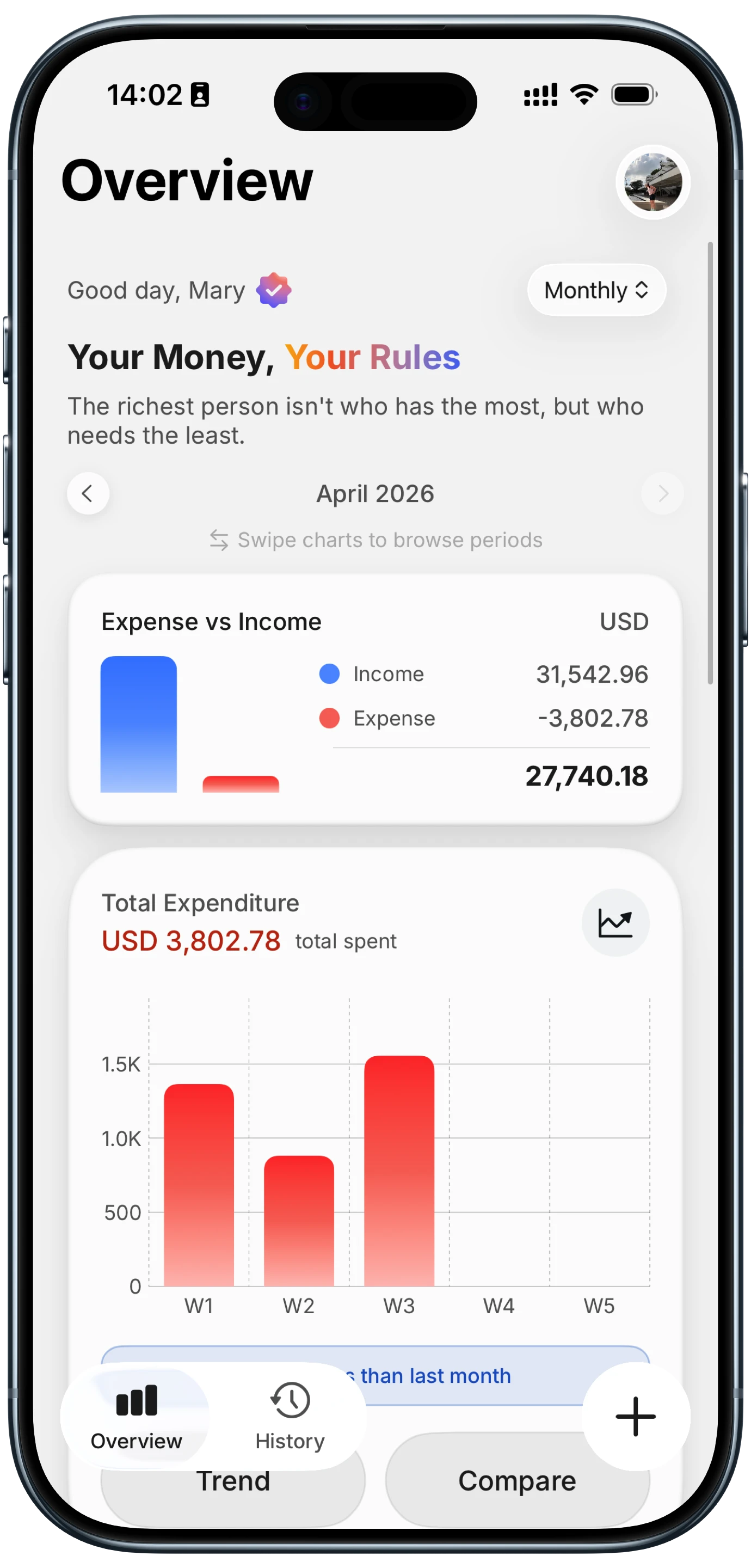
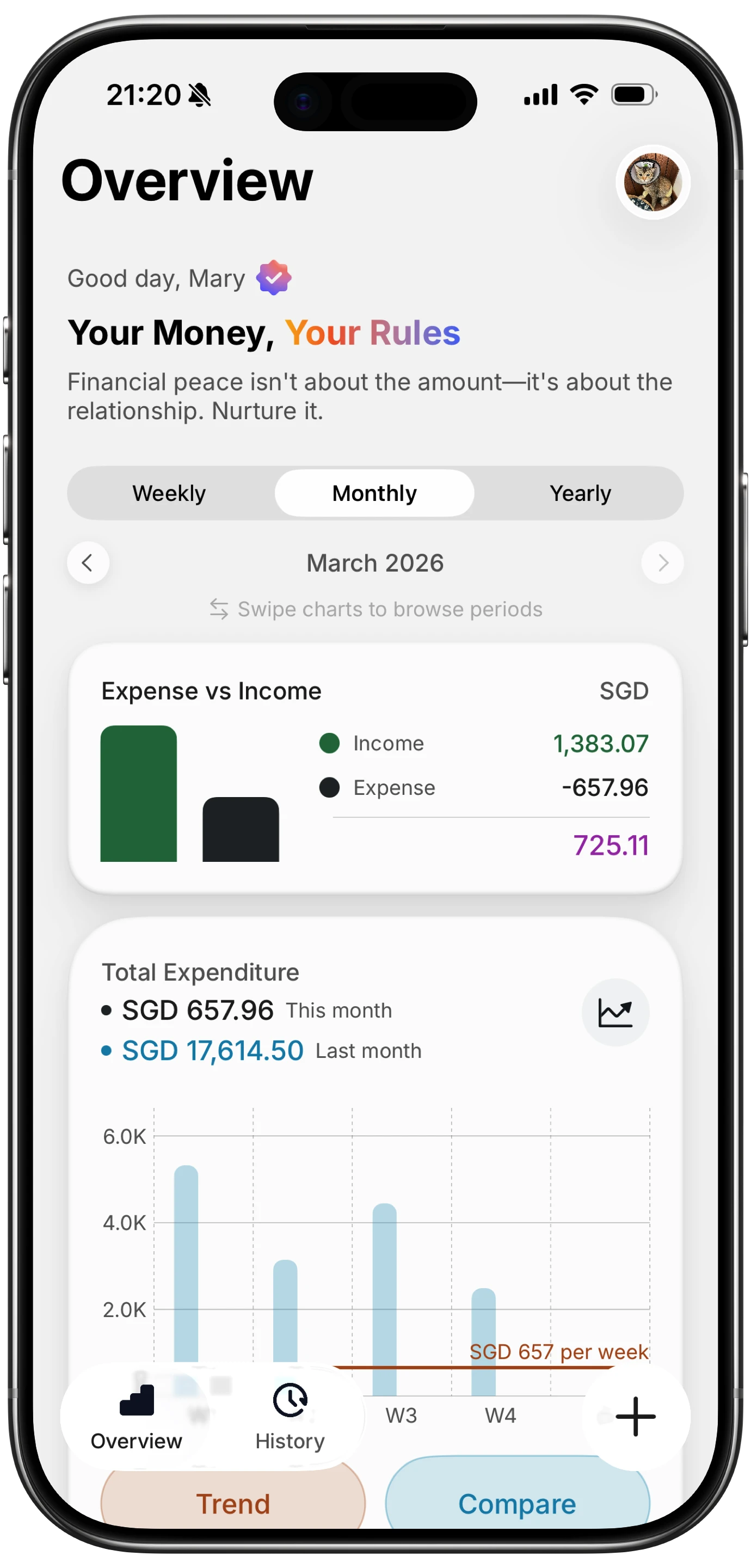
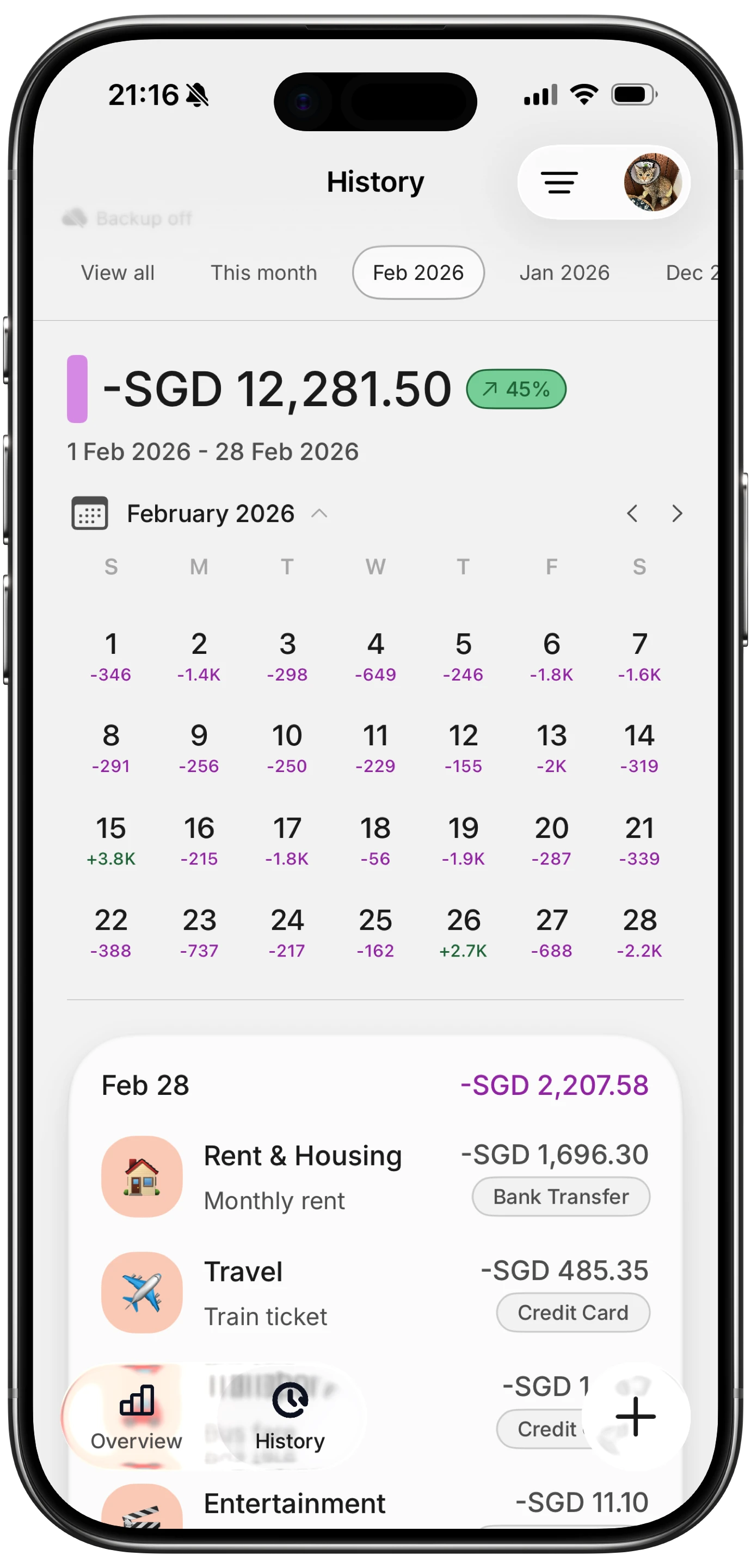
Debt management requires knowing exactly how much money flows in and out each month. Without tracking, you cannot identify how much extra you can put toward debt payoff.
Finny app's Overview feature
Tracking your expenses reveals:
- Your actual surplus. Income minus all spending shows what is available for extra debt payments.
- Spending you can redirect. Cutting $150/month in discretionary spending and directing it to credit card debt pays off $1,800/year plus saved interest.
- Progress over time. Watching debt balances decline while expense data stays stable confirms your plan is working.
Finny app's History calendar feature
For more on building the tracking habit, see our guide to tracking expenses.
The Bottom Line
The good debt vs bad debt framework is not about labeling all borrowing as acceptable or harmful. It is about evaluating whether the cost of borrowing is justified by the value it creates. Mortgage and education debt can be strategic tools. Credit card debt and consumer financing are almost always costly.
The practical step is assessing your current debts honestly, prioritizing the most expensive ones for payoff, and tracking your expenses to find the money to do it. Knowing your debt-to-income ratio is also useful for understanding how lenders view your overall debt load.
Common Questions About Good and Bad Debt
Is all credit card debt bad?
As a carried balance, yes. Credit card interest rates are too high for the debt to produce positive returns. Using credit cards and paying in full each month is not debt, it is a payment method, and can be beneficial for rewards and credit building.
Are student loans always good debt?
No. Student loans are only good debt when the education significantly increases your earning potential relative to the cost. Borrowing $100,000 for a degree that leads to a $40,000 salary may not justify the investment.
Should I pay off my mortgage early?
It depends on your interest rate and alternative uses for the money. If your mortgage rate is 3-4% and you could invest at 7-10%, the math favors investing. If your rate is 7%+, paying it off is a guaranteed return.
Is it better to save or pay off debt?
Pay off high-interest debt (above 7%) before investing beyond employer 401k match. The guaranteed return of eliminating 20% APR credit card debt exceeds any realistic investment return.
Can debt ever be a good financial strategy?
Yes. Low-interest debt that finances appreciating assets or income growth can accelerate wealth building. The key is that the return on what you borrow for must exceed the cost of borrowing.
Want to find money to pay off debt faster?
Download Finny to track every expense with AI-assisted input. See exactly where your money goes, redirect spending toward debt payoff, and build a clear path to becoming debt-free.