How Do Spending Limits Help With Budgeting?
You have a budget. You wrote it down, maybe even put it in a spreadsheet. But by the third week of the month, you are over in two categories and have no idea how it happened. The budget existed, yet it did not actually control anything.
The missing piece is often spending limits. A budget without limits is a wish list. It describes what you hope to spend, but it does not create the boundaries that make those numbers stick. How do spending limits help with budgeting? They turn a passive plan into an active system: one that tells you when to stop before you go too far in any single category.
This guide explains exactly how spending limits strengthen a budget, the psychology behind why they work, and how to set limits that hold up in real life. If you are new to the concept itself, our guide on what a spending limit is covers the fundamentals.
What Are Budget Limits in Personal Finance
A budget limit is a maximum dollar amount you assign to a specific spending category for a defined period, usually a month. It differs from a budget allocation in one important way: an allocation is a target, while a limit is a ceiling.
For example, allocating $400 to groceries means you plan to spend around $400. Setting a $400 grocery limit means you will not exceed $400, period. That distinction matters because allocations invite flexibility (sometimes too much), while limits create a hard boundary that forces decision-making when you approach the cap.
Budget limits apply to both fixed and variable categories, though they have the most impact on variable spending: dining out, entertainment, shopping, personal care, and similar categories where the amount changes month to month. Fixed expenses like rent or insurance already have natural limits built in.
5 Ways Spending Limits Strengthen Your Budget
1. They Prevent Category Creep
Without a defined ceiling, discretionary spending tends to grow gradually. You spend $200 on dining out one month, $240 the next, then $280. Each increase feels small in isolation. Over six months, you are spending $80 more per month than you originally intended, and $80 per month is $960 per year.
Spending limits stop this drift. When you set a $200 dining limit, the $240 month triggers an immediate signal: you went over. That awareness is the first step toward correction. Without the limit, you might never notice the creep until your savings account stops growing.
2. They Simplify Daily Spending Decisions
Every purchase requires a decision, and decision fatigue is real. By the end of a long day, your ability to evaluate whether a purchase fits your overall financial picture drops significantly. Research in behavioral finance confirms that willpower depletes throughout the day, which is why most impulse spending happens in the evening.
Spending limits reduce the cognitive load of each decision. Instead of asking "Can I afford this $45 dinner considering my rent, car payment, savings goals, and everything else I have bought this month?" you ask a simpler question: "Is there $45 left in my dining budget?" One question. One number to check. That simplicity makes it far easier to stick with your budget consistently.
3. They Force Healthy Trade-offs
When you hit your entertainment limit halfway through the month, you face a choice: find free activities for the remaining two weeks, or pull money from another category. Both options are healthy financial behaviors.
Choosing free alternatives builds resourcefulness. Pulling from another category forces you to consciously decide what matters more. Either way, you are making deliberate choices about your money instead of spending on autopilot. This is the core skill that separates people who manage money well from those who struggle, and spending limits are what create the conditions for practicing it.
4. They Reduce Financial Anxiety
It sounds counterintuitive, but limits create freedom. When you know your clothing budget is $100 and you have spent $30, you can spend $70 on a new jacket without guilt or second-guessing. The limit has already accounted for this spending in your overall budget. You do not need to run mental calculations against your rent, your savings, or your credit card balance.
People who budget without limits often feel anxious about every purchase because they lack a clear framework for knowing when spending is "okay." Limits provide that framework. As long as you are under the limit, you have permission to spend. That psychological clarity reduces the stress that causes many people to abandon budgeting altogether.
5. They Make Overspending Visible Immediately
A budget without limits can hide overspending for weeks. You might not realize you blew past your dining target until you review your numbers at the end of the month, by which point the damage is done and the money is spent.
Spending limits create real-time accountability. When you track spending against a defined cap, you can see exactly where you stand at any point during the month. If you are at 80% of your grocery limit with ten days remaining, you know to be cautious. That early warning system is what makes limits far more effective than loose budget targets. For strategies on addressing overspending when it happens, see our guide on how to stop overspending.
The Psychology Behind Why Spending Limits Work
Understanding why limits are effective helps you use them better. Three psychological principles explain their power.
Mental Accounting
Behavioral economists have studied how people mentally separate money into different "accounts" even when it all sits in the same bank account. This is called mental accounting, and spending limits harness it deliberately. When you assign $150 to entertainment, your brain treats that as a separate pool of money. Spending from that pool feels different from spending your grocery money or your savings.
This mental separation makes it easier to control spending because each category feels finite. Without limits, all your available money blends together into one large pool, which makes it harder to notice when any single category is consuming too much.
Loss Aversion
People feel the pain of losing something more strongly than the pleasure of gaining something. When you set a spending limit and approach it, the prospect of "losing" your remaining budget triggers loss aversion. You become more careful with each dollar as the balance shrinks. This natural psychological response makes you progressively more frugal as the month goes on, which is exactly the behavior a budget needs.
The Goal Gradient Effect
People increase effort as they get closer to a goal. In budgeting, the goal is staying under your limit. As you approach the end of the month with budget remaining, you feel motivated to finish under the cap. That motivation is strongest in the final days, precisely when most budgets fall apart. Limits create a finish line that activates this effect.
How to Set Spending Limits That Actually Work
Knowing that limits help is only useful if you set them correctly. Limits that are too tight lead to frustration and abandonment. Limits that are too loose provide no real constraint. Here is how to find the right balance.
Start With Your Actual Spending Data
You cannot set realistic limits without knowing what you currently spend. Track every expense for at least 30 days to establish a baseline. Look at the real numbers, not what you think you spend. Most people underestimate discretionary categories by 30 to 50 percent.
If you have been tracking expenses already, pull your last three months and calculate the average for each category. Three months smooths out anomalies like a birthday dinner or a holiday shopping spike.
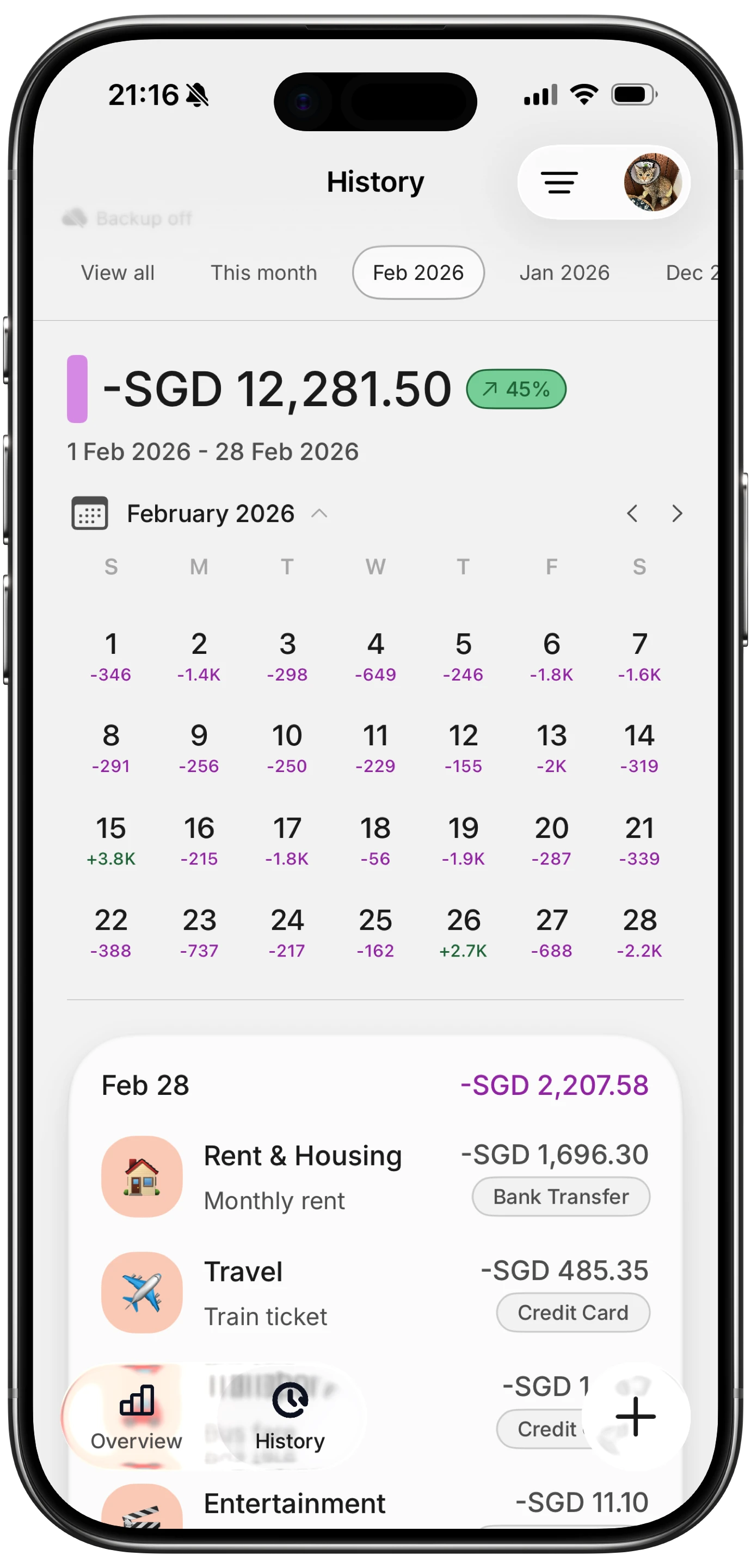
Finny app's History calendar feature
Use the Reduction Method
Once you have baseline data, do not try to cut every category at once. Pick two or three categories where you see the most room for improvement and set limits 10 to 15 percent below your current average. Leave other categories at their current levels.
For example, if you average $350 on dining out and $180 on entertainment:
| Category | Current Average | New Limit | Monthly Savings |
|---|---|---|---|
| Dining out | $350 | $300 | $50 |
| Entertainment | $180 | $155 | $25 |
| Groceries | $450 | $450 | $0 (hold steady) |
| Transportation | $200 | $200 | $0 (hold steady) |
This approach saves $75 per month ($900 per year) without overhauling your entire lifestyle. Once those limits feel natural after two to three months, you can tighten further or start reducing other categories.
Align Limits With a Budgeting Method
Spending limits work within any budgeting framework. With zero-based budgeting, limits ensure that every dollar assigned to a category stays within its allocation. With envelope budgeting, the limit is the amount of cash (physical or digital) in each envelope. With the 50/30/20 method, limits ensure your "wants" category stays within 30 percent.
The method you choose determines how your limits interact with each other. For a full comparison of methods and how to pick one, see our guide on how to budget money.
Build In a Buffer Category
Create a "miscellaneous" or "overflow" category with a small monthly limit, around 3 to 5 percent of your total variable budget. This buffer absorbs unexpected small expenses without forcing you to break a category limit. A forgotten subscription renewal, a last-minute gift, or an unexpected parking fee can come from this buffer instead of blowing up your carefully set limits.
Tracking Spending Against Your Limits
Setting limits is the first step. Tracking spending against those limits throughout the month is what makes them effective. There are several approaches.
Manual Tracking
Write down each purchase and subtract it from the relevant category limit. Simple, but requires discipline and is easy to fall behind on. Best for people who prefer pen and paper and have relatively few transactions.
Spreadsheet Tracking
Build a spreadsheet with your categories, limits, and a running total. Update it daily or every few days. More structured than a notebook, but still requires manual data entry.
App-Based Tracking
The lowest-friction option. An expense tracker lets you log purchases quickly and see your remaining budget per category in real time. Finny lets you set spending limits for each category and track progress throughout the month, with multiple input methods including AI text entry and receipt scanning that reduce the time it takes to log each expense.
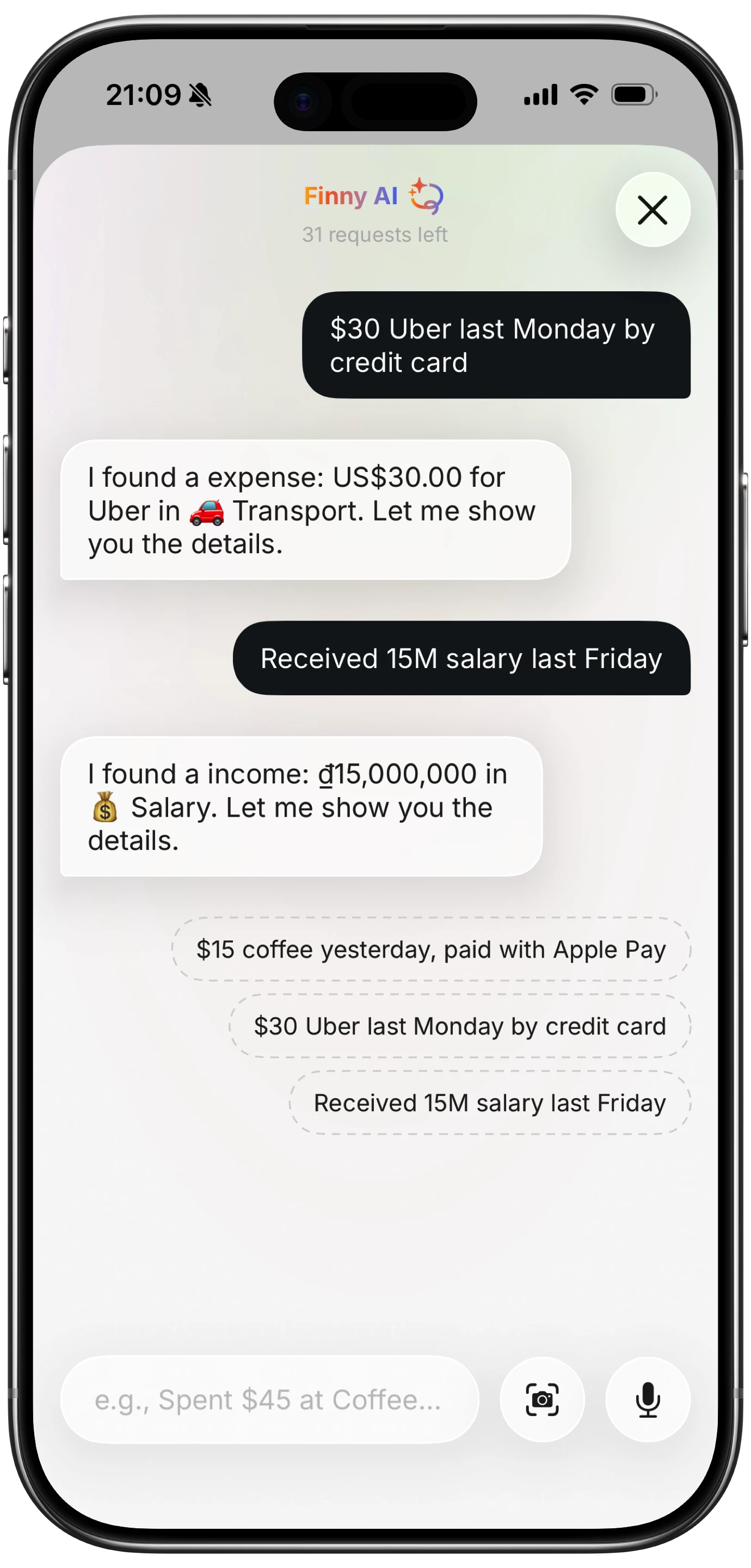
Finny app's AI chat feature
The key regardless of method is frequency. Checking your limits once a week is the minimum. Daily check-ins take less than a minute and keep limits front of mind, which reinforces the psychological effects described earlier.
Common Mistakes When Using Spending Limits
Setting Limits Based on Ideals Instead of Reality
If you currently spend $500 on groceries, setting a $300 limit because a blog post said that is "normal" will fail. Always base your initial limits on your actual spending, then reduce gradually.
Too Many Categories
Tracking 20 separate categories with individual limits creates overhead that kills consistency. Start with five to eight categories. You can always add granularity later once tracking becomes a habit.
No Flexibility Between Categories
Rigid limits that never allow movement between categories feel punishing. Allow yourself to transfer between categories when needed, as long as the total stays the same. If you underspend on entertainment by $30, it is fine to add that $30 to your dining budget. The point is awareness, not rigidity.
Forgetting to Adjust Over Time
Your spending patterns change. A limit that was realistic six months ago might be too tight or too loose today. Review your limits quarterly and adjust based on what the data shows. Life changes like a new commute, a salary change, or a new household member should trigger an immediate review.
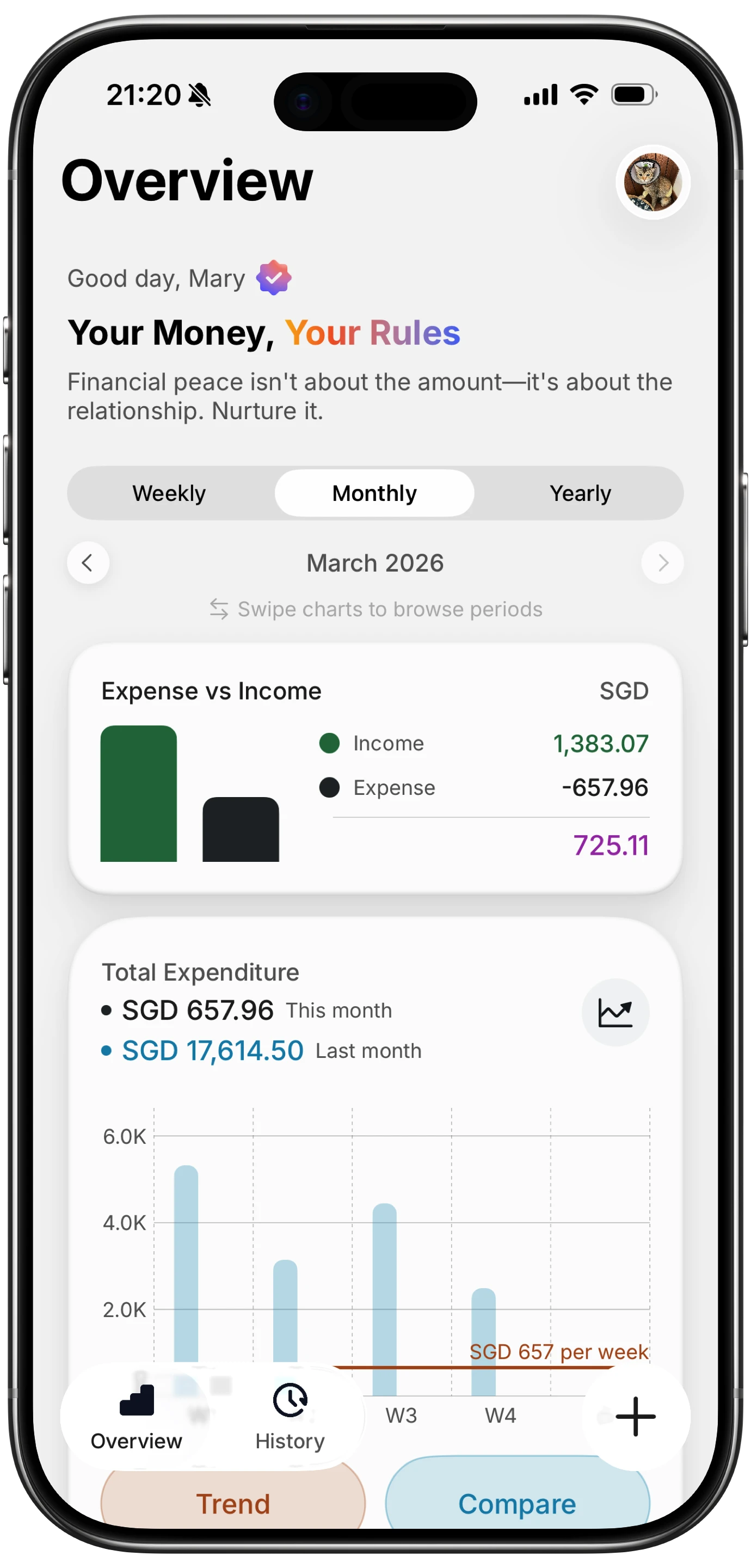
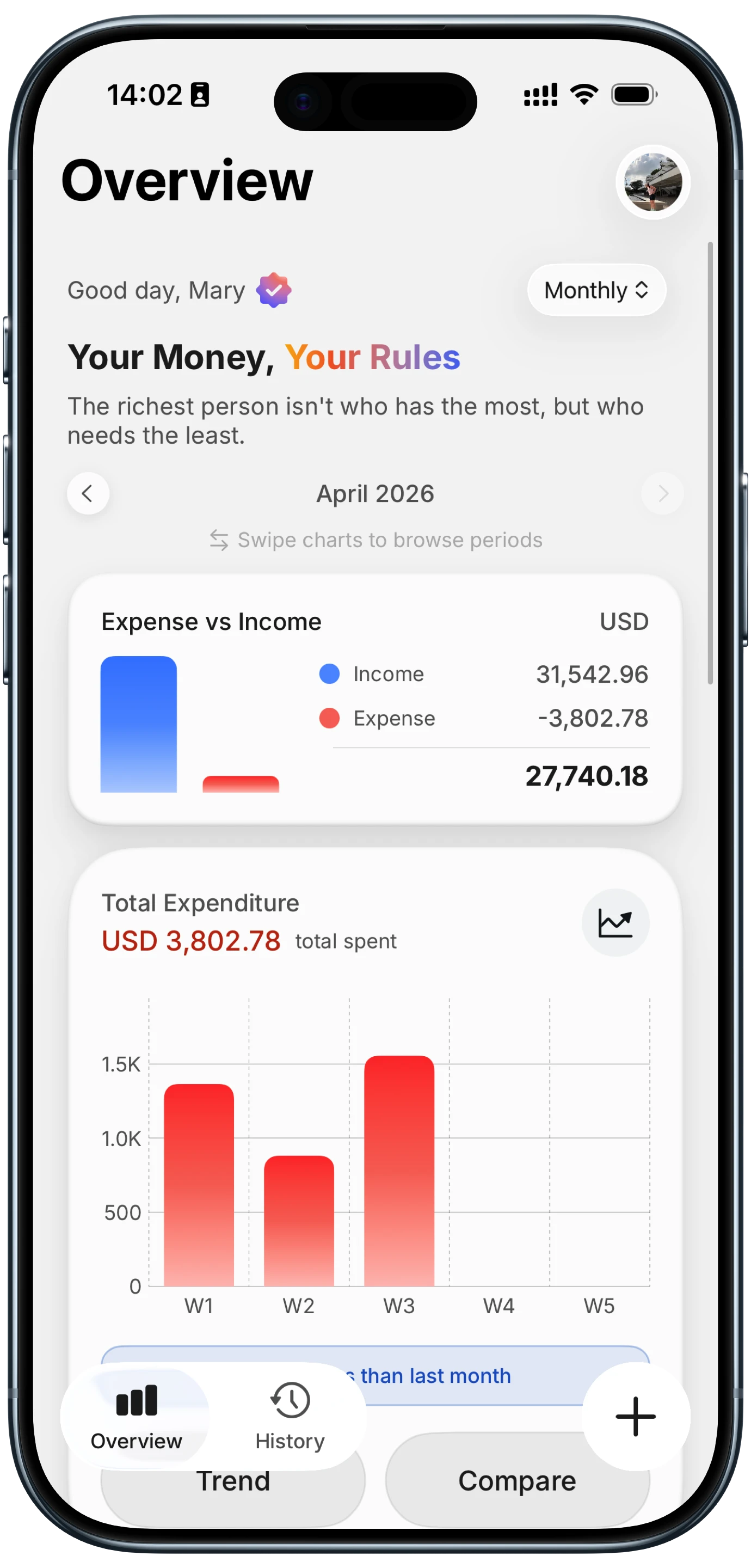
Finny app's Overview feature
Spending Limits vs. No Limits: A Real Comparison
Consider two people with the same $4,500 monthly income and $2,000 in variable spending capacity.
Person A: Budget with no spending limits. They write down targets at the start of the month. By week three, they have lost track of dining out spending and spent $120 more than intended. They compensate by skipping a savings contribution. Over 12 months, they miss their savings goal by $1,200.
Person B: Budget with spending limits. They set the same targets but treat them as hard caps. In week two, they check their dining limit, see they are at 70 percent with half the month left, and cook at home for a few meals. They finish the month $15 under their dining limit. Over 12 months, they hit their savings goal and have a small surplus.
The difference is not income, willpower, or financial literacy. It is whether the budget had teeth. Limits give a budget teeth.
Frequently Asked Questions
How many spending limit categories should beginners start with?
Start with five to eight categories that cover your major variable expenses: groceries, dining out, entertainment, transportation, shopping, and personal care. Fewer categories are easier to track consistently. Once tracking becomes routine after a month or two, you can split broad categories into more specific ones if you want greater control over particular areas.
Can spending limits work if my income varies each month?
Yes, but you need to adjust your approach. Calculate limits based on your lowest typical monthly income so you can always meet them. In higher-income months, allocate the extra to savings or debt repayment rather than raising your spending limits. This prevents your expenses from scaling up with your income, which is a common trap for freelancers and commission earners.
What should I do when I exceed a spending limit?
Do not panic or abandon the budget. First, identify why you went over: was it a genuine unexpected expense or a series of unplanned purchases? If it was unexpected, pull from your buffer category. If it was overspending, reduce that category by the overage amount next month to compensate. The goal is course correction, not perfection. Consistent small adjustments matter more than never going over.
Are spending limits the same as budget allocations?
No, and the distinction matters. A budget allocation is a plan for how much you intend to spend. A spending limit is a cap you commit not to exceed. Allocations are flexible estimates. Limits are boundaries. You can set allocations without limits, but spending limits add accountability that makes allocations far more likely to hold up throughout the month.
How often should I review and adjust my spending limits?
Review your limits at least once per quarter. Compare your actual spending against each limit over the previous three months. If you consistently come in well under a limit, you can lower it and redirect that money to savings or debt. If you consistently go over, either the limit is unrealistic and needs raising, or you need to examine your habits in that category more closely.
Start Using Spending Limits Today
Spending limits are not about restriction. They are about giving your budget the structure it needs to actually work. They prevent creep, simplify decisions, force trade-offs, reduce anxiety, and make overspending visible before it becomes a problem.
The steps are straightforward: track your current spending, set limits 10 to 15 percent below your averages in a few key categories, and check your progress throughout the month. Adjust quarterly as your spending patterns change.
Download Finny to log expenses using AI, receipts, or text. No bank connections, offline support, and full control over your financial data.