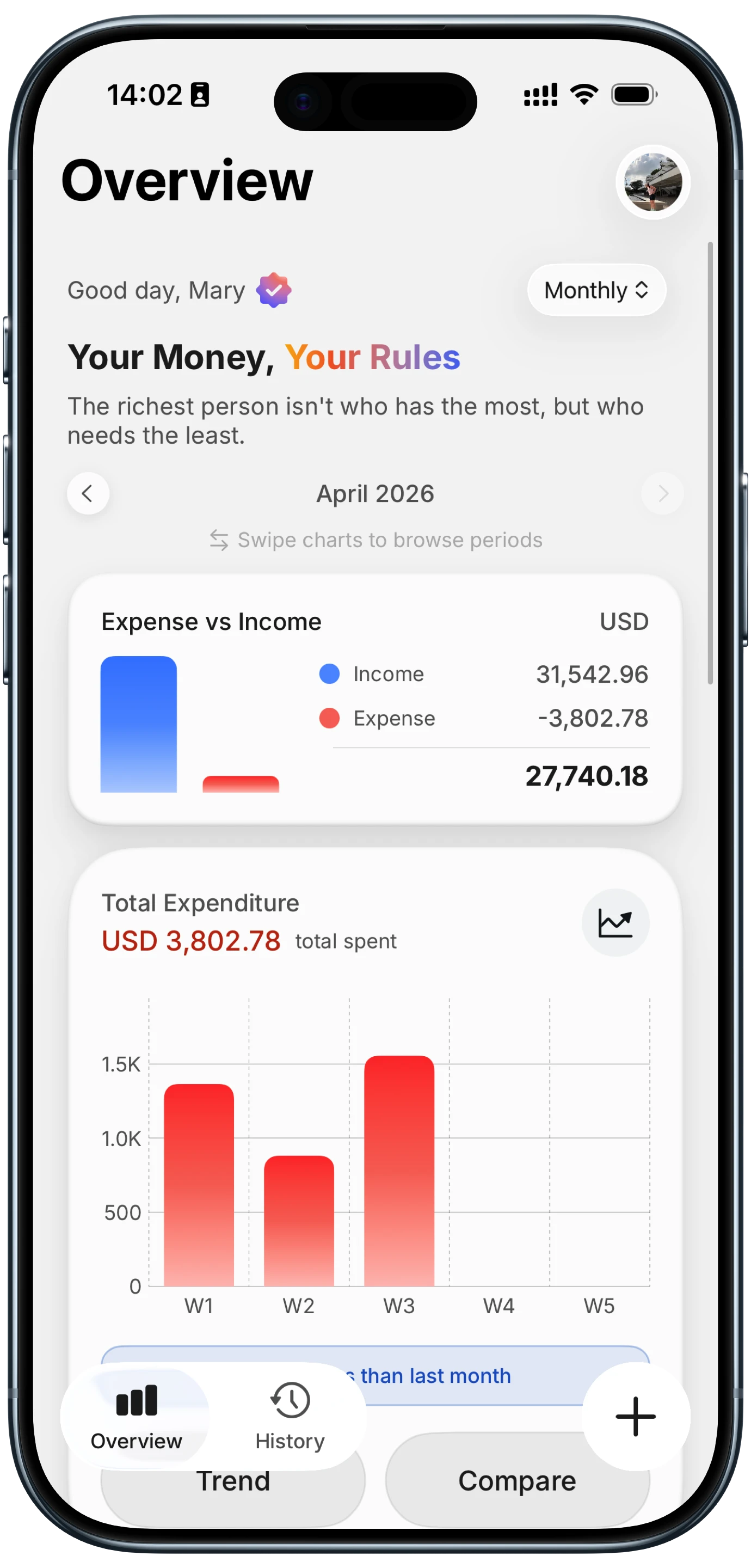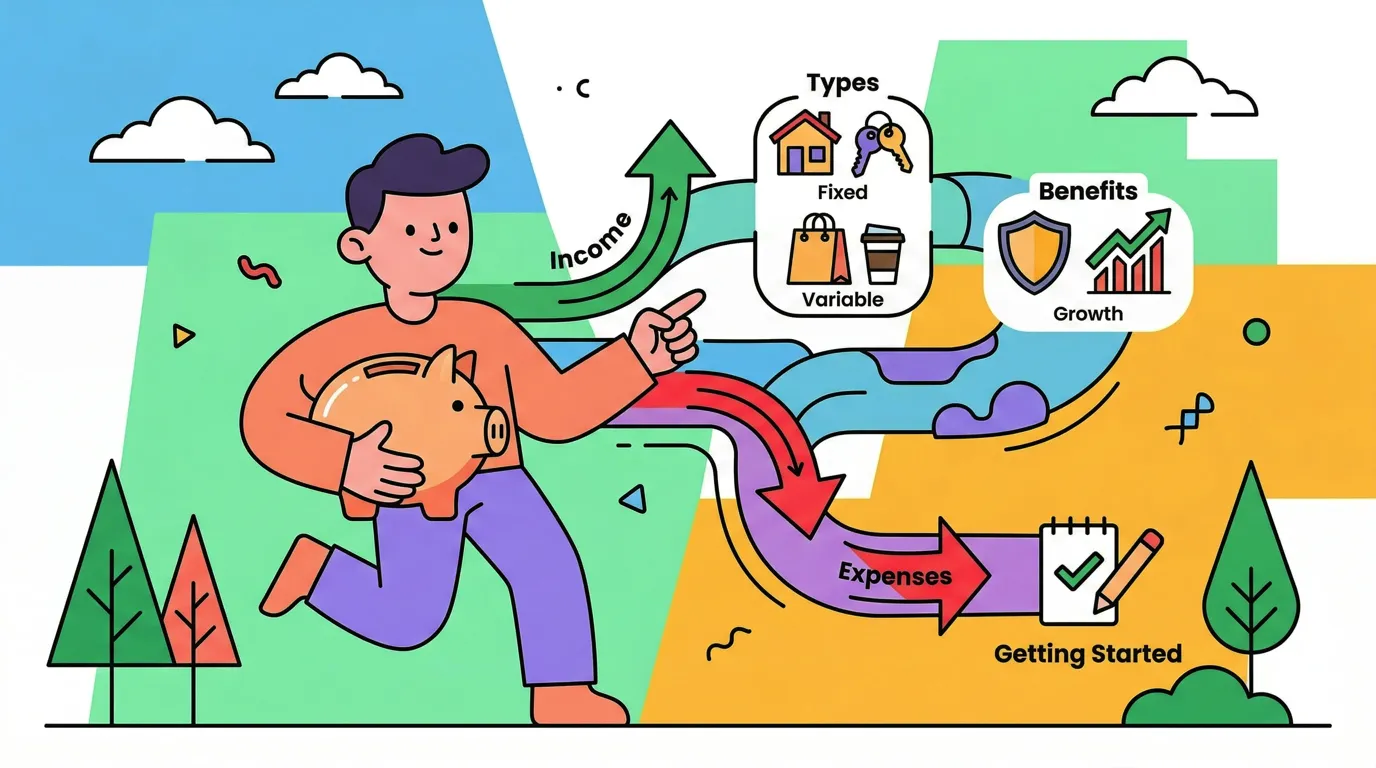
Most people have a rough sense of how much money comes in each month. Far fewer know where it actually goes. The gap between those two numbers is exactly where financial stress lives, and it is the reason budgets exist.
A budget is a plan for how you will spend and save your money over a set period. It does not require spreadsheets, complicated software, or a finance degree. At its simplest, a budget answers one question: does the money I earn cover the life I am living? If you are new to managing money, our budgeting for beginners guide walks through the fundamentals step by step.
This guide covers what a budget actually is, the most common budgeting methods, why budgets fail, and how to build one that sticks. The common thread through all of it: expense tracking is the foundation that makes any budget work.
What a Budget Actually Does
A budget assigns purpose to your income before you spend it. Instead of reaching the end of the month and wondering where everything went, you decide in advance how much goes to rent, groceries, transportation, savings, and everything else.
The core mechanics are simple:
- Calculate your income: Total take-home pay after taxes
- List your expenses: Fixed costs, variable spending, and savings goals
- Allocate every dollar: Assign income to categories until the balance is zero
- Track and adjust: Compare actual spending to your plan throughout the month
A budget is not a restriction. It is a set of choices made deliberately rather than by default. Without one, spending decisions happen reactively. With one, they happen intentionally.
Types of Budgets
Not every budget works the same way. The best method depends on your income stability, financial goals, and how much detail you want to manage. Here are the three most widely used approaches.
Zero-Based Budget
In a zero-based budget, every dollar of income is assigned to a specific category. Income minus expenses (including savings) equals exactly zero. Nothing is left unaccounted for.
This method works well for people who want full control over their money. It requires more upfront effort because you plan every category before the month begins, but it eliminates the vagueness that causes overspending.
For a deeper look at this approach, see our full guide on zero-based budgeting.
Best for: People with stable income who want detailed control over every dollar.
50/30/20 Budget
The 50/30/20 rule divides after-tax income into three broad categories:
- 50% for needs: Rent, utilities, insurance, minimum debt payments, groceries
- 30% for wants: Dining out, entertainment, subscriptions, hobbies
- 20% for savings and debt repayment: Emergency fund, investments, extra debt payments
This method is less granular than zero-based budgeting, which makes it easier to maintain. Our 50/30/20 Budget Calculator lets you plug in your income and see the exact dollar amounts for each bucket. The tradeoff is less precision. You know roughly how much goes to each bucket, but individual categories within each bucket are not tightly managed.
Best for: People who want a simple framework without tracking every category in detail.
Envelope Budget
The envelope method allocates cash (physical or digital) into separate envelopes for each spending category. When an envelope is empty, spending in that category stops until the next month.
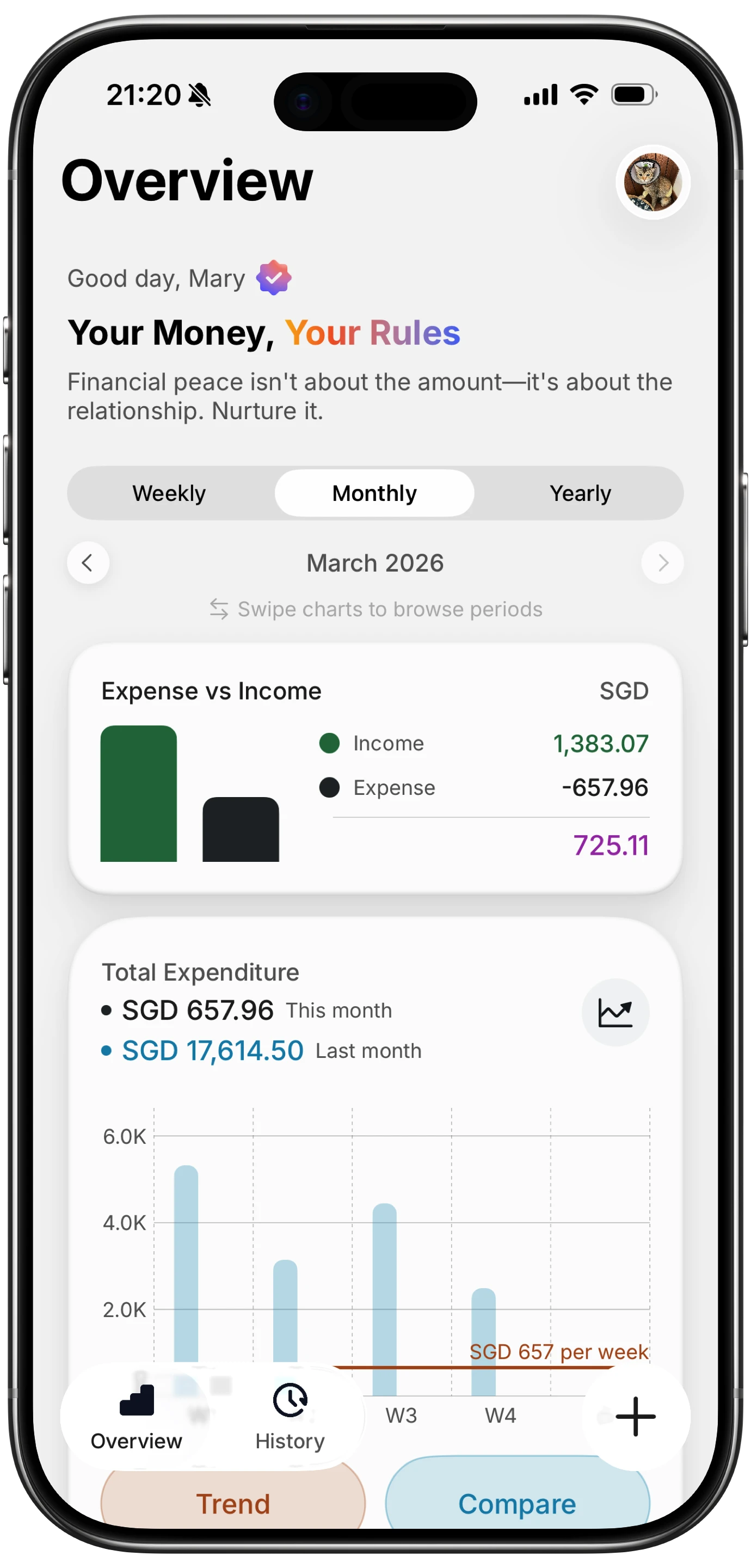
Finny app's Overview feature
This approach is highly visual and creates hard limits on spending. Traditional envelope budgeting uses physical cash, but modern expense tracking apps replicate the concept digitally with category-based spending limits.
Best for: People who struggle with overspending and benefit from hard category limits.
Which Method Should You Choose?
| Method | Effort Level | Flexibility | Control |
|---|---|---|---|
| Zero-based | High | Low | Very high |
| 50/30/20 | Low | High | Moderate |
| Envelope | Medium | Medium | High |
There is no universally correct answer. Many people start with 50/30/20 for simplicity, then move to zero-based or envelope budgeting as they get more comfortable with tracking. The important thing is choosing a method and actually following it.
Why Budgets Fail
Roughly 80% of people who create a budget stop following it within a few months. The problem is rarely the math. It is usually one of these issues.
The Budget Is Too Rigid
A budget that leaves no room for unexpected expenses or occasional treats will feel punishing. When it feels punishing, people abandon it. Build in a small buffer for miscellaneous spending so the plan bends rather than breaks.
There Is No Tracking System
A budget without expense tracking is just a list of good intentions. If you do not record what you actually spend, you have no way to compare reality to the plan. This is where most budgets quietly die: not with a dramatic failure, but with a slow drift into guessing.
The Categories Are Wrong
If your budget has a $200 grocery line but you consistently spend $350, the budget is wrong, not your behavior. Use at least two months of real spending data to set realistic category amounts before committing to a budget.
Life Changes and the Budget Does Not
Income changes, new expenses appear, priorities shift. A budget created in January may not fit your life by June. Review and adjust monthly. A budget is a living document, not a contract.
It Takes Too Much Time
If updating your budget takes 45 minutes every evening, you will stop doing it. The best budget systems minimize friction. Quick expense logging, whether by typing a few words, snapping a receipt photo, or speaking a transaction aloud, keeps the system running without becoming a chore.
How to Start a Budget in Five Steps
Step 1: Gather Your Numbers
Pull together your after-tax income and at least one month of spending data. Bank statements, credit card records, and any existing expense logs work. If you do not have historical data, start tracking expenses now and build your budget after two to four weeks of real numbers.
Step 2: Categorize Your Spending
Group expenses into categories that match your life. Common categories include:
- Housing (rent or mortgage)
- Utilities
- Groceries
- Transportation
- Insurance
- Subscriptions
- Dining out
- Entertainment
- Personal care
- Savings
- Debt repayment
Keep the list manageable. Ten to fifteen categories is usually enough. Too many categories creates tracking fatigue. Too few hides where money actually goes.
Step 3: Choose a Budgeting Method
Pick one of the methods above based on your personality and goals. If you are unsure, start with 50/30/20. It requires the least setup and gives you a working framework while you learn your spending patterns.
For a detailed walkthrough of building your first budget, see our guide on how to budget money.
Step 4: Set Up Expense Tracking
This is the step most people skip, and it is the reason most budgets fail. You need a system for recording what you spend, ideally one that takes seconds rather than minutes.
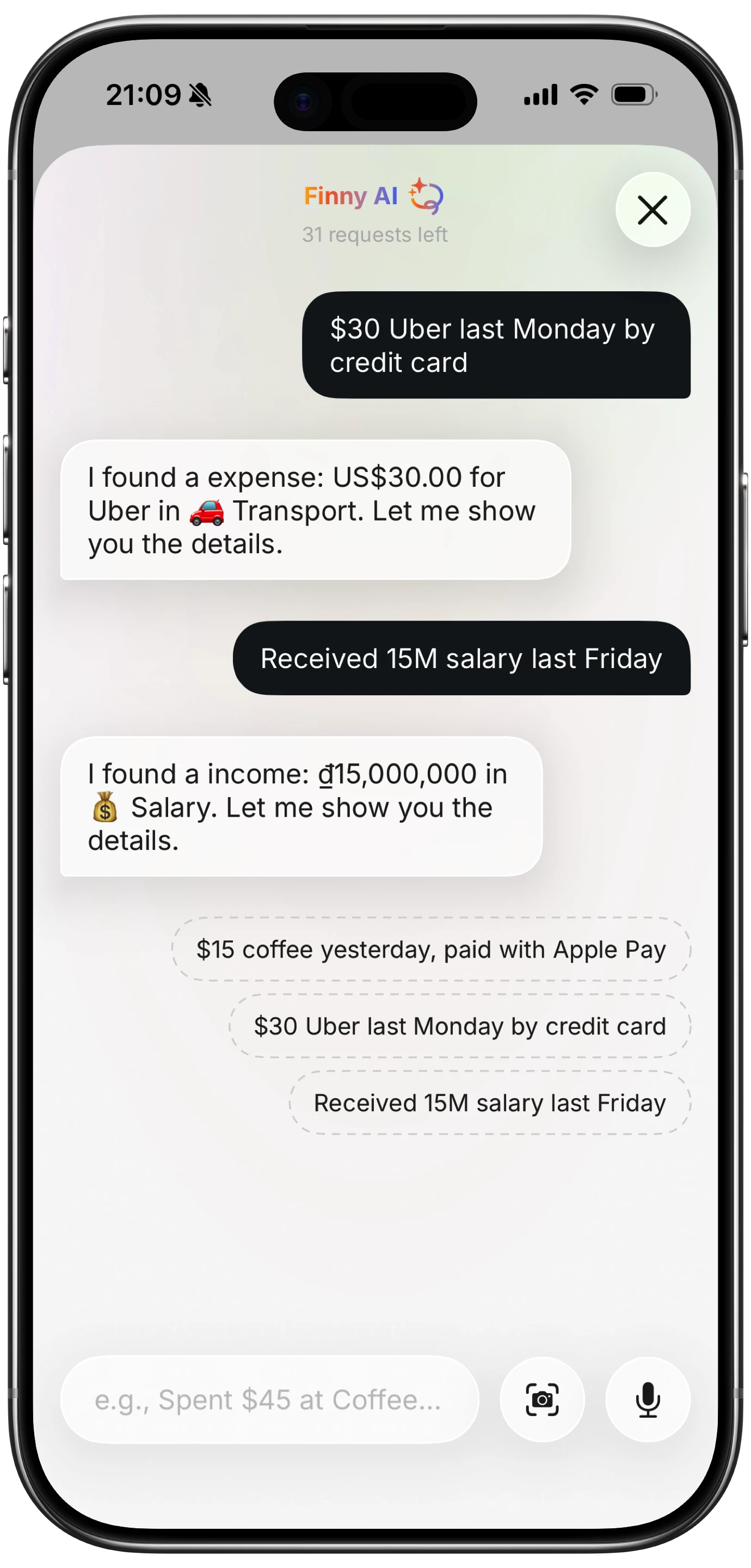
Finny app's AI chat feature
Options range from pen-and-paper logs to dedicated apps. The best system is one you will actually use consistently. Finny, for example, lets you log expenses through text, voice, or receipt photos, which removes the friction that causes people to stop tracking. When logging takes five seconds, it happens. When it takes two minutes, it does not.
Step 5: Review Weekly, Adjust Monthly
Check your spending against your budget once a week. A five-minute review catches overspending early when you can still course-correct. At the end of each month, compare your plan to your actual numbers and adjust categories for the following month.
Expense Tracking: The Foundation of Every Budget
A budget tells you where money should go. Expense tracking tells you where it actually went. Without both, you are flying blind.
This is true regardless of which budgeting method you choose. Zero-based budgets need transaction-level tracking to verify allocations. The 50/30/20 method needs category totals to confirm ratios. Envelope budgets need real-time balance updates to enforce limits.
The most common reason budgets fail is not a flawed plan. It is a missing feedback loop. When you track every expense and review it against your budget, you create accountability. You see the $47 impulse purchase at the electronics store. You notice subscriptions you forgot about. You catch the slow creep of dining expenses from $200 to $340 over three months.
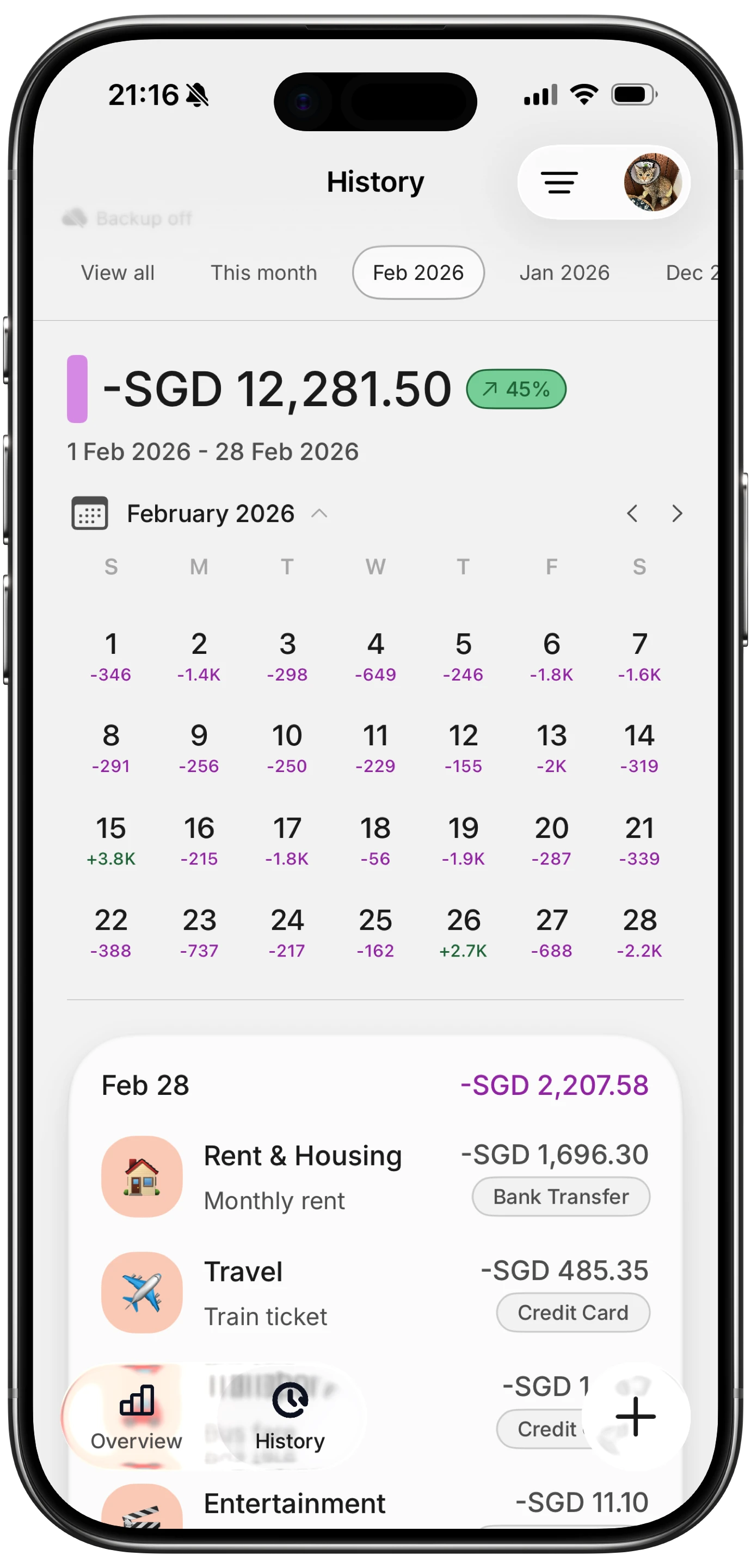
Finny app's History calendar feature
Effective tracking does not need to be complicated. The key qualities are:
- Speed: Logging an expense should take seconds, not minutes
- Consistency: Every transaction gets recorded, not just the ones you remember
- Categorization: Expenses should land in the right budget category automatically or with minimal effort
- Visibility: You should be able to see category totals at a glance
Apps like Finny handle all four by using AI to parse natural language inputs, scan receipts, and suggest categories. You type "coffee 4.50" or snap a photo of a receipt, and the transaction is logged and categorized. That low-friction approach is what keeps tracking consistent over weeks and months rather than days.
For a broader look at tracking tools, check out our best money tracker app in 2026 roundup.
Budgeting on an Irregular Income
Freelancers, contractors, and anyone with variable income face an extra challenge: you cannot allocate money you have not earned yet.
The approach that works best is to budget based on your lowest typical month. If your income ranges from $3,000 to $6,000, build the core budget around $3,000. Cover essentials and minimum savings at that level. When higher-income months arrive, direct the surplus to savings, sinking funds, or debt repayment.
This prevents the common trap of spending based on a good month and scrambling during a lean one. It also means your budget works even in worst-case scenarios, which reduces financial anxiety significantly.
The Bottom Line
A budget is simply a plan for your money. It does not need to be complicated, restrictive, or time-consuming. Whether you choose zero-based budgeting for maximum control, the 50/30/20 rule for simplicity, or the envelope method for hard spending limits, the core principle is the same: decide where your money goes before it disappears.
The single most important factor in whether a budget succeeds is not the method you choose. It is whether you track your actual spending against the plan. Expense tracking closes the gap between intention and reality. Without it, a budget is just a wish list.
Start with one month of honest tracking. Build your budget from real numbers. Review weekly. Adjust as needed. That cycle, repeated consistently, is what turns a budget from a document into a habit. For a hands-on walkthrough, see our complete budget tracking guide.
Common Questions About Budgets
What is a budget in simple terms?
A budget is a plan that shows how much money you earn, how much you spend, and how much you save over a specific period. It helps you make intentional choices about where your money goes rather than spending reactively.
What is the easiest budgeting method for beginners?
The 50/30/20 rule is the simplest starting point. It divides your income into three broad categories (needs, wants, savings) without requiring detailed category tracking. Once you are comfortable, you can move to a more detailed method like zero-based budgeting.
How often should I update my budget?
Review your spending against your budget weekly. Adjust category amounts monthly based on actual spending patterns. Major life changes like a new job, a move, or a new recurring expense should trigger an immediate budget revision.
Can I budget without linking my bank account?
Yes. Manual expense tracking, where you log each transaction yourself, gives you full control over your data without sharing bank credentials. Apps like Finny support text input, voice logging, and receipt scanning, so you can track everything without connecting a bank account.
Why do most budgets fail?
Most budgets fail because of missing expense tracking, unrealistic category amounts, or too much friction in the process. A budget works when it is based on real spending data and supported by a tracking system that is easy to use daily.
Ready to build a budget that actually sticks?
Download Finny to track expenses in seconds using text, voice, or receipt photos. No bank connections required, full offline support, and clear spending analytics to keep your budget on track.