What Is Frugal Living? How to Spend Less Without Feeling Deprived
Frugal living has an image problem. Many people picture extreme couponing, never eating out, and sacrificing every small pleasure. In practice, frugality is less about deprivation and more about intentionality: getting maximum value from every dollar so you can direct money toward what actually matters to you.
Frugal living is a lifestyle focused on reducing waste and unnecessary spending while maintaining or improving your quality of life. It is not about spending the least possible amount. It is about spending wisely so that your money serves your priorities rather than disappearing into things you do not value. For more on aligning spending with values, see our guide on conscious spending.
Frugal vs Cheap: The Important Difference
| Trait | Frugal | Cheap |
|---|---|---|
| Buys quality when it matters | Yes | No (always buys cheapest) |
| Values others' time | Yes | No (undertips, asks for excessive favors) |
| Spends on priorities | Yes, generously | Avoids spending even on priorities |
| Considers long-term cost | Yes | No (only looks at price tag) |
| Enjoys life | Yes, selectively | Often sacrifices enjoyment |
A frugal person buys durable shoes that last three years instead of cheap shoes every six months. A cheap person buys the cheapest option regardless of quality or impact on others. Frugality optimizes total cost of ownership, not just purchase price.
Core Principles of Frugal Living
1. Question Every Recurring Expense
Subscriptions, memberships, and services accumulate silently. A frugal approach reviews every recurring charge regularly and eliminates what is not actively providing value. For more on this, see our guide on stopping subscription creep.
2. Value Your Time
Driving 30 minutes to save $3 on groceries is not frugal if your time is worth more than $6/hour. True frugality considers the time cost of saving money. Some "deals" cost more in effort than they save in dollars.
3. Reduce Waste Before Reducing Spending
Before cutting your grocery budget, check how much food you throw away. Before buying new clothes, wear what you already own. Much of what people buy replaces things that were wasted, not worn out.
4. Focus on the Big Three
Housing, transportation, and food typically consume 60-70% of most budgets. Optimizing these three categories has more impact than cutting small expenses:
- Housing: Living below your means in housing (smaller home, cheaper neighborhood, roommates) saves hundreds per month.
- Transportation: A reliable used car, public transit, or biking eliminates car payments and reduces insurance costs.
- Food: Cooking at home, meal planning, and reducing food waste can cut food spending by 30-50%.
5. Buy Quality for Frequently Used Items
The frugal approach to purchasing is not "always buy cheap." It is "buy the right quality for the use case." Items you use daily (mattress, work shoes, cookware) justify higher spending. Items you use rarely can be budget options.
Practical Frugal Living Strategies
Cook at home. Restaurant meals cost 3 to 5 times what home-cooked equivalents cost. Batch cooking on weekends eliminates the "too tired to cook" excuse.
Use the library. Books, audiobooks, movies, magazines, and even museum passes are available free at most public libraries.
Buy used when possible. Cars, furniture, tools, and children's items lose 30-70% of their value immediately. Buying used captures that depreciation as savings.
Negotiate bills annually. Insurance, internet, and phone plans are often negotiable. A 15-minute call can save $20-50/month.
Maintain what you own. Regular maintenance on cars, appliances, and clothing extends their life significantly. A $50 oil change prevents a $5,000 engine repair.
Wait for sales on planned purchases. If you know you need something, plan the purchase around sales cycles. This is different from buying things you do not need because they are on sale.
How Expense Tracking Makes Frugality Effective
Frugal living without data is guesswork. You might cut your coffee budget by $50/month while overlooking $200/month in unused subscriptions. Expense tracking shows you exactly where the waste is.
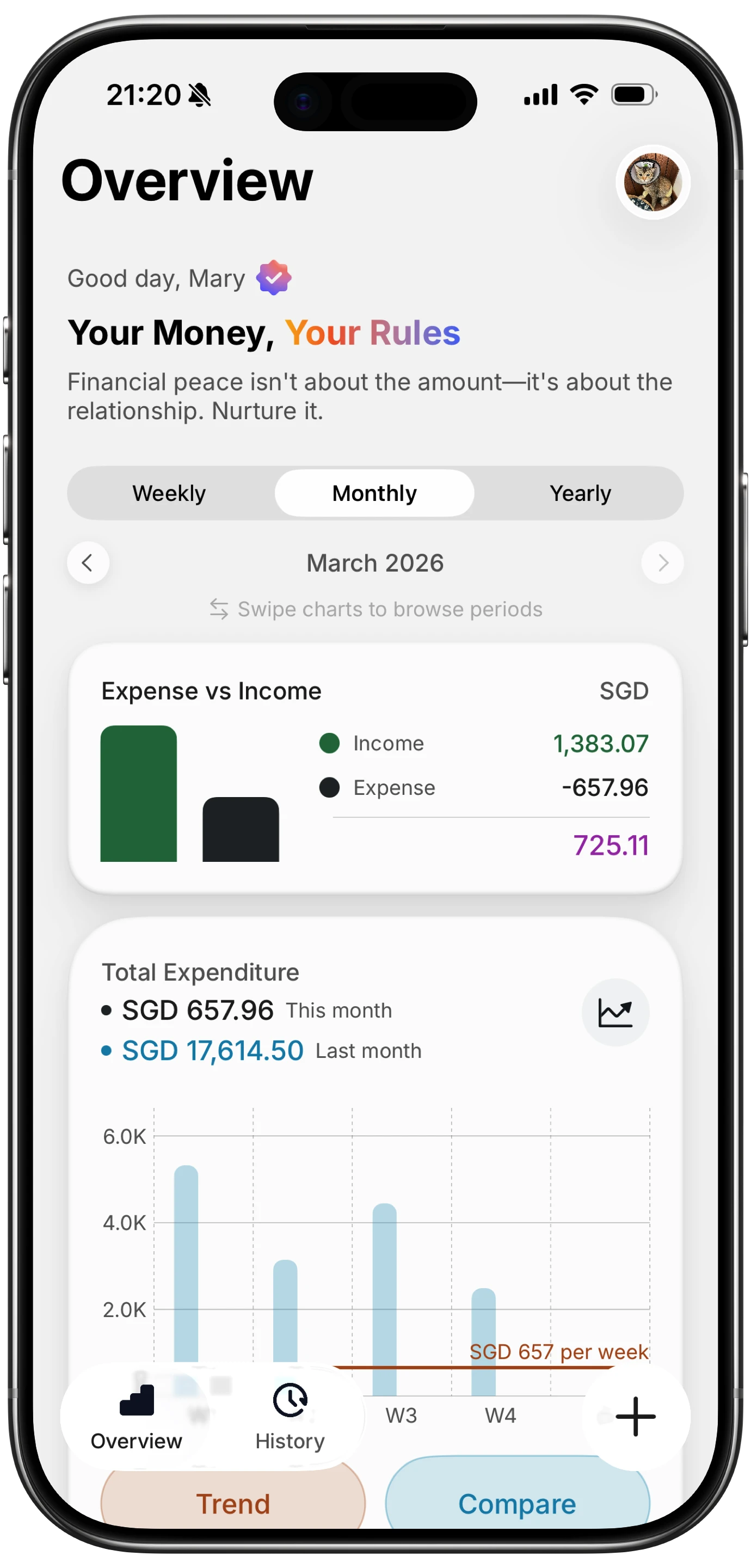
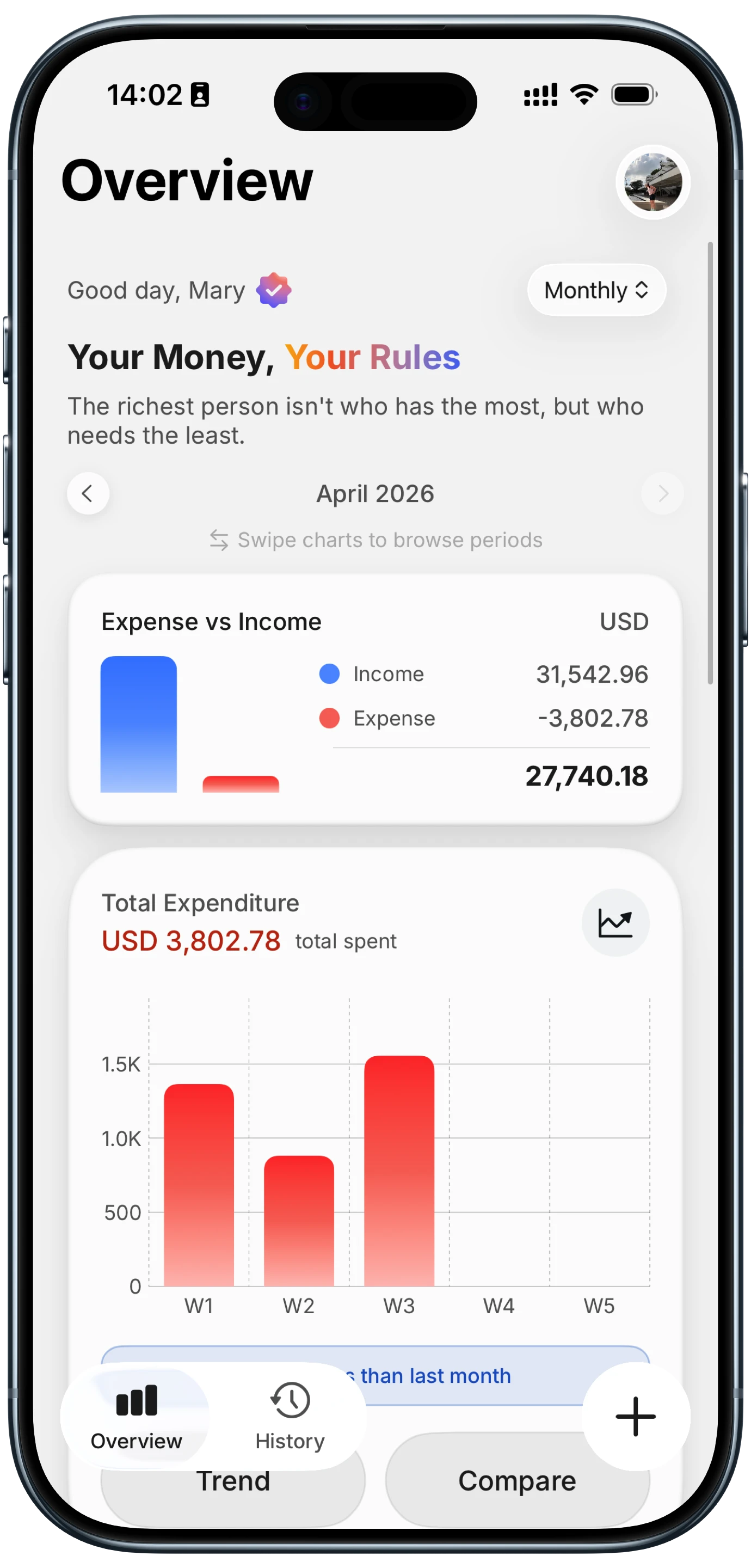
Finny app's Overview feature
With one month of tracked data, you can:
- Rank categories by spending. See where the most money goes.
- Identify waste. Recurring charges you forgot about, food thrown away, duplicate services.
- Measure improvement. As you implement frugal strategies, tracked data shows the actual savings.
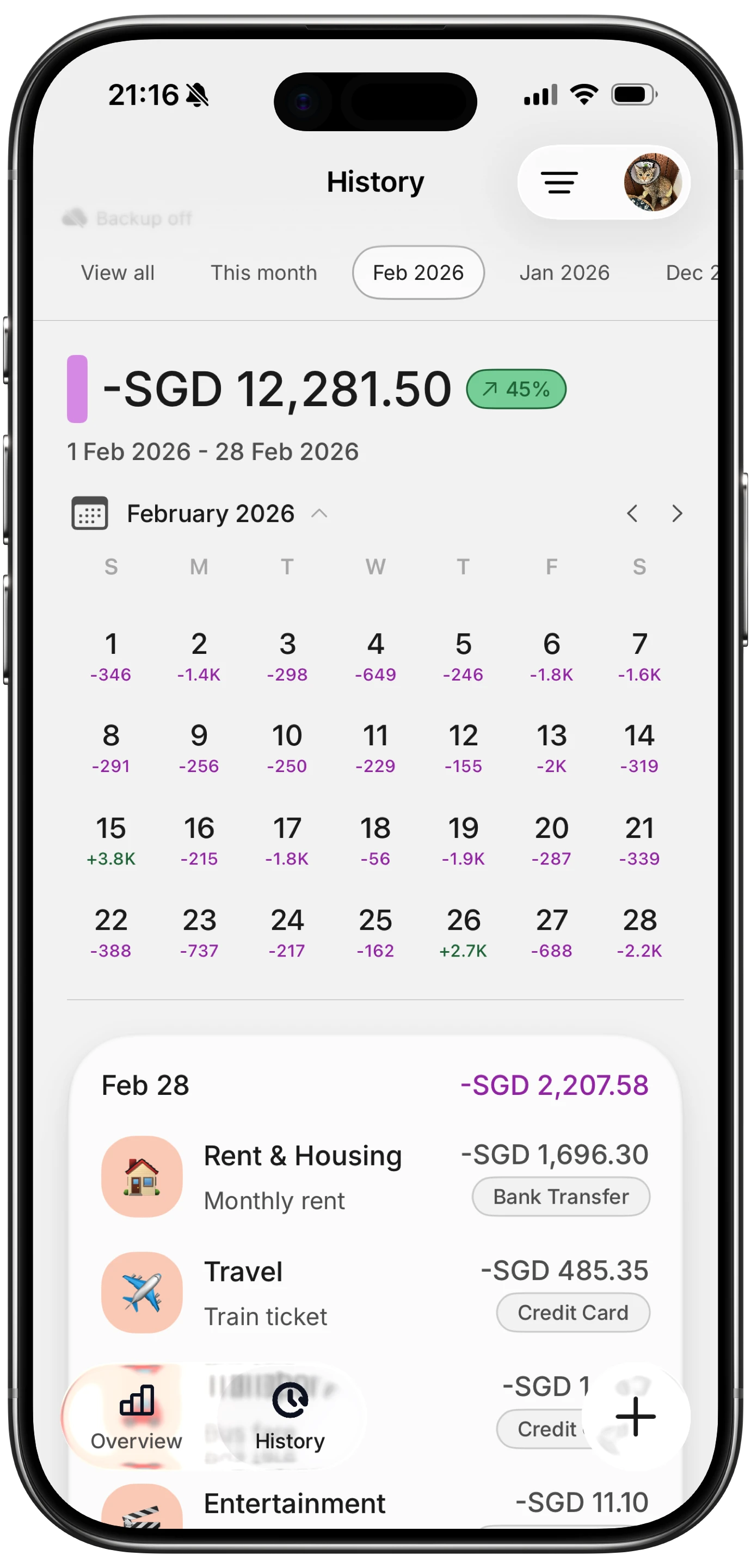
Finny app's History calendar feature
The most effective frugal strategy is often the one you discover by looking at your own data rather than following generic advice. Your waste patterns are unique to you. For more on building the tracking habit, see our guide on how to track daily spending.
When Frugality Goes Too Far
Frugality becomes counterproductive when:
- It costs you more time than it saves in money. Making your own laundry detergent to save $2/month is not frugal if it takes an hour.
- It damages relationships. Never treating friends, always suggesting the cheapest option, or making others uncomfortable crosses from frugal to cheap.
- It prevents investing in yourself. Skipping education, health care, or tools that improve your earning capacity is false economy.
- It becomes an obsession. If optimizing every purchase creates stress and consumes mental energy, the approach is working against you.
The goal is spending less on what does not matter so you can spend freely on what does.
The Bottom Line
Frugal living is not about deprivation. It is about awareness, intentionality, and maximizing the value you get from every dollar. The practical starting point is tracking your spending to see where waste exists, then systematically addressing the biggest opportunities.
Most people find that small changes in the big three categories (housing, transportation, food) and eliminating forgotten recurring charges create significant savings without reducing quality of life. The money saved goes toward goals that actually matter: financial freedom, travel, security, or whatever you value most.
Common Questions About Frugal Living
How much money can frugal living save?
It varies enormously by starting point. Someone spending $6,000/month who adopts frugal principles might save $1,000-$2,000/month. The biggest savings typically come from housing and transportation choices.
Is frugal living worth it if I have a high income?
Yes. Frugality at high incomes accelerates wealth building dramatically. Earning $150,000 and spending $80,000 builds wealth faster than earning $150,000 and spending $140,000. High earners benefit most from the pay yourself first principle.
How do I start being more frugal?
Track your spending for one month. Identify the three largest categories of discretionary spending. Choose one strategy to reduce each. Start with easy wins (canceling unused subscriptions, cooking one more meal at home per week) and build from there.
Can I be frugal and still enjoy life?
Absolutely. Frugality means spending less on things you do not care about so you can spend more on things you do. Many frugal people spend generously on their priorities, whether that is travel, hobbies, or quality food.
What is the difference between frugal living and minimalism?
Frugality focuses on spending wisely. Minimalism focuses on owning less. They overlap but are not the same. A frugal person might buy things on sale and stock up. A minimalist would only buy what they need right now. Both approaches reduce unnecessary consumption.
Want to find where your money is going to waste?
Download Finny to track every expense with AI-assisted input. See your spending patterns, identify waste, and redirect money toward what you actually value. No bank connections required.