Best Accounting Software with OCR Receipt Scanning (2026)
A shoebox of curling thermal receipts is still how a lot of freelancers and small business owners track expenses. It works until tax season, when a faded coffee-shop slip becomes the difference between a clean deduction and a guess. The fix most people reach for is accounting software with OCR receipt scanning, which reads a photo of a receipt and pulls out the vendor, date, and amount automatically.
The problem is that "accounting software" and "receipt scanner" are not the same thing, and the listicles tend to blur them. Some of these tools are full double-entry accounting platforms with receipt capture bolted on. Others are expense-management apps that happen to sync with your books. The right pick depends on whether you actually need general ledger accounting or just a reliable way to capture and categorize spending.
This guide compares five real options that all offer OCR receipt capture, explains what the technology does and where it still needs a human, and is honest about when full accounting software is more than a solo operator needs. If you are early in your research, our roundup of the best receipt scanner apps for 2026 covers the lighter end of the market in more detail.
What OCR receipt scanning actually does
OCR stands for optical character recognition. In an accounting context, it means the software takes an image of a receipt and converts the printed text into structured data fields you can sort, total, and export.
The fields it tries to extract
A modern receipt OCR engine attempts to pull several specific values from each scan:
- Merchant or vendor name, matched against a database where possible
- Transaction date
- Total amount, and often the subtotal and tax separately
- Currency, which matters for travel and cross-border spending
- Line items, on higher-end tools, though this is the least reliable field
- Payment method, when the receipt prints it
Where the human still comes in
Vendors advertise high accuracy numbers, sometimes in the high nineties, but those figures usually describe clean, flat, well-lit receipts. Crumpled paper, faded thermal ink, handwritten tips, and foreign-language receipts all drag accuracy down. The category to expect the most errors in is expense classification: software can read that you spent $42 at a hardware store, but it cannot always know whether that was a deductible business cost or a personal repair. Plan to review every scanned entry before it hits your books. OCR removes the typing, not the judgment.
What to look for in receipt capture software
Not every tool that scans receipts is worth paying for. A few features separate genuinely useful receipt capture software from a glorified camera.
Auto-extraction accuracy and editing
The scan is only the start. Look at how easy it is to correct a misread field. Good tools let you tap a value and fix it in seconds; weaker ones bury the edit screen or force you to delete and rescan.
Transaction matching
If you connect a card or import statements, the software should match a scanned receipt to the corresponding transaction so you are not double-counting. This is one of the highest-value features for anyone reconciling at month end.
Mileage and approvals
Mileage tracking matters for anyone who drives for work, since it is a separate deduction from receipts. Approval workflows matter only if you have employees or contractors submitting expenses to you. A solo freelancer can ignore approvals entirely.
Integrations and export
Confirm the tool connects to whatever you already use, whether that is a tax preparer, a spreadsheet, or a general ledger. At minimum, you want a clean CSV or PDF export. Being able to leave a platform is as important as the features inside it.
The best accounting software with OCR receipt scanning compared
The table below summarizes five established options. Pricing is current as of May 2026 and reflects standard monthly billing in US dollars; annual billing and promotional discounts often lower these numbers, so verify on each vendor's site before you buy.
| App | Starting price | OCR receipt scanning | Best for |
|---|---|---|---|
| QuickBooks Online | $38/mo (Simple Start) | Included, syncs scans to transactions | Small businesses needing full accounting |
| Expensify | Free tier, then $5/user/mo | SmartScan, free tier capped at 25 scans/mo | Expense reports and reimbursements |
| Zoho Expense | Free for up to 3 users, then $4/user/mo | 20 autoscans/mo free, unlimited on paid | Teams already in the Zoho ecosystem |
| FreshBooks | $19/mo (Lite) | Included receipt capture | Freelancers who also send invoices |
| Wave | Free accounting; scanning $11/mo add-on or in Pro | Receipt scanning included in Pro plan | Budget-conscious solo businesses |
QuickBooks
QuickBooks Online is full double-entry accounting software, and receipt capture is one feature inside it. You photograph a receipt in the mobile app and QuickBooks extracts the data and can match it to a bank or card transaction. Pricing starts at $38 per month for Simple Start as of 2026, after Intuit's mid-2025 price increase, and rises to $115 per month for the Plus plan. It is powerful and well integrated, but the cost and learning curve are real. This is the right tool if you need proper accounting, not if you only want to file receipts.
Expensify
Expensify is built around expense reports rather than accounting. Its SmartScan OCR reads receipts, and the free tier allows a limited number of scans per month, commonly cited around 25, before you need a paid plan starting near $5 per user per month. It shines for anyone who submits or reimburses expenses, and it integrates with QuickBooks and Xero. For a true solo operator with no reports to file, much of Expensify's workflow machinery goes unused.
Zoho Expense
Zoho Expense offers a free plan supporting up to three users with a monthly autoscan allowance, then paid tiers starting around $4 per user per month for unlimited scanning, mileage, and multi-step approvals. It is a strong fit if you already use other Zoho products or want room to add a small team. As a standalone purchase for one person, it can feel heavier than the job requires.
FreshBooks
FreshBooks leans toward freelancers and service businesses that invoice clients. It includes receipt capture alongside invoicing, time tracking, and basic accounting, with the Lite plan starting around $19 per month. If sending professional invoices and chasing payments is as important to you as tracking receipts, FreshBooks bundles both. If you only need expense and receipt tracking, you are paying for invoicing you will not touch.
Wave
Wave offers genuinely free accounting and invoicing, monetized through payment processing and payroll. Receipt scanning is the catch: it is part of the paid Pro plan or available as an add-on, commonly priced around $8 to $11 per month depending on your plan. For a budget-conscious solo business that mostly needs free books with occasional receipt capture, Wave is a sensible middle ground.
When full accounting software is overkill
Here is the honest part. If you are a freelancer, contractor, or sole proprietor whose real need is "capture receipts, categorize spending, and hand a clean total to my tax preparer," a full accounting platform is often more tool than the job calls for.
Double-entry accounting, payroll, accounts payable, and a general ledger solve problems you may not have. Paying $38 or more a month, and spending hours learning the software, makes sense when you have inventory, employees, or investors who expect formal financials. It makes much less sense when you have a phone full of receipts and a Schedule C to file.
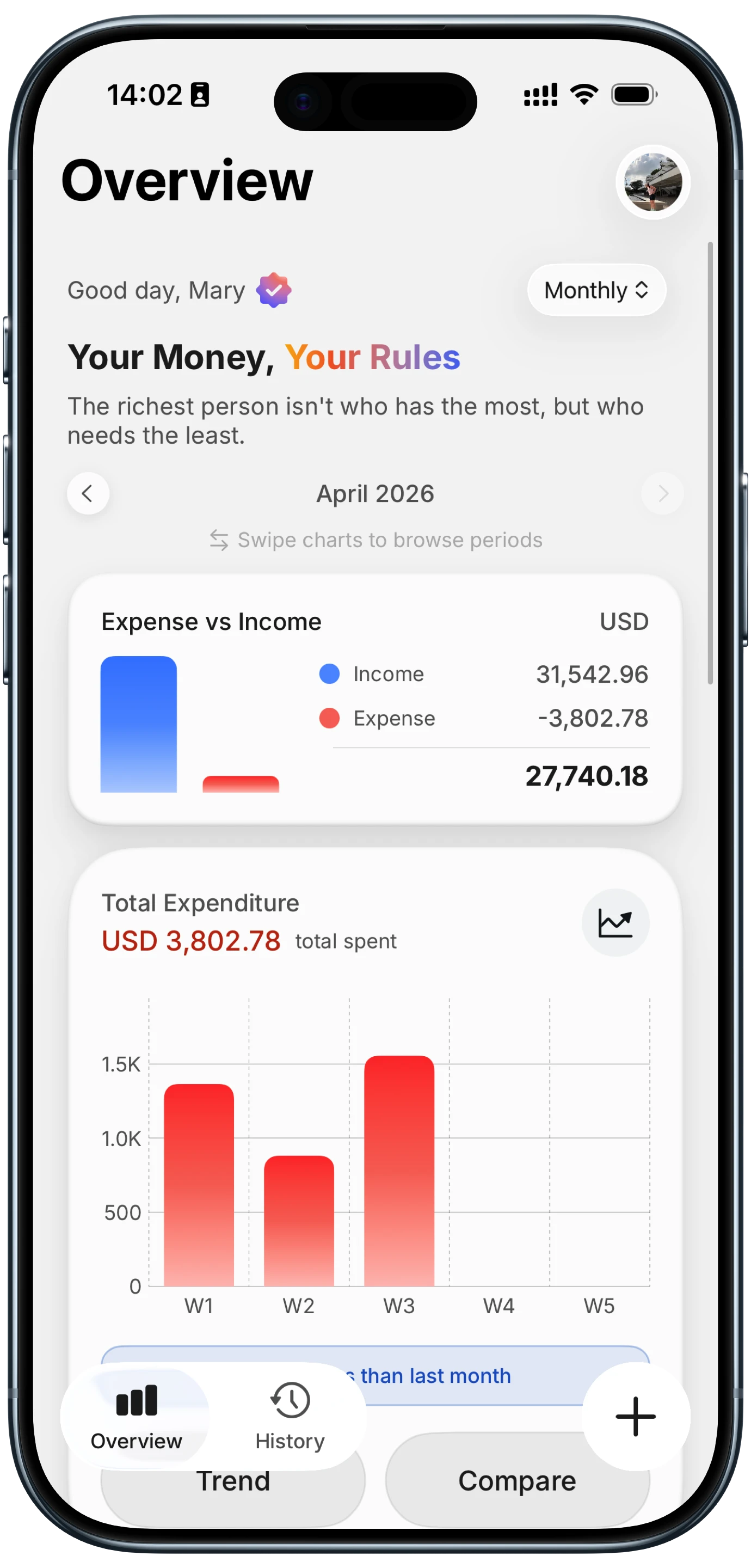
For that lighter need, a focused expense tracker does the core work for a fraction of the price. Finny is an iOS expense tracker built for exactly this case. You can log an expense by typing, voice, a receipt photo, or a quick chat, and its Batch Snap & Log feature scans up to five receipts at once from your photo library. It is offline-first and privacy-first, with no bank connection required, and the free tier covers unlimited manual tracking, charts, and 150-plus currencies. Finny Pro costs a low monthly or yearly price, which is well below what QuickBooks or Expensify costs.
The tradeoff to be clear about: Finny is a lightweight personal and sole-proprietor expense tracker, not accounting software. If you need payroll, invoicing, or formal double-entry books, choose one of the platforms above. If you mostly need receipts and categories handled cleanly, a dedicated tracker is the better value. Our guide on how to track business expenses and income on an iPhone walks through that workflow.
How to choose the right tool
Work through these questions in order, and the answer usually becomes obvious.
- Do you need a general ledger and formal financial statements? If yes, choose QuickBooks or FreshBooks. If no, keep going.
- Do you have employees or contractors submitting expenses to you? If yes, an expense platform with approvals like Expensify or Zoho Expense earns its keep. If no, keep going.
- Do you invoice clients and want billing in the same tool? If yes, FreshBooks bundles invoicing and receipts cleanly.
- Are you a solo operator who mostly needs receipt capture and clean categories? If yes, a lightweight expense tracker beats full accounting software on both price and simplicity.
- Is a free tier non-negotiable? Wave offers free accounting, and several focused trackers offer free tiers; just confirm whether receipt scanning is inside the free plan or behind a paywall.
The most common mistake is buying for the business you imagine rather than the one you run today. You can always upgrade. Self-employed readers may also want our self-employed expense tracker guide for iPhone for a tax-focused view.
Frequently Asked Questions
What is OCR receipt scanning in accounting software?
OCR receipt scanning is a feature that photographs a paper or digital receipt and converts the printed text into structured data. The software reads the merchant name, date, and total amount, then files them as an expense entry. In accounting software it usually goes a step further by matching that scan to a bank or card transaction, which reduces manual data entry and speeds up reconciliation at month end.
How accurate is receipt OCR?
Accuracy is high for clean, flat, well-printed receipts and noticeably lower for faded thermal paper, crumpled receipts, or foreign-language formats. Vendors often quote accuracy in the high nineties, but those figures describe ideal conditions. Expense categorization is the weakest link, since software cannot always tell a business cost from a personal one. Treat every scan as a draft and review it before it reaches your books.
Do freelancers need full accounting software for receipts?
Usually not. A freelancer whose main need is capturing receipts, categorizing spending, and producing a year-end total can do that with a focused expense tracker for a few dollars a month. Full accounting software earns its cost when you have inventory, payroll, or investors expecting formal statements. If none of those apply, paying for a general ledger you will not use is overkill.
Can a free app scan receipts with OCR?
Yes, but usually with limits. Free tiers commonly cap the number of OCR scans per month, somewhere between roughly 20 and 25 on several popular tools, before charging per scan or requiring an upgrade. Some apps also keep advanced features like transaction matching or mileage behind paid plans. Check whether the free plan includes the scanning volume you actually need before committing.
Does receipt scanning software work offline?
It depends on the app. Cloud-based accounting platforms typically need an internet connection to process a scan and run the OCR on their servers. Some lightweight, offline-first trackers let you capture and store receipts without a connection and process them on-device or sync later. If you travel or work in areas with poor signal, offline capability is worth checking before you choose.
The bottom line
The best accounting software with OCR receipt scanning is the one matched to the size of your operation. QuickBooks and FreshBooks suit businesses that need real accounting and invoicing. Expensify and Zoho Expense fit teams handling expense reports and reimbursements. Wave is a strong free-accounting option if you can absorb the receipt-scanning fee. And if you are a solo operator who simply needs receipts captured and categorized without the overhead, a dedicated expense tracker is the cleaner, cheaper answer.
If that last description fits you, try Finny. It captures receipts by photo or batch scan, logs expenses by voice or chat, works offline, and costs a fraction of full accounting software, without asking for a bank login.