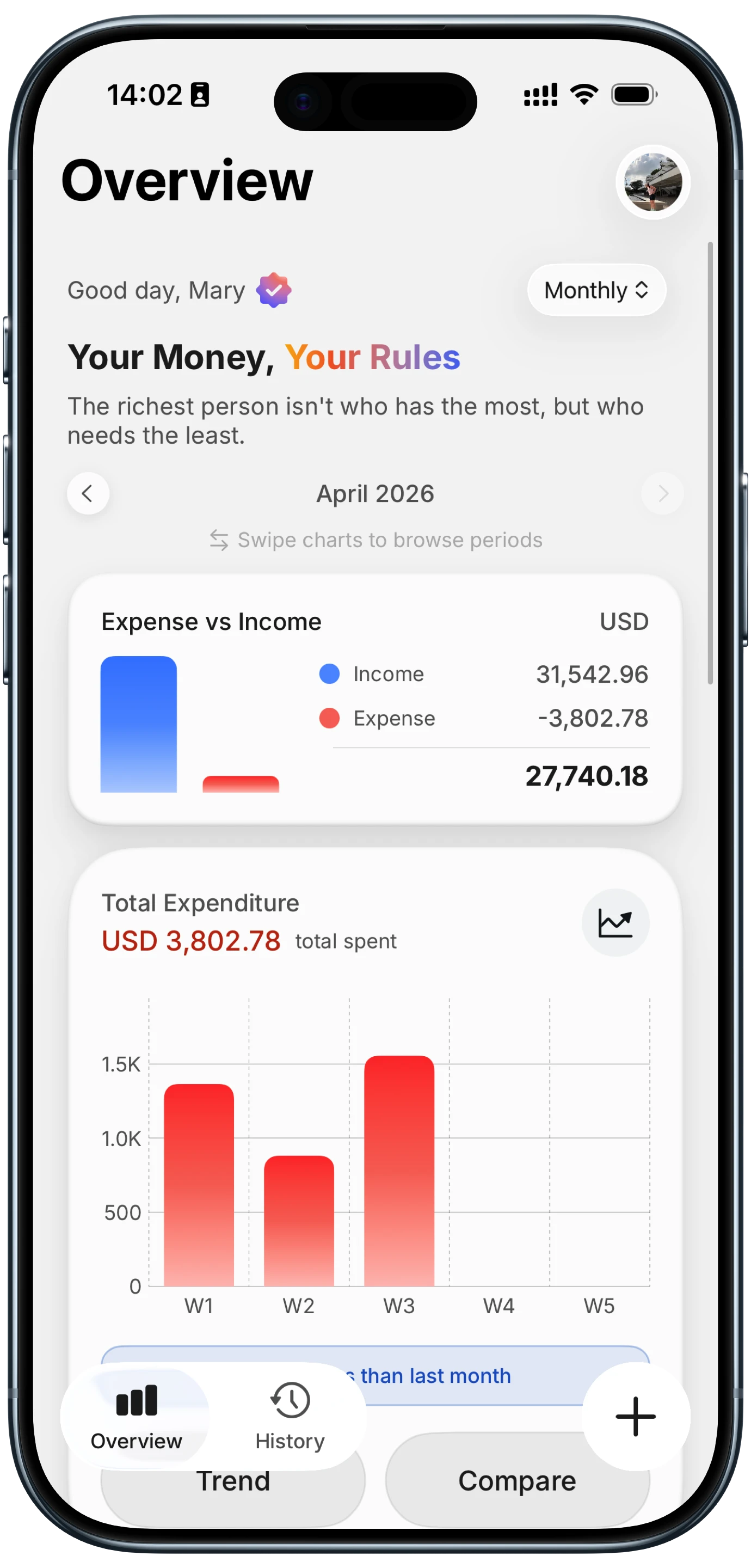
Best Receipt Scanner Apps in 2026: Scan and Track Spending
Paper receipts pile up fast. They fade, crumple, and disappear into coat pockets right when you need them. Manually typing every line item into a spreadsheet is tedious, and most people give up within a week.
A newer group of AI-first receipt apps has entered this space, which we compared in Receiptix alternatives.
A receipt scanner app solves this by using your phone camera to capture and parse receipt data automatically. The best options in 2026 extract merchant names, dates, totals, and individual line items, then organize that data into your budget. This guide compares the top receipt scanner apps available today, covering accuracy, privacy, and pricing. For a broader look at expense tracking tools, see our best money tracker apps in 2026 guide.
What a Receipt Scanner App Actually Does
A receipt scanner app uses optical character recognition (OCR) and, increasingly, AI models to read the text on a photographed receipt. For a deeper look at how OCR works and the best OCR-specific options, see our OCR receipt scanner guide for iPhone in 2026. The process typically works like this:
- Capture: You photograph the receipt using your phone camera.
- Parse: The app extracts key fields: merchant name, date, total, tax, tip, and sometimes individual items.
- Categorize: The app suggests a spending category based on the merchant or items.
- Confirm: You review the parsed data and approve or edit before saving.
The quality of parsing varies significantly between apps. Some handle clean, printed receipts well but struggle with handwritten totals, faded thermal paper, or foreign-language receipts. Others use advanced AI models that handle messy inputs more reliably.
Beyond basic scanning, some receipt tracker apps offer batch scanning (capturing multiple receipts at once), integration with accounting software, and export options for tax preparation. For a broader look at apps that automate receipt capture and organization, see our guide to the best apps to track receipts automatically in 2026. If you want a scanner that ties directly into a working budget rather than just storing images, see our breakdown of the best app that scans receipts for your budget.
Best Receipt Scanner Apps Compared
| Feature | Expensify | Wave | Smart Receipts | Finny |
|---|---|---|---|---|
| Price | Free tier / $5-18/mo | Free | Free / $10 Pro | Free |
| Batch Scanning | No | No | No | Yes (up to 5) |
| Bank Connection Required | Optional | Yes | No | No |
| Offline Support | Partial | No | Yes | Yes |
| AI Categorization | Yes | Basic | Manual | Yes |
| Export Options | CSV, PDF | CSV, PDF | CSV, PDF, ZIP | CSV |
| Privacy Focus | Low | Low | Medium | High |
Expensify
Expensify is the most widely known receipt scanning app, primarily designed for business expense reporting. Its SmartScan feature handles receipt parsing and can match receipts to credit card transactions automatically.
Strengths: Strong integration with accounting platforms like QuickBooks and Xero. Automatic mileage tracking. Reliable OCR for standard printed receipts. Good for teams that need approval workflows.
Limitations: The free tier restricts you to 25 SmartScans per month. Business plans start at $5/month per user. The app is designed around corporate expense reporting, which means the interface feels heavy for personal use. Privacy-conscious users should note that Expensify processes receipt images on their servers and connects to bank accounts by default.
Wave
Wave offers free accounting software for small businesses and freelancers. Its receipt scanning feature feeds directly into your bookkeeping, making it popular with self-employed users.
Strengths: Completely free invoicing and accounting. Receipt data flows into financial reports automatically. Simple interface for small business owners.
Limitations: Wave requires bank connections to function fully. Receipt scanning is a secondary feature, not the primary focus. Personal budgeting features are limited since the app targets business use. Wave was acquired by H&R Block, raising questions about data usage for some users.
Smart Receipts
Smart Receipts is an open-source receipt tracker app focused on expense reporting. It works well for travelers and freelancers who need to document expenses for reimbursement or taxes.
Strengths: Open source, which means transparent data handling. Strong export options including ZIP files with images. Works offline. Customizable report categories and columns.
Limitations: No AI categorization in the free tier. The interface feels dated compared to newer apps. You scan one receipt at a time. There is no budgeting or spending analysis. It is purely a receipt documentation tool, not a financial tracker.
Finny: Best for Privacy-First Receipt Scanning
Finny takes a different approach to receipt scanning by combining AI parsing with a privacy-first design. No bank connection is required, and receipt images are processed with your control in mind.
What sets Finny apart: Finny supports multi-image scanning, letting you capture up to five receipts at once. This is a meaningful time-saver when you return from a shopping trip or clean out a week of receipts from your wallet. The AI parses merchant names, totals, and dates from each image, then presents them all for your review before saving.
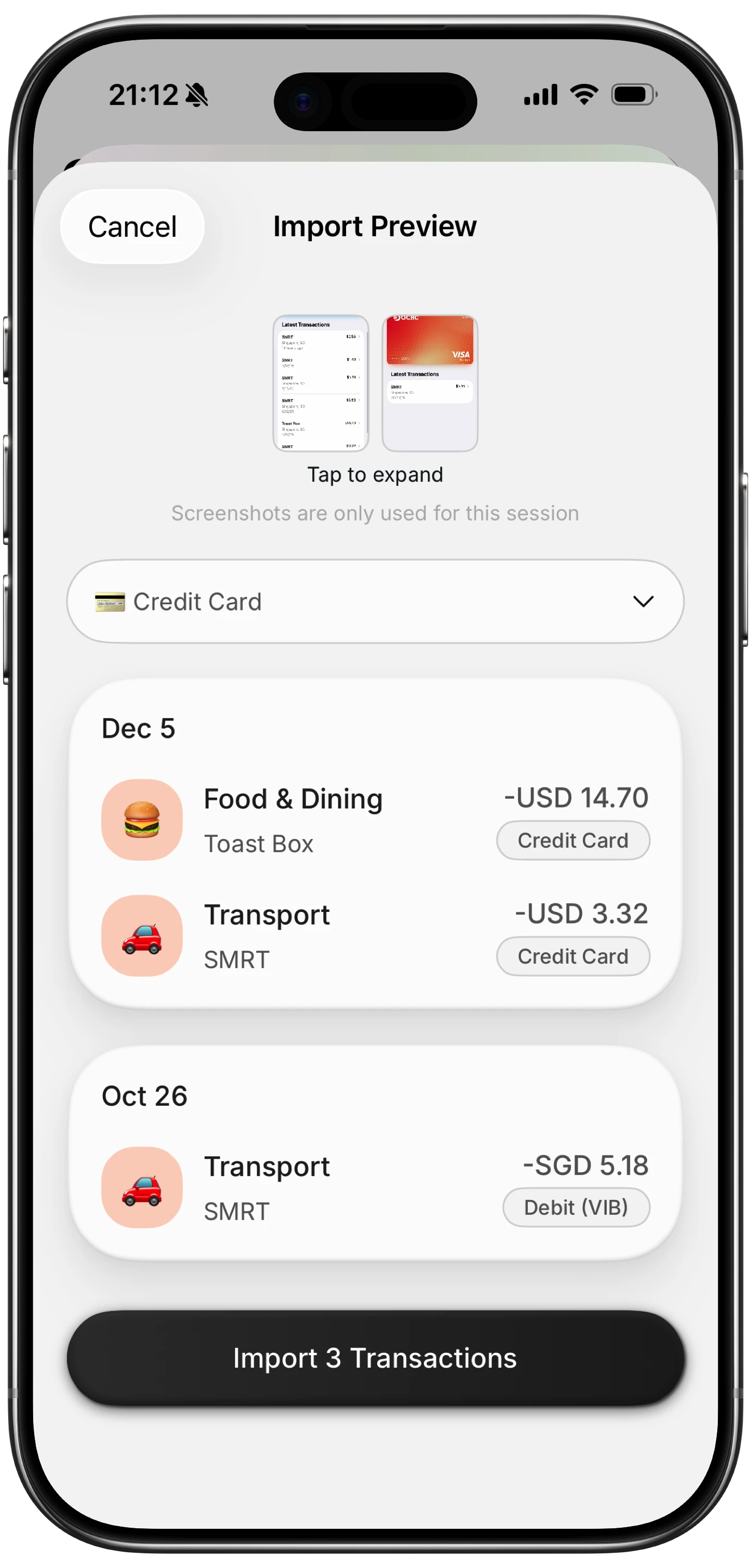
Finny app's screenshot import feature
After scanning, Finny's AI review screen shows each parsed receipt with extracted fields clearly labeled. You can edit any field before confirming. This "AI assists, human confirms" approach reduces errors while keeping you in control of your data.
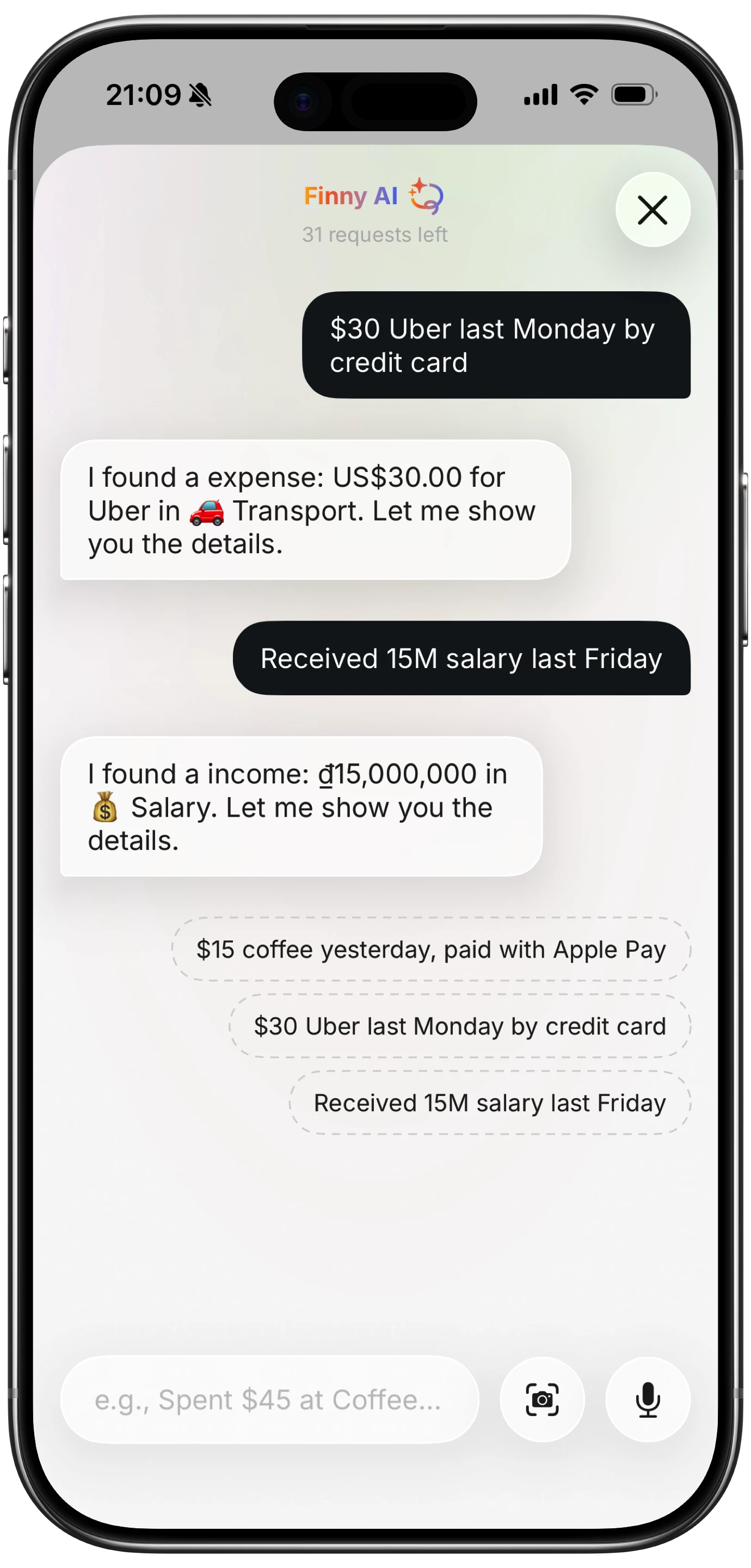
Finny app's AI chat feature
Finny also works entirely offline, storing your data locally on your device. For users who want to scan receipts for budget tracking without uploading financial data to third-party servers, this is a significant advantage. Learn more about why offline tracking matters in our offline expense tracking guide.
Receipt Scanning Accuracy: What to Expect
No receipt scanner is perfect. Here is what affects accuracy across all apps:
High accuracy scenarios: Clean, printed receipts from major retailers. Standard formatting with clear totals. Good lighting when photographing.
Lower accuracy scenarios: Faded thermal paper receipts. Handwritten additions or tips. Receipts in languages the app does not support. Crumpled or torn paper. Long itemized receipts where the camera cannot capture everything in one shot.
The best approach is to scan receipts shortly after purchase, before the thermal paper fades. If you are tracking expenses for tax purposes, always verify the parsed totals against the original receipt.
For users who want AI assistance beyond receipt scanning, text and voice input are additional options. Our guide on AI-powered financial coaching explores how AI is changing personal finance tools more broadly.
Privacy Considerations for Receipt Scanning
Receipt images contain sensitive information: where you shop, what you buy, when you visit certain stores, and how much you spend. Before choosing a receipt scanner app, consider how your data is handled.
Cloud-based processing: Most receipt scanners upload your images to remote servers for OCR processing. This means a third party has access to your purchase history. Apps like Expensify and Wave process images on their infrastructure.
Local processing: Some apps process images on your device. This keeps receipt data under your control but may limit accuracy since on-device models are typically smaller than cloud-based ones.
Bank connections: Apps that link to your bank account combine receipt data with your full transaction history. This creates a comprehensive financial profile stored on someone else's servers.
Finny avoids bank connections entirely and processes receipt data with privacy as a priority. If data security is important to you, read our detailed guide on finance app security and privacy.
How to Get the Most from Receipt Scanning
Follow these practices to improve your receipt scanning workflow:
- Scan immediately: Photograph receipts the same day you receive them. Thermal paper fades within weeks.
- Use good lighting: Natural light or a well-lit room improves OCR accuracy significantly.
- Flatten the receipt: Smooth out wrinkles and lay the receipt flat before photographing.
- Batch your scanning: If your app supports it, save up a few receipts and scan them together. Finny's multi-image scanning handles up to five at once.
- Always review: Check parsed totals against the original receipt, especially for tax-relevant expenses.
- Set a category: Assign spending categories at scan time so your budget stays organized. Our guide on optimizing spending categories can help you set up a system that works.
Who Should Use a Receipt Scanner App
Not everyone needs one. Here is a quick breakdown:
Freelancers and self-employed: Receipt scanning is essential for tracking deductible expenses. Look for apps with strong export options for tax time.
Privacy-conscious trackers: If you avoid linking bank accounts, receipt scanning is one of the best ways to log purchases accurately without manual data entry.
Travelers: Receipts in foreign currencies and languages are common. Multi-currency support matters here. See our guide on multi-currency expense tracking for digital nomads for more detail.
Casual budgeters: If you only want a rough sense of spending, manual text input may be simpler than scanning every receipt. But for those who want accuracy with less typing, scanning is worth the effort. iPhone users looking for more options can check our list of the best receipt scanner apps for iPhone in 2026.
The Bottom Line
The best receipt scanner app depends on your priorities. For business expense reporting with team features, Expensify remains the standard. For freelancers who need free accounting, Wave works if you are comfortable linking your bank. For open-source transparency and export flexibility, Smart Receipts covers the basics.
For personal budget tracking with privacy, batch scanning, and AI-assisted parsing, Finny offers a combination that the others do not: scan up to five receipts at once, review AI-parsed data before saving, and keep everything on your device without bank connections.
Common Questions About Receipt Scanner Apps
What is the best receipt scanner app in 2026?
The best option depends on your use case. For personal budgeting with privacy, Finny offers batch scanning without bank connections. For business expense reporting, Expensify provides team workflows and accounting integrations.
Can I scan receipts for budget tracking without linking my bank?
Yes. Apps like Finny and Smart Receipts let you scan and categorize receipts without any bank connection. This keeps your financial data on your device rather than on third-party servers.
How accurate is receipt scanning with AI?
Accuracy varies by app and receipt quality. Clean, printed receipts from major retailers parse reliably across most apps. Faded, handwritten, or foreign-language receipts may require manual corrections. The best approach is to use an app that shows parsed data for your review before saving.
Is it safe to scan receipts with a phone app?
Safety depends on how the app handles your images. Apps that process locally and avoid cloud uploads are safer for privacy. Check whether the app stores receipt images on remote servers and whether it shares data with third parties.
Ready to scan receipts without the privacy trade-offs?
Download Finny to scan up to five receipts at once with AI parsing, offline support, and no bank connections required. Your data stays on your device.