There are two ways an app can help you save money. It can move money into savings for you automatically, or it can help you spend less so there is more left to save. The best approach depends on whether your problem is discipline or visibility.
A save money app that automates transfers works well if you earn enough but never get around to saving. An expense tracker works better if you are not sure where your money goes each month. And a subscription canceller is the right tool if recurring charges are quietly draining your account.
This guide covers all three categories so you can pick the right tool for your situation. If you want a broader look at tracking tools, our guide to the best expense tracker apps in 2026 is a good companion read.
How We Chose These Apps
We evaluated each app based on how effectively it helps users keep more of their money. The criteria included:
- Savings mechanism: Does it automate transfers, reduce spending, cancel subscriptions, or earn cashback?
- Cost vs. value: Is the app's fee justified by the savings it creates?
- Ease of use: How quickly can you set it up and see results?
- Privacy: Does it require bank access, and how does it handle your data?
- Track record: Do real users report meaningful savings over time?
For a deeper look at building lasting money habits, check out our guide on building money habits that stick.
Quick Comparison Table
| App | Type | Price | Bank Connection | Best For |
|---|---|---|---|---|
| Finny | Expense tracker | a low monthly price | No | Seeing where money goes without bank linking |
| Qapital | Automated savings | From $3/mo | Yes | Rule-based automatic savings |
| Oportun (Digit) | Automated savings | $5.99/mo | Yes | Hands-off saving based on spending patterns |
| PocketGuard | Expense tracker | Free/$12.99/mo | Yes | "In My Pocket" leftover spending view |
| Rocket Money | Subscription canceller | Free/$7-14/mo | Yes | Finding and cancelling unused subscriptions |
| Acorns | Round-up investing | From $3/mo | Yes | Investing spare change automatically |
| Goodbudget | Envelope budgeting | Free/$10/mo | No | Couples using envelope method to limit spending |
| Ibotta | Cashback | Free | No | Earning cash back on groceries |
Apps That Help You Spend Less
These apps save you money by making your spending visible. When you can see exactly where every dollar goes, you naturally start making better choices.
Finny: Best for Revealing Savings Opportunities
Finny takes a different approach to saving money. Instead of moving cash into a savings bucket, it gives you complete visibility into your spending so you can find the leaks yourself.
The app's AI input lets you log expenses by typing naturally, speaking, or scanning receipts. You can snap up to five receipts at once with Batch Snap and Log, which means you never fall behind on tracking. When every purchase is accounted for, patterns emerge quickly. You might discover you are spending $400 a month on dining out, or that small daily purchases add up to more than your rent.
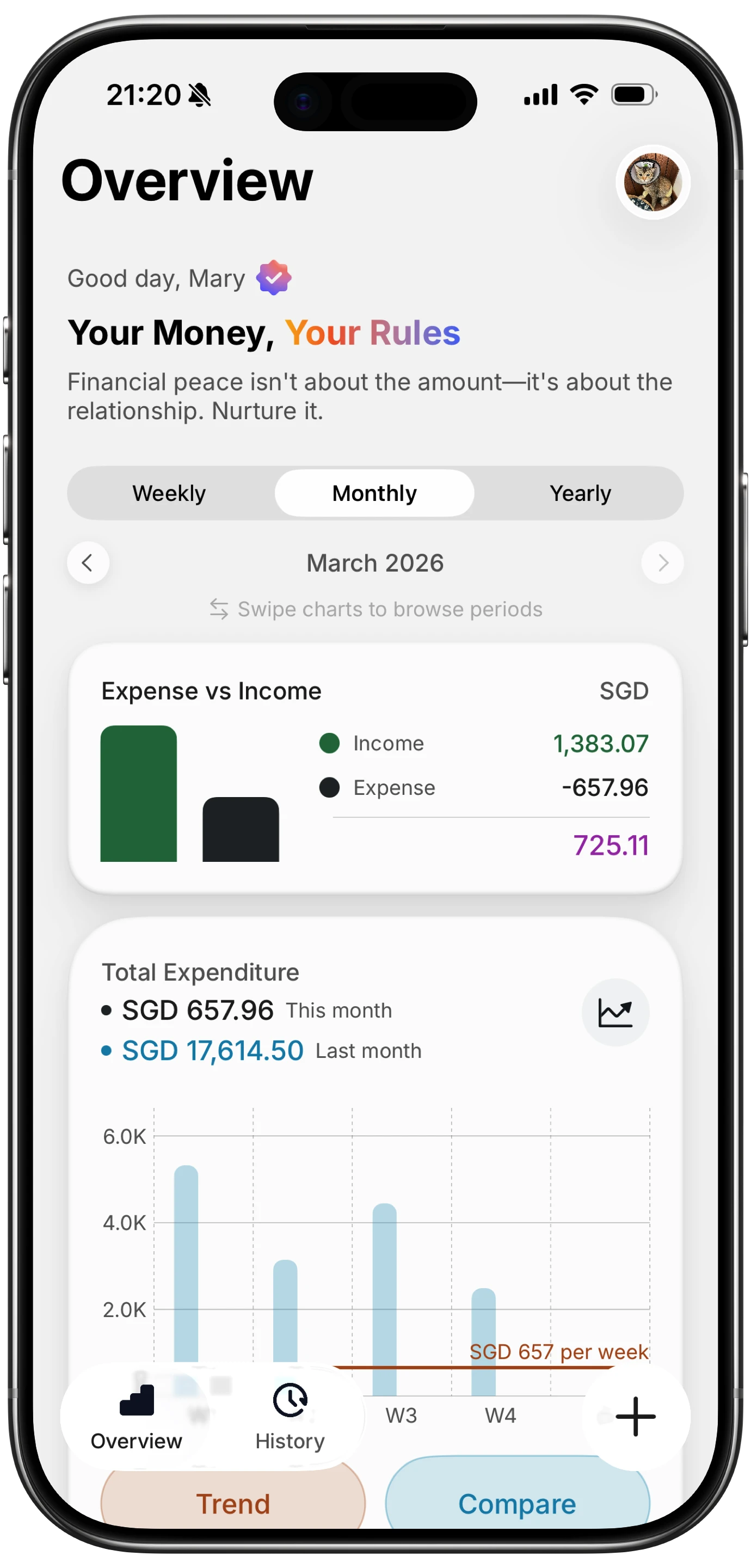
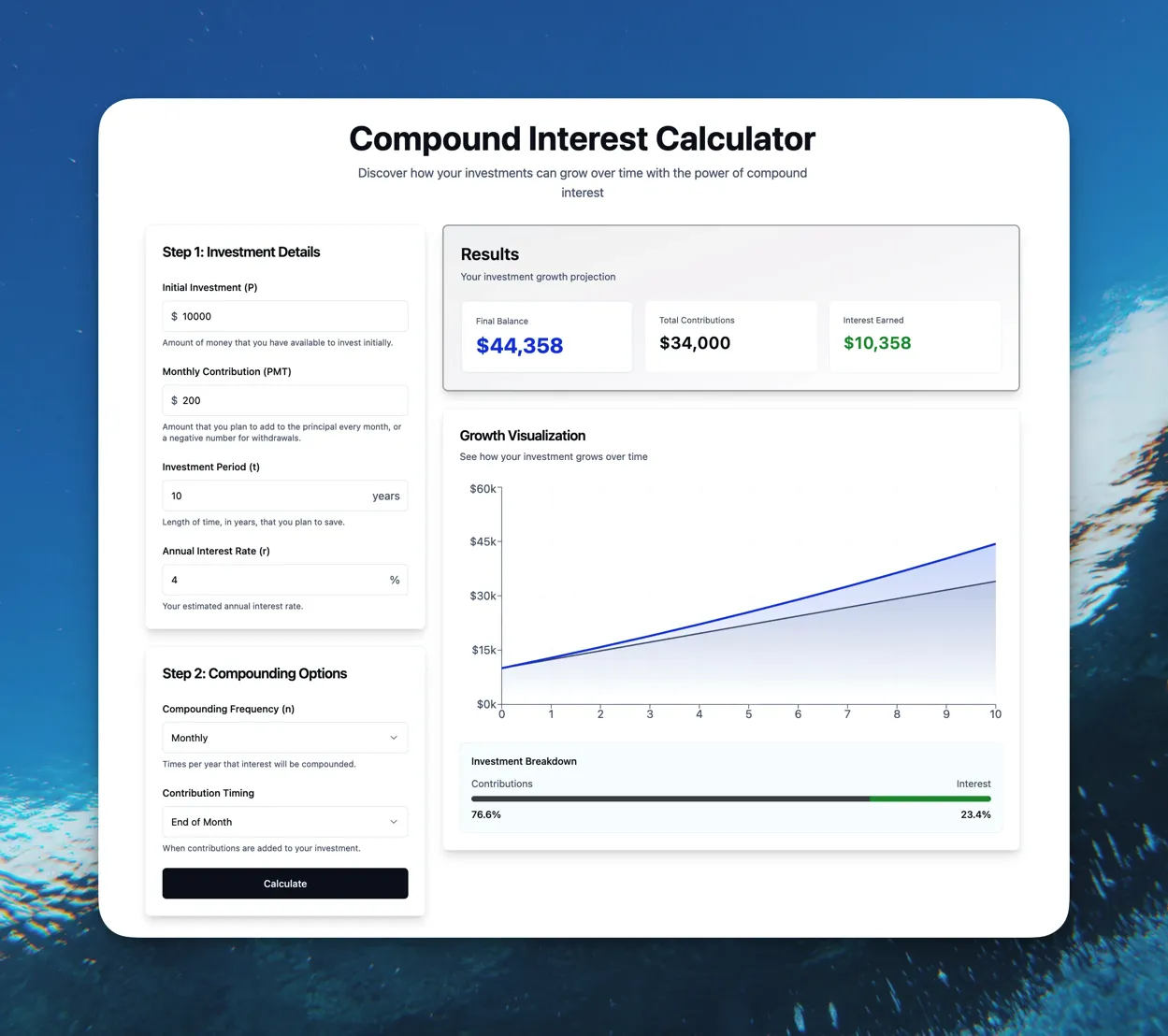
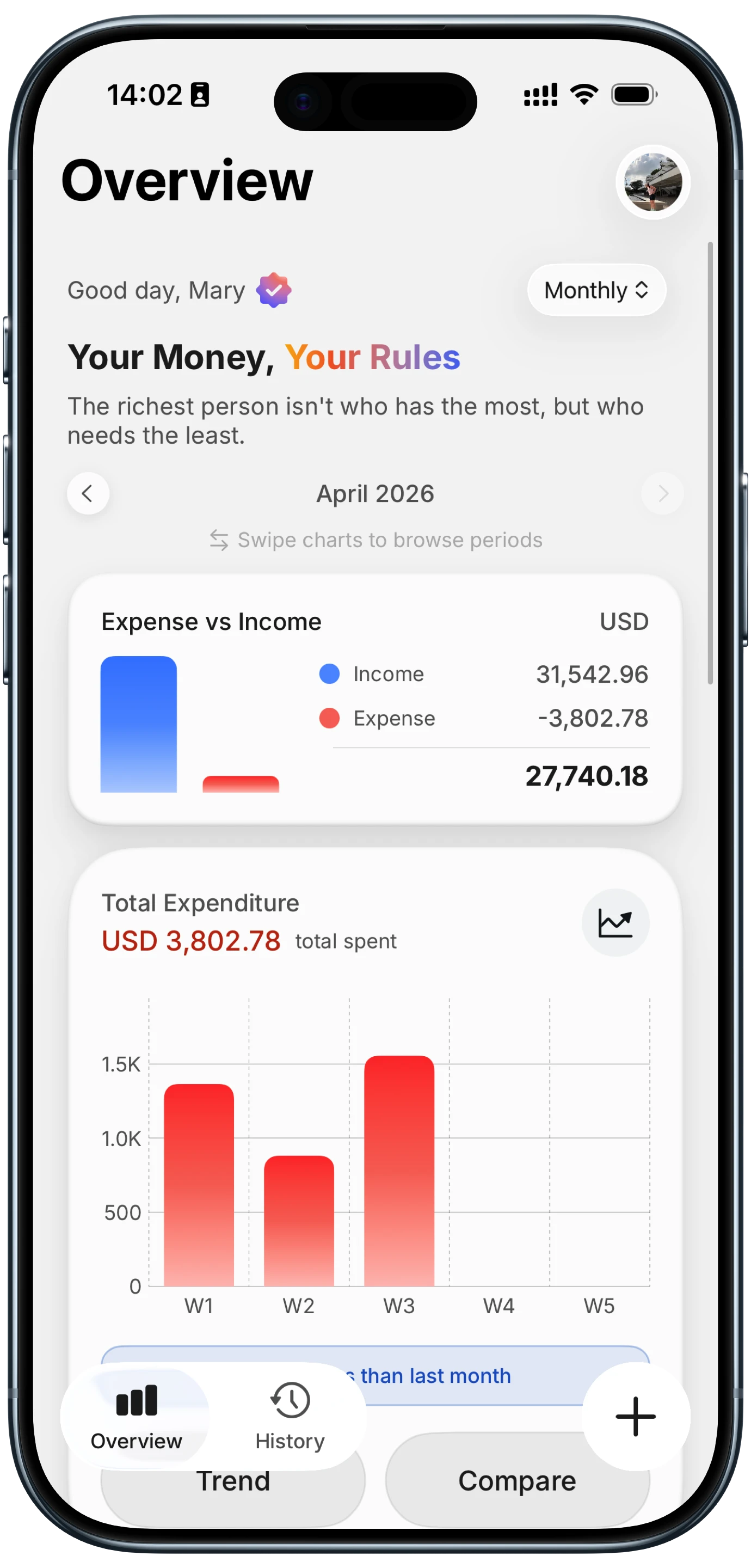
Finny app's Overview feature
Finny works fully offline and does not require bank connections, which makes it a strong choice for anyone who prefers privacy-first financial tools. The free tier includes unlimited manual tracking, custom categories, and charts. Pro unlocks AI input, voice logging, and receipt scanning for a low monthly price, making it one of the most affordable options on this list.
For users who pay with Apple Pay, the Tap to Track feature automatically logs transactions the moment they happen. No manual entry, no forgotten purchases.
Price: Free tier available. Pro at a low monthly or yearly price.
Best for: People who want to understand their spending patterns without connecting bank accounts.
If you want to learn how expense tracking fits into a larger savings strategy, our guide on how to save money fast has practical tips.
PocketGuard: Best for Seeing What You Can Safely Spend
PocketGuard's standout feature is its "In My Pocket" number, which shows how much money you have left after bills, goals, and necessities. This single figure answers the question most people actually have: how much can I spend today without hurting myself financially?
The app connects to your bank accounts and credit cards to pull transactions automatically. It categorizes spending and tracks recurring bills. The free version is limited to two budget categories and two bank connections, which makes it quite restrictive for serious use.
PocketGuard Plus at $12.99/mo unlocks unlimited categories, debt payoff planning, and subscription tracking. That price puts it in the premium tier for what is essentially a spending visibility tool.
Price: Free (limited) or $12.99/mo ($74.99/yr).
Best for: People who want one clear number telling them what they can safely spend.
Apps That Move Money Into Savings
These apps automate the act of saving by transferring small amounts from your checking account into a separate savings balance. They work best for people who earn enough to save but struggle with follow-through.
Qapital: Best for Custom Savings Rules
Qapital lets you create personalized rules that trigger automatic savings. You can round up purchases, save a fixed amount every time you buy coffee, set a "guilty pleasure" trigger, or even tie savings to your Apple Health workout data. The app offers more than 15 customizable rules.
The approach is clever because it turns spending into saving. Each rule runs quietly in the background, moving small amounts into your Qapital goals. Users who set multiple rules often save $100 to $200 per month without noticing the transfers.
After a 30-day free trial, plans start at $3/mo. The app requires a linked bank account to function.
Price: From $3/mo after 30-day free trial.
Best for: People who like gamified saving with custom triggers and rules.
Oportun (formerly Digit): Best for Fully Automated Saving
Oportun, which many people still know as Digit, analyzes your income and spending patterns to determine safe amounts to save. The algorithm transfers small sums from your checking account to your Oportun savings balance throughout the month, adjusting based on upcoming bills and spending habits.
The hands-off approach is its biggest selling point. You do not set rules or make decisions. The app handles everything. Users report saving an average of $150 per month. Oportun also guarantees no overdrafts from its automatic transfers.
The downside is cost. At $5.99/mo ($3.99/mo on the annual plan), you are paying roughly $48 to $72 per year for the service. That fee eats into your savings, especially in the first year when balances are small.
Price: $5.99/mo or $3.99/mo (annual plan). Free trial available.
Best for: People who want completely hands-off saving without making any decisions.
Acorns: Best for Investing Spare Change
Acorns rounds up your purchases to the nearest dollar and invests the difference into a diversified portfolio. A $4.35 coffee becomes a $5.00 charge, with $0.65 going into your investment account. Over months of daily transactions, these round-ups can add up to $20 to $50 per month in new investments.
The app is simple to use and requires almost no financial knowledge. You pick a risk level, and Acorns handles the rest. It also offers retirement accounts with IRA matching on higher-tier plans.
The challenge is the fee structure. At $3/mo for the Bronze plan, $6/mo for Silver, and $12/mo for Gold, the flat fee represents a high percentage of small balances. If you have less than $500 invested, you might be paying more in fees than you earn in returns. Acorns works best once your balance grows past $1,000.
Price: $3/mo (Bronze), $6/mo (Silver), $12/mo (Gold).
Best for: Beginners who want to start investing with spare change and no financial expertise.
Apps That Cut Recurring Costs
Sometimes the best way to save money is to stop paying for things you forgot you were paying for. These apps specialize in finding and eliminating wasteful subscriptions.
Rocket Money: Best for Cancelling Forgotten Subscriptions
Rocket Money scans your bank transactions to identify every recurring charge on your accounts. The average user discovers $200 to $300 in annual subscriptions they forgot about or no longer use.
The free tier identifies subscriptions and lets you track them manually. Premium ($7 to $14/mo, you choose your price) adds a concierge service that cancels subscriptions on your behalf. You tap a button, and Rocket Money handles the cancellation call or email. Premium also includes bill negotiation, where the app contacts service providers to lower your rates.
The economics are straightforward. If Rocket Money helps you cancel even one $15/mo subscription, it pays for itself. Most users find several. For more on managing recurring charges, read our guide on how to stop subscription creep.
Price: Free (tracking only) or $7-14/mo (Premium with cancellation concierge).
Best for: People with multiple streaming, fitness, or software subscriptions they have lost track of.
Apps That Earn You Money Back
Ibotta: Best for Grocery Cashback
Ibotta offers cash back on grocery purchases at major retailers. You browse available offers before shopping, buy the qualifying items, then scan your receipt or link a loyalty card to earn cashback. Payouts start at $20 and go to PayPal, Venmo, or gift cards.
The app works best for grocery shoppers who plan their trips. Power users report earning $30 to $50 per month, though most people earn $10 to $20 depending on how many offers they activate. Ibotta is completely free and does not require a bank connection.
The downside is that cashback offers can nudge you toward buying things you would not otherwise purchase. The real savings come from using offers on items already on your shopping list.
Price: Free.
Best for: Regular grocery shoppers who want passive cashback on items they already buy.
Envelope Budgeting as a Savings Tool
Goodbudget: Best for Couples Limiting Spending Together
Goodbudget uses the envelope budgeting method, where you allocate money into virtual envelopes for each spending category. When an envelope runs out, you stop spending in that category. This built-in constraint is surprisingly effective at reducing overall spending.
The app works well for couples because both partners can see the same envelopes and track against the same limits. No bank connection is required, so all entries are manual. The free tier includes 10 envelopes and syncing across 2 devices. Plus costs $10/mo or $80/yr for unlimited envelopes and 5 devices.
Price: Free (10 envelopes) or $10/mo ($80/yr).
Best for: Couples who want a shared, simple system to limit spending by category.
Two Types of Saving: Which Approach Is Right for You?
The apps above fall into two broad categories, and understanding the difference matters.
Apps that move money (Qapital, Oportun, Acorns) automate the transfer of small amounts into savings or investment accounts. They work best when your income comfortably covers your expenses and the problem is simply that you never get around to saving. The risk is that fees can eat into small balances, and the automation can mask underlying spending issues.
Apps that help you spend less (Finny, PocketGuard, Rocket Money, Goodbudget) focus on visibility and control. They help you understand where your money goes so you can make better decisions. This approach is more sustainable long-term because it addresses the root cause.
For most people, starting with a spending tracker like Finny to identify waste, then adding an automated savings tool once you have freed up cash, is the most effective two-step approach. If you are looking for a structured way to begin, our saving money challenge guide walks you through a practical starting framework.
Finny app's Overview feature
FAQ
How much money can a savings app actually save you?
Results vary widely depending on the app type and your financial situation. Automated savings apps like Oportun report average savings of $150/mo. Subscription cancellers like Rocket Money help users find $200 to $300 in forgotten annual subscriptions. Expense trackers help indirectly by revealing spending patterns, which typically leads to 10 to 20 percent reductions in discretionary spending once you see the numbers clearly.
Are automated savings apps safe to connect to your bank?
Most automated savings apps use bank-level encryption and connect through services like Plaid. They cannot make withdrawals beyond what the app's algorithm determines is safe. Oportun, for example, guarantees no overdrafts. That said, if you prefer not to share bank credentials with third parties, expense trackers like Finny that work without bank connections offer a privacy-first alternative.
Is it worth paying for a savings app?
It depends on the math. A $3 to $6/mo app that helps you save $150/mo is clearly worth it. But a $12/mo app on a small balance can eat into your returns significantly. Free options like Finny's manual tracking tier, Goodbudget's free plan, or Ibotta's cashback program carry no cost risk. Start with free tools, and upgrade only when you have evidence the paid features will pay for themselves.
Can I use multiple savings apps together?
Yes, and many people do. A common combination is an expense tracker (to understand spending) paired with an automated savings app (to move money) and a cashback app (to earn back on purchases). The key is avoiding overlap that creates confusion. Pick one tool per category and let each do its job.
What is the difference between a savings app and a budgeting app?
A savings app focuses on moving money into savings, either through automation, round-ups, or cashback rewards. A budgeting app focuses on planning how you spend money. Some apps, like PocketGuard and Rocket Money, blend both by tracking spending and identifying savings opportunities. Pure expense trackers like Finny focus on visibility, letting you make your own decisions about where to cut back.