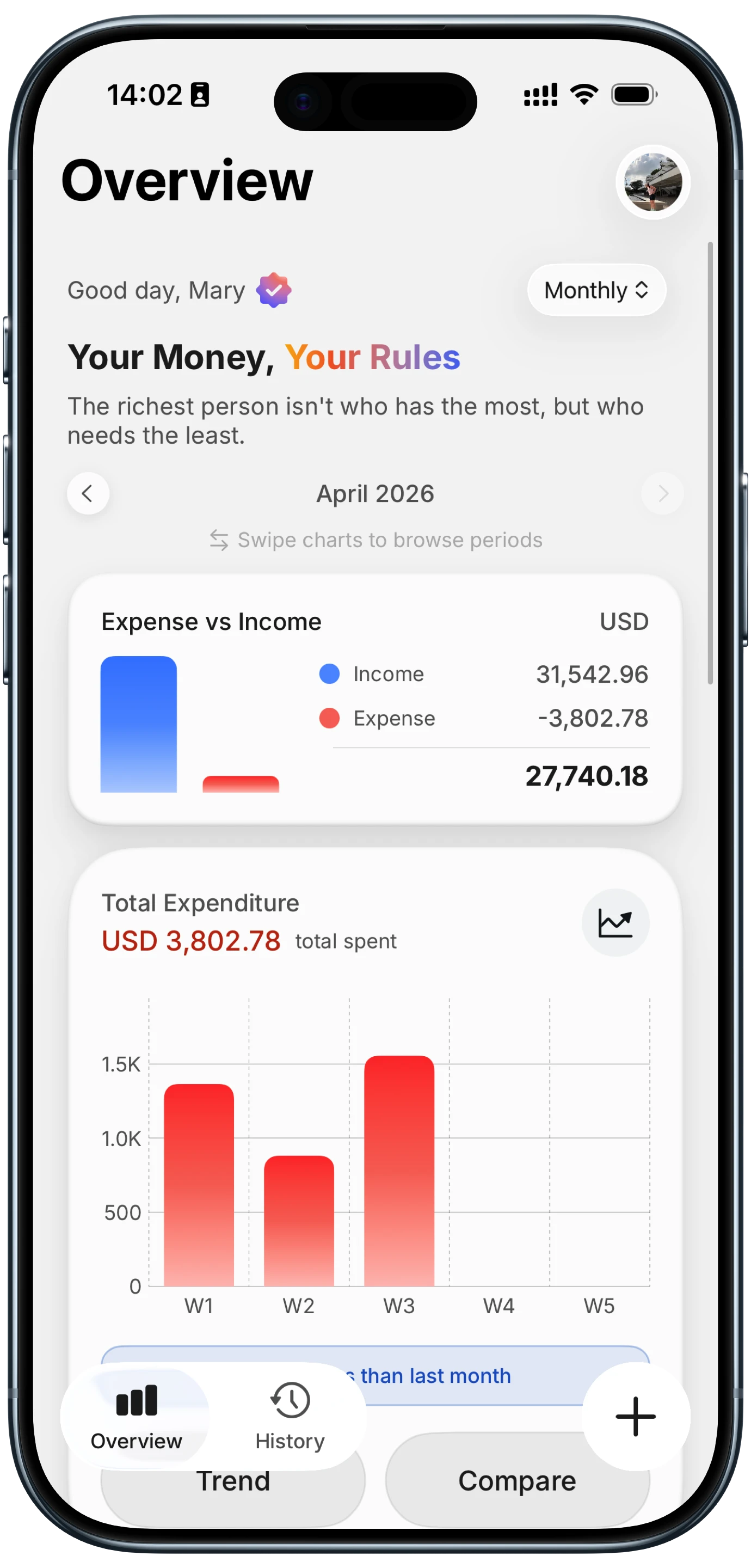
Most receipt scanner apps are built for businesses. They are designed around expense reports, reimbursement workflows, and accounting software integrations. That is not what you need when you just want to photograph a grocery receipt and see where your money went this month.
A receipt scanner app for money tracking should do three things well: scan accurately, categorize spending automatically, and feed that data into a personal budget. No corporate approval chains. No QuickBooks integrations you will never use. Just a fast way to turn paper receipts into useful spending data.
This guide focuses specifically on receipt scanner apps designed for personal expense tracking. We compared accuracy, categorization, batch scanning, privacy, and pricing. For a broader look at receipt scanning tools including business options, see our best receipt scanner apps in 2026 roundup. If you want to understand how AI receipt scanning works under the hood, our AI receipt scanner guide explains the technology.
What to Look for in a Personal Receipt Scanner
Business receipt scanners and personal receipt scanners solve different problems. Here is what matters when you are scanning receipts to track your own spending:
Automatic categorization. The app should assign a spending category (groceries, dining, transport) based on the merchant or items without requiring manual input every time.
Speed over compliance. Business apps prioritize audit trails and policy enforcement. Personal apps should prioritize getting the receipt logged in under 10 seconds.
Budget integration. The scanned data should flow into charts, category totals, and spending trends. A receipt scanner that just stores images is a filing cabinet, not a financial tool.
Privacy. Personal receipt data contains sensitive information about your habits and location. Look for apps that do not require bank connections and ideally process data on your device.
Batch scanning. If you tend to accumulate receipts over a few days, scanning them one at a time is tedious. Batch scanning lets you clear a stack in one session.
For tips on automating the entire receipt capture process, see our guide to the best apps to track receipts automatically in 2026.
Comparison Table: Receipt Scanners for Personal Spending
| Feature | Finny | Expensify | SimplyWise | Wave | Smart Receipts | SparkReceipt |
|---|---|---|---|---|---|---|
| Primary Use | Personal tracking | Business expenses | Personal/tax | Small business | Expense reports | Small business |
| Price | Free / a low monthly price | Free (25 scans) / $4.99/mo | Free / $4.99/mo | Free | Free / $0.99 | Free / $9.99/mo |
| Batch Scanning | Yes (up to 5) | No | No | No | No | No |
| AI Categorization | Yes | Yes | Yes | Basic | Manual | Yes |
| Bank Connection | Not required | Optional | Optional | Required | Not required | Not required |
| Offline Support | Full | Partial | No | No | Yes | No |
| Budget/Charts | Yes | Limited | Basic reports | Accounting | No | No |
| Data Privacy | High (on-device) | Low (cloud) | Medium | Low | High (open source) | Medium |
Best Receipt Scanner Apps for Tracking Spending
Finny: Best Overall for Personal Receipt Scanning
Finny treats receipt scanning as one input method among several, all feeding into the same personal budget. This integrated approach means scanned receipts do not live in a separate silo. They appear alongside your typed, spoken, and automatically captured expenses in one unified view.
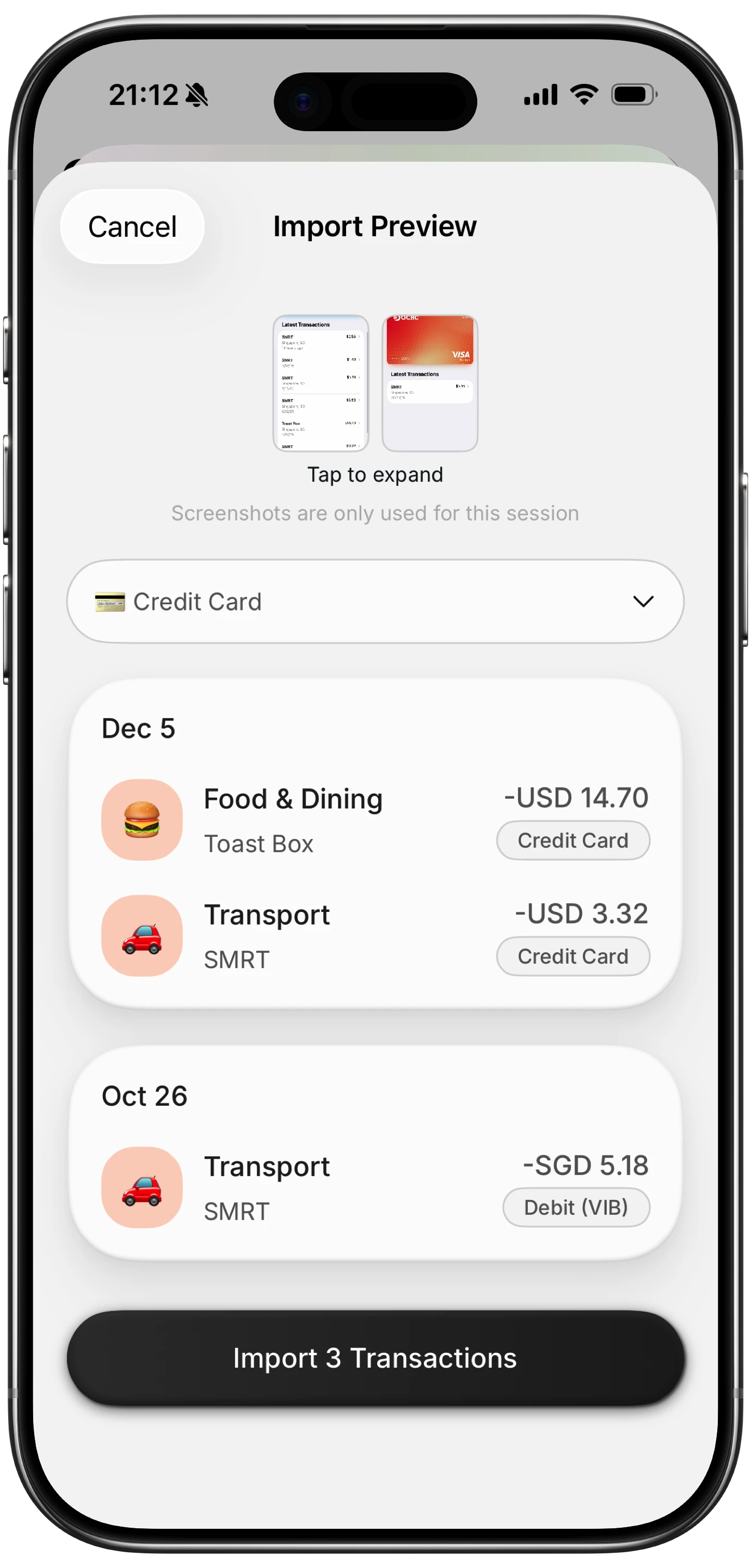
Finny app's screenshot import feature
The standout feature for receipt scanning is Batch Snap and Log. You can photograph up to five receipts at once, and the AI parses each one for the merchant name, date, total, and category. This is a genuine time-saver when you come home with a handful of receipts from the day. No other personal finance app in this price range offers multi-receipt scanning.
Accuracy is strong on standard printed receipts. The AI handles different formats, currencies, and even slightly crumpled paper without much trouble. After scanning, you review the extracted data and confirm or edit before saving. This "AI assists, you confirm" workflow keeps errors from slipping into your budget.
Finny works entirely offline, processes receipt data with your privacy in mind, and never requires bank connections. The free tier includes receipt scanning with daily AI limits. Pro at a low monthly price unlocks 50 AI requests per day, which covers heavy scanning use with room to spare.
Beyond receipts, Finny offers AI input via text, voice, and chat. The Tap to Track feature captures Apple Pay transactions automatically. Your spending data feeds into charts, category breakdowns, and trend analysis across over 150 currencies.
Best for: Anyone who wants receipt scanning as part of a complete personal expense tracker, without corporate bloat or high costs.
Expensify: Most Recognized Name in Receipt Scanning
Expensify's SmartScan technology is the industry benchmark for receipt OCR. Point your camera at a receipt, and the app extracts the merchant, date, amount, and currency with high accuracy. It can also process receipts forwarded via email.
The challenge for personal users is that Expensify is fundamentally a business tool. The interface is organized around expense reports, approval workflows, and accounting integrations. If you just want to track grocery spending, you will navigate past features you do not need.
The free tier allows 25 SmartScans per month. For unlimited scanning, individual plans start at $4.99/month. Expensify processes all receipt images on its servers, which is standard for business tools but worth noting if privacy matters to you.
Best for: Users who also need business expense reporting and want one app for everything.
SimplyWise: Best for Receipt Organization
SimplyWise focuses on capturing and organizing receipts with AI. It scans store name, date, tax, tip, and total, then files everything into searchable categories. The app can also import receipts automatically from email accounts like Gmail and from retailers like Amazon and Walmart.
The monthly and yearly spending reports are useful for spotting trends. The interface is straightforward and clearly designed for individuals rather than businesses. SimplyWise also matches receipts to bank transactions if you choose to connect accounts, which helps catch discrepancies.
The free tier covers basic scanning. Premium at $4.99/month adds unlimited scans, email imports, and advanced reporting. The app requires an internet connection for scanning, which is a limitation if you want to log receipts immediately while traveling or in areas with poor connectivity.
Best for: Users who want a dedicated receipt organizer with automatic email import.
Wave: Best Free Option for Freelancers
Wave offers free receipt scanning as part of its accounting suite. The Smart Receipts feature extracts key details and feeds them directly into your bookkeeping. Unlimited scans are included at no cost, which is generous compared to competitors.
The catch: Wave is built for small business accounting. Personal budgeting features are minimal. You need to connect a bank account to use the app fully, and the interface assumes you are tracking business income and expenses rather than personal spending. Wave was acquired by H&R Block, which raises data usage questions for some users.
Best for: Freelancers and self-employed users who need receipt scanning alongside invoicing and bookkeeping.
Smart Receipts: Best for Privacy and Exports
Smart Receipts is an open-source receipt tracker focused on documentation rather than budgeting. It works offline, handles receipt photos locally, and offers flexible export options including CSV, PDF, and ZIP bundles. The open-source codebase means you can verify exactly how your data is handled.
The trade-off is significant: Smart Receipts does not categorize expenses automatically, does not generate spending charts, and does not offer any budget tracking. It is a receipt filing tool, not a financial tracker. You scan one receipt at a time, tag it manually, and export when needed. For users who want privacy and export flexibility above all else, it fills a specific niche.
Best for: Privacy-focused users who need receipt documentation for tax or reimbursement purposes.
SparkReceipt: Best for Tax Preparation
SparkReceipt positions itself as an AI-powered tool for staying "tax-ready" year-round. It scans receipts, auto-categorizes them using tax-relevant categories, and flags potential deductions. The app is built primarily for small business owners and independent contractors.
For personal spending tracking, SparkReceipt's categorization is useful but the tax-centric framing may feel like overkill. The free tier covers basic scanning. Premium plans at $9.99/month unlock unlimited AI processing and advanced reporting.
Best for: Self-employed users who want receipt scanning tied directly to tax category tracking.
How Receipt Scanning Fits Into Your Budget
Scanning receipts is only useful if the data goes somewhere productive. Here is how to integrate receipt scanning into a sustainable expense tracking habit:
Scan immediately or batch weekly. The two approaches that work are scanning each receipt the moment you get it, or collecting receipts in one spot and scanning them all in a weekly session. Anything in between leads to lost receipts and gaps in your data. Apps with batch scanning, like Finny, make the weekly approach practical.
Let AI categorize, but review monthly. Automatic categorization saves time daily but introduces small errors over time. A monthly review of your categories catches misclassifications before they distort your spending picture.
Combine scanning with other input methods. Receipts do not cover every expense. Digital payments, subscriptions, and cash spending need other capture methods. The most effective approach uses receipt scanning alongside manual entry, voice logging, or automatic transaction capture. For a detailed look at different tracking approaches, see our guide on how to track expenses.
Receipt Scanner vs. Bank-Connected Apps
Some users wonder why they should bother scanning receipts when bank-connected apps import transactions automatically. There are a few reasons receipt scanning still matters:
Line-item detail. Bank transactions show "Walmart $87.42." A scanned receipt shows exactly what you bought. That granularity helps you understand where the money actually goes within a category.
Cash purchases. Bank syncing misses any transaction paid with cash. Receipt scanning captures everything regardless of payment method.
Privacy. Receipt scanning works without sharing bank credentials with a third-party app. For a deeper look at this trade-off, read about tracking expenses without linking your bank.
Speed. Some bank-connected apps take 24 to 48 hours to import transactions. A scanned receipt appears in your budget immediately.
Frequently Asked Questions
What is the best receipt scanner app for personal spending?
For personal spending, you want an app that combines accurate scanning with budget tracking and categorization. Finny offers the strongest combination of batch receipt scanning (up to five at once), AI categorization, spending charts, and privacy at a low monthly price. Expensify has excellent OCR accuracy but is designed primarily for business use. SimplyWise sits in the middle with good personal features but no offline support.
Can I scan receipts to track expenses for free?
Yes. Finny's free tier includes receipt scanning with daily AI limits. Expensify offers 25 free SmartScans per month. Wave provides unlimited free scans as part of its accounting platform, though it requires bank connections. Smart Receipts is completely free and open source but offers no automatic categorization or budget features.
How accurate are receipt scanner apps?
Modern AI-powered scanners handle standard printed receipts with high accuracy, typically extracting merchant, date, and total correctly over 90% of the time. Accuracy drops with handwritten receipts, faded thermal paper, or unusual formatting. The best apps let you review and edit extracted data before saving, which catches the occasional error. For a deeper look at AI scanning accuracy and how it works, read our AI receipt scanner guide.
Is receipt scanning better than manual expense entry?
Receipt scanning is faster for purchases where you receive a physical receipt. A single photo replaces 30 seconds of typing. However, many expenses (subscriptions, digital purchases, transfers) do not come with physical receipts. The most effective tracking combines receipt scanning with other input methods. Apps like Finny that offer scanning alongside text, voice, and automatic Apple Pay capture cover all scenarios.
Do receipt scanner apps need an internet connection?
It depends on the app. Finny and Smart Receipts work fully offline, processing receipt data on your device. Expensify and SimplyWise require an internet connection for their cloud-based AI processing. If you travel frequently or want to scan receipts in areas with poor connectivity, offline support is an important consideration. Learn more in our guide on batch receipt scanning for expense tracking.