Best Travel Budget Apps for 2026
Traveling across multiple countries means dealing with currencies that change every few days, Wi-Fi that disappears at the worst moments, and the ongoing math of splitting bills with companions who all paid in different denominations. A general-purpose budgeting app built for home use rarely handles any of this well.
The best travel budget apps solve a specific set of problems: logging expenses quickly when you have five seconds at a taxi window, converting between currencies without a signal, and giving you a clear picture of what you have left before you book the next leg. This guide compares the top options for 2026, covering both occasional vacationers and long-term digital nomads. For a deeper look at what to prioritize in a single app, see our complete guide to choosing a travel budget app.
What Makes a Travel Budget App Actually Useful
Most apps marketed as "travel-friendly" are just standard expense trackers with a currency converter bolted on. What separates genuinely useful tools from the rest comes down to a short list of functional requirements.
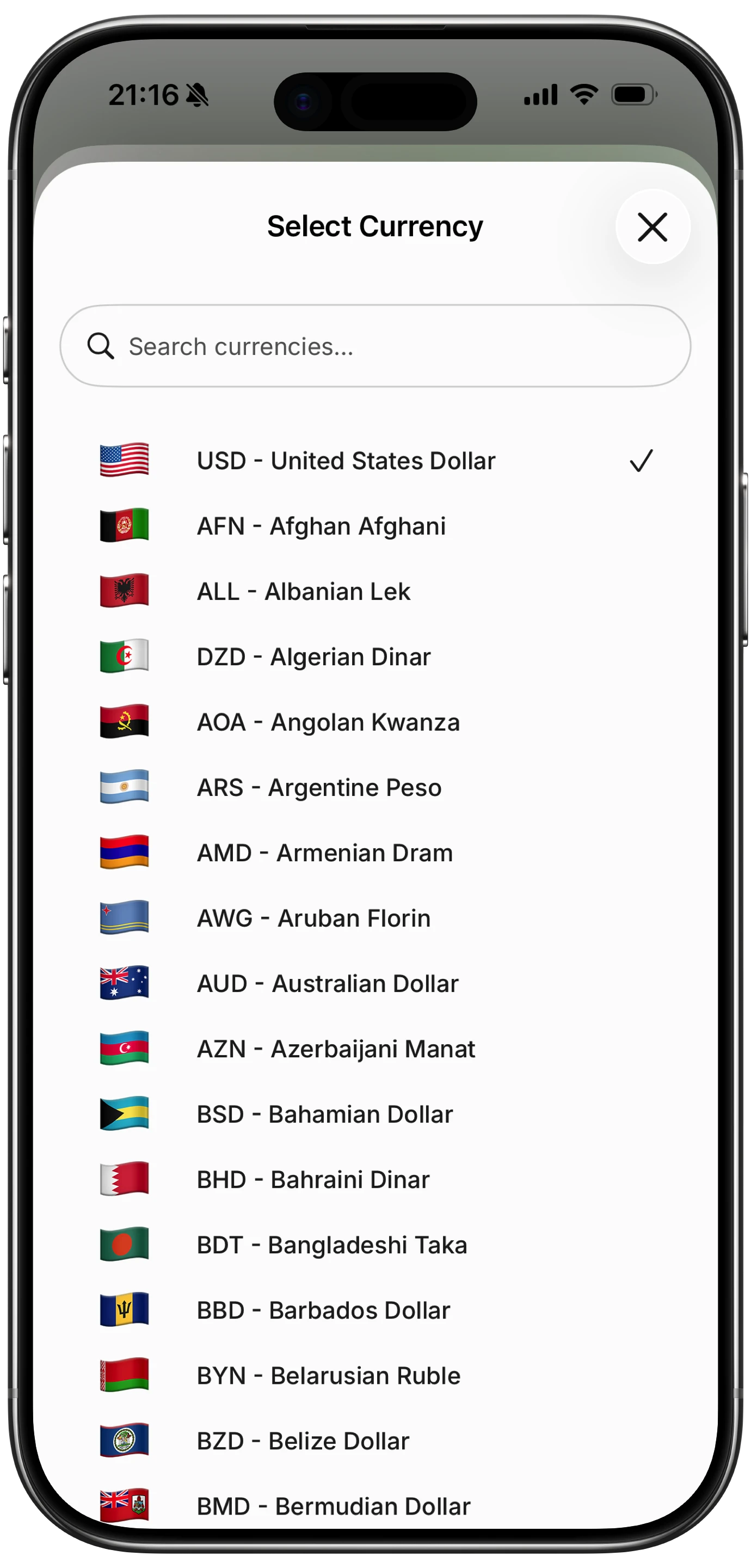
Multi-currency handling. The app needs to store transactions in the currency you paid in, not silently convert everything on entry. If you spent 2,400 yen on lunch, you want to see 2,400 yen in your log, with an auto-converted total in your home currency for the overall budget view. Apps that only show converted amounts make it impossible to reconcile receipts later.
Offline-first logging. Connectivity abroad is unpredictable. Airport lounges, rural guesthouses, and ferry crossings all have one thing in common: the internet is either slow or absent. An app that requires a sync to record an expense is an app you will stop using by day three of a trip.
Fast entry. The window to log a transaction is narrow. Standing outside a market stall or waiting for a rideshare, you need to add an expense in two or three taps, not navigate four screens. Voice input and receipt scanning accelerate this further.
Trip-based organization. Home budgets run month to month. Travel budgets run trip to trip. Grouping expenses by trip rather than calendar month gives you a meaningful picture of what each destination actually cost.
Splitting with others. Group travel involves shared meals, shared taxis, and shared accommodation. Built-in split tracking, or at minimum easy export to a splitting tool, saves a lot of mental overhead.
The Apps: A Comparison for 2026
The landscape of travel expense apps has narrowed. Several once-popular tools have stagnated or shut down. The following options are actively maintained as of mid-2026.
Comparison Table
| App | Price | Multi-Currency | Offline | Split with Others | Platforms | Best For |
|---|---|---|---|---|---|---|
| Finny | Free / a low monthly price (Pro) | 150+ currencies, original + converted | Yes | Manual split notes | iOS | Solo travelers, digital nomads |
| Spendee | Free / $1.99 mo (Plus) / $5.99 mo (Premium) | Yes, with bank sync | Partial | Shared wallets | iOS, Android, Web | Couples, friend groups |
| Wallet by BudgetBakers | Free / Premium (subscription or lifetime) | Yes | Yes | Shared budgets | iOS, Android, Web | Families, heavy planners |
Spendee
Spendee is a well-designed app with a clean visual interface and a long track record. Its standout feature for travel is shared wallets, which let multiple people contribute expenses to a single budget. If you are traveling with a partner or a small group, this makes it easy to see the household total without manually combining data from two phones.
Multi-currency support is present, and the premium tiers add bank connections in supported countries. The Plus plan costs $1.99/mo (or $14.99 annually), while Premium is $5.99 per month (or $35.99 annually). For travelers who do not need bank sync, Plus covers the essentials.
The main limitation for travel is that offline functionality is partial: you can log expenses without connectivity, but certain sync and categorization features require a connection. The interface is polished, though it takes more taps to enter a quick expense than some competitors.
Wallet by BudgetBakers
Wallet by BudgetBakers is one of the more comprehensive personal finance apps available, with multi-currency support, shared budgets, and a lifetime purchase option that appeals to travelers who dislike ongoing subscriptions. The app supports bank connections in a wide range of countries and offers robust budgeting tools for those who want to plan a trip budget in advance, not just track after the fact.
For travel specifically, Wallet works well for people who want detailed category breakdowns and are willing to invest time in setup. The interface is functional but less optimized for rapid one-handed entry on the move. Pricing for Premium is available inside the app and via the web app; BudgetBakers does not publish a fixed public rate, as amounts vary by region.
Multi-Currency and Offline Use: The Two Features That Matter Most
These two capabilities deserve more attention than they typically get in app comparisons, because both are easy to claim and hard to implement well.
What Good Multi-Currency Support Actually Looks Like
The minimum bar is recording a transaction in the original currency. The next level is showing you that original amount alongside a converted total in your base currency, updated with current exchange rates. The best implementations let you lock in an exchange rate at the time of purchase, which matters when you want to reconcile a credit card statement that charged a slightly different rate.
For digital nomads working across three or four currencies simultaneously, a unified view is essential. Seeing $2,400 USD spent this month is useful. Seeing $800 USD, £300 GBP, and 45,000 JPY, all auto-summed to a single total, is what actually lets you manage a nomadic budget. Our guide to multi-currency expense tracking for digital nomads covers the mechanics in depth.
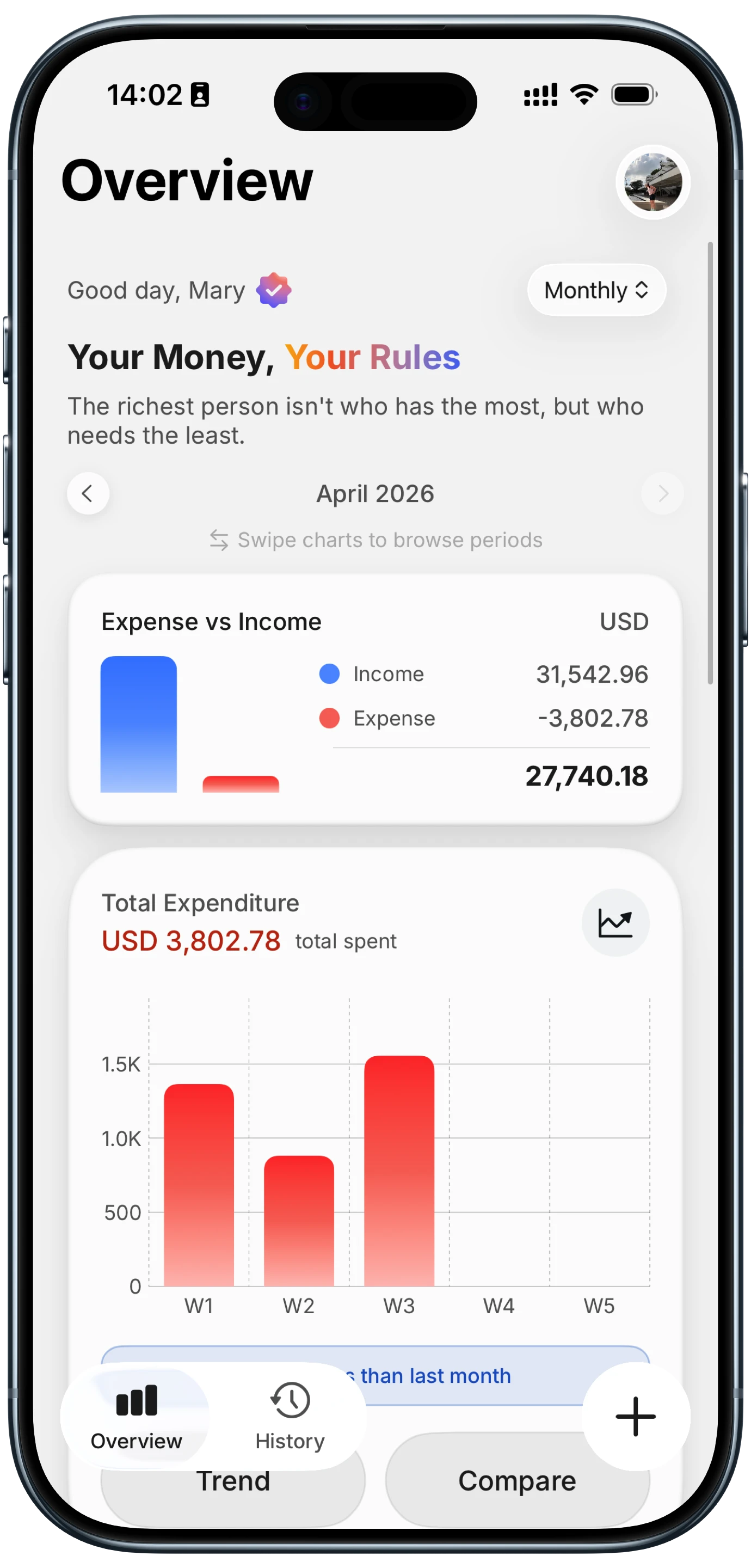
Finny handles this with a unified multi-currency view across 150+ currencies, showing the original currency on each transaction while auto-converting totals. No bank connection is required, which also means no exposure of financial credentials to a third party.
Offline-First Is Not a Nice-to-Have
Every app in this list claims some level of offline support. The distinction is between apps that store data locally first and sync later, versus apps that queue a sync on the assumption that connectivity will return soon. The first model works reliably. The second fails quietly when you are on a 12-hour overnight train.
For a deeper comparison of which apps genuinely work without a signal, see our roundup of the best multi-currency expense tracking apps for 2026.
Fast Logging: The Feature That Determines Daily Use
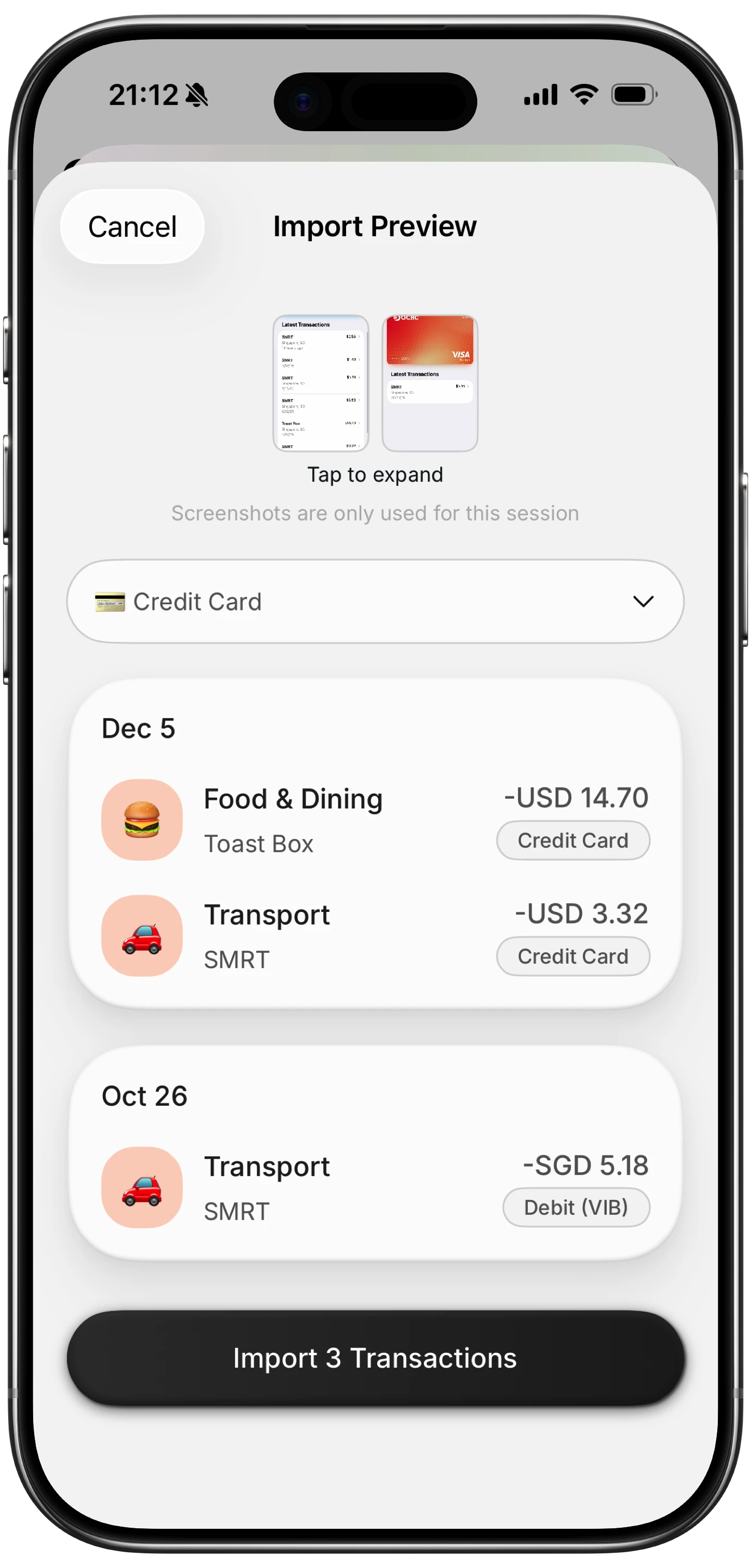
Quick entry is where the difference between apps shows up most clearly in practice. Finny's Tap to Track feature lets you record a common expense in a single tap, while AI input accepts text, voice, or a receipt photo. Describing a transaction out loud while walking away from a counter takes about three seconds.
For business travelers specifically, receipt capture matters for reimbursement workflows. Our overview of business travel expense tracker apps covers that use case in more detail.
Vacationer vs. Digital Nomad: Which App Fits Which Traveler
The two main audiences for travel budget apps have different priorities, and no single app is optimal for both.
Vacationers taking one or two trips per year want something easy to set up, with a clear trip-total view and the ability to split costs with a partner or small group. Spendee's shared wallets are a strong fit here. Wallet by BudgetBakers works well for travelers who want to plan a detailed trip budget in advance.
Digital nomads moving between countries continuously need multi-currency handling that does not require re-setup each time, offline reliability, and fast daily logging. The priority shifts from planning tools toward frictionless capture. For nomads who spend across five or more currencies in a single month, a detailed guide to tracking expenses in multiple currencies is worth reading before committing to any app.
Finny suits the nomad use case well: privacy-first (no bank connection), offline-first, fast entry via AI input, and a unified multi-currency view. The free tier covers solo tracking; Pro at a low monthly price adds additional features without the cost of most competing premium plans.
How to Choose
Start with the group-travel question. If you are regularly sharing expenses with others, Spendee's shared wallets or Wallet's shared budgets add real value. If you are traveling solo or simply want your own clean record, the shared features add complexity without payoff.
Then consider logging frequency. If you are disciplined about logging every expense, any of these apps works. If you know you will skip logging when it is inconvenient, prioritize the fastest entry method available, and test it before your trip.
Finally, consider what happens to your data. Apps that require bank connections to unlock core features mean sharing credentials with a third-party service. For travelers who prefer to keep financial data off external servers, manual-entry apps with no bank connection required are the privacy-preserving alternative.
Common Questions About Travel Budget Apps
Does a travel budget app work without internet access?
Offline capability varies by app. Apps built with local-first storage, where data is saved to your device immediately and synced later, work reliably without connectivity. Apps that depend on a server sync to process or categorize transactions may fail silently when offline. Before traveling, test your chosen app in airplane mode to confirm it behaves as expected.
How do travel budget apps handle multiple currencies?
Better apps record the original transaction currency and store exchange rates at the time of entry. This lets you see what you actually paid in local currency and compare it to your card statement. Simpler apps convert everything immediately to your home currency on entry, which makes reconciliation harder. Look for apps that show the original amount alongside the converted total.
Can I share a travel budget with a partner or group?
Yes, several apps support shared wallets or budgets. Spendee and Wallet by BudgetBakers both include multi-user sharing at their premium tiers. For groups larger than two or three, dedicated splitting apps like Splitwise may handle the settlement math more cleanly, with your budget app handling the personal tracking side.
Is it safe to connect my bank account to a travel budget app?
Bank connection features use read-only access via aggregation services, which reduces but does not eliminate risk. Travelers concerned about credential exposure can use manual-entry apps that never request banking credentials. These apps require more discipline in logging but keep financial data off third-party servers entirely.
What is the best free travel budget app?
Most apps in this category offer a functional free tier. Spendee's free plan covers basic manual tracking. Wallet by BudgetBakers has a free tier with limited features. Finny's free tier covers manual multi-currency expense logging with no bank connection required, which covers the core travel use case without a subscription.
Ready to track your next trip without the spreadsheet math? Download Finny and log your first expense in under ten seconds, in whatever currency you happen to be holding.