Goodbudget vs YNAB 2026: Envelopes or Zero-Based?
Two of the most respected names in budgeting take almost opposite paths to the same goal. One asks you to sort money into envelopes before you spend it. The other asks you to give every single dollar a job and adjust as life happens. Both work, but they suit very different temperaments.
Goodbudget vs YNAB is really a choice between two methods: the digital envelope system and zero-based budgeting. It is also a choice about money, privacy, and how much automation you want. Goodbudget never touches your bank; YNAB syncs your accounts. One has a genuinely usable free tier; the other does not. By the end of this guide you will know which method matches your instincts, what each app costs in 2026, and where a faster, lower-cost option might fit instead.
Goodbudget vs YNAB at a Glance
Before the deep dive, here is the short version. The two apps overlap in spirit (intentional, proactive budgeting) but differ sharply on price, automation, and free access.
| Feature | Goodbudget | YNAB |
|---|---|---|
| Method | Digital envelope budgeting | Zero-based budgeting |
| Free tier | Yes — 20 envelopes, 1 account, 2 devices | No — 34-day free trial only |
| Paid price | Plus: $10/mo or $80/yr | $14.99/mo or $109/yr |
| Bank sync | No (manual entry by design) | Yes (linked account import) |
| Platforms | iOS, Android, web | iOS, Android, web |
| Partner sharing | Yes (shared across devices) | Yes (shared budget) |
| Learning curve | Gentle | Steep |
| Transaction history | 1 year free / 7 years Plus | Full history |
A few things stand out immediately. Goodbudget is the cheaper option at every level, and its free tier is real, not a teaser. YNAB costs more and offers no free plan beyond a trial, but it brings bank syncing and a more powerful budgeting engine. The rest of this comparison explains when each of those trade-offs is worth it.
The Methods: Envelope Budgeting vs Zero-Based
The biggest difference between these apps is philosophical, so it is worth understanding the methods before the menus.
Goodbudget and the Digital Envelope Method
Goodbudget is a modern translation of the old cash-envelope system. You create envelopes (Groceries, Rent, Dining Out, Gas), fund each one with a set amount every pay period, and spend only what is inside. When an envelope runs dry, you either stop spending in that category or deliberately move money from another envelope.
The power here is allocation before spending. You decide once, calmly, that groceries get $500 this month, and the app keeps score from there. It is forgiving, visual, and easy to teach a partner. If the approach is new to you, our guide to envelope budgeting walks through how to set up your first envelopes.
YNAB and Zero-Based Budgeting
YNAB (You Need A Budget) is built on zero-based budgeting: income minus everything you assign equals zero. Every dollar gets a job, whether that job is rent, an emergency fund, or "fun money." Nothing sits unassigned.
YNAB layers four rules on top of that: give every dollar a job, embrace your true expenses (break big annual bills into monthly chunks), roll with the punches (move money when you overspend without guilt), and age your money (aim to spend income that is at least 30 days old). It is a complete behavior-change system, not just a ledger. That is its strength and its barrier: the method delivers real results, but the first few weeks demand effort.
In short, envelopes feel like organizing cash; zero-based budgeting feels like running a tiny, disciplined business. Both are valid. The right one is the one you will actually keep doing.
Pricing and Free Tiers
This is where Goodbudget vs YNAB separates most clearly, and where many people make their decision.
Goodbudget offers a free plan that is genuinely usable, not just a sample. The free tier gives you 20 envelopes, 1 account, 2 devices, and 1 year of transaction history. For a solo budgeter or a couple who can share, 20 envelopes covers most real-life category lists. If you outgrow it, Goodbudget Plus is $10/month or $80/year and unlocks unlimited envelopes, up to 5 accounts, 5 devices, and 7 years of history.
YNAB has no free tier at all. You get a 34-day free trial, then it is $14.99/month or $109/year. There is no permanent free option to fall back on, which means YNAB has to earn its keep every year you renew.
The gap is significant. Goodbudget free costs nothing, and even Goodbudget Plus undercuts YNAB by roughly $29 a year. If price is your main constraint, this is close to a settled question. YNAB's higher cost is justified only if its automation and method save you enough time or money to outweigh it. Plenty of people find it does; many others find the same discipline cheaper elsewhere, which is why our roundup of the best YNAB alternatives exists.
One caveat worth naming: free tiers are valuable only if you stick with the app. A free plan you abandon in week two saves nothing. Match the method to your habits first, then let price break the tie.
Bank Connection and Data Entry
Here the two apps take opposite stances, and neither is simply "better."
Goodbudget does not connect to your bank. There is no live link on the free or Plus plan. Every transaction is entered by hand (the Plus plan adds manual QFX/OFX file imports, but that is a download-and-upload step, not automatic syncing). For some people this is a dealbreaker. For others it is the entire point.
Manual entry is a privacy and intentionality trade-off. Nothing leaves your control to a third-party aggregator, and the small act of logging a purchase keeps you aware of where money goes. That awareness is exactly what automatic syncing tends to erode: when transactions appear on their own, it is easy to stop looking.
YNAB syncs your linked accounts. Transactions flow in automatically, and you approve and categorize them inside the app. This saves time and reduces missed entries, which matters a lot for zero-based budgeting, where an unrecorded purchase throws off the whole plan. The cost is that you are connecting your financial accounts to a third party, and syncs occasionally hiccup or miscategorize, requiring cleanup anyway.
So the real question is what kind of friction you prefer. Goodbudget's friction is entering each purchase; the reward is total privacy and a forced pause. YNAB's friction is occasional sync maintenance and an annual fee; the reward is less typing. If you like the discipline of manual entry but dread the typing, that middle ground is exactly where faster manual-first tools come in, covered below.
Sharing and Devices
Couples budgeting is a common reason people choose one of these apps, and both handle it well.
Goodbudget was built for shared budgeting. On the free plan you can sync across 2 devices, so two partners can both see the same envelopes and balances in real time. Goodbudget Plus raises that to 5 devices, which comfortably covers a household with phones, tablets, and a laptop. Because everything is one shared envelope set, there is no confusion about who spent what against which category.
YNAB also supports a shared budget. One subscription covers the whole household, and partners can log in on their own devices to view and edit the same plan. There is no per-person upcharge, so a couple pays the single $109/year rate, not double.
For sharing specifically, both are solid, and the decision again comes down to method and money. If your household prefers a clear envelope-by-envelope view and wants to spend nothing, Goodbudget free is hard to beat. If you want automatic syncing across both partners' accounts and you are committed to the zero-based approach, YNAB's single shared subscription is fair value. Just remember that shared automation also means both partners' linked accounts flow through the same aggregator.
Which Should You Choose in Goodbudget vs YNAB?
Strip away the features and it comes down to method, automation, and budget.
Choose Goodbudget if you want a free or low-cost app, prefer the envelope method, value privacy, like the awareness that manual entry creates, or want a simple shared budget for a couple. It is the lighter, friendlier, cheaper tool, and the free tier is enough for many people indefinitely.
Choose YNAB if you want bank syncing, respond well to a structured method with rules and accountability, and are willing to pay $109/year and climb the learning curve for it. YNAB rewards people who commit; it frustrates people who want something casual.
A Faster-Entry Alternative
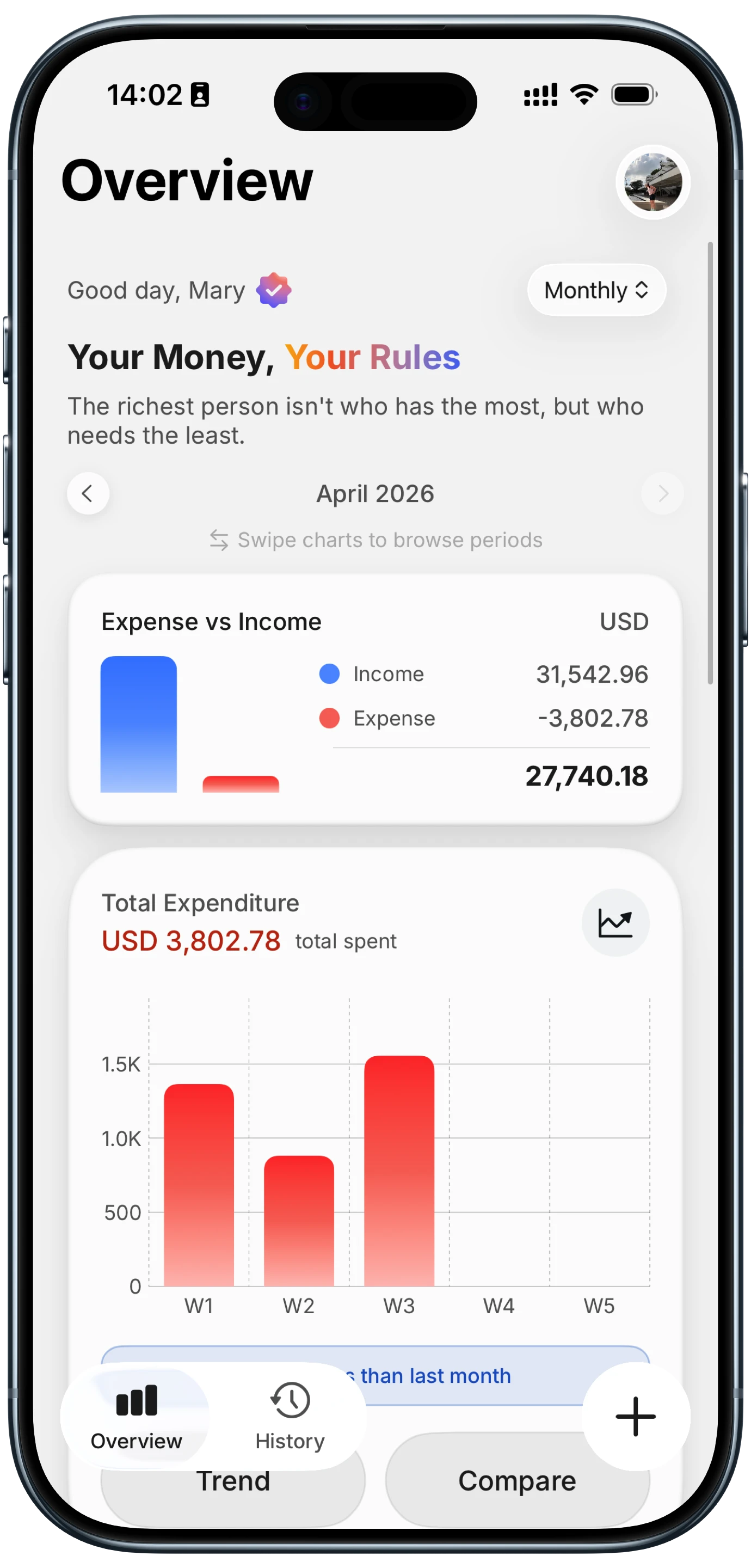
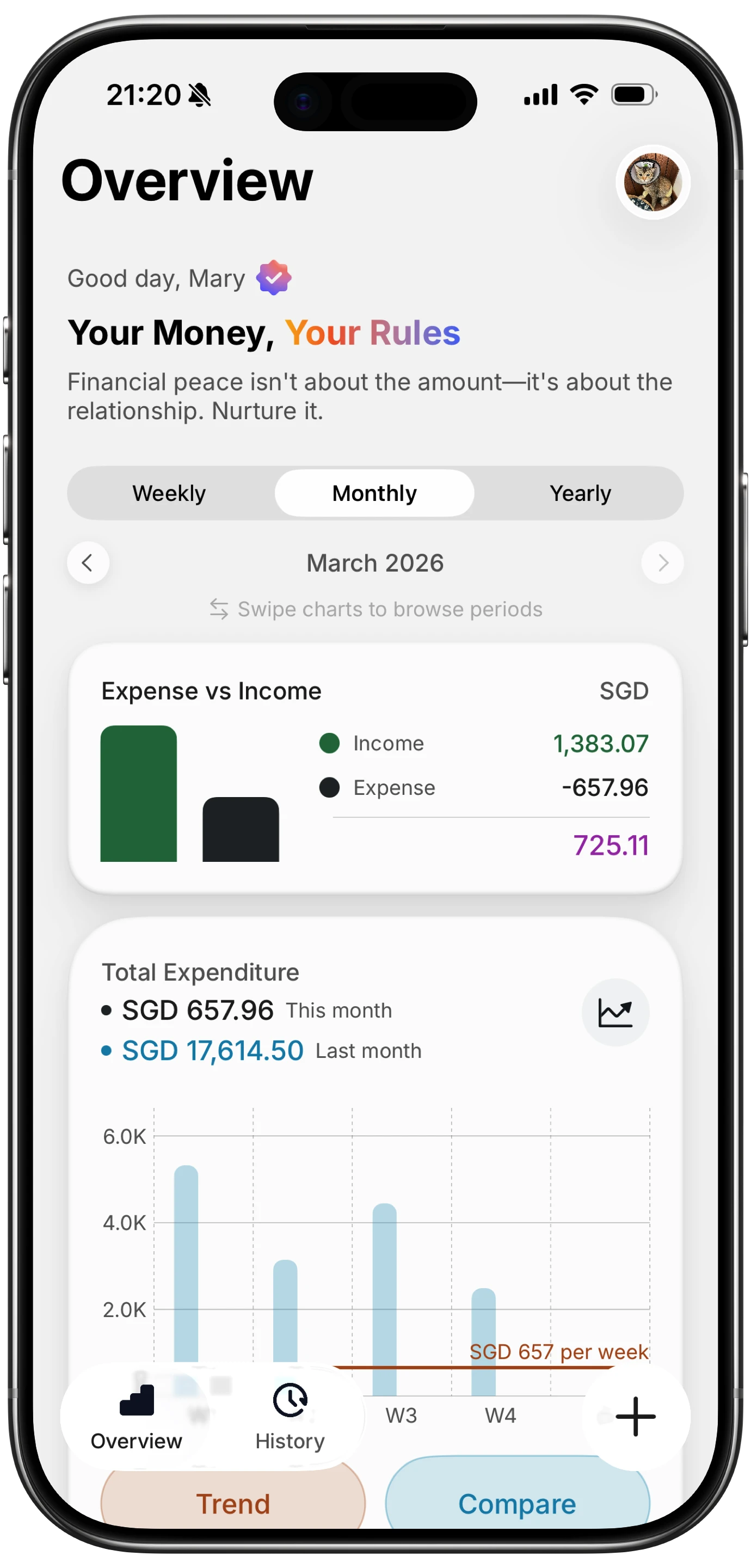
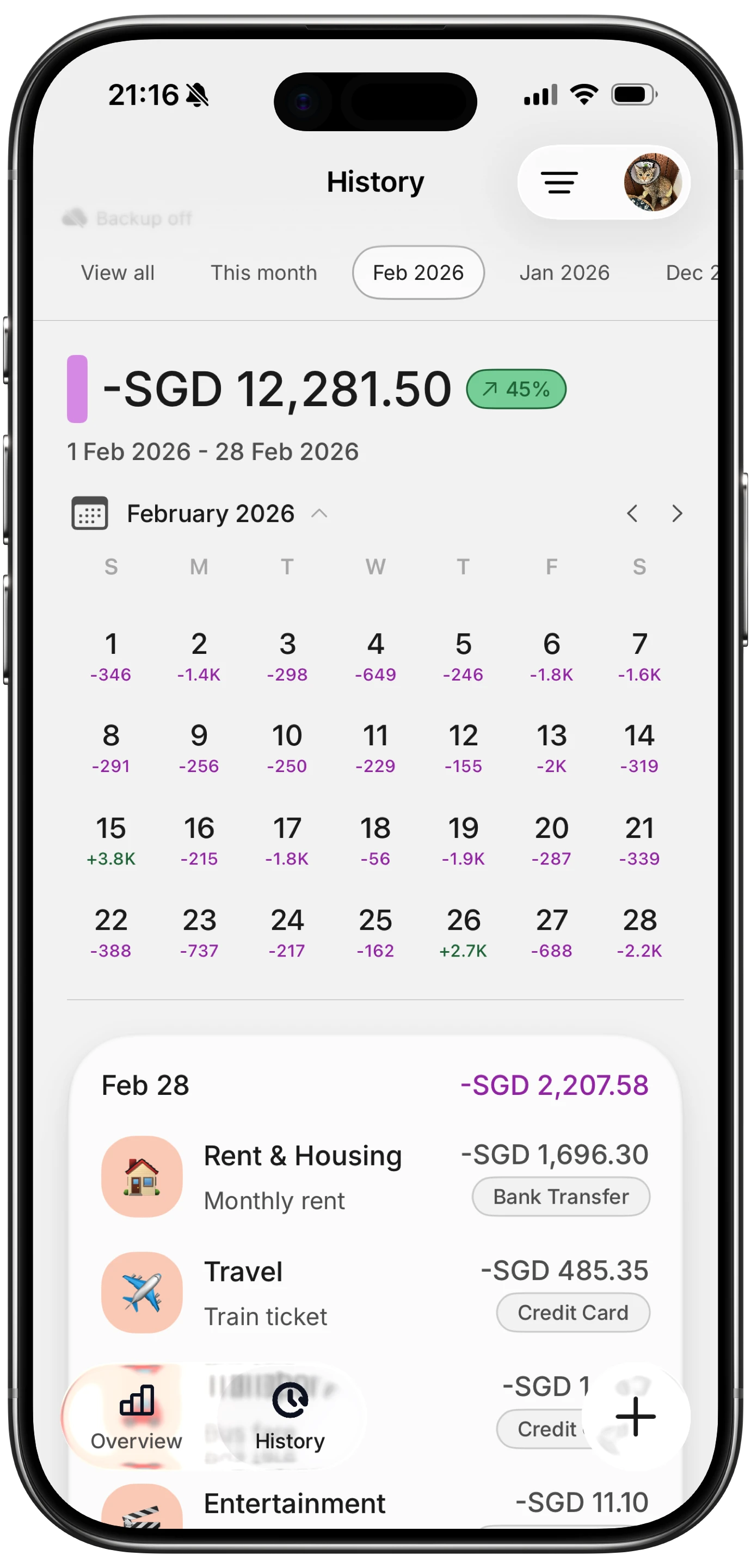
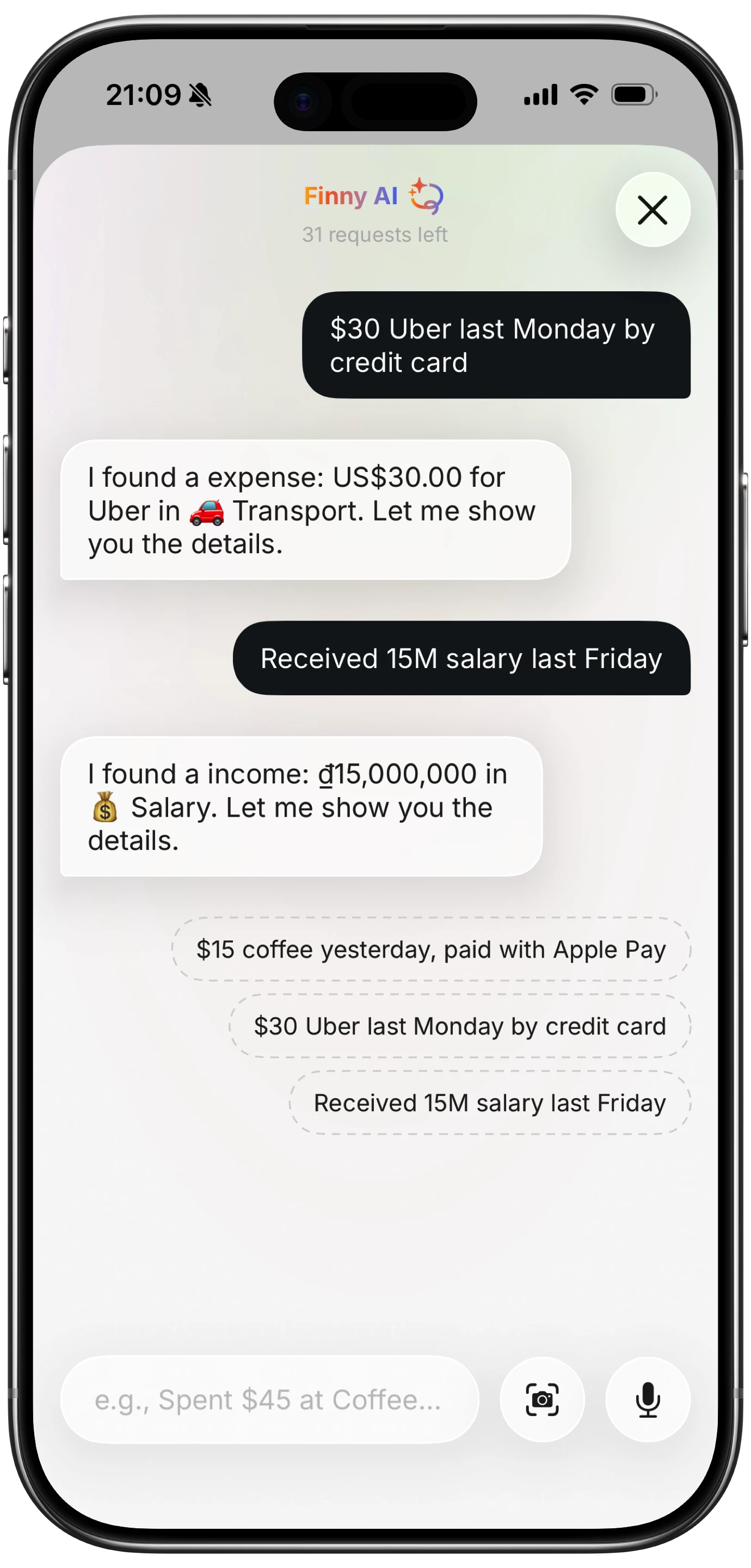
There is a third path for people who like the discipline of manual, bank-free budgeting but hate the typing. Finny keeps your data on your device with no bank link required, then makes logging fast with AI input: type, speak, or snap a receipt and it records the expense for you. Its Tap to Track feature can even auto-log Apple Pay purchases via iOS Shortcuts and NFC, so you stay private without missing entries. It is free to start, and Finny Pro costs a low yearly price, well under either app's paid plan. It is iOS-only, so it is not for everyone, but for manual-entry fans on iPhone it removes the main pain of the Goodbudget approach.
Frequently Asked Questions
Is Goodbudget better than YNAB?
Neither is universally better; they suit different people. Goodbudget is better if you want a free or cheap app, prefer the envelope method, and like manual, bank-free budgeting. YNAB is better if you want automatic bank syncing and a structured zero-based system with built-in rules and accountability, and you are willing to pay $109/year. Match the method to how you actually manage money, then let price and automation preferences break the tie.
Is Goodbudget really free?
Yes. Goodbudget's free plan is genuinely usable, not just a trial. It includes 20 envelopes, 1 account, 2 devices, and 1 year of transaction history, which is enough for many solo budgeters and couples. The paid Plus plan ($10/month or $80/year) adds unlimited envelopes, up to 5 accounts, 5 devices, and 7 years of history. Unlike YNAB, Goodbudget does not force you onto a paid plan after a trial.
Does Goodbudget connect to your bank?
No. Goodbudget has no live bank connection on any plan; every transaction is entered manually by design. The Plus plan allows manual QFX/OFX file imports you download from your bank, but that is a deliberate upload step, not automatic syncing. This is intentional: manual entry keeps your data private and builds spending awareness. If you want automatic transaction syncing, YNAB links your accounts directly, which is one of its main advantages over Goodbudget.
Which is cheaper, Goodbudget or YNAB?
Goodbudget is clearly cheaper. It has a free plan, and its paid Plus tier is $10/month or $80/year. YNAB has no free plan (only a 34-day trial) and costs $14.99/month or $109/year. Even comparing paid plans, Goodbudget Plus undercuts YNAB by roughly $29 a year. If keeping costs low is your priority, Goodbudget wins on price at both the free and paid levels.
The Bottom Line
The Goodbudget vs YNAB decision is less about which app is "best" and more about which method you will stick with. Goodbudget gives you the digital envelope system, a real free tier, total privacy, and the lowest price, at the cost of manual entry and a more basic engine. YNAB gives you a powerful zero-based system with bank syncing and strong accountability, at $109/year and a steeper learning curve.
If you prefer envelopes and value privacy and price, Goodbudget is the natural pick. If you thrive on structure and want automation, YNAB earns its fee. And if you love bank-free budgeting but want manual entry to feel effortless, try Finny for fast AI-assisted logging that keeps your data on your phone, no bank link required.