How to Track Mileage and Fuel Expenses for Work
If you drive for work, the miles add up faster than you think. Rideshare trips, deliveries, client visits, supply runs: each one carries a real cost in fuel, wear, and time. The problem is that most of those costs vanish unless you write them down.
For gig workers and the self-employed, those vanished miles are also vanished money. Every business mile you can document is a mile you may be able to deduct at tax time. Miss the record, and you simply pay more tax than you owe.
This guide walks through how to track mileage and fuel expenses the right way: the two IRS deduction methods, the records you must keep, a simple logging workflow, and a worked example. If you also handle other costs like supplies or software, our guide to tracking business expenses and income on iPhone pairs well with this one.
Why Tracking Mileage and Fuel Expenses Matters
Driving for work is one of the largest deductible costs many self-employed people have, and also one of the easiest to lose. The IRS does not accept guesses. If you estimate "about 8,000 miles" with no log behind it, that deduction is fragile in an audit.
Good records do two things. First, they protect a deduction you have legitimately earned. Second, they show you the true cost of the work you take on. A delivery shift that pays well but burns 60 miles of fuel may not be as profitable as it looks.
There is also a cash-flow angle. When you can see fuel spending clearly, you can plan for it instead of being surprised by it. Fuel is a recurring cost, and recurring costs are easier to manage when they sit in one place rather than scattered across receipts and card statements.
The habit is what matters. A log you update once a year from memory is barely better than no log. A log you update the same day is something you can actually defend.
The Two IRS Deduction Methods
The IRS lets self-employed drivers deduct vehicle costs using one of two methods. You generally cannot mix them in the same year, so it helps to understand both before you start.
Standard Mileage Rate
With the standard mileage rate, you multiply your business miles by a fixed per-mile rate set by the IRS. That single rate is meant to cover fuel, maintenance, depreciation, insurance, and general wear. You do not deduct gas separately on top of it.
For 2026, the IRS set the business standard mileage rate at 72.5 cents per mile. Rates change yearly, so always confirm the current figure on the official IRS standard mileage rates page before you file.
The appeal here is simplicity. You mostly need an accurate mileage log, not a shoebox of fuel receipts.
Actual Expenses
With the actual expenses method, you add up what the vehicle truly cost: fuel, oil, repairs, insurance, registration, lease payments or depreciation, and more. You then deduct the business-use percentage of that total, based on business miles divided by total miles driven.
This method can produce a larger deduction for expensive vehicles or heavy repair years, but it demands far more paperwork. You still need a mileage log to calculate the business-use percentage.
Which Method to Pick
One rule matters most: if you want the option to switch later, choose the standard mileage rate in the first year a vehicle is used for business. If you start with actual expenses, you generally must keep using actual expenses for that vehicle. Leased vehicles have their own restriction, so check the IRS guidance or a tax professional for your situation.
Records You Must Keep
Whichever method you choose, the mileage log is the foundation. For each business trip, the IRS expects you to be able to show:
- The date of the trip
- The miles driven for business
- The business purpose (client name, delivery, supply run)
- Your odometer reading or a reliable start and end point
Keep your records for at least three years after you file, since that is the typical audit window.
What Counts as Business Mileage
Not every mile qualifies. Driving from home to a regular workplace is commuting, and commuting is not deductible. Deductible business trips usually include driving to meet clients, traveling between job sites, and running errands to pick up work supplies.
Fuel and Other Car Costs
If you use the standard mileage rate, fuel is already baked into the rate, so fuel receipts are not deductible separately. If you use actual expenses, save every receipt: gas, oil changes, tires, repairs, insurance statements, and registration. Tolls and parking fees for business trips are deductible under either method, so log those regardless.
A Simple Logging Workflow
You do not need a complicated system. You need one you will actually repeat. Here is a workflow that holds up:
- Note your odometer at the start of the year. This anchors your total miles and supports the business-use percentage if you ever use actual expenses.
- Log each trip the day it happens. Record the date, purpose, and miles while the details are fresh. Memory fades fast, and reconstructed logs are weak.
- Capture fuel and car costs as they occur. Photograph the receipt or enter the amount immediately, before it ends up lost in a glovebox.
- Tag everything with a clear category. Keep mileage and fuel separate from unrelated business spending so the totals are easy to pull later.
- Review weekly. A five-minute check catches missing trips while you can still remember them.
- Total it monthly. A running monthly figure means tax season is just addition, not archaeology.
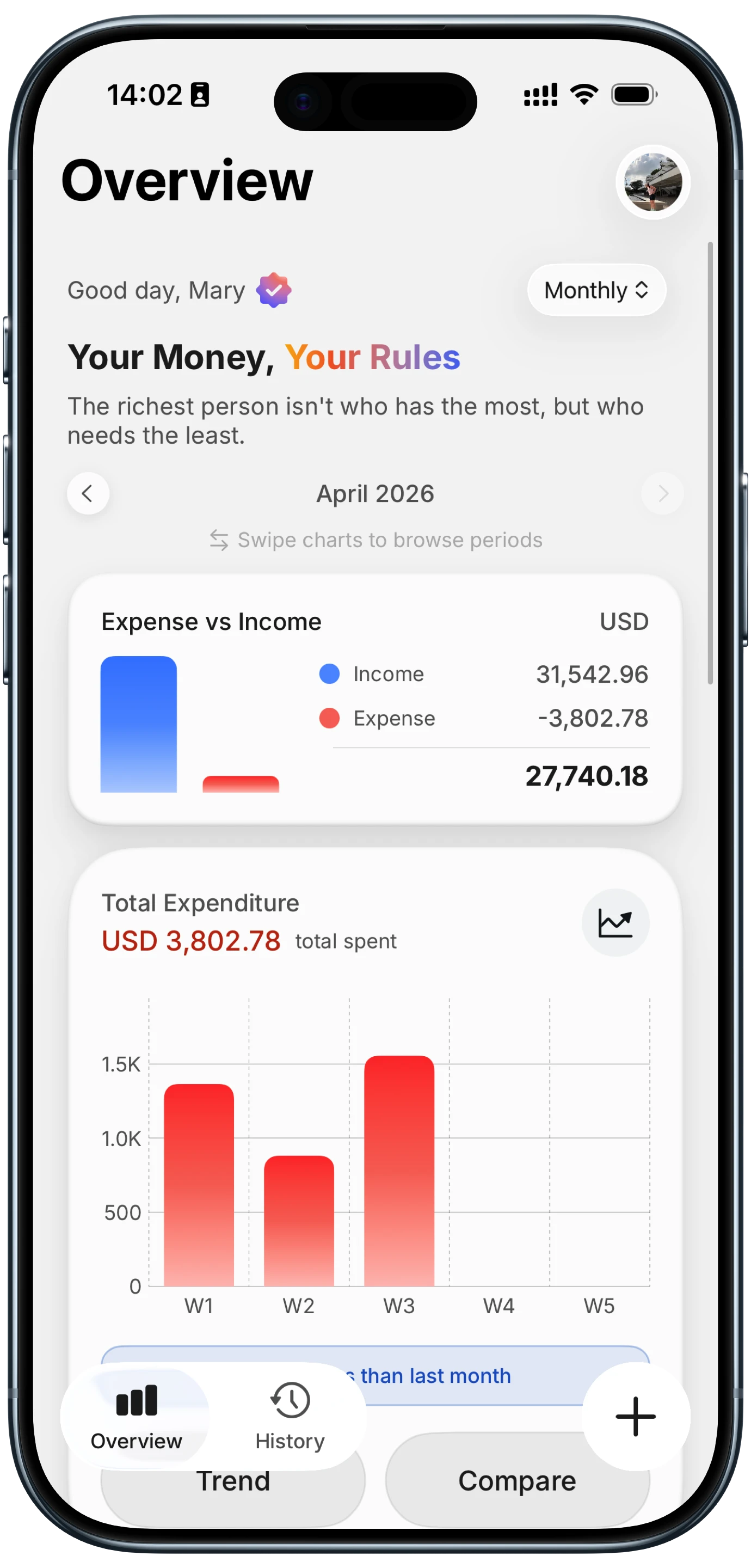
A general expense tracker works well for steps three through six. An app like Finny lets you create custom categories such as "Business Mileage" and "Fuel," then log a fill-up by snapping the receipt, typing, or using voice in seconds. Because it is offline-first, you can record a trip from a parking lot with no signal.
A Worked Example
Numbers make the methods concrete. Imagine you are a self-employed delivery driver, and over the year your log shows 9,000 business miles.
Standard Mileage Rate
Using the 2026 business rate of 72.5 cents per mile:
9,000 miles x $0.725 = $6,525
That $6,525 is your vehicle deduction. You would not also deduct fuel, since the rate already covers it. Your job was simply to keep an accurate mileage log.
Actual Expenses
Now assume your total miles for the year were 12,000, so your business-use percentage is 9,000 / 12,000 = 75 percent. Suppose your actual vehicle costs were:
- Fuel: $3,200
- Insurance: $1,400
- Repairs and maintenance: $900
- Registration: $200
Total: $5,700. Your deduction is 75 percent of that:
$5,700 x 0.75 = $4,275
In this example, the standard mileage rate produces the larger deduction. For a different driver with an older, repair-heavy vehicle, actual expenses might win. The only way to know is to keep good records and run both numbers.
Dedicated Mileage Apps vs a General Expense Tracker
There are two broad tools for this job, and many drivers use both.
Dedicated GPS Mileage Apps
GPS mileage apps run in the background and detect drives automatically, then let you swipe to mark each trip as business or personal. The strength is hands-off mileage capture, which is genuinely useful if you drive constantly.
The tradeoffs: continuous GPS tracking can drain battery, auto-detection sometimes misclassifies trips, and these apps focus narrowly on miles. They often do not give you a full picture of your other business spending.
A General Expense Tracker
A general expense tracker handles fuel, tolls, parking, supplies, and every other business cost in one place. You log mileage as a number rather than capturing it by GPS, which takes a few seconds per trip but keeps everything unified.
The advantage is the complete view. At tax time, mileage, fuel, and every other deductible cost sit in the same app. For drivers who want one financial picture instead of a stack of single-purpose tools, this is often the simpler path. Our roundup of free business expense trackers for freelancers covers the options. If your employer pays you back instead, see our guide to tracking reimbursable work expenses.
The Bottom Line
Tracking mileage and fuel for work is not complicated, but it does require consistency. Decide early which IRS method fits your vehicle, since the first-year choice can lock you in. If you might want flexibility later, the standard mileage rate is usually the safer starting point.
Keep a real log: date, miles, purpose, and odometer. Save receipts if you use actual expenses. Update records the same day, review weekly, and total monthly. Do that, and your deduction stops being a guess and becomes a documented number you can defend.
The tool matters less than the habit. Whether you use a GPS app, a notebook, or an expense tracker, the win comes from logging consistently and confirming the current rate with the IRS each year.
Frequently Asked Questions
Can I deduct both mileage and gas?
Generally no. If you use the standard mileage rate, fuel is already included in the per-mile rate, so you cannot deduct gas separately. If you use the actual expenses method, you deduct your real fuel costs but not a per-mile rate. The two methods are alternatives, not add-ons. Tolls and parking for business trips are deductible under either method.
What records do I need to deduct mileage?
You need a mileage log showing the date, business miles driven, and business purpose of each trip, plus your odometer readings. If you use actual expenses, also keep receipts for fuel, repairs, insurance, and registration. Keep these records for at least three years after filing, since that is the standard audit window.
Is my commute to work tax deductible?
No. Driving between your home and a regular workplace is considered commuting, and commuting miles are not deductible. Deductible business miles typically include trips to meet clients, travel between job sites, and errands to pick up work supplies. The distinction matters, so log the purpose of each trip clearly.
Can I switch between the mileage and actual expense methods?
It depends on what you chose first. If you used the standard mileage rate in the first year a vehicle was in business use, you can generally switch methods in later years. If you started with actual expenses, you usually must keep using actual expenses for that vehicle. Leased vehicles have separate rules, so confirm with the IRS or a tax professional.
What is the IRS standard mileage rate?
The IRS standard mileage rate is a per-mile figure you multiply by your business miles to calculate a vehicle deduction. For 2026, the business rate is 72.5 cents per mile. The rate changes yearly, so always verify the current figure on the official IRS standard mileage rates page before filing your return.
Conclusion
Tracking mileage and fuel does not have to be a chore. Pick a method, keep a clean log, capture receipts as they happen, and the deduction takes care of itself.
If you want one place to log fuel, tolls, and mileage without juggling apps, Finny lets you create custom categories like "Mileage" and "Fuel" and record each cost by typing, voice, or receipt photo in seconds. It works offline, keeps your data private with no bank connections, and gives you a clear monthly total when tax season arrives. Start tracking your work driving today at getfinny.app.