What Is a Money Mindset? How Your Beliefs Shape Your Finances
Two people earn the same salary. One steadily builds savings and feels in control. The other lives paycheck to paycheck and feels constant financial anxiety. The difference is often not math. It is mindset.
Your money mindset is the set of beliefs, attitudes, and assumptions you hold about money. These beliefs, often formed in childhood, shape every financial decision you make: how much you save, how you feel about spending, whether you invest, and how you talk about money. Changing your financial outcomes often starts with examining these beliefs. For a broader framework on money management, see our budgeting for beginners guide.
Scarcity Mindset vs Abundance Mindset
The most common money mindset framework contrasts scarcity and abundance thinking.
| Characteristic | Scarcity Mindset | Abundance Mindset |
|---|---|---|
| Core belief | "There is never enough" | "There is enough if managed well" |
| Spending behavior | Hoards or panic-spends | Spends intentionally |
| Risk tolerance | Avoids all risk | Takes calculated risks |
| Reaction to setbacks | "I knew this would happen" | "How do I fix this?" |
| View of others' success | Threatening | Inspiring or neutral |
| Financial planning | Avoids (too stressful) | Engages (empowering) |
Neither extreme is fully accurate. A healthy money mindset acknowledges real constraints while maintaining agency over your choices.
Where These Beliefs Come From
Money mindsets form through:
- Family messages: "Money does not grow on trees," "Rich people are greedy," "We cannot afford that." These phrases, repeated throughout childhood, become unconscious financial operating rules.
- Early experiences: Growing up in financial instability creates different default behaviors than growing up in financial security.
- Cultural norms: Some cultures encourage saving; others encourage generosity or display. These shape what feels "normal" financially.
- Personal financial experiences: A job loss, debt crisis, or financial windfall can reshape your relationship with money.
Common Limiting Money Beliefs
"I am bad with money." This belief becomes self-fulfilling. If you believe you cannot manage money well, you avoid budgeting and tracking, which means you actually do manage money poorly, which confirms the belief.
"I do not earn enough to save." While real income constraints exist, many people with modest incomes save effectively, and many high earners save nothing. The belief often prevents looking for savings opportunities that do exist.
"Investing is gambling." This conflates speculative trading with long-term investing. Broad market index funds have historically grown wealth for every generation of patient investors.
"I deserve to treat myself." Occasional treats are healthy. Using this phrase to justify every impulse purchase creates a pattern where spending substitutes for self-care.
"Money is too stressful to think about." Avoiding financial information increases financial stress over time. Engagement reduces it.
How to Shift Your Money Mindset
1. Identify Your Current Beliefs
Write down your automatic thoughts about money. When you see a price tag, what do you think? When someone mentions investing, how do you feel? When you check your bank balance, what emotion surfaces?
These automatic responses reveal your underlying beliefs.
2. Challenge Inherited Messages
Not every financial lesson from your parents is true or helpful. "Never go into debt" is reasonable advice, but it prevents some people from getting a mortgage. "Always buy the cheapest option" can cost more in the long run. Evaluate inherited rules against your current reality.
3. Replace Avoidance With Data
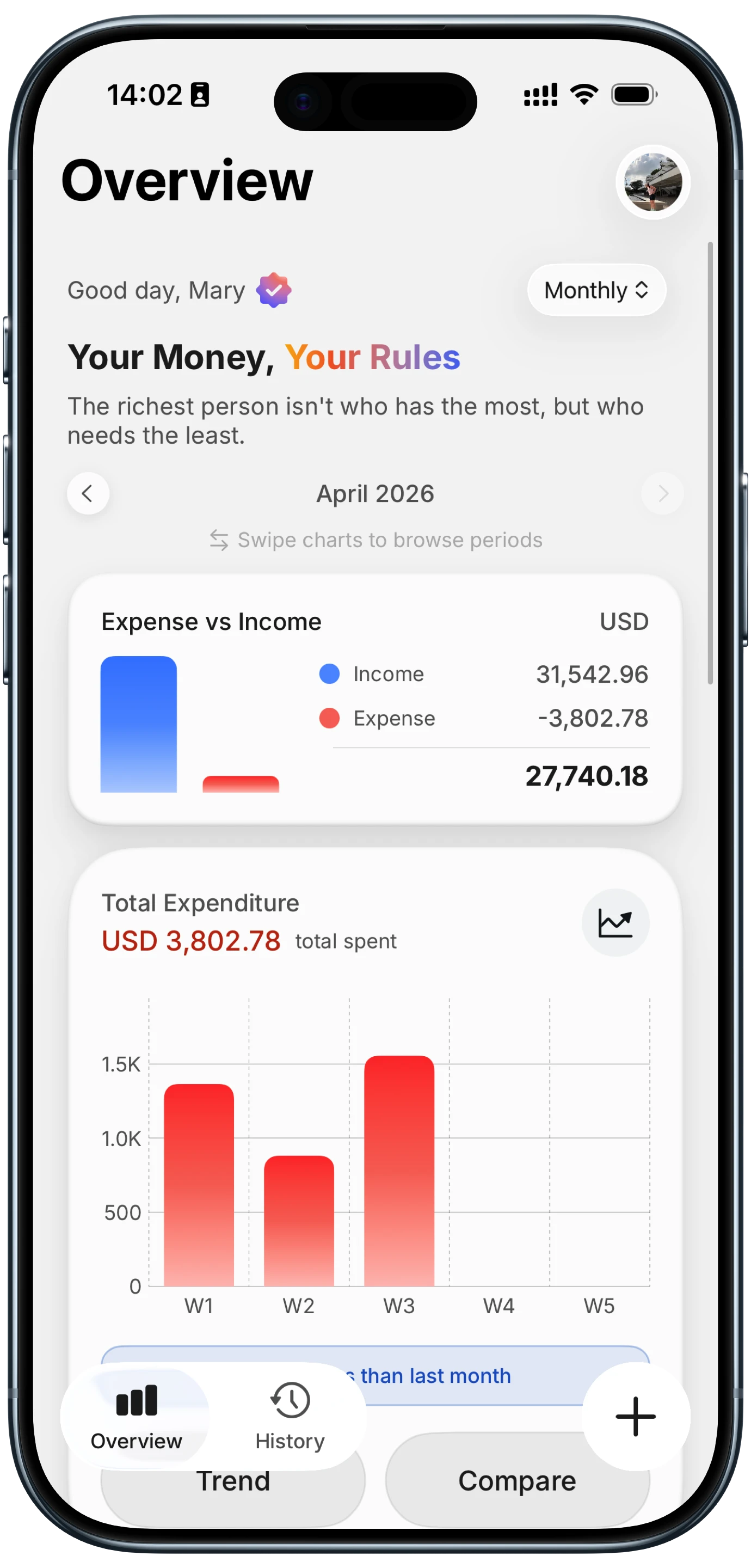
The most powerful mindset shift is replacing emotional reactions with information. When you track every expense and see exactly where your money goes, financial decisions become data-driven rather than anxiety-driven.
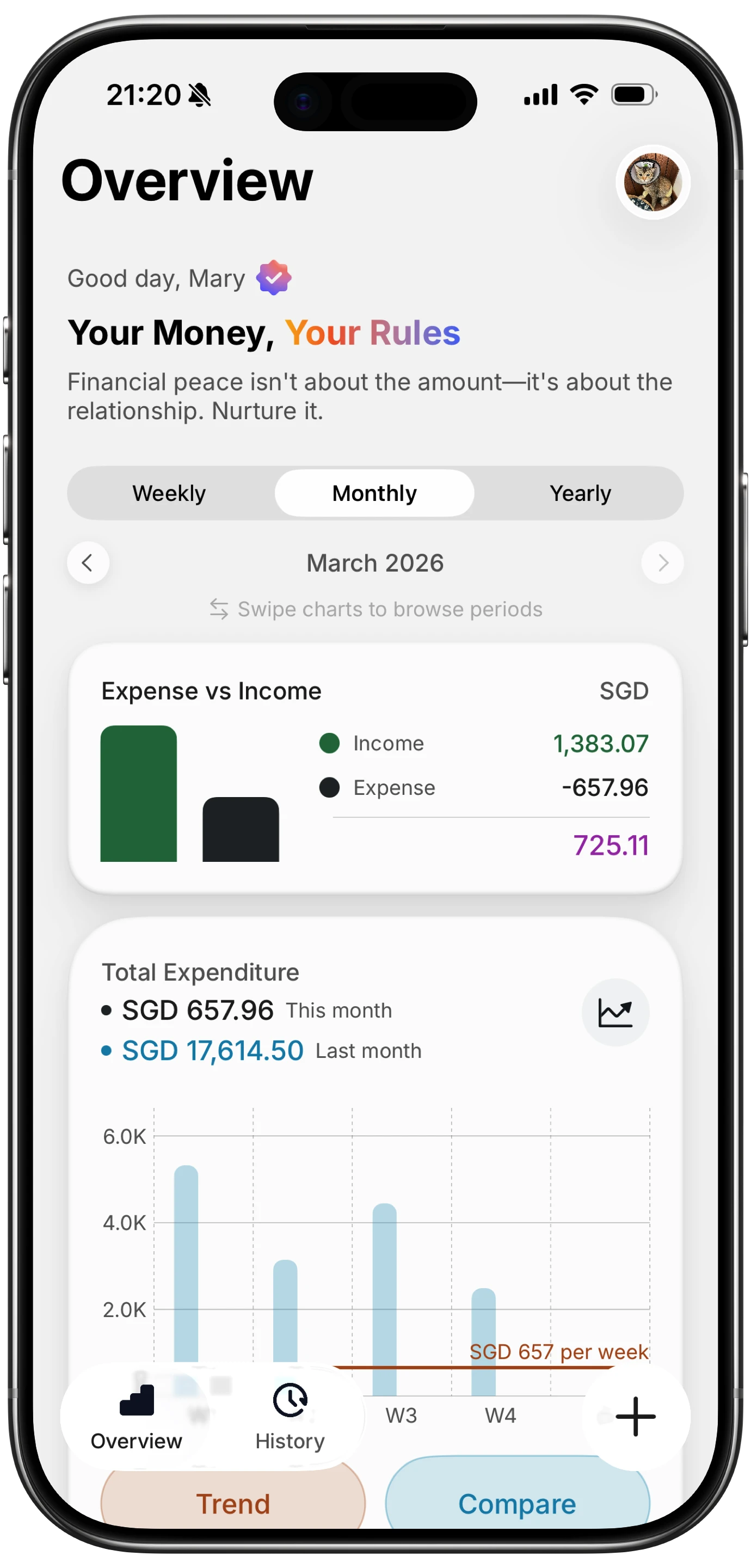
Finny app's Overview feature
People who track expenses consistently report feeling more in control of their finances, regardless of income level. The data replaces uncertainty with clarity.
4. Set One Small Financial Goal
Mindset shifts happen through action, not just thinking. Set one achievable goal: save $500 for an emergency fund, track spending for 30 days, or pay off one small debt. Success builds confidence, which shifts your belief about what is possible.
5. Normalize Talking About Money
Financial silence keeps harmful beliefs unchallenged. Talking with trusted friends or a partner about money, whether through money dates or casual conversation, exposes you to different perspectives and reduces shame.
The Role of Expense Tracking in Mindset Change
Expense tracking is not just a financial tool. It is a mindset tool. Here is why:
It replaces fear with facts. The vague sense that "I spend too much" becomes specific data: "I spend $340/month on dining out." Specific is manageable. Vague is paralyzing.
It builds financial self-efficacy. Each day you log expenses is proof that you can engage with your finances. This evidence directly counters the "I am bad with money" belief.
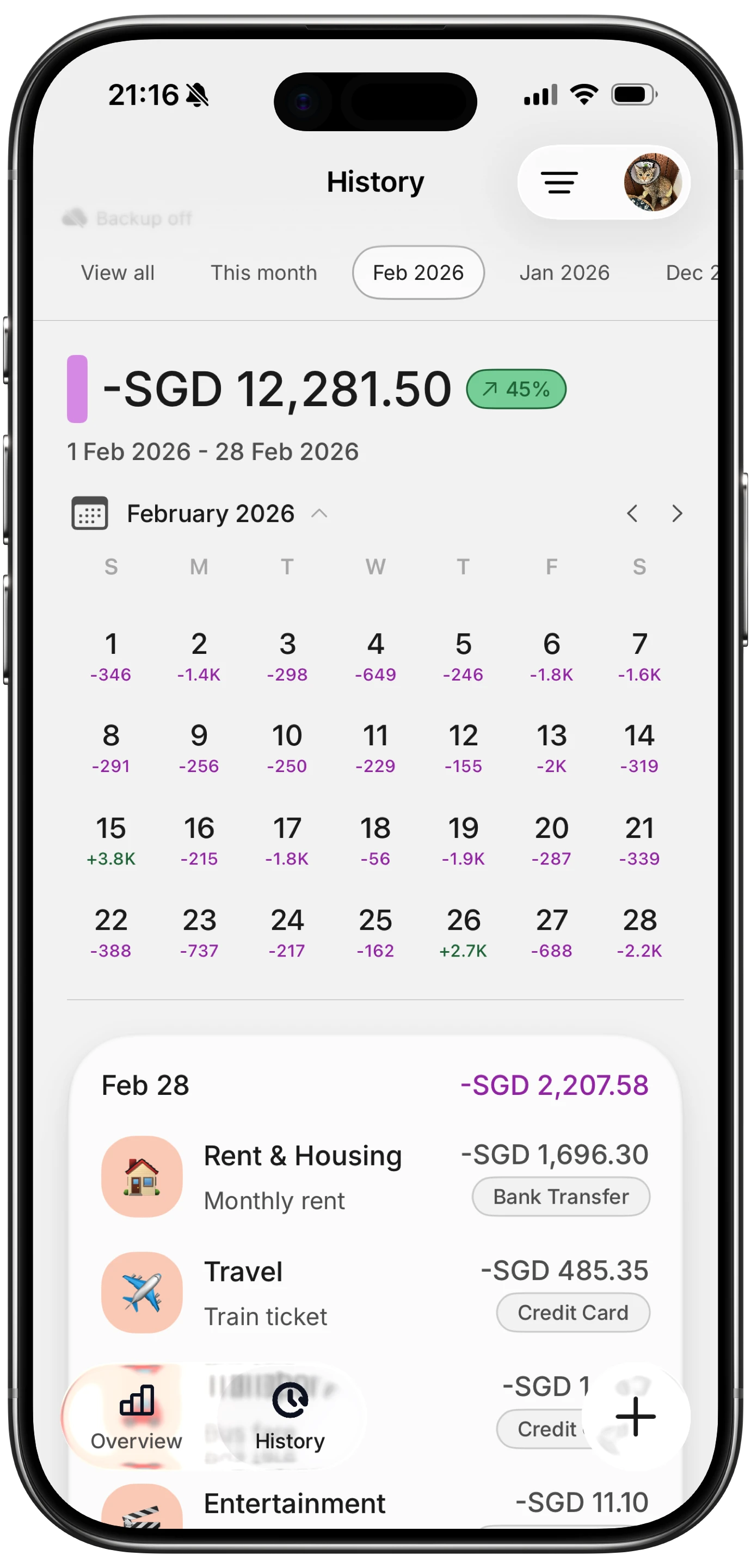
Finny app's History calendar feature
It creates a feedback loop. Track spending, make one small change, see the impact in your data, feel motivated, make another change. This positive cycle builds momentum that gradually reshapes your money mindset.
It separates emotion from action. When you have a bad spending day, the data shows it is one day, not a pattern. When you have a good month, the data confirms it. This objectivity prevents both catastrophizing and complacency.
Money Mindset and Life Stages
Your relationship with money evolves:
Early career: Often dominated by scarcity thinking (low income, student debt). The mindset shift here is from "I cannot save" to "I can start small."
Mid-career: Income grows but so do expenses. The risk is lifestyle creep. The mindset shift is from "I earn more so I can spend more" to "I earn more so I can build more."
Pre-retirement: Concerns shift to "Will I have enough?" The mindset shift is from anxiety about the future to confidence built on data and planning.
Retirement: Shifting from accumulation to spending. Many lifelong savers struggle to spend in retirement. The mindset shift is giving yourself permission to use the money you saved.
The Bottom Line
Your money mindset shapes your financial outcomes more than your income does. Beliefs formed in childhood, reinforced by experience, and left unexamined create patterns that no budget can fix. The path to a healthier money mindset starts with awareness: noticing your automatic beliefs, challenging them, and replacing emotional reactions with data.
Expense tracking is the most practical entry point. It turns money from an abstract source of stress into a concrete, manageable system you can see, understand, and control.
Common Questions About Money Mindset
Can I really change my money mindset?
Yes. Money mindsets are learned, which means they can be unlearned. The process takes time and requires both awareness (identifying limiting beliefs) and action (tracking, saving, investing). Small wins build new neural pathways that replace old patterns.
How long does it take to change financial beliefs?
Beliefs shift gradually through repeated positive experiences. Most people report feeling meaningfully different about money within three to six months of consistent tracking and small financial wins.
Is money mindset just positive thinking?
No. It is not about affirming "I am wealthy" while ignoring real constraints. A healthy money mindset acknowledges your current situation honestly while maintaining the belief that you can improve it through informed action.
Does income level determine money mindset?
No. People at every income level can have scarcity or abundance mindsets. High earners with scarcity mindsets often feel perpetually insecure despite large incomes. Modest earners with healthy mindsets often feel financially stable and in control.
What if my partner has a different money mindset?
This is common and can be navigated through open communication. Understanding each other's financial backgrounds and beliefs is the starting point. See our guide on budgeting as a couple for practical approaches.
Ready to replace money anxiety with clarity?
Download Finny to track every expense and build financial awareness. When you see where your money goes, managing it stops feeling overwhelming and starts feeling empowering.