You get a raise, a better-paying job, or a side income that finally starts producing real money. Your bank account grows, and so does your confidence. Within a few months, your spending quietly rises to match. The new apartment, the upgraded car, the restaurant meals that used to feel like treats but now feel routine. By the end of the year, you are saving the same amount (or less) than you did before the raise.
This pattern is called lifestyle creep, and it is one of the most common reasons people earn more but never feel financially ahead. It does not happen through reckless decisions. It happens through dozens of small, reasonable upgrades that collectively consume every extra dollar.
This guide covers what lifestyle creep actually looks like, how to recognize the warning signs, and how to prevent it without stripping the enjoyment out of earning more. If you want a broader look at managing your finances, see our guide on how to manage personal finances.
What Is Lifestyle Creep
Lifestyle creep, also known as lifestyle inflation, is the gradual increase in spending that occurs as a person's income rises. Instead of directing new earnings toward savings, investments, or debt repayment, the money flows into a higher standard of living. The core problem is not that spending increases. It is that spending increases at the same rate as income, leaving no room for financial progress.
Lifestyle creep is different from intentional lifestyle upgrades. Choosing to move to a safer neighborhood after years of saving is a deliberate decision. Lifestyle creep, by contrast, is usually unconscious. You do not sit down and decide to spend an extra $400 per month on dining out. It just happens, one meal at a time.
The term applies across all income levels. Someone earning $50,000 who gets a $10,000 raise and immediately locks in $800 more in monthly commitments is experiencing lifestyle creep. So is someone earning $200,000 who upgrades to a lifestyle that requires $195,000 to maintain.
How Lifestyle Creep Happens
Lifestyle inflation rarely arrives as a single large expense. It builds through layers of small changes that each feel insignificant on their own.
The Normalization of Upgrades
When you first start earning more, small luxuries feel exciting. A $6 coffee, a premium streaming plan, a slightly nicer bottle of wine. Over time, these upgrades become the new baseline. What once felt like a splurge now feels standard, and the next upgrade becomes the new treat.
This normalization cycle repeats. Each step up resets your expectations, making it difficult to notice the cumulative effect on your budget.
Social and Environmental Pressure
A higher income often brings changes in social circles, workplaces, and neighborhoods. New colleagues go to different restaurants. A new apartment complex has residents with different spending habits. These environmental shifts create subtle pressure to match the spending patterns around you, even when no one explicitly asks you to.
Convenience Spending
Higher earners often justify increased spending as "buying back time." Meal delivery services, cleaning help, premium subscriptions, and faster shipping tiers all fall into this category. Each one is easy to justify individually, but they add up. A person spending $15 here and $30 there on convenience services can easily accumulate $300 to $500 in monthly costs that did not exist before the raise.
Subscription Accumulation
New subscriptions tend to arrive with income increases. A better gym, a music streaming upgrade, a cloud storage plan, a meal kit service. These recurring charges are especially dangerous because they persist month after month without requiring a new spending decision. For more on this pattern, see our guide on how to stop subscription creep.
Warning Signs of Lifestyle Creep
Lifestyle inflation is quiet, but it leaves traces. Watch for these indicators:
Your savings rate has not changed despite earning more. This is the clearest signal. If you saved 10% of a $60,000 salary and you still save 10% of an $80,000 salary, you have captured none of the benefit of earning more.
You cannot identify where the extra money goes. After a raise, you should be able to point to specific allocations: more savings, faster debt repayment, a planned purchase. If the money simply vanished into daily life, lifestyle creep is the likely cause.
Former luxuries now feel like necessities. When you start describing restaurant meals, ride-sharing, or premium products as things you "need," your spending baseline has shifted.
You feel financially tight despite earning well. High earners who feel broke are almost always experiencing lifestyle creep. The income is there, but commitments have expanded to consume it.
Your fixed costs have risen faster than your income. A larger apartment, a car payment, and new subscriptions create a higher floor of mandatory spending. If your minimum monthly obligations have grown significantly, your financial flexibility has shrunk.
Real Examples of Lifestyle Creep
Example 1: The Gradual Upgrade
Sarah earns $55,000 and spends about $3,800 per month, saving roughly $400. She receives a $12,000 raise, adding $700 per month after taxes. Over the next six months, she upgrades her apartment ($200 more per month), starts ordering lunch instead of packing it ($150 per month), adds a gym membership ($60), and begins using a cleaning service ($120 every two weeks, or $260 per month). Her new monthly spending is $4,470, and her savings remain at $430. The entire raise disappeared.
Example 2: The Lifestyle Lock-In
James and his partner earn a combined $140,000 and buy a house at the top of their approval range. The mortgage, property taxes, insurance, and maintenance consume most of their income growth for the next several years. When one partner wants to switch careers or take time off, they cannot afford the income reduction. Their lifestyle is locked in by a single large commitment.
Example 3: The Convenience Trap
A freelancer's income rises from $4,000 to $6,500 per month over two years. She adds meal delivery ($250/month), a coworking space ($200/month), premium software tools ($150/month), upgraded phone plan ($40/month), and regular ride-sharing instead of public transit ($180/month). These convenience purchases total $820 per month, consuming most of the income gain.
How to Prevent Lifestyle Creep Without Feeling Deprived
The goal is not to freeze your lifestyle at its current level forever. It is to be intentional about upgrades and ensure that higher income translates into real financial progress.
Apply the 50% Rule to Raises
When your income increases, commit at least half of the after-tax increase to savings, investments, or debt repayment before adjusting your lifestyle. If a raise adds $600 per month, direct $300 to financial goals automatically. You still get to enjoy the other $300, but your financial position actually improves.
Automate Savings Before Lifestyle Adjusts
The window between receiving a raise and adjusting your spending is short, usually a few weeks. During that window, set up automatic transfers to savings or investment accounts for the increased amount. Once the money moves automatically, you adapt your spending to what remains. This is much easier than trying to cut back after lifestyle creep has already set in.
For more on this approach, see our guide on pay yourself first.
Track Spending Month Over Month
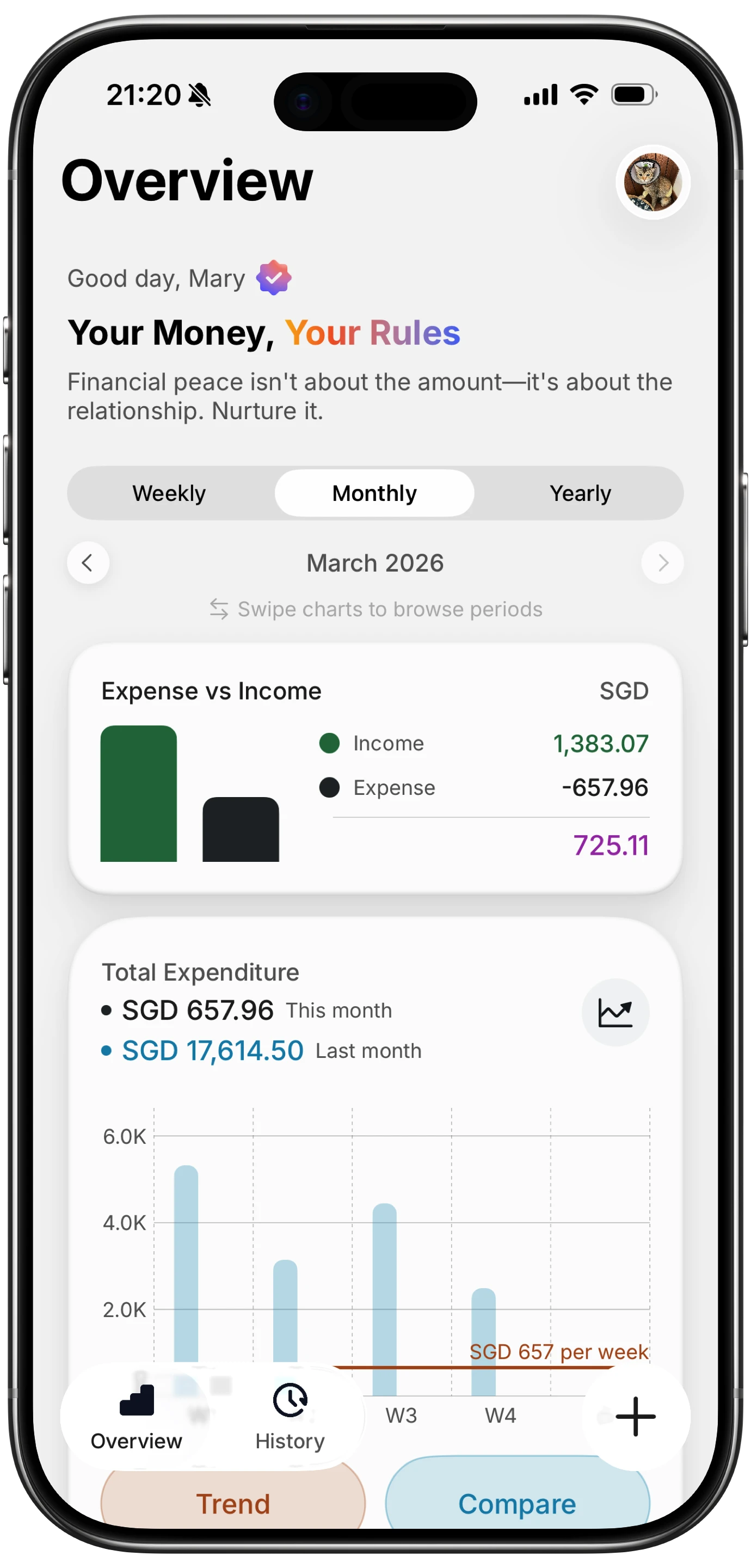
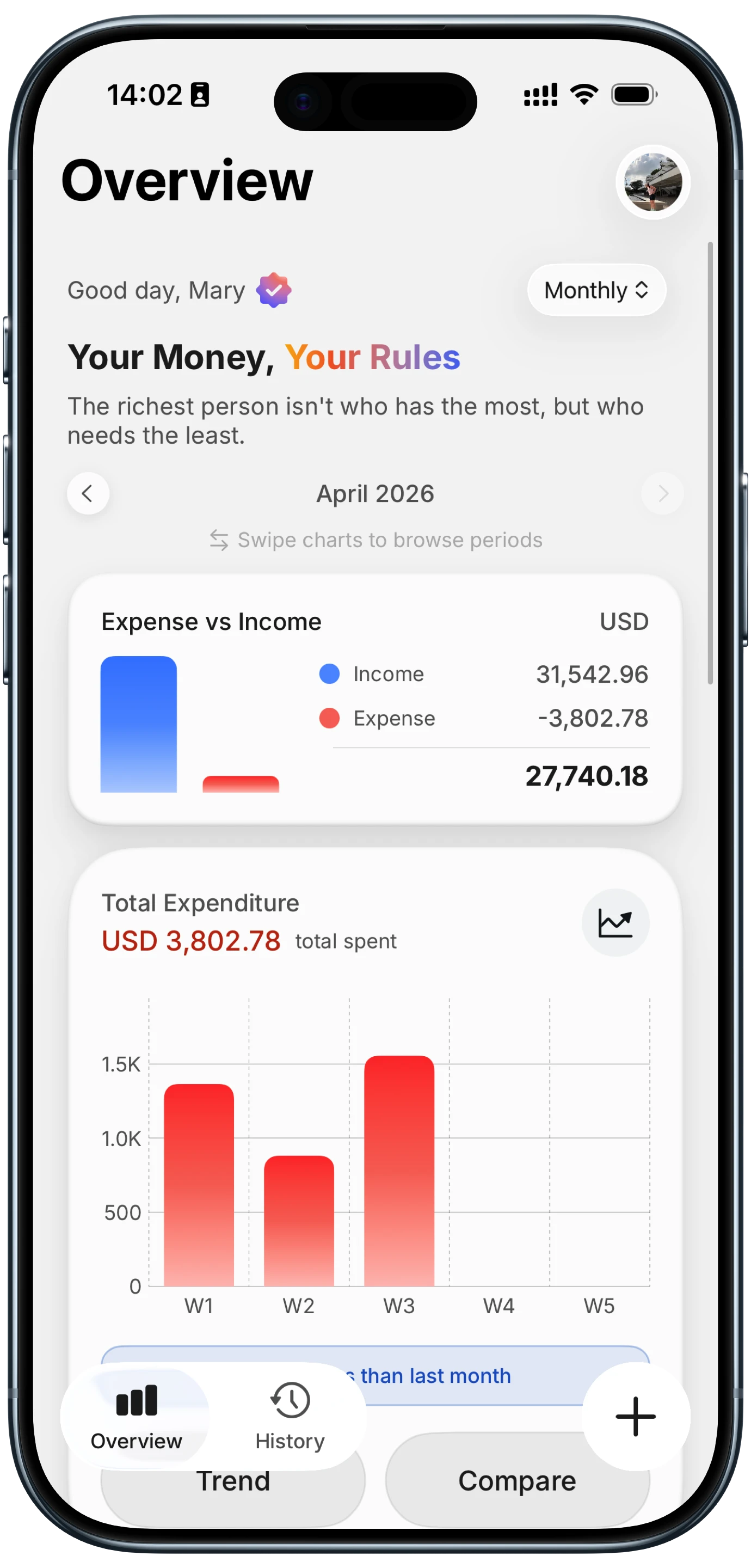
Finny app's Overview feature
The most effective defense against lifestyle creep is comparing your spending across months. A single month's expenses can look reasonable in isolation. But when you line up January next to June and notice that dining out grew from $180 to $340, the pattern becomes visible.
This is where a habit of comparing monthly spending becomes valuable. Finny's visual analytics make this comparison straightforward. You can see category-by-category changes over time and spot gradual increases before they become permanent habits.
Set Spending Limits by Category
Rather than tracking a single total budget, set limits for categories that are prone to creep: dining, entertainment, subscriptions, and personal care. When a category starts consistently exceeding its limit, you have an early warning.
For a deeper look at this approach, see our guide on what is a spending limit.
Build a Waiting Period for New Commitments
Before adding any recurring expense (subscription, membership, service), wait 30 days. Many of these feel urgent in the moment but lose their appeal after a few weeks. This is especially important for expenses that auto-renew, since they persist long after the initial excitement fades.
Choose Intentional Upgrades Over Passive Ones
There is nothing wrong with spending more as you earn more. The problem is when upgrades happen passively. Instead of letting spending drift upward, choose one or two meaningful upgrades per raise. Maybe it is a better apartment or a hobby you have wanted to pursue. By selecting specific upgrades and holding the line elsewhere, you enjoy the benefit of higher income without surrendering all of it.
How Month-Over-Month Comparison Catches Lifestyle Creep Early
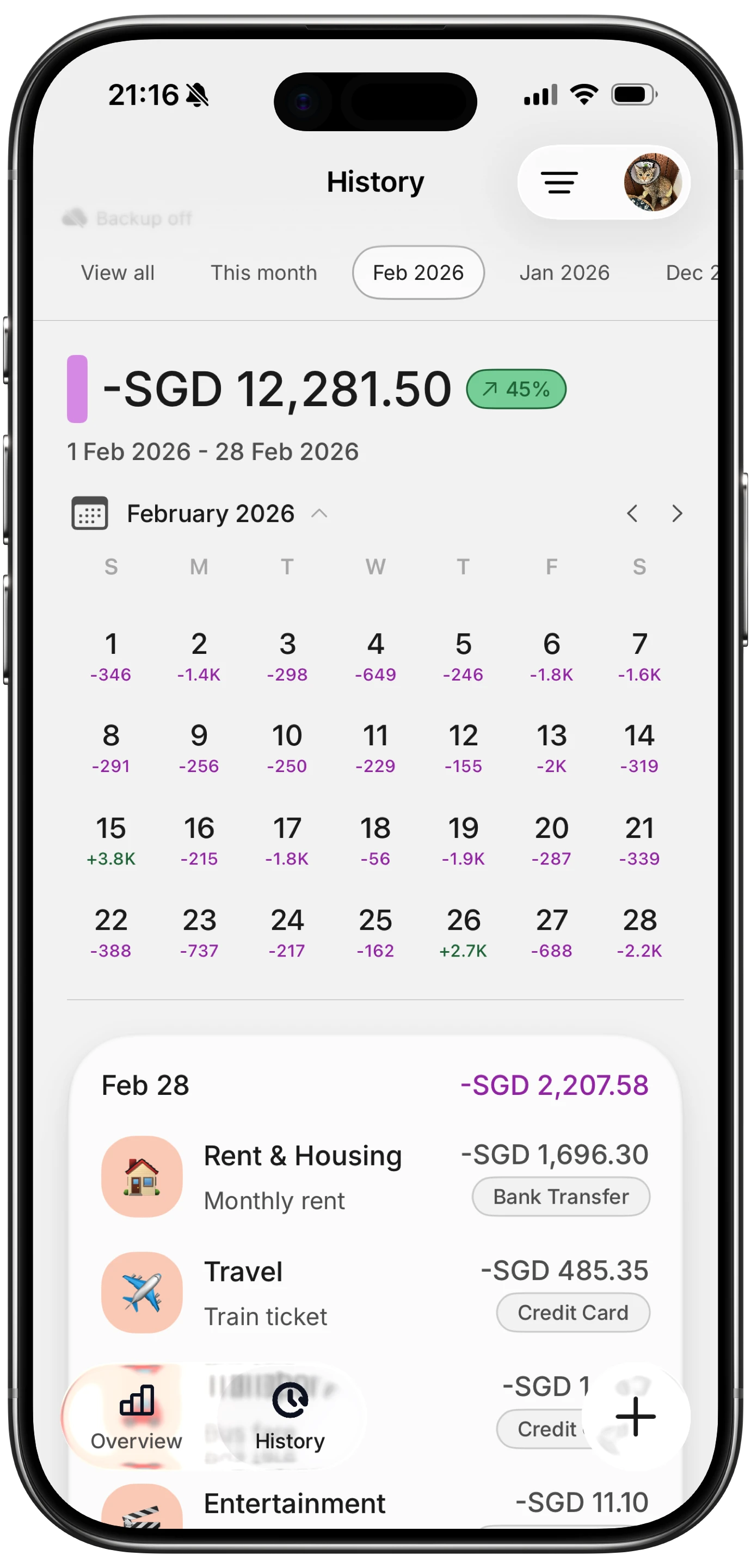
Finny app's History calendar feature
Lifestyle creep is nearly invisible in real time. You do not notice an extra $30 here or $50 there. But spending data, viewed over several months, tells a different story.
When you compare monthly spending consistently, you can spot patterns like:
- A dining category that grew 15% each month for four months
- Subscription costs that doubled over six months
- Transportation spending that crept up after you stopped using public transit
- A "miscellaneous" category that keeps growing, suggesting untracked lifestyle inflation
Finny is built for this kind of review. Because you log expenses as they happen, whether by text, receipt scan, or voice input, you build a complete picture of where money goes. The analytics view then shows trends over time, making gradual increases obvious.
The key is regularity. A monthly check-in, even a brief one, is enough to catch spending shifts before they become entrenched habits. Five minutes reviewing your categories at the end of each month can save thousands over the course of a year.
Lifestyle Creep vs. Intentional Lifestyle Upgrades
Not all spending increases are lifestyle creep. The distinction matters.
| Aspect | Lifestyle Creep | Intentional Upgrade |
|---|---|---|
| Decision process | Unconscious, gradual | Deliberate, planned |
| Budget impact | Unknown until reviewed | Calculated in advance |
| Savings effect | Erodes savings rate | Savings rate maintained |
| Reversibility | Hard to reverse (new baseline) | Can be adjusted if needed |
| Satisfaction | Often unnoticed | Genuinely appreciated |
An intentional upgrade is something you planned, budgeted for, and chose with full awareness of its impact on your finances. Lifestyle creep is what happens when you skip that process and let spending decisions accumulate on autopilot.
How to Reverse Lifestyle Creep That Has Already Set In
If you recognize these patterns in your own spending, here is how to course-correct:
-
Audit your recurring expenses. List every subscription, membership, and service you pay for monthly. Cancel anything you have not actively used in the past 30 days.
-
Compare your current spending to six months ago. Use an expense tracker to see where categories have grown. Focus on the largest increases first.
-
Identify your top three areas of creep. You do not need to cut everything. Pick the three categories with the largest unexplained growth and set firm limits.
-
Rebuild your savings rate target. Decide what percentage of income should go to savings, then automate that amount. Adjust your spending to fit what remains.
-
Give yourself one intentional indulgence. Cutting everything feels punitive and does not last. Keep one upgrade that genuinely improves your quality of life and be disciplined about the rest.
For more strategies on reining in spending, see our guide on how to stop overspending.
The Bottom Line
Lifestyle creep is not a character flaw. It is a natural tendency that affects nearly everyone whose income grows over time. The problem is not wanting a better life. The problem is letting spending increases happen unconsciously, so that higher income never translates into greater financial security.
The best defense is awareness. Track your spending, compare it month over month, and make upgrade decisions deliberately rather than by default. When you do spend more, make it count by choosing upgrades that genuinely matter to you, not ones that simply became habits.
With consistent tracking and periodic review, lifestyle creep becomes easy to spot and straightforward to manage. You keep the benefits of earning more without losing them to invisible spending growth.
Common Questions About Lifestyle Creep
What is lifestyle creep in simple terms?
Lifestyle creep is when your spending gradually increases as your income grows, so you never actually get ahead financially. Even though you earn more, your expenses rise to match, leaving your savings rate flat or declining.
How do I know if I have lifestyle creep?
The clearest sign is that your savings rate has not improved despite earning more. Other indicators include feeling financially tight on a good salary, being unable to account for where extra income went, and treating former luxuries as necessities.
Is lifestyle creep always bad?
Not necessarily. Spending more as you earn more is natural and sometimes worthwhile. The issue is when it happens unconsciously and prevents financial progress. Intentional upgrades that you plan and budget for are healthy. Passive spending drift is not.
How can an expense tracker help with lifestyle creep?
An expense tracker lets you compare spending across months, making gradual increases visible. Finny, for example, categorizes your expenses and shows trends over time, so you can spot a dining budget that grew 40% over three months before it becomes your new normal.
Can you reverse lifestyle creep?
Yes. Start by auditing recurring expenses and canceling unused subscriptions. Then compare current spending to a few months ago, identify the biggest areas of growth, and set firm category limits. Automating a higher savings rate forces your spending to adjust to what remains.
Ready to catch lifestyle creep before it catches you?
Download Finny to track your spending, compare months side by side, and spot gradual increases before they become permanent habits. No bank connections required, just clear visibility into where your money actually goes.