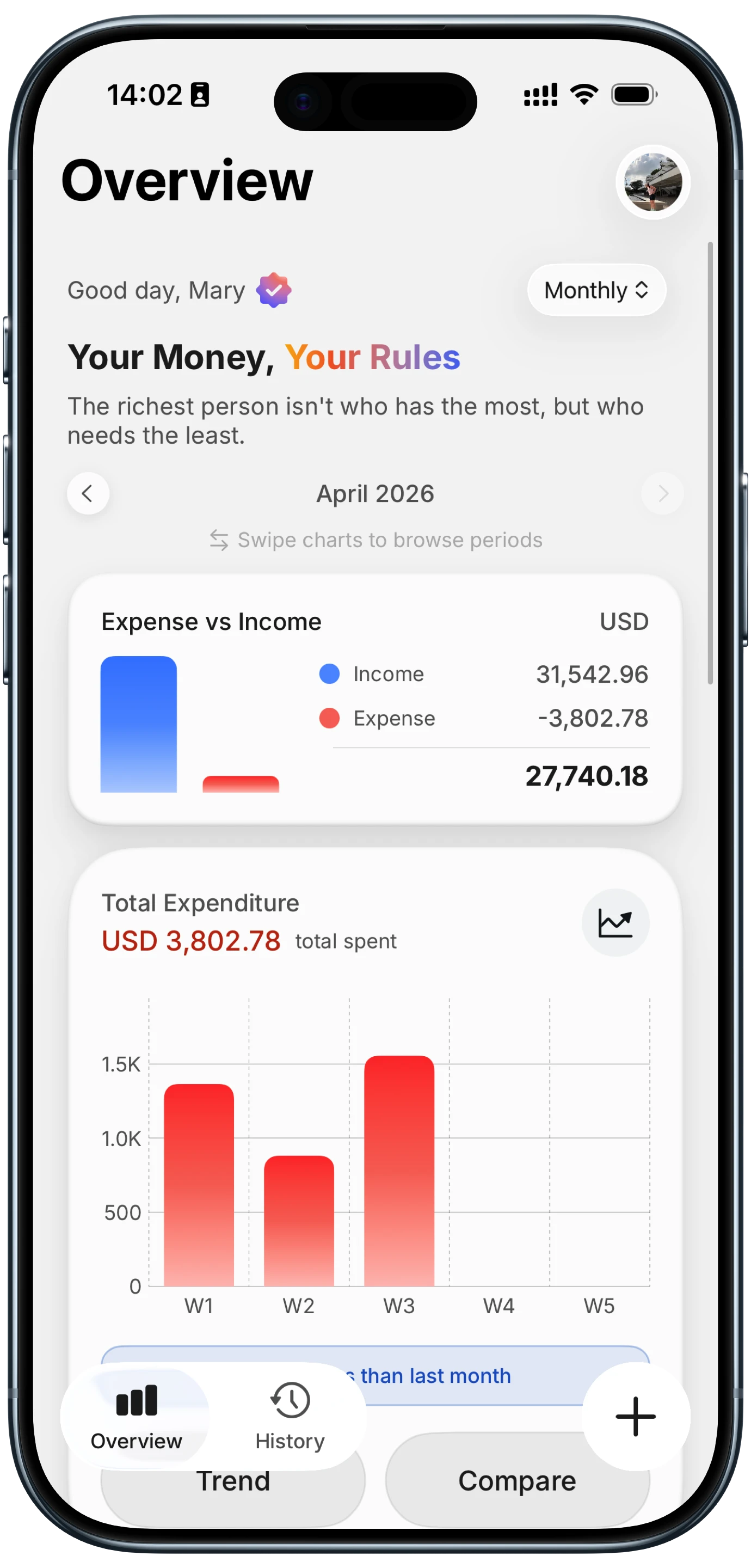
Most expense trackers tell you where your money went. A budget planner app tells you where your money should go before you spend it. That distinction matters more than most people realize.
Planning ahead means fewer surprises at the end of the month, less guilt about spending, and a clearer path toward financial goals. Whether you follow zero-based budgeting, the envelope method, or a simpler framework like 50/30/20, the right app can make the process feel effortless rather than tedious.
This guide compares the best budget planner apps available in 2026, covering their planning methodologies, pricing, and ideal use cases. If you are looking for a broader comparison of tracking tools, see our best expense tracker apps in 2026 roundup.
What Makes a Good Budget Planner App?
Not every finance app qualifies as a planner. Tracking past spending is helpful, but true budget planning requires forward-looking features.
Look for these capabilities:
- Budget creation before the month starts. You should be able to allocate money across categories before spending begins.
- Progress tracking against your plan. Real-time or near-real-time visibility into how much remains in each category.
- Flexibility across budgeting methods. Whether you prefer zero-based, envelope, or percentage-based planning, the app should support your style.
- Goal setting. Savings targets, debt payoff plans, or custom milestones that tie into your monthly plan.
- Low friction for daily use. A planner you abandon after two weeks is worse than no planner at all.
Quick Comparison Table
| App | Method | Bank Sync | Offline | Goal Planning | Free Tier | Price |
|---|---|---|---|---|---|---|
| Finny | Flexible | No | Yes | Categories | Yes | Free / low-cost Pro |
| YNAB | Zero-based | Yes | No | Yes | 34-day trial | $14.99/mo |
| Goodbudget | Envelope | No | Yes | Envelopes | Yes (limited) | Free / $8/mo |
| PocketGuard | Zero-based | Yes | No | Yes | Yes (limited) | Free / $12.99/mo |
| Monarch Money | Flexible | Yes | No | Yes | 7-day trial | $14.99/mo |
| Copilot | Flexible | Yes | No | Yes | 1-month trial | $13/mo |
| Spendee | Flexible | Yes | Partial | Shared wallets | Yes (limited) | Free / $2.99/mo |
| Wallet by BudgetBakers | Flexible | Yes | Yes | Yes | Yes (limited) | Free / $4.49/mo |
Best Budget Planner Apps Reviewed
Finny: Best for Low-Friction Budget Planning
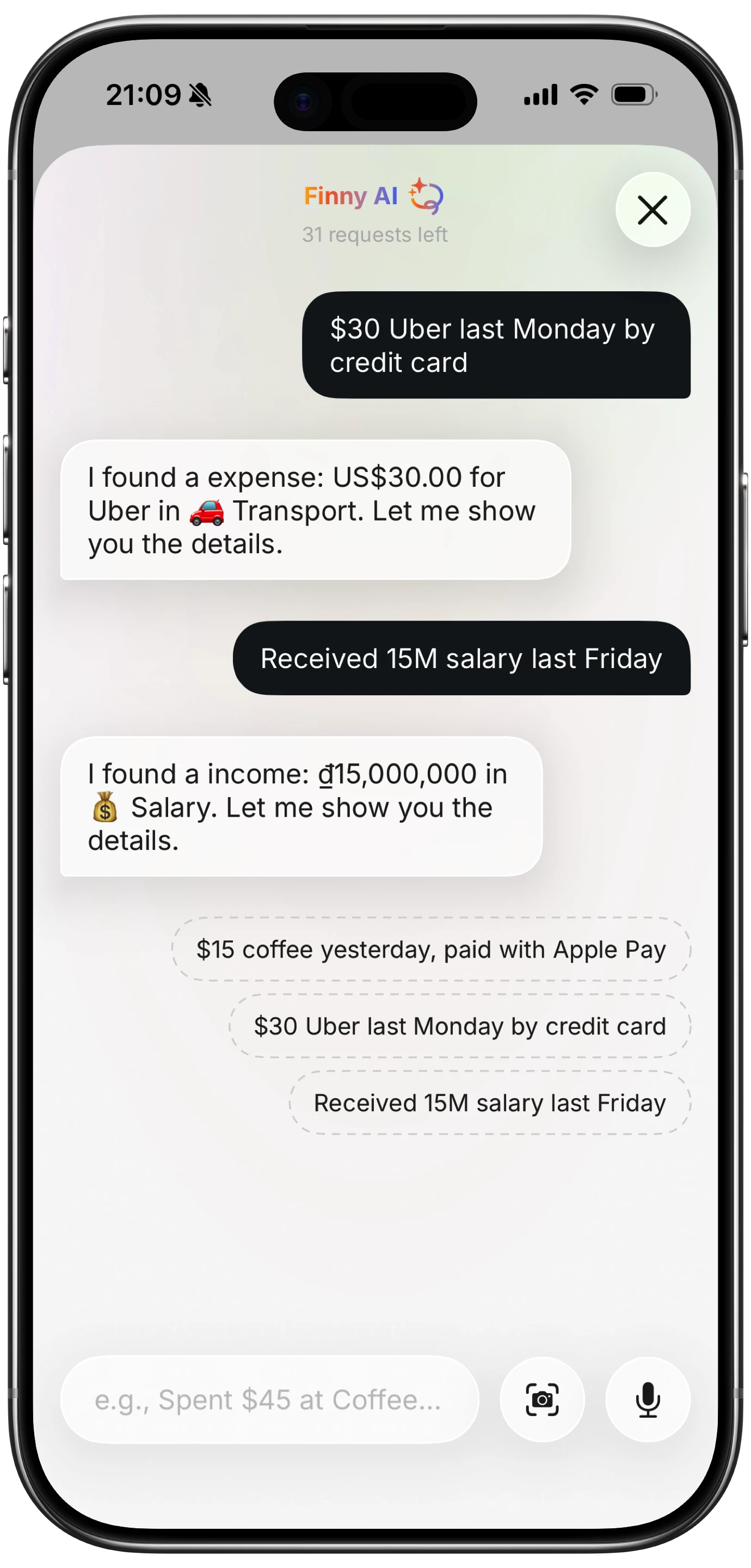
Finny takes a different approach to budget planning. Instead of requiring you to connect bank accounts or manually enter every transaction through forms, it uses AI to reduce the friction that causes most people to quit budgeting.
Finny app's AI chat feature
Type "lunch $12 salad" and Finny categorizes it automatically. Use voice input to log expenses while walking. Scan receipts in batches of up to five at once with Batch Snap and Log. The less effort tracking requires, the more likely you are to stick with your plan.
For Apple Pay users, Tap to Track auto-logs transactions the moment you pay. No manual entry needed for those purchases.
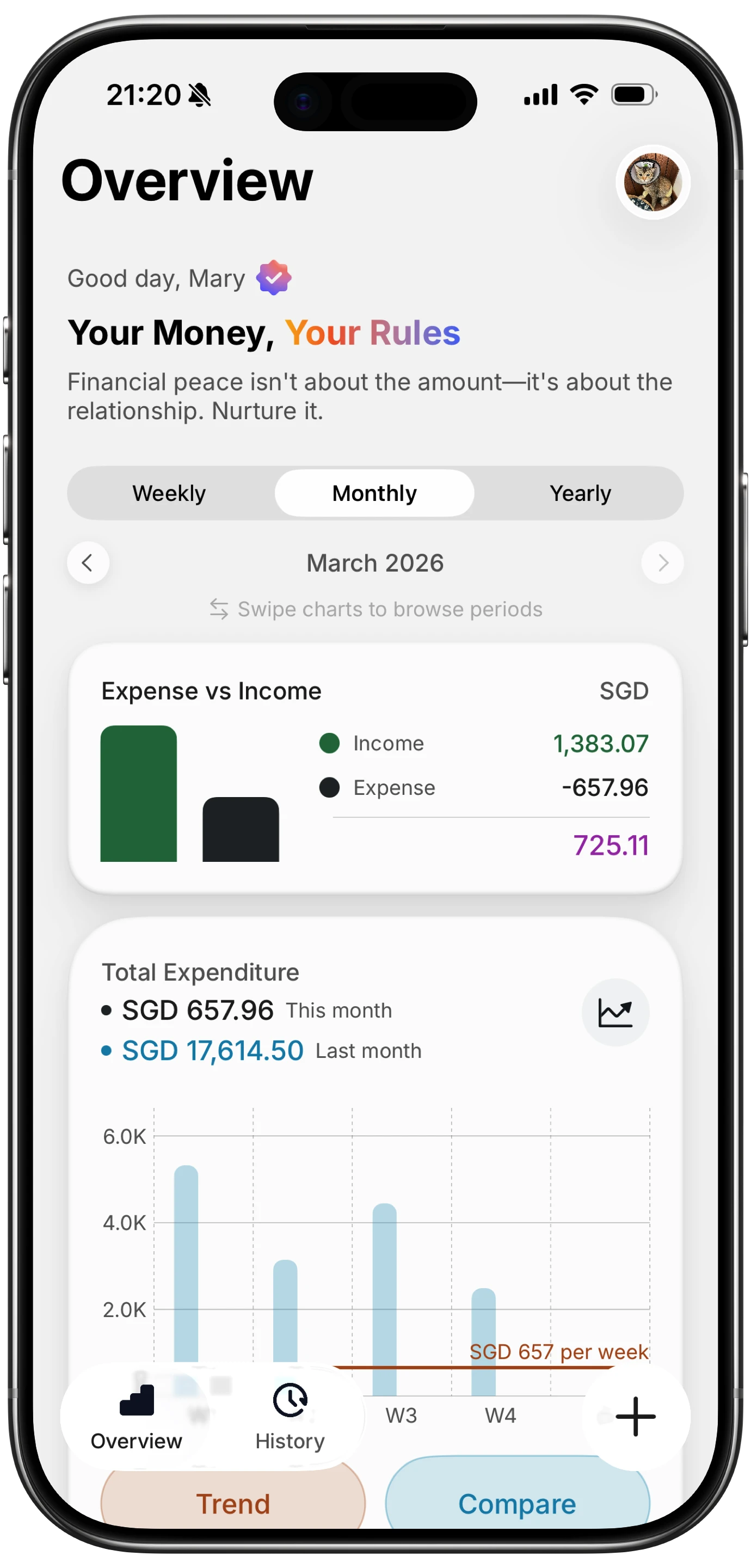
Budget planning features: Custom categories for income and expense, visual charts showing spending against your allocations, and multi-currency support for travelers or expats who budget across borders.
Pricing: Free tier includes unlimited manual tracking, custom categories, charts, and 150+ currencies. Pro costs a low monthly price for AI input, receipt scanning, voice logging, and cloud sync.
Best for: People who have tried budgeting before and quit because the daily tracking felt like a chore. If you want to learn more about how to track expenses without the friction, Finny is worth trying.
YNAB: Best for Zero-Based Budgeting Discipline
YNAB (You Need a Budget) is the gold standard for zero-based budgeting. Its core philosophy is simple: give every dollar a job before you spend it. Your income minus your planned spending should equal zero.
What sets YNAB apart is its emphasis on behavior change, not just tracking. The app teaches four rules: give every dollar a job, embrace your true expenses, roll with the punches, and age your money. These principles help users break the paycheck-to-paycheck cycle.
YNAB connects to banks for automatic transaction import, but still requires you to approve and categorize each transaction. This deliberate friction keeps you engaged with your plan.
Pricing: $14.99/mo or $109/yr. 34-day free trial. Free for college students for one year.
Best for: Users committed to zero-based budgeting who want a structured system with educational resources. See our guide on zero-based budgeting for more on this method.
Goodbudget: Best for Envelope Method Planning
Goodbudget digitizes the classic envelope budgeting system. You create virtual envelopes for each spending category and allocate your income across them at the start of each month. When an envelope is empty, you stop spending in that category.
This approach works well for people who think visually. Seeing a "Dining Out" envelope at 80% capacity on the 15th of the month creates a natural pause before the next restaurant visit.
Goodbudget does not connect to bank accounts. You enter transactions manually, which some users find helpful for staying aware of spending. It syncs across devices, making it easy for couples to share a budget.
Pricing: Free tier includes 20 envelopes, 1 account, and 2 devices. Premium costs $8/mo for unlimited envelopes, 5 accounts, and 5 devices.
Best for: Beginners who want visual, structured planning using the envelope budgeting method. Also a solid choice for couples who budget together.
PocketGuard: Best for "How Much Can I Spend?" Planning
PocketGuard follows a zero-based framework but presents it differently. After connecting your accounts and entering income and expenses, the app calculates one number: how much you have left to spend today. PocketGuard calls this your "In My Pocket" amount.
The Pace feature (available for Plus subscribers on iOS) alerts you if you are spending your budget too quickly based on how much remains and how many days are left in the month. This forward-looking approach helps prevent end-of-month scrambling.
PocketGuard also includes a subscription manager, bill organizer, net worth tracker, and debt payoff planner.
Pricing: Free tier with basic features. Plus costs $12.99/mo or $74.99/yr ($6.95/mo equivalent).
Best for: Users who want a single, clear number to guide daily spending decisions.
Monarch Money: Best Full Financial Dashboard
Monarch Money positions itself as a complete financial overview. It connects to bank accounts, credit cards, investments, and loans to give you a unified picture. Budget planning sits alongside net worth tracking, investment monitoring, and cash flow analysis.
The budgeting tools are flexible. You can set category budgets, track recurring expenses, and create savings goals. Monarch also supports shared finances for couples and families with collaborative features.
Pricing: $14.99/mo or $99.99/yr. 7-day free trial.
Best for: Users who want budget planning integrated into a comprehensive financial dashboard. If you are also interested in free budgeting options, there are alternatives that cost less.
Copilot: Best Design for iPhone Users
Copilot focuses on clean design and a polished iOS experience. It connects to your financial accounts and presents budgets, spending, net worth, and investments in an interface that feels native to the Apple ecosystem.
Budget planning includes category limits, recurring transaction tracking, and spending insights. The app learns your patterns over time and surfaces trends you might miss.
Pricing: $13/mo or $95/yr. 1-month free trial.
Best for: iPhone users who value design and want a premium, well-crafted budget planner.
Spendee: Best for Shared Budget Planning
Spendee supports shared wallets, making it a strong option for couples, roommates, or families who plan together. Each person can track spending against shared category limits.
The free tier covers basic personal budgeting with manual entry. Premium adds bank connections, shared wallets, and more detailed analytics.
Pricing: Free tier available. Premium at $2.99/mo.
Best for: Groups or couples who want collaborative budget planning at an affordable price.
Wallet by BudgetBakers: Best for International Users
Wallet supports bank connections across many countries, multi-currency tracking, and detailed financial planning tools. It covers budgets, savings goals, debt tracking, and scheduled transactions.
The app also works offline, syncing when you reconnect. Its broad international support and feature depth make it a versatile choice for users outside the US.
Pricing: Free tier with basic features. Premium at $4.49/mo.
Best for: International users who need broad bank support and multi-currency planning.
Choosing the Right Budgeting Method
The best budget planner app depends on your preferred methodology. Here is a quick guide to the most popular approaches.
Zero-Based Budgeting
Every dollar of income gets assigned to a specific category. Income minus planned spending equals zero. This method works well for people who want complete control and are willing to put in the planning time each month.
Best apps for this method: YNAB, PocketGuard, Finny.
For a deeper dive, read our guide to zero-based budgeting.
Envelope Method
You divide your budget into categories (envelopes) with fixed amounts. When the envelope is empty, spending in that category stops. This method is intuitive and works especially well for variable expenses like dining and entertainment.
Best apps for this method: Goodbudget, YNAB.
Learn more in our envelope budgeting explainer.
50/30/20 Rule
Allocate 50% of after-tax income to needs, 30% to wants, and 20% to savings and debt repayment. This is the simplest framework and works well for people who find detailed budgeting overwhelming.
Best apps for this method: PocketGuard, Finny, Monarch Money.
Goal-Based Planning
Rather than budgeting by category, you work backward from financial goals: emergency fund, vacation, debt payoff. You allocate monthly amounts toward each goal and track progress over time.
Best apps for this method: YNAB, Monarch Money, PocketGuard.
How to Get Started With Budget Planning
Finny app's Overview feature
If you have never used a budget planner app before, follow these steps:
- Pick one method. Do not overthink it. Start with 50/30/20 if you are unsure.
- Choose one app. Download it today. Free tiers are fine to start.
- Set up categories. Match them to your actual spending patterns, not an ideal version of your life.
- Log expenses for one full month. The first month is about data collection, not perfection.
- Adjust your plan. After one month of real data, refine your allocations.
The biggest mistake people make is trying to create the perfect budget before they have any real spending data. Start tracking first, then plan. Our guide on how to budget money covers this process in more detail.
Frequently Asked Questions
What is the best free budget planner app?
Finny offers the most capable free tier for budget planning. You get unlimited manual tracking, custom categories, visual charts, and support for 150+ currencies at no cost. Goodbudget is another solid free option if you prefer the envelope method, though its free tier limits you to 20 envelopes and one account.
Is YNAB worth the price?
YNAB costs $14.99/mo, which is steep compared to alternatives. However, users consistently report that YNAB's zero-based methodology helps them save more than the subscription costs. The 34-day free trial is enough time to see if the approach works for you. If price is a concern, Finny Pro at a low monthly price offers AI-powered tracking at a fraction of the cost.
Can I budget without linking my bank account?
Yes. Finny, Goodbudget, and several other apps work without bank connections. Manual entry gives you complete control over your data and avoids the security concerns of sharing bank credentials. Finny's AI receipt scanner and voice input make manual entry fast enough that you do not miss automatic imports.
What budgeting method should a beginner use?
Start with the 50/30/20 rule. It requires minimal setup: just three broad categories. Once you are comfortable tracking your spending, you can move to a more detailed method like zero-based or envelope budgeting. The key is choosing something simple enough that you will actually stick with it.
How often should I check my budget planner app?
Daily, even if just for 30 seconds. The goal is to log expenses while they are fresh and glance at your remaining budget. A weekly review of 5 to 10 minutes to assess your overall progress is also helpful. Most people who abandon budgeting do so because they let days pile up without logging, then face a backlog that feels overwhelming.