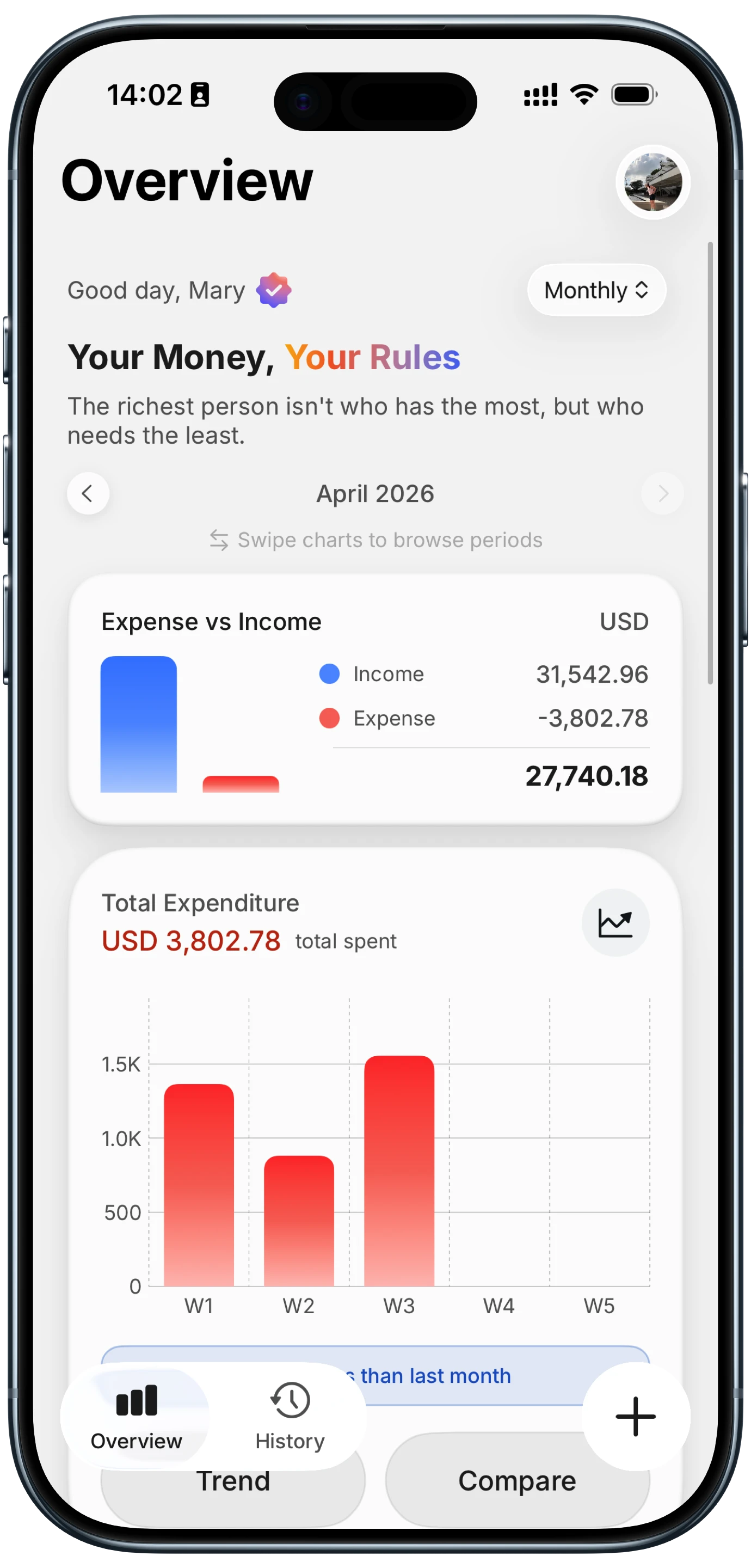
Budgeting in Europe is rarely a single-currency exercise. You might earn euros in Berlin, pay rent in Swiss francs, split a holiday bill in Croatian kuna, and get a subscription charged in pounds, all in the same month. Add cross-border banking, PSD2 open banking rules, and the small foreign transaction fees that nibble at every purchase abroad, and a simple spending plan gets complicated fast. That is why the best budgeting apps in Europe are the ones that treat multiple currencies as normal, not as an afterthought. In this guide we compare the top budgeting apps in Europe for 2026, from bank-built tools inside Revolut and N26 to dedicated trackers built for expats, travelers, and anyone living a multi-currency life.
Why multi-currency comes first for budgeting apps in Europe
Most budgeting apps were designed around a single home currency. That works fine if you live and spend in one country. It breaks the moment your life spans borders. A weekend trip from Stockholm to Copenhagen already mixes SEK and DKK. A remote worker paid in USD while living in Portugal juggles two currencies before rent is even due.
When you evaluate budgeting apps in Europe, multi-currency support should be the first filter, not the last. Here is what genuinely good multi-currency handling looks like:
- Log in any currency. You should be able to record a coffee in CHF and lunch in EUR without switching a global setting.
- See a consolidated view. Totals should roll up into one base currency so your budget still makes sense at a glance.
- Reasonable exchange rates. Apps that refresh rates regularly give you a truer picture than a fixed rate set once a year.
- Wide currency coverage. EUR, GBP, CHF, SEK, PLN, NOK, DKK, and CZK are just the start for anyone moving around the continent.
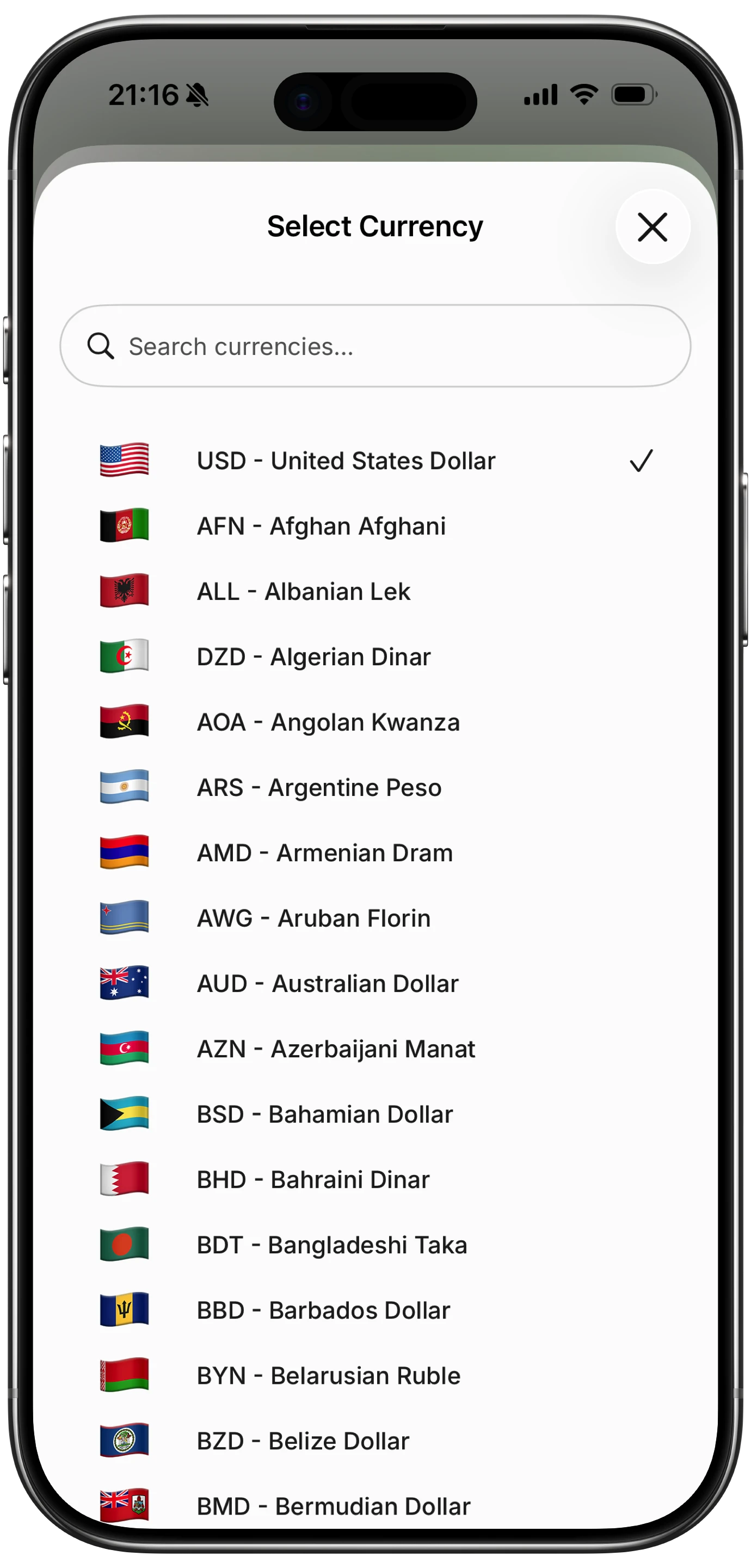
Finny app's multi-currency feature
If you want a deeper look at this specific need, our guide to the best multi-currency expense tracker for 2026 breaks down how different apps convert and consolidate balances.
The best budgeting apps in Europe for 2026
There is no single winner for everyone. Your best choice depends on whether you want automatic bank connections, prefer manual privacy-first tracking, or need the deepest coverage for a specific region. Here is how the leading options compare.
| App | Platforms | Price | Best for |
|---|---|---|---|
| Finny | iOS (iPhone, Apple Watch) | Free tier; Pro a low monthly or yearly price | Multi-currency manual tracking, privacy, AI input |
| YNAB | iOS, Android, web | About $109/yr, no free tier | Zero-based budgeting methodology |
| Emma | iOS, Android | Free tier plus paid premium | UK and Ireland users with EUR overlap |
| Wallet by BudgetBakers | iOS, Android, web | Free tier plus premium | Central and Eastern European bank coverage |
| Spendee | iOS, Android, web | Free tier plus premium | Shared wallets and visual design |
| Toshl | iOS, Android, web | Free tier plus Pro around €2.99/mo | Frequent travelers, 200+ currencies |
| Monefy | iOS, Android | Free with paid unlock | Fast manual entry, no bank sync |
A few notes on this lineup:
- YNAB remains the benchmark for zero-based budgeting, but it costs around $109 per year with no free tier, and multi-currency was not part of its original design. If the method appeals but the price does not, our best YNAB alternatives for 2026 covers cheaper options.
- Wallet by BudgetBakers and Spendee, both developed in the Czech Republic, offer some of the deepest European bank coverage through open banking aggregators, which matters if you want automatic transaction imports.
- Toshl, built in Slovenia, was designed from the ground up for multiple currencies and refreshes exchange rates regularly, which makes it a favorite for people who switch countries often.
- Monefy keeps things deliberately simple with manual entry only and no bank sync, syncing across devices through your own cloud storage instead.
Bank-built budgeting: Revolut, N26, and open banking
Many Europeans never download a separate budgeting app because their bank already offers one. That is worth understanding before you pay for anything extra.
Revolut has genuinely strong built-in budgeting. You can hold balances in multiple currencies, view a consolidated total in your base currency, and sort spending by category, merchant, country, currency, or card. For someone who already banks with Revolut and travels frequently, the analytics cover a lot of ground.
N26 also breaks your spending into categories automatically and offers Spaces for saving toward goals. The catch for cross-border users is that N26 operates in euros only, so if you regularly hold other currencies you will need a separate solution.
Bank-built tools lean on PSD2 open banking, the EU framework that lets licensed apps read your transaction data with consent. That is what powers automatic imports in apps like Wallet and Spendee too. Open banking is convenient, but it comes with trade-offs:
- Your financial data flows through third-party aggregators.
- Coverage varies by country and by bank.
- Connections occasionally break and need reauthorizing.
- It only tracks spending inside connected accounts, so cash and cards outside the system slip through.
If you would rather keep your accounts unlinked entirely, our roundup of the best expense trackers with no bank login for 2026 explains the privacy case in detail.
Connected versus manual tracking across borders
The biggest fork in the road for European budgeters is whether to connect your accounts or track manually. Both are valid, and the right answer depends on your life.
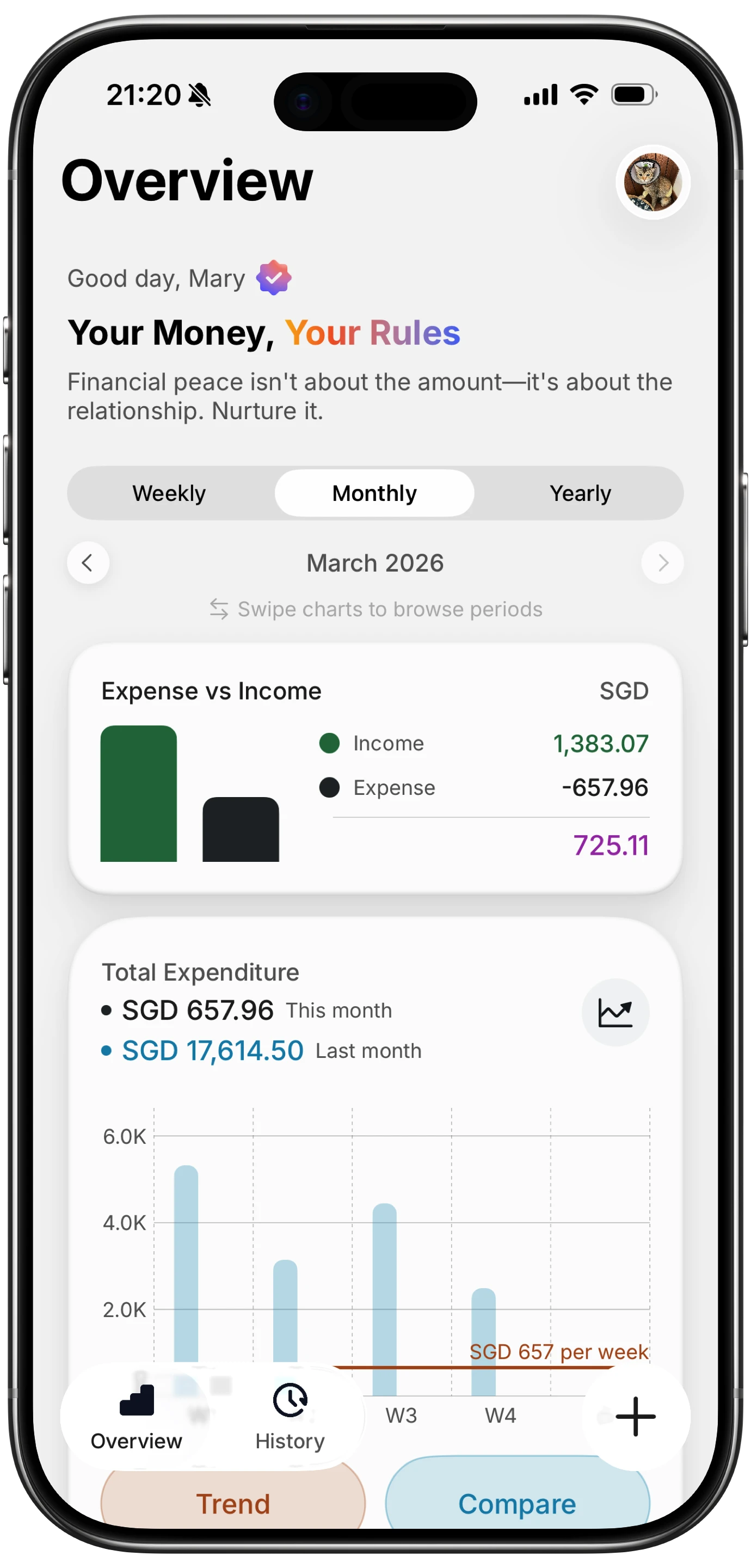
Finny app's Overview feature
Connected tracking suits people who spend mostly through one or two accounts in a stable set of currencies. It reduces manual effort and catches transactions you might forget. The downsides are patchy coverage across some smaller European banks, reliance on aggregators, and the fact that cash purchases never appear.
Manual tracking suits people who value privacy, use several accounts and cards across countries, or spend a lot of cash. It takes a few seconds per purchase, but it keeps your data on your own device and gives you a complete picture rather than a partial one. Modern manual apps make entry fast enough that the effort argument has largely faded, and learning a simple framework like the 50/30/20 rule helps you turn those logged expenses into an actual plan. If you are new to logging spending by hand, our step-by-step guide on how to track expenses walks through the habit.
For anyone constantly crossing borders, manual tracking also sidesteps a subtle problem: many aggregators struggle to categorize foreign-currency transactions cleanly, and foreign transaction fees can quietly distort your totals. Our guide on how to avoid foreign transaction fees covers that side of cross-border spending.
How Finny approaches multi-currency budgeting in Europe
Finny is an AI-powered expense tracker built for Apple users who want fast, private, multi-currency tracking without linking a bank. It fits the European use case in a few specific ways.
The free forever core includes manual expense tracking, custom categories, spending charts, full offline support, and support for 150+ currencies, which covers EUR, GBP, CHF, SEK, PLN, and far beyond. Because there is no bank login required, your data stays on your device, and you can export or import via CSV whenever you like. That privacy-first, no-linking approach is exactly what many cross-border users are looking for.
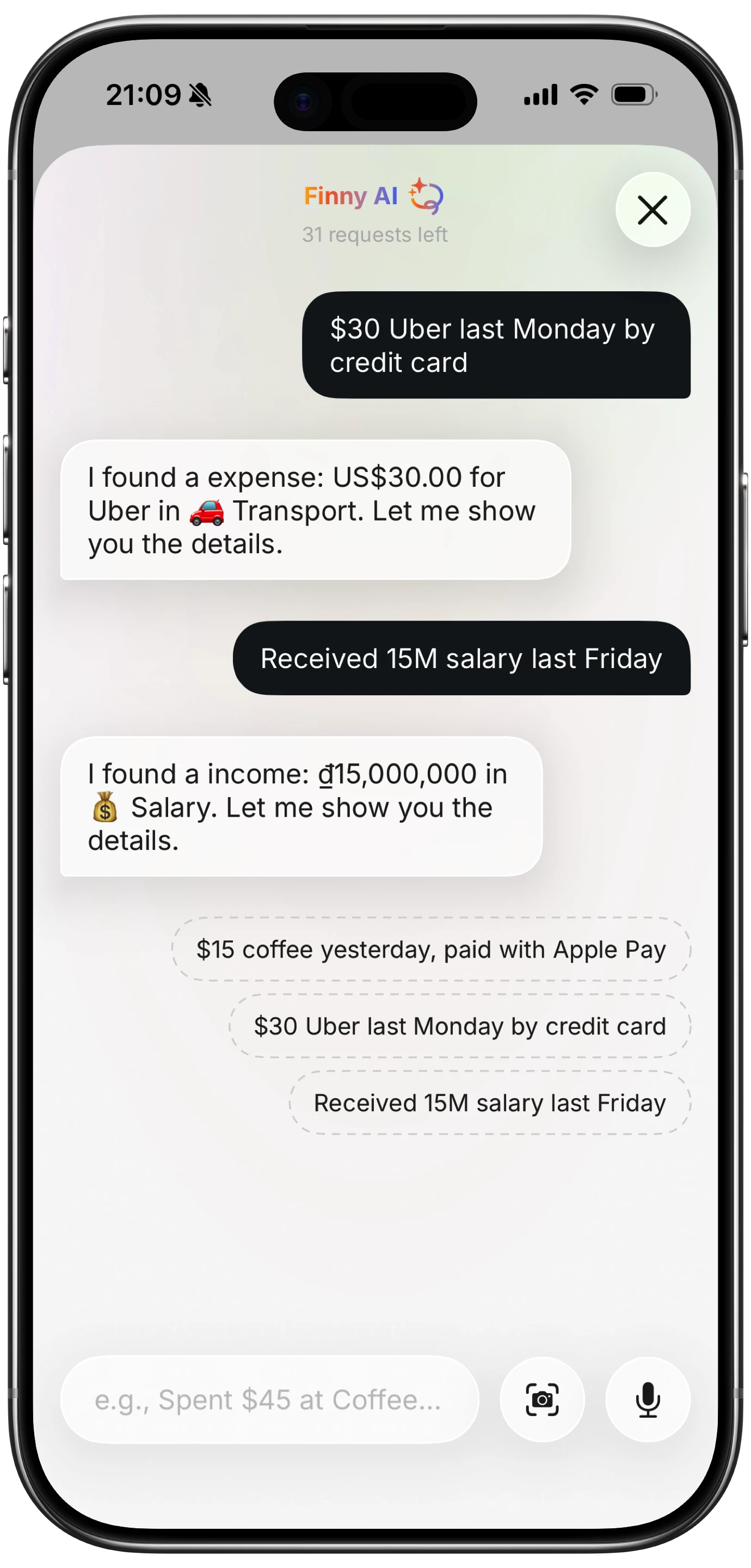
Finny app's AI chat feature
Logging is where the AI comes in. You can type naturally like "coffee 5," speak hands-free, or snap a receipt photo, and Finny turns it into a structured expense that you always review before saving. AI input, Tap to Track, and batch receipt scanning of up to five receipts at once are part of Finny Pro, which costs a low monthly or yearly price, well below the annual cost of tools like YNAB. The free tier even includes one AI credit so you can try it first. For a closer look at managing several currencies at once, see our guide to tracking expenses in multiple currencies.
One caveat worth stating plainly: Finny is iOS and Apple only, covering iPhone and Apple Watch, so Android users will need one of the other options above.
Frequently Asked Questions
What is the best budgeting app for multiple currencies in Europe?
It depends on how you like to track. Toshl and Wallet by BudgetBakers handle many currencies well with bank connections, while Finny offers 150+ currencies with private, manual and AI-assisted entry and no bank linking. Revolut is strong if you already bank there. The best choice comes down to whether you prefer automatic imports or a privacy-first approach that keeps data on your device.
Are there free budgeting apps in Europe?
Yes. Several budgeting apps in Europe offer a genuine free tier, including Finny, Spendee, Wallet by BudgetBakers, and Toshl, though features vary. Finny's free core covers manual tracking, custom categories, charts, offline use, and 150+ currencies. YNAB, by contrast, has no free tier and costs around $109 per year after its trial. Always check which features sit behind a paywall before committing.
Do budgeting apps in Europe require open banking access?
No. Many apps use PSD2 open banking to import transactions automatically, but it is optional. Manual-entry apps like Finny and Monefy never connect to your bank, which appeals to people who value privacy or use several accounts across countries. Open banking is convenient for single-account users but only tracks connected accounts, so cash and external cards go unrecorded unless you add them yourself.
Can I budget across the Eurozone and non-euro countries in one app?
Yes, as long as the app supports the currencies you use and consolidates them into one base currency. This matters if you move between EUR countries and places using GBP, CHF, SEK, PLN, or NOK. Apps built around multi-currency, such as Toshl and Finny, let you log spending in any supported currency and still see a single meaningful total for your budget.
Is manual expense tracking worth it in 2026?
For many cross-border users, yes. Manual tracking gives a complete picture including cash, keeps your data private, and avoids broken bank connections. Modern apps make entry fast: with AI input you can type or speak a purchase in seconds. The trade-off is a small daily habit in exchange for full control and accuracy, which suits anyone whose spending spans multiple accounts and currencies.
The bottom line
There is no universal best budgeting app in Europe, only the best one for how you live and spend. If you bank mostly in euros through Revolut or N26, their built-in tools may be enough. If you want deep local bank coverage, Wallet by BudgetBakers and Spendee lead in Central and Eastern Europe, while Toshl shines for heavy travelers. If your priority is privacy, multi-currency flexibility, and fast entry without linking a bank, a manual and AI-assisted tracker fits best. Whatever you choose, start with multi-currency support and be honest about whether you prefer connected or manual tracking. To try a free, privacy-first option built for Apple users, get Finny here.